

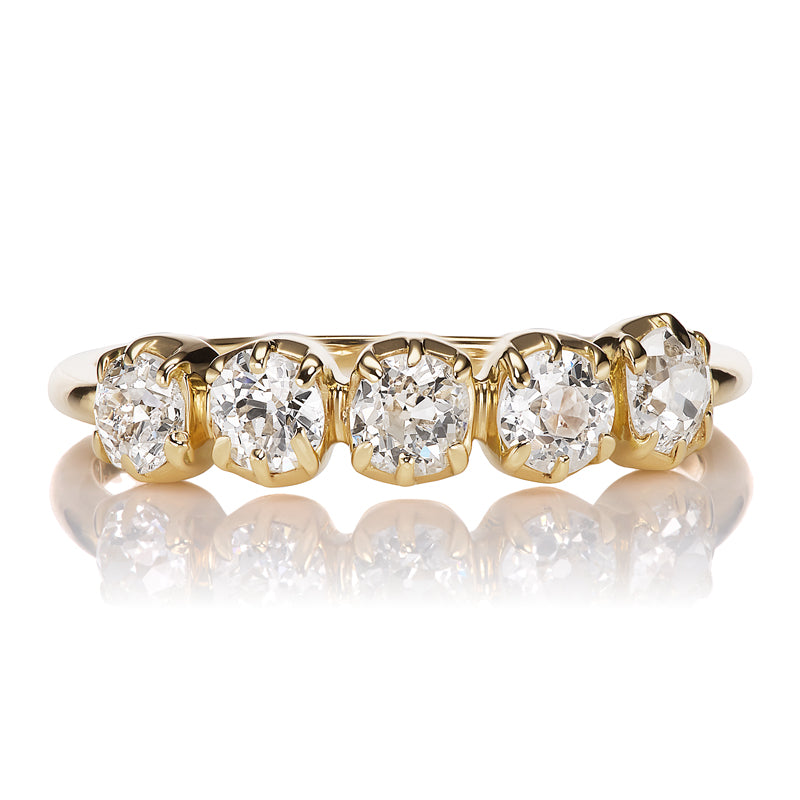
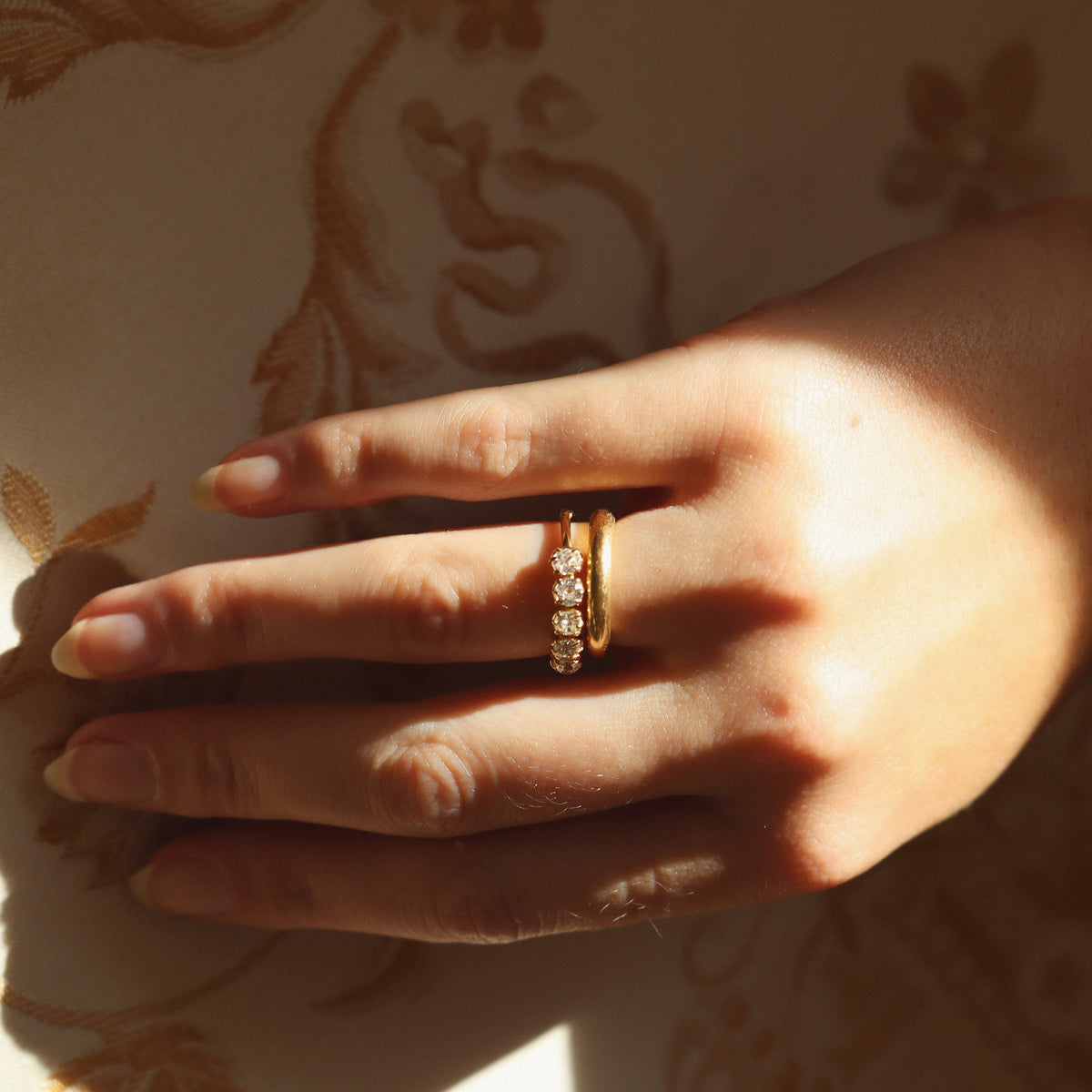
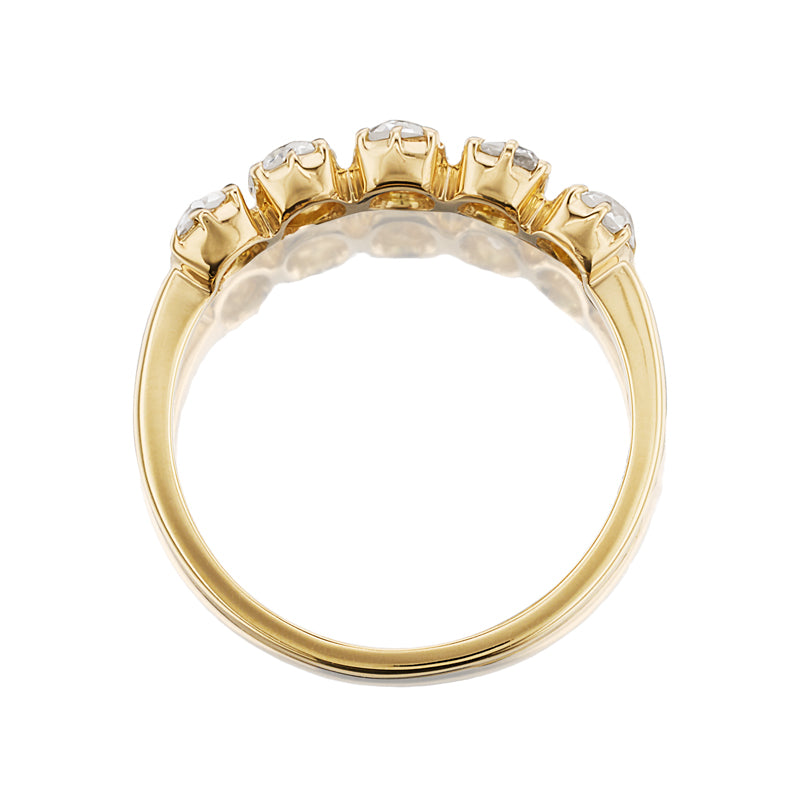
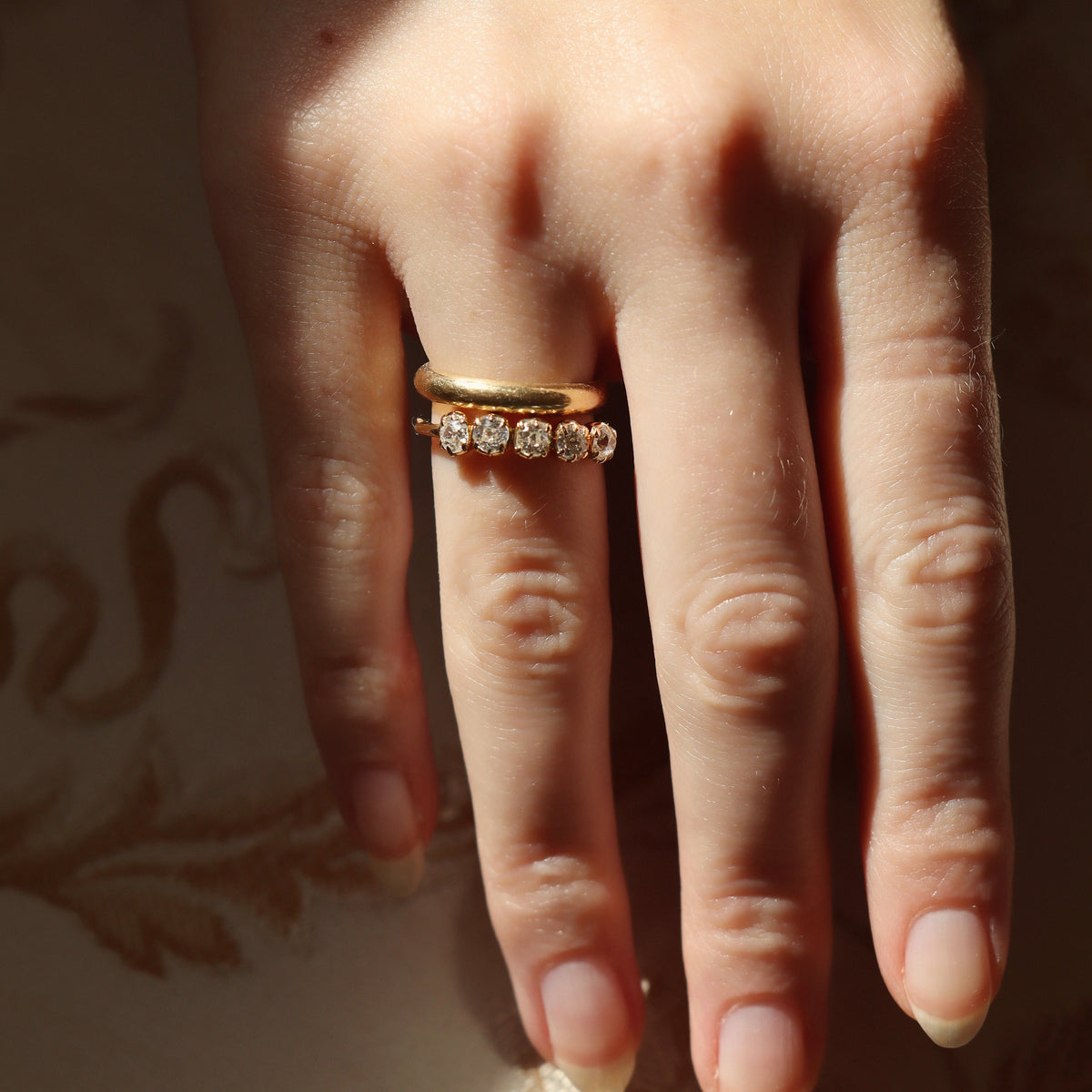
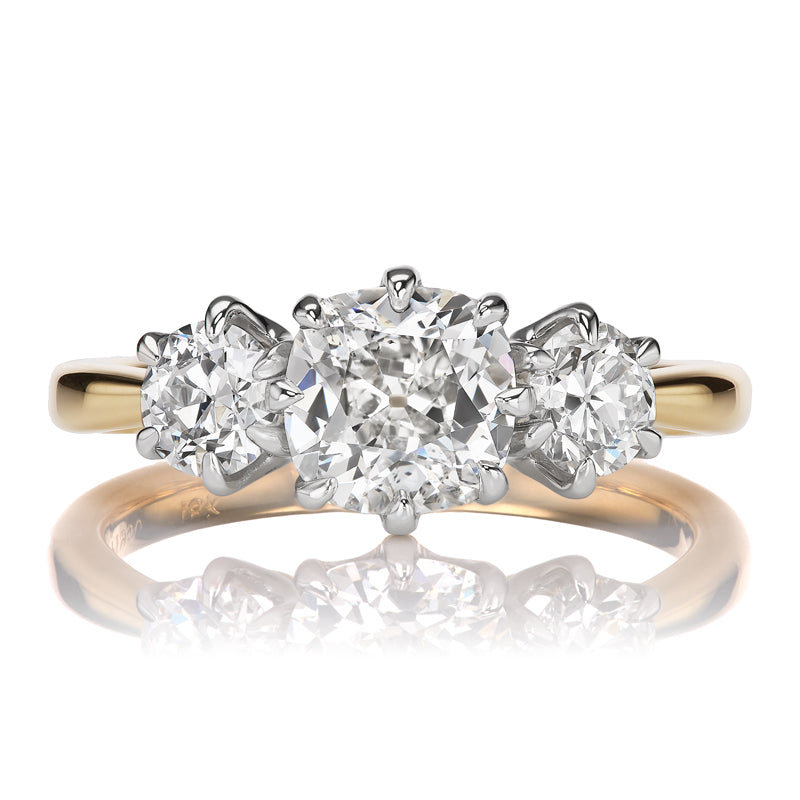
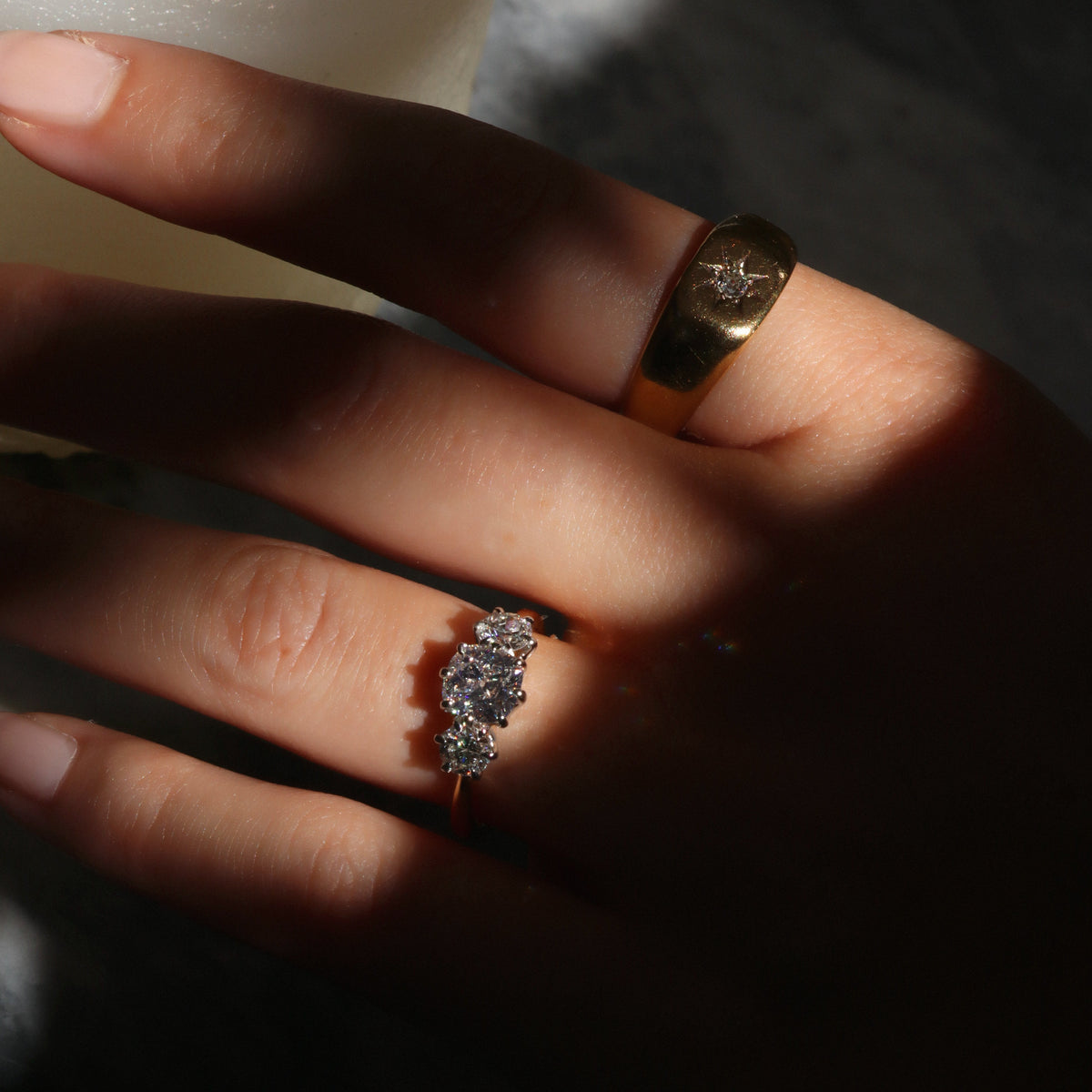
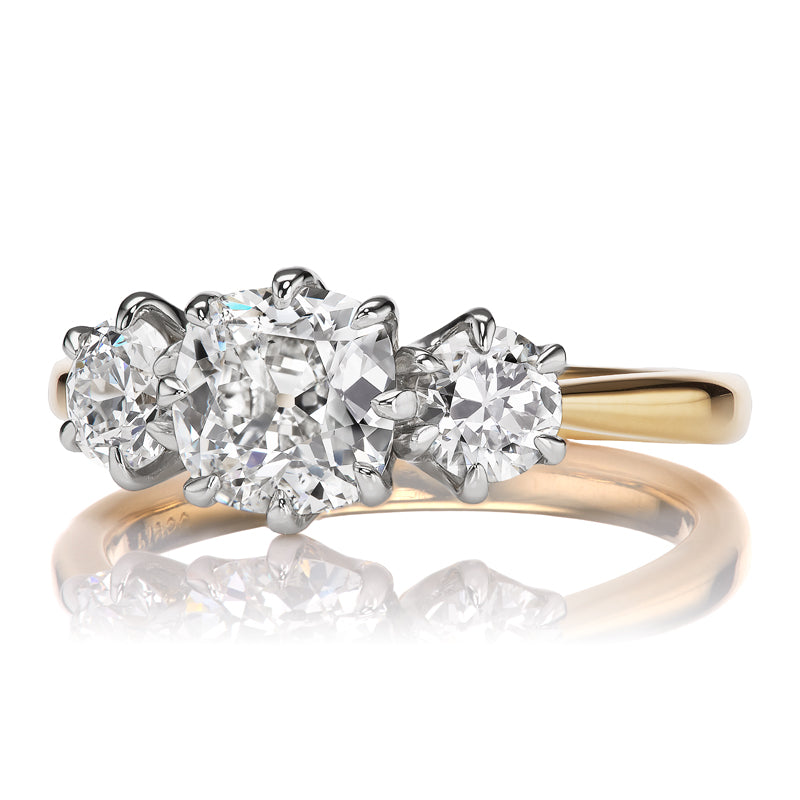
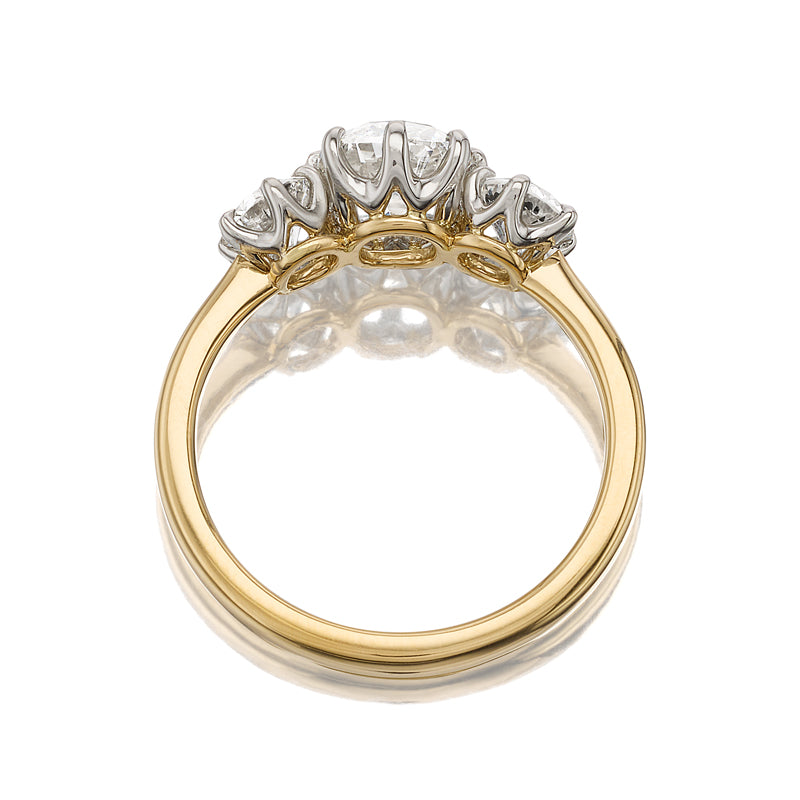
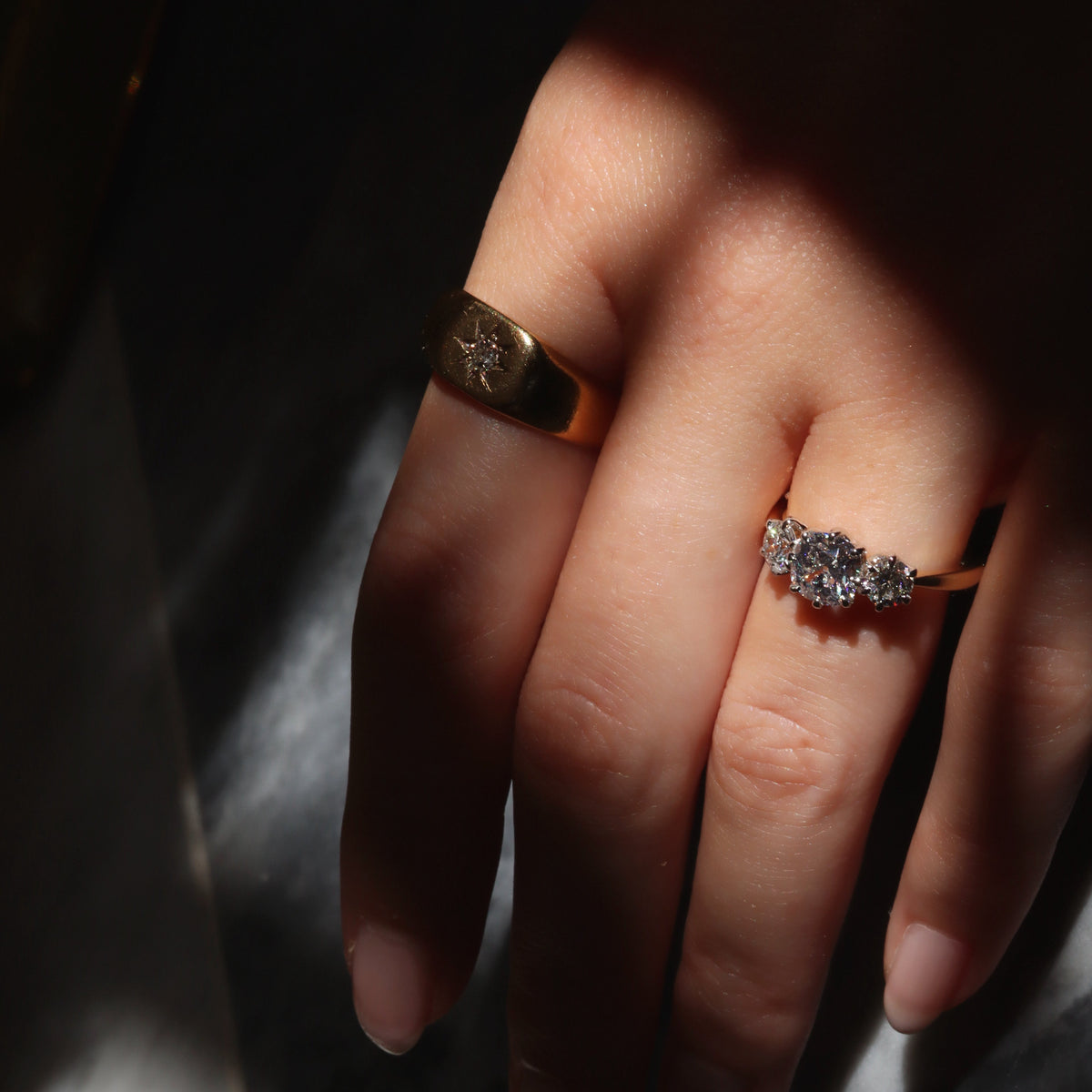
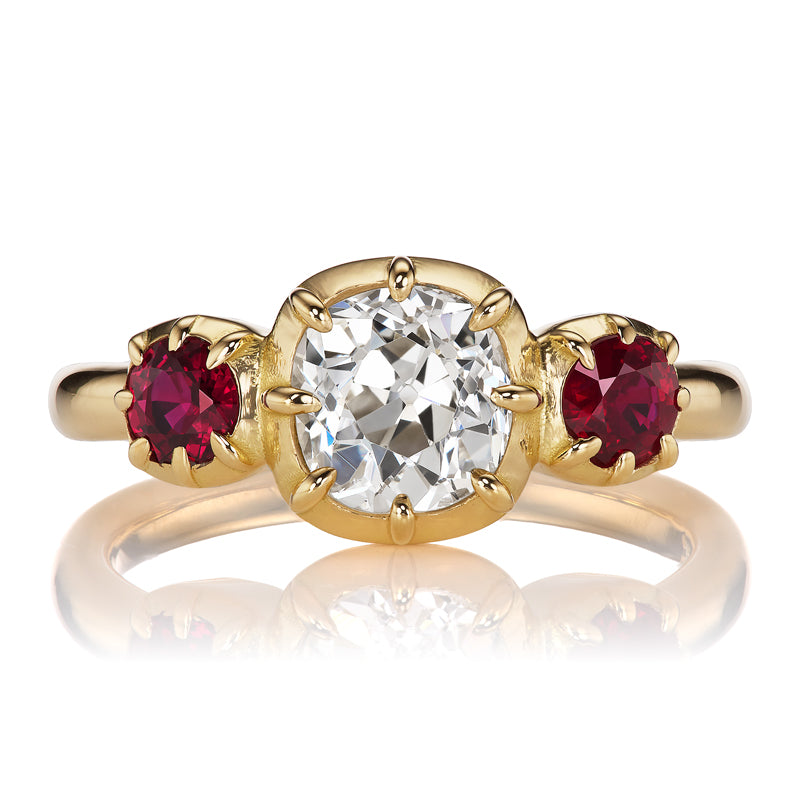
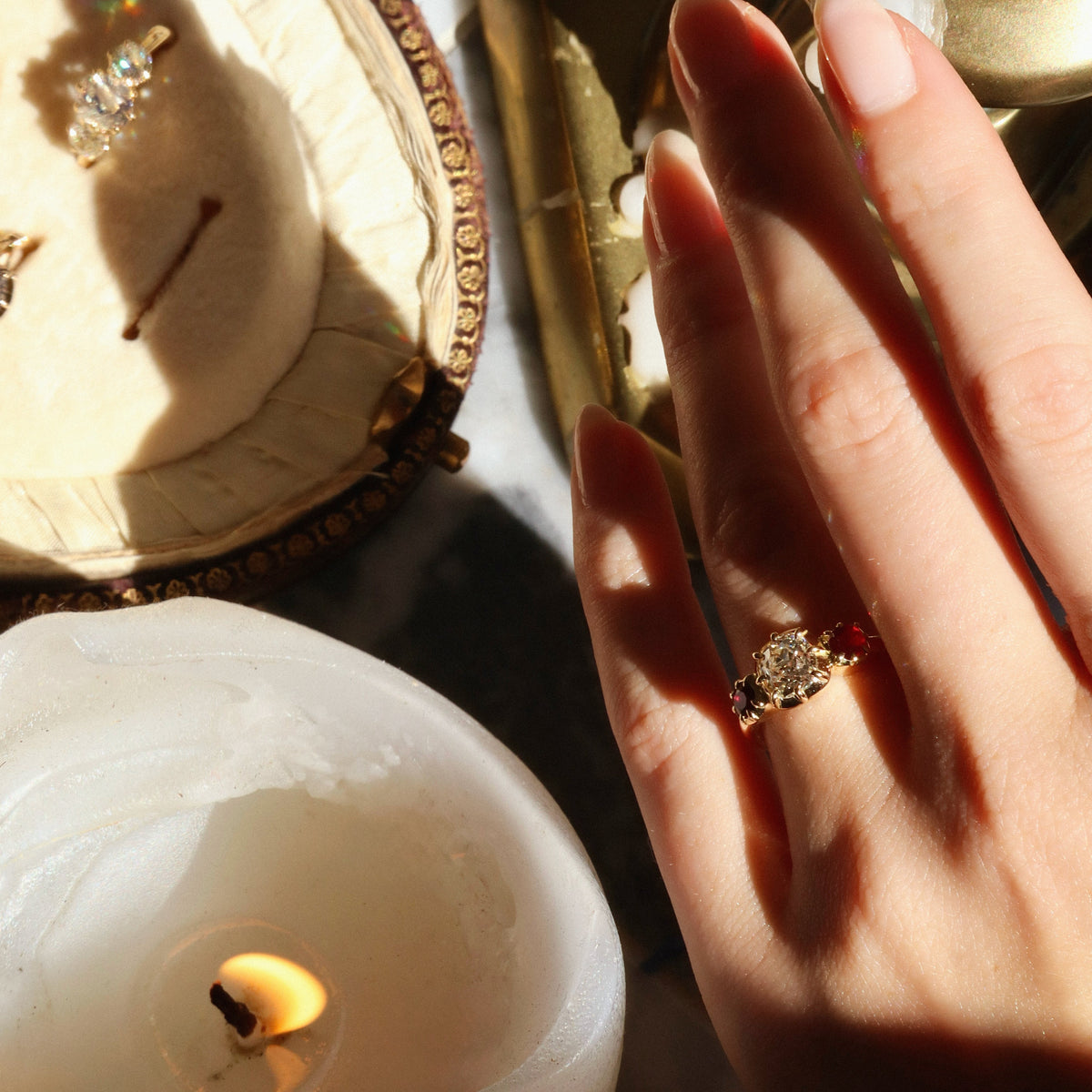
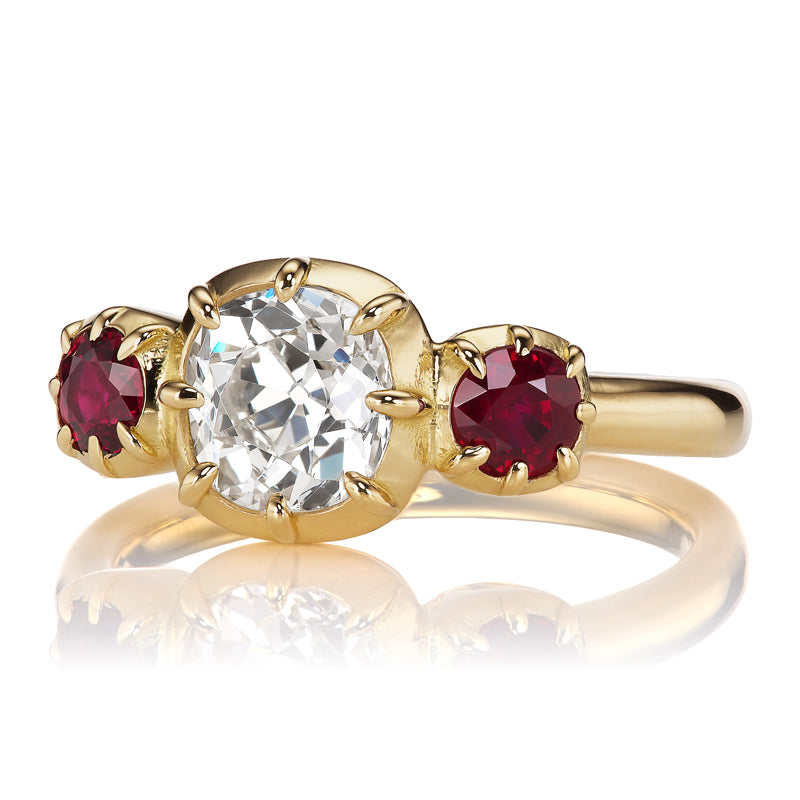
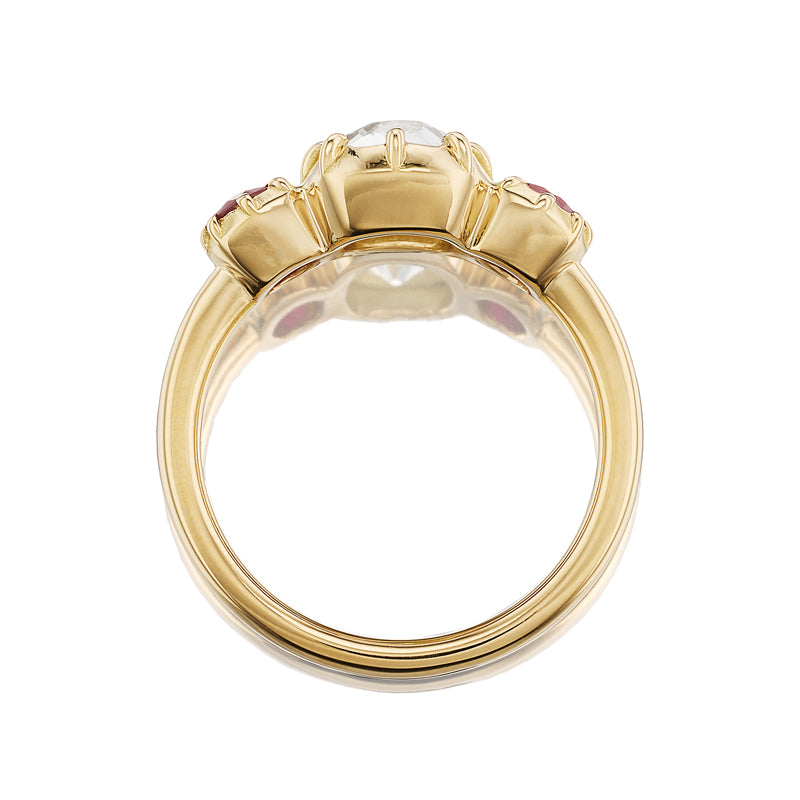
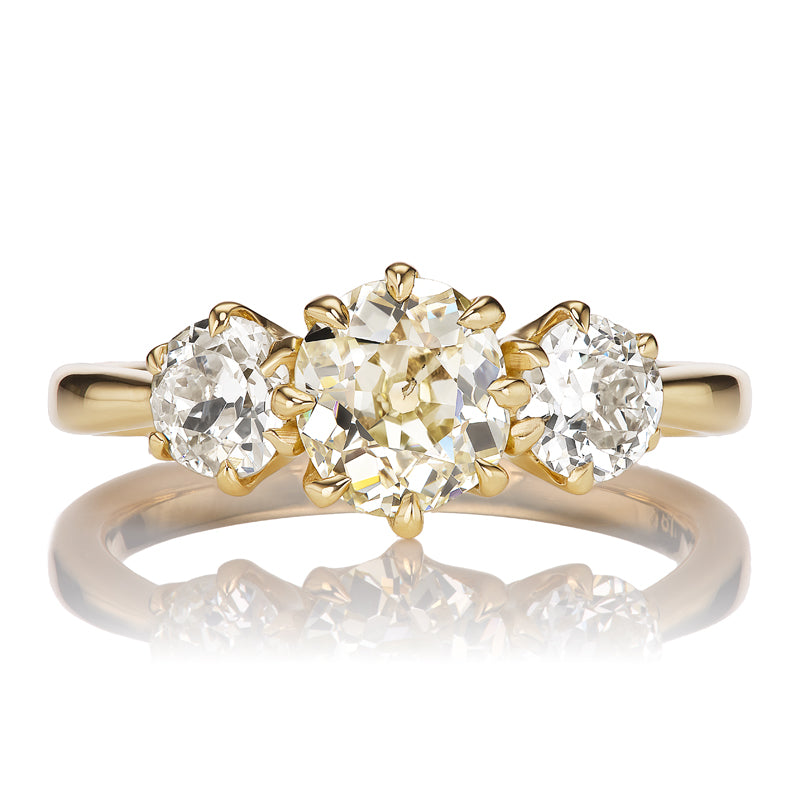
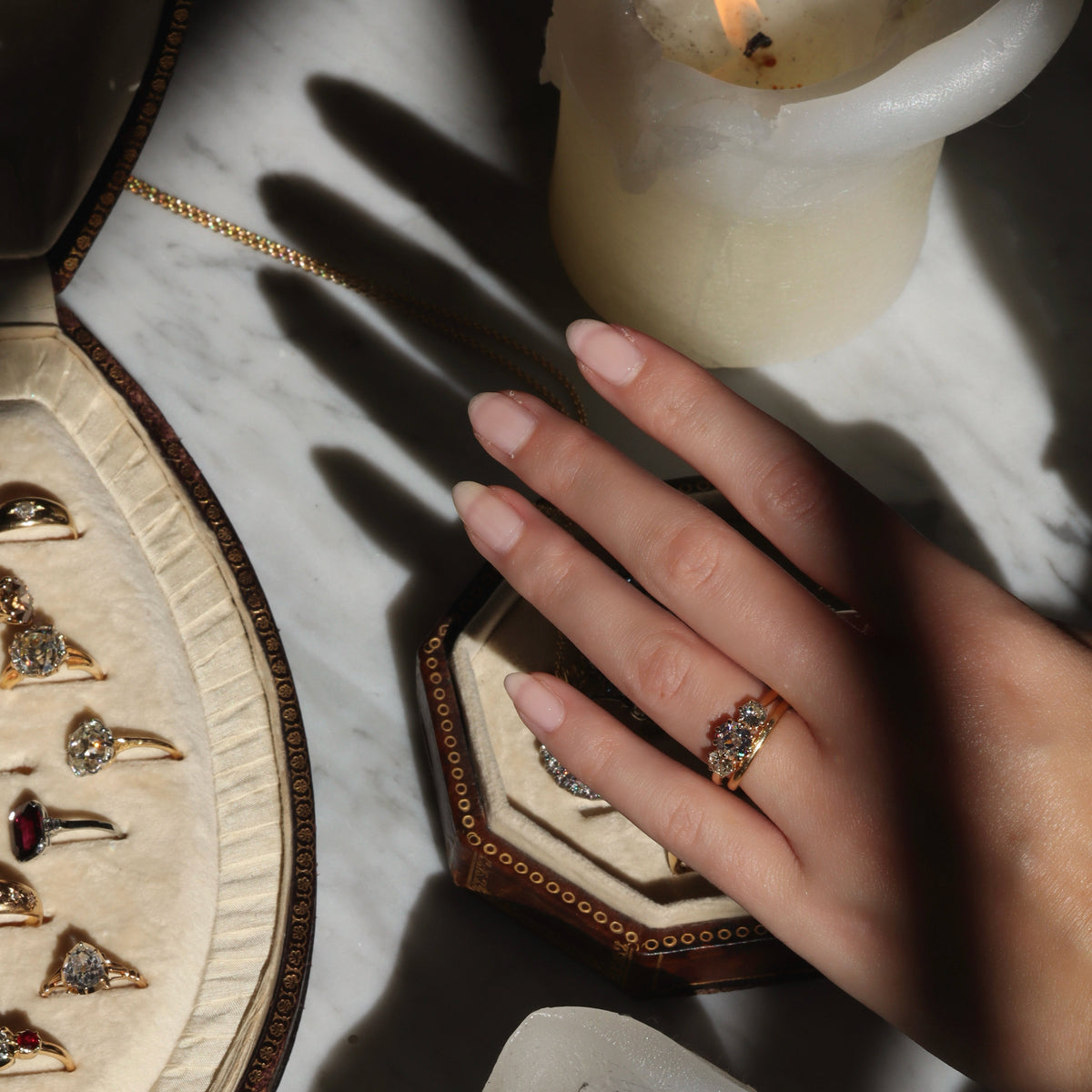
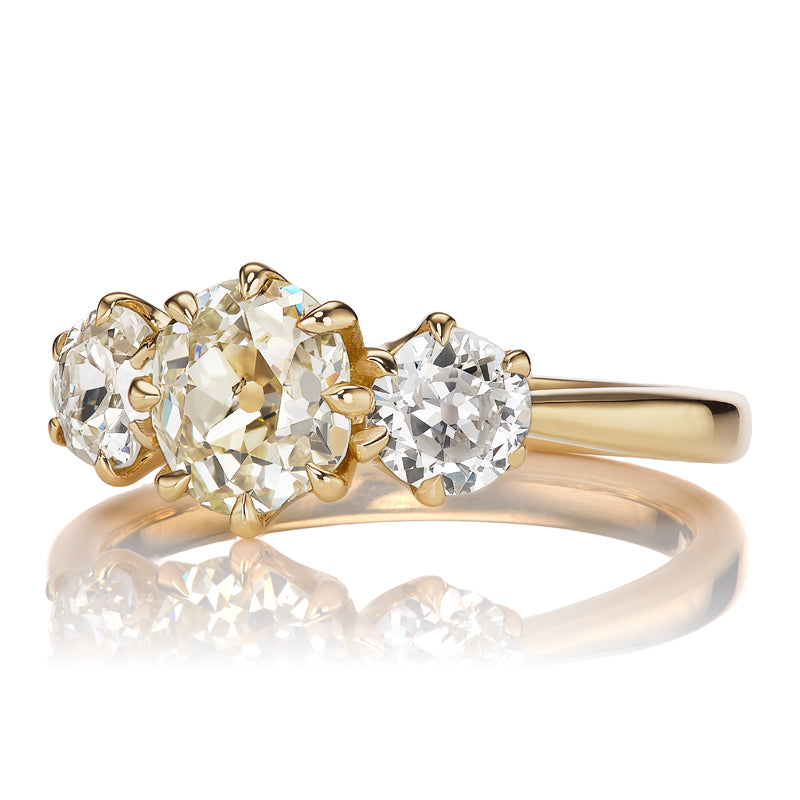
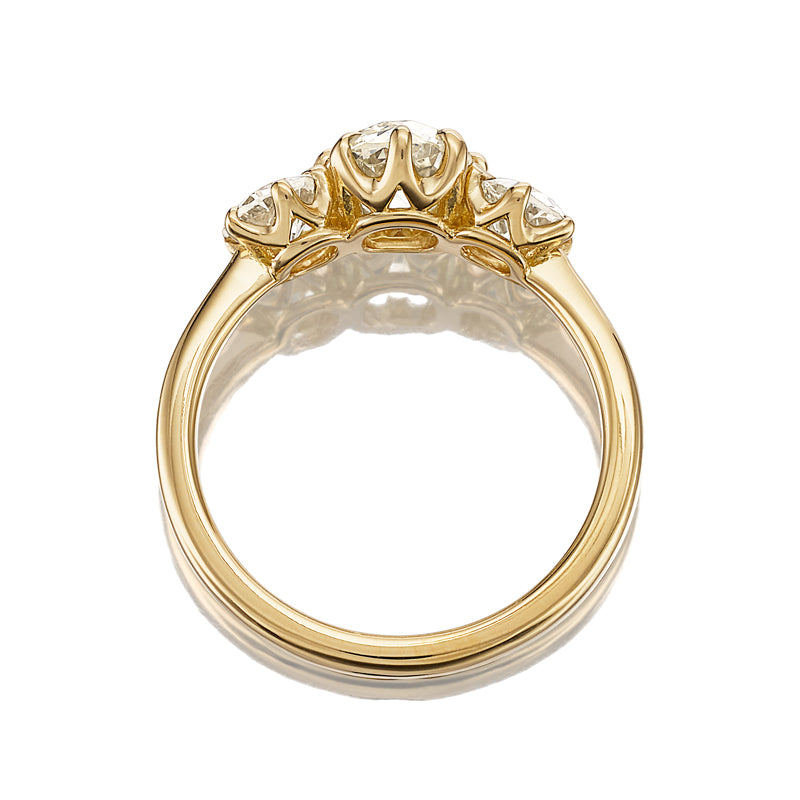
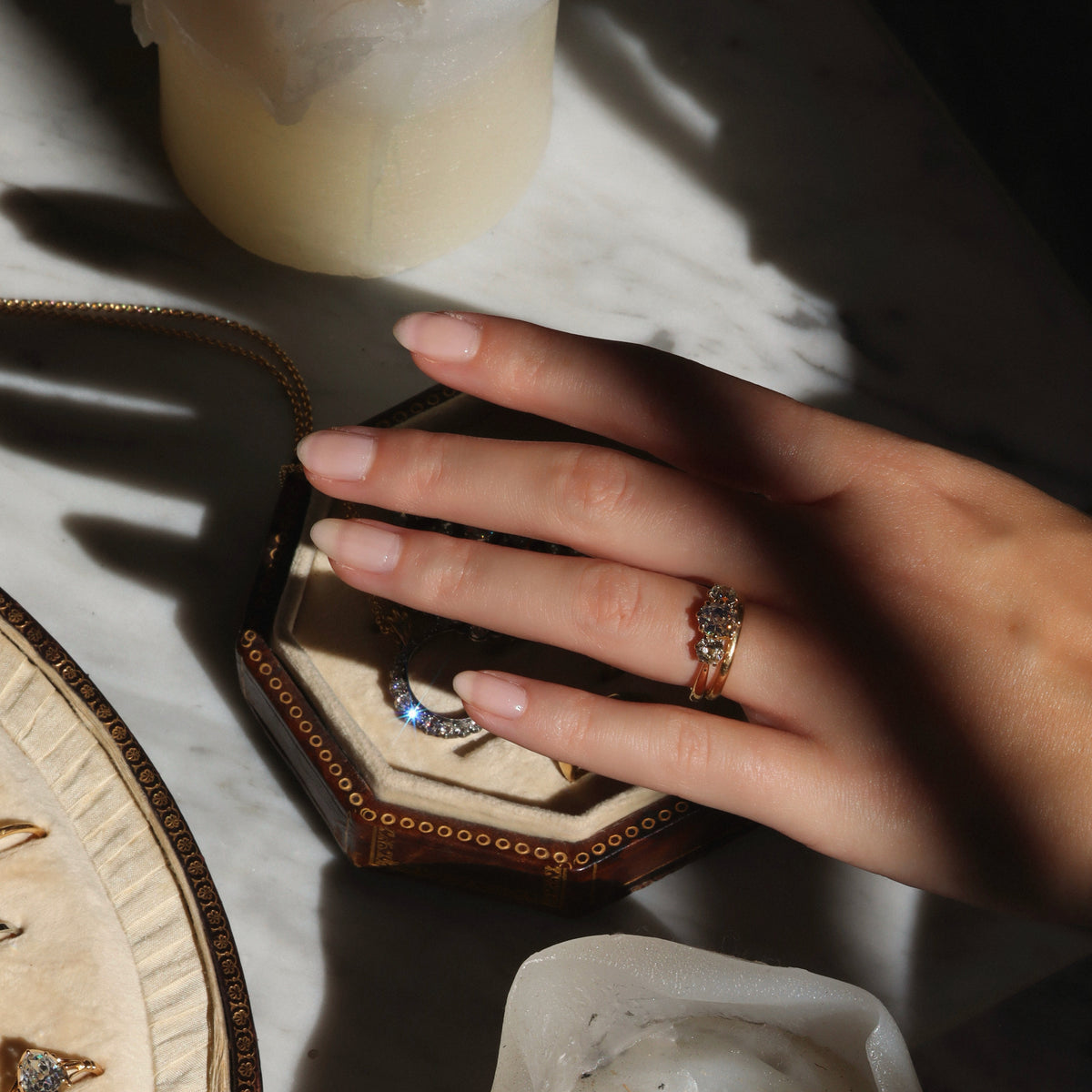
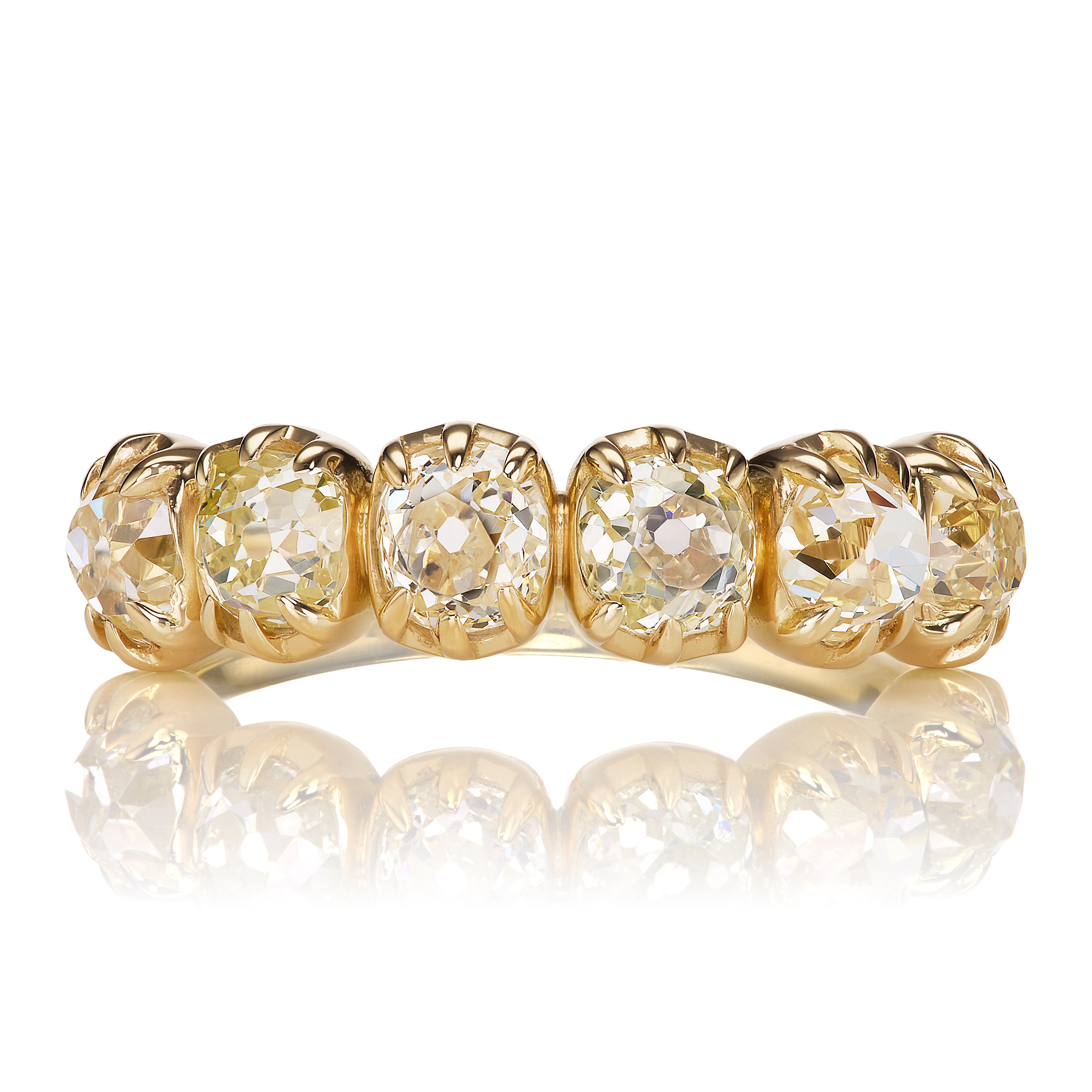
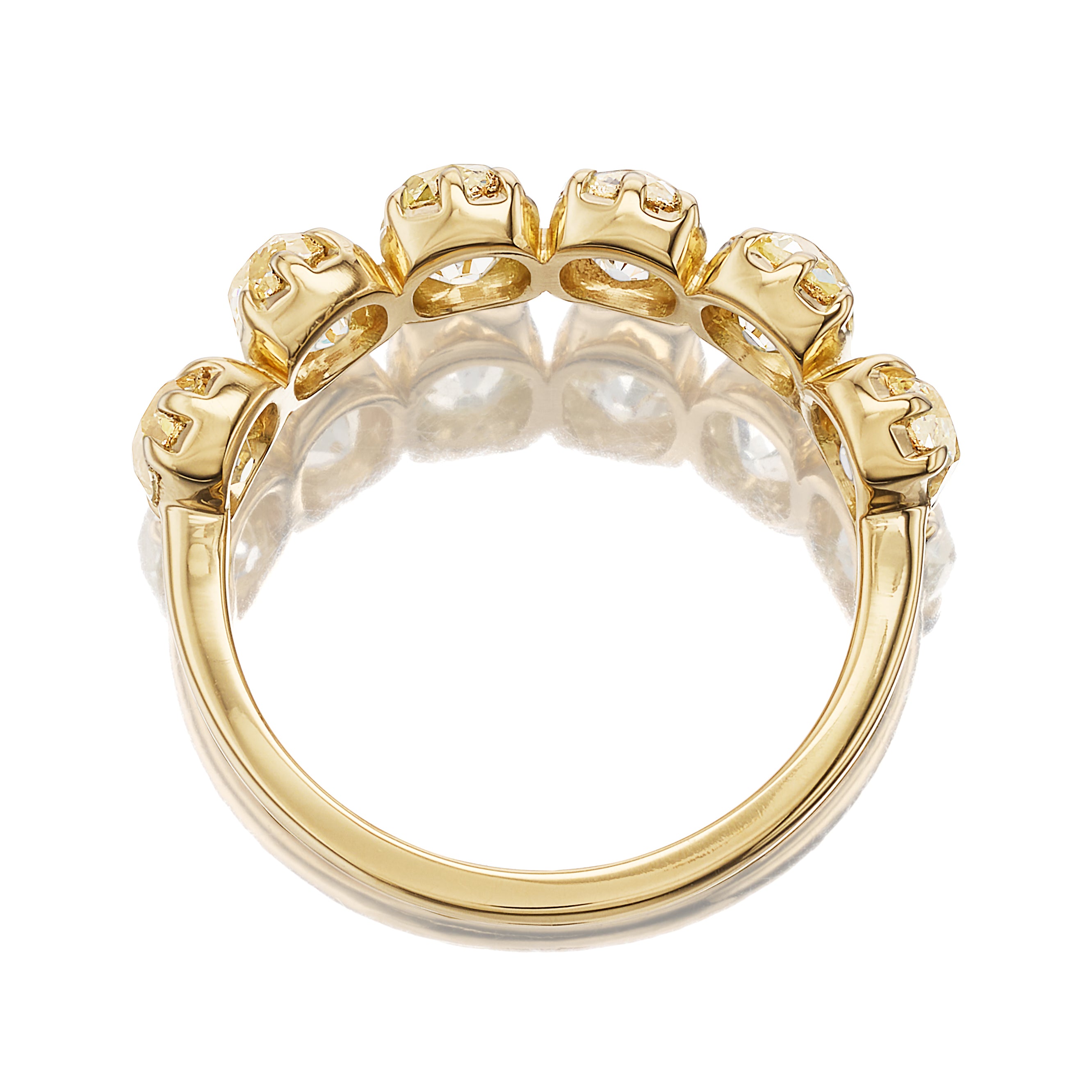
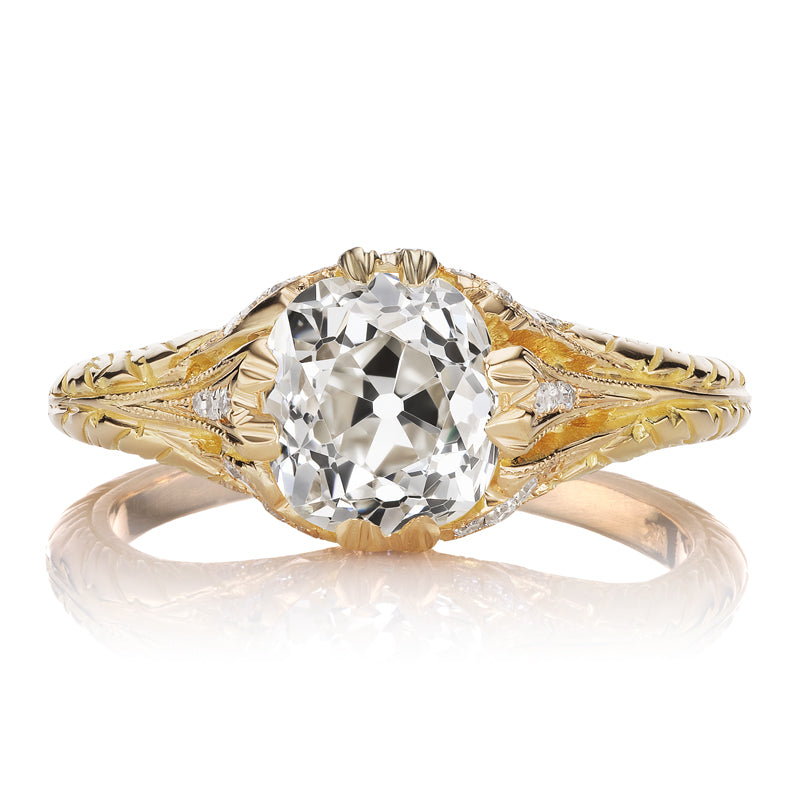
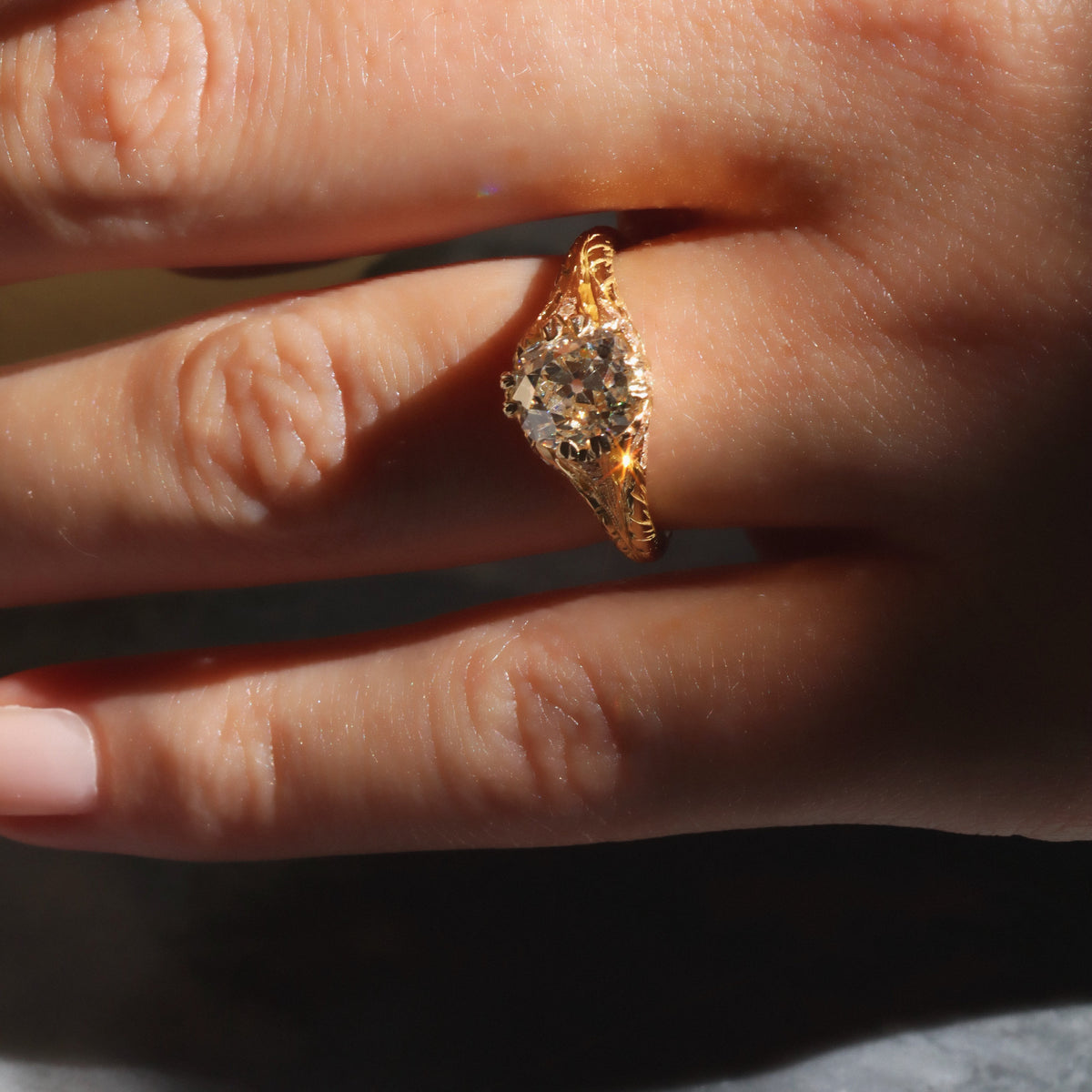
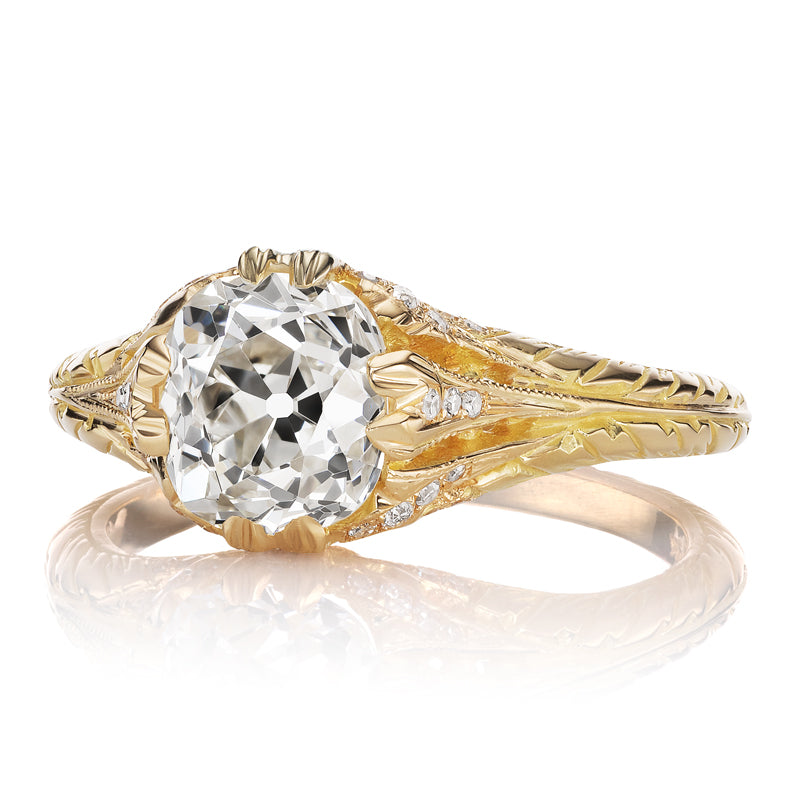
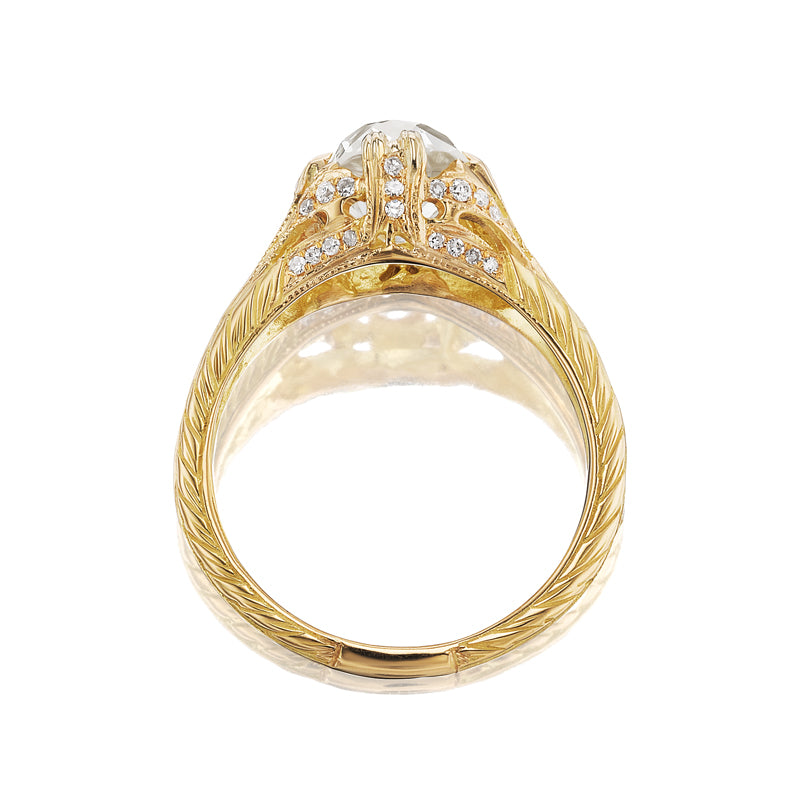
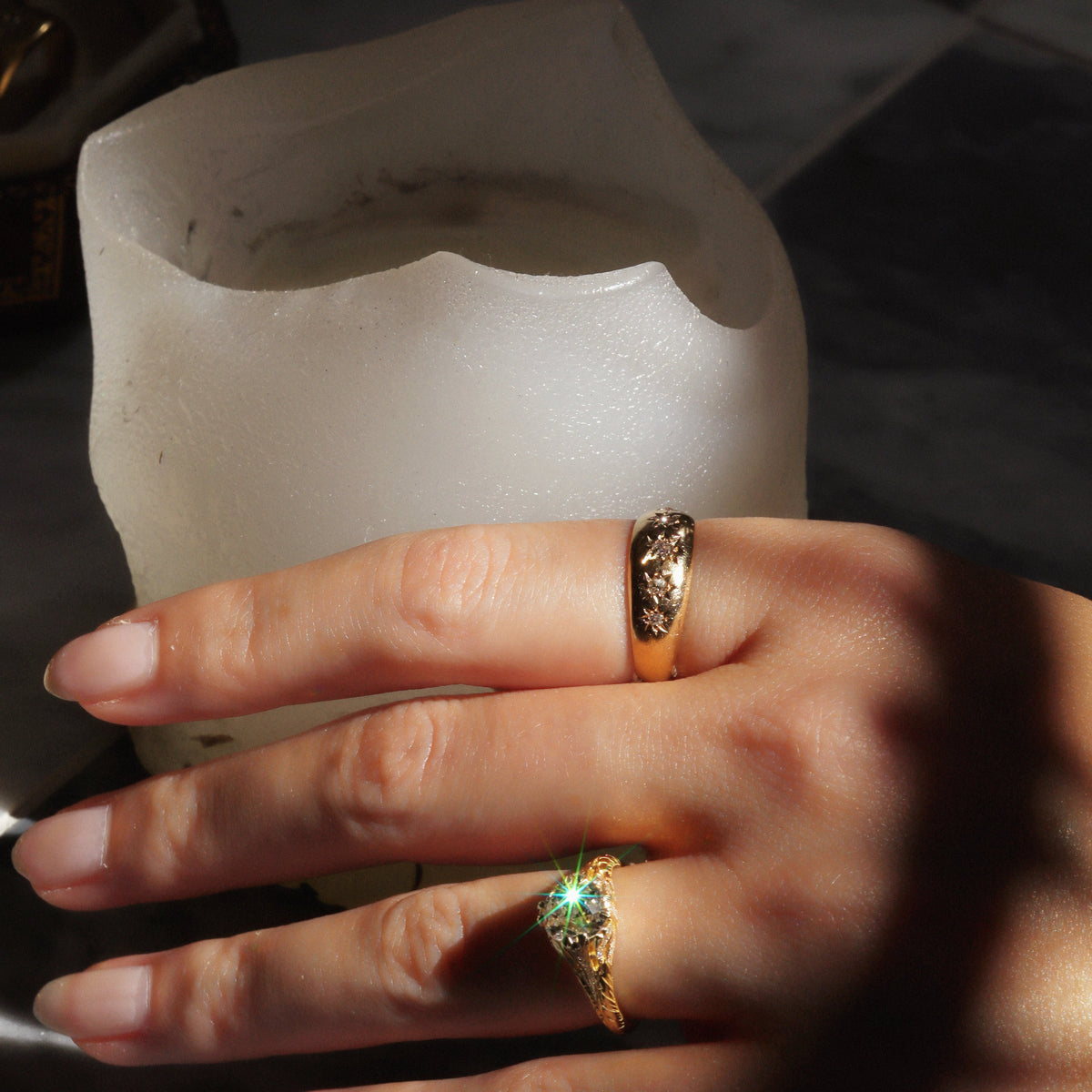
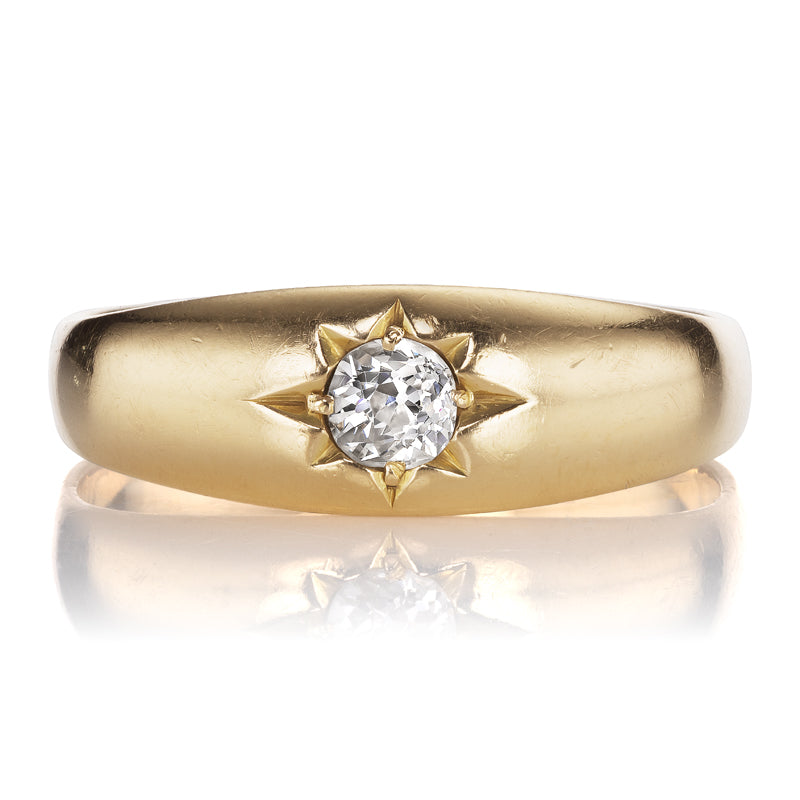
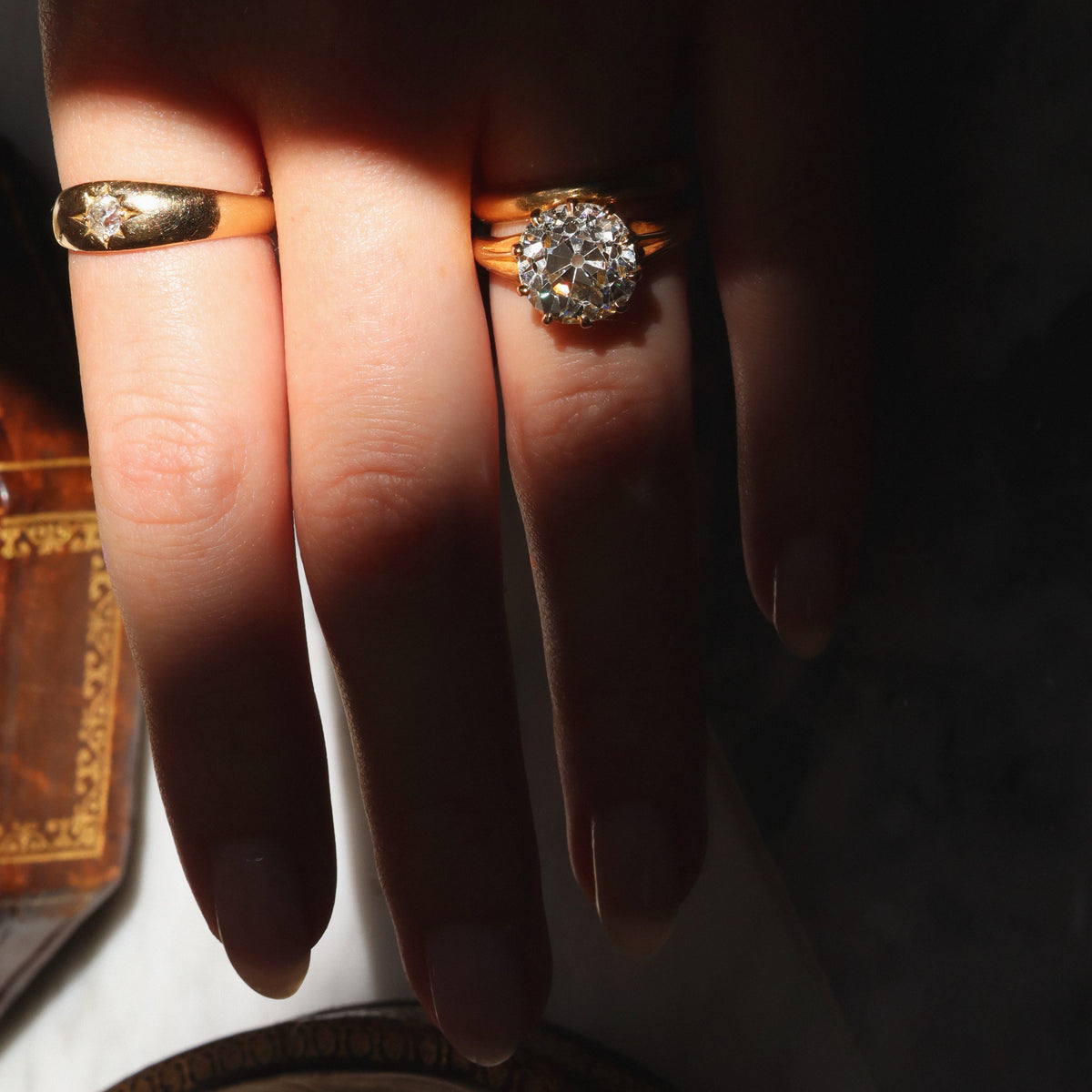
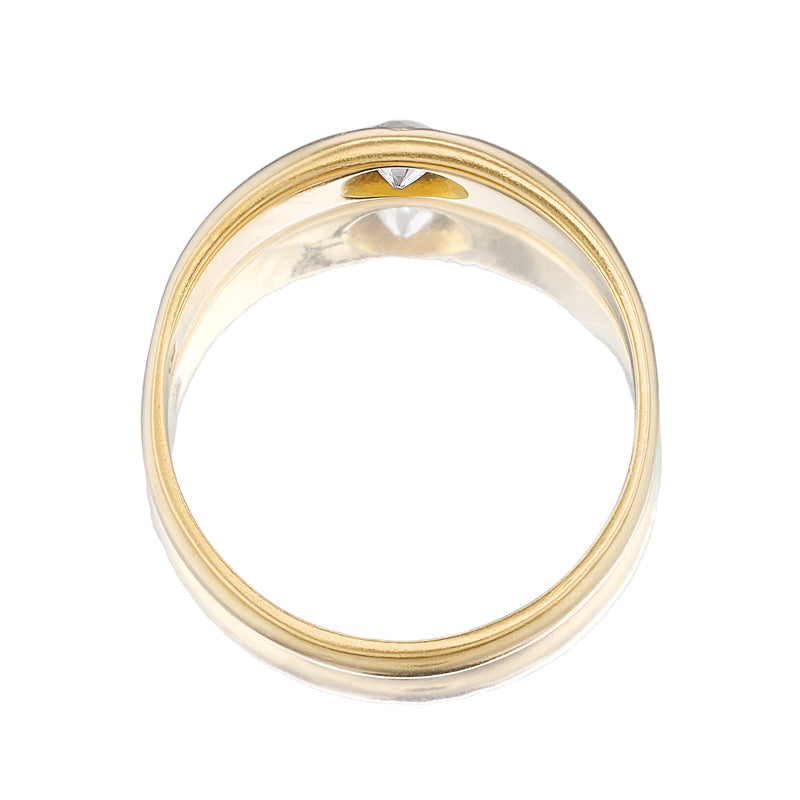
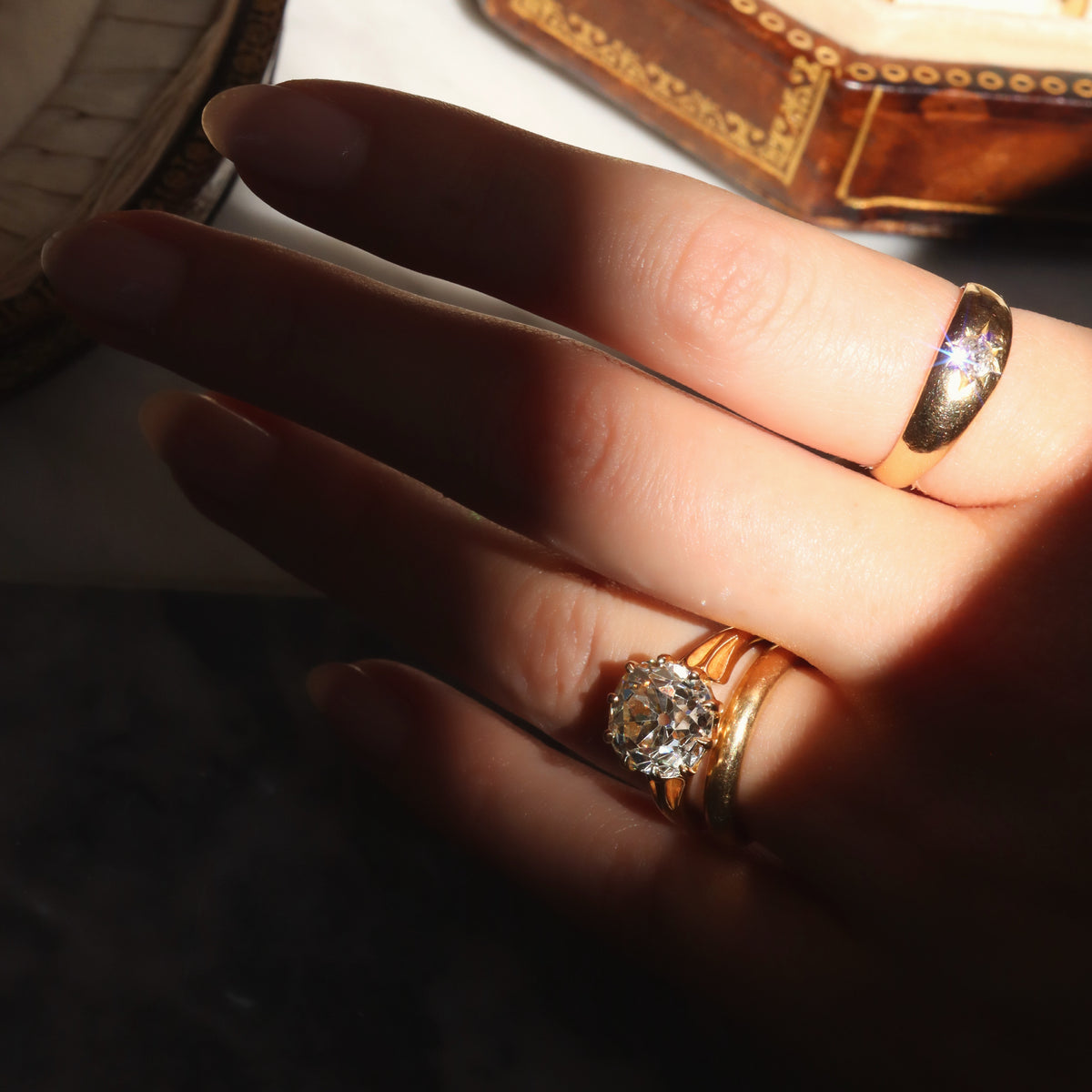
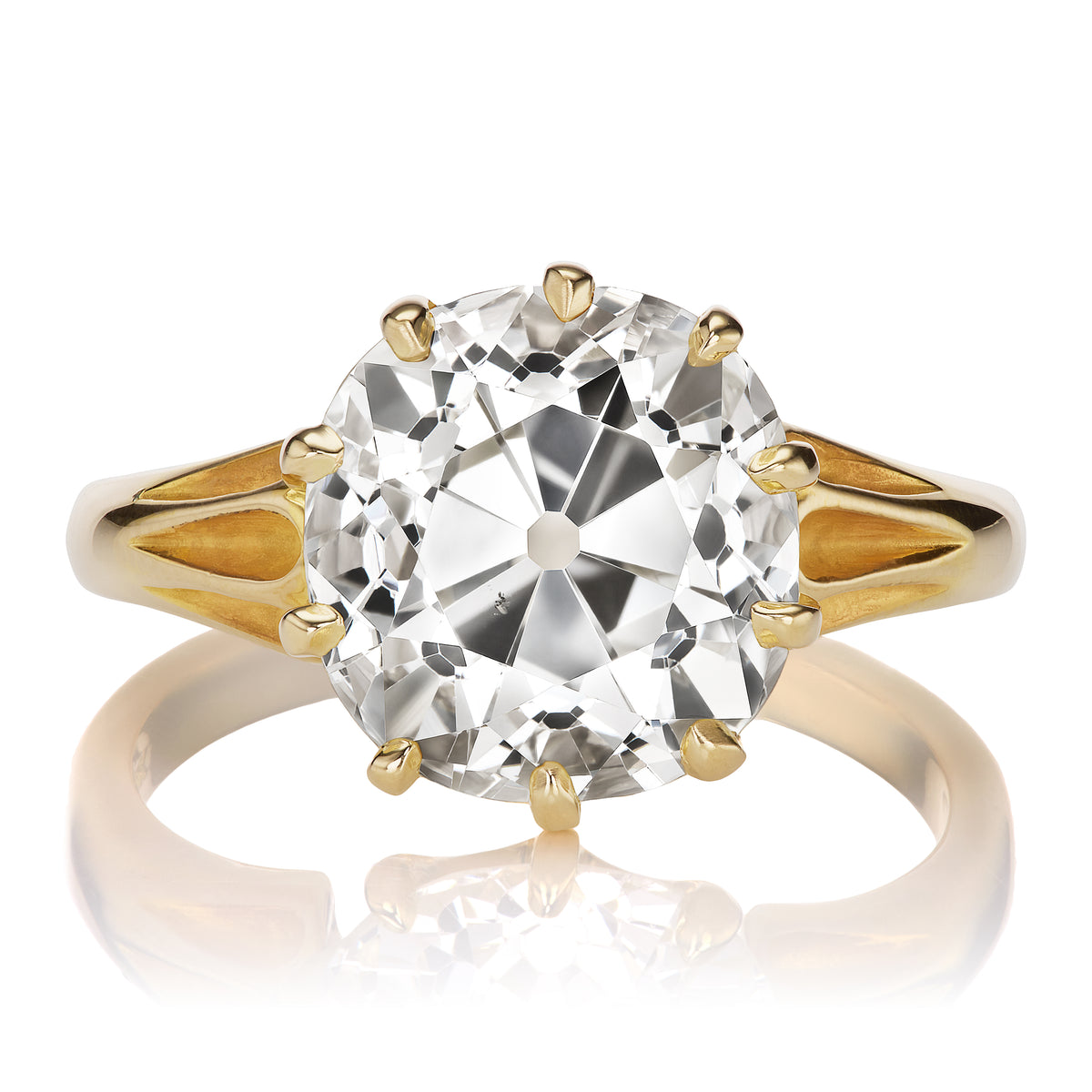
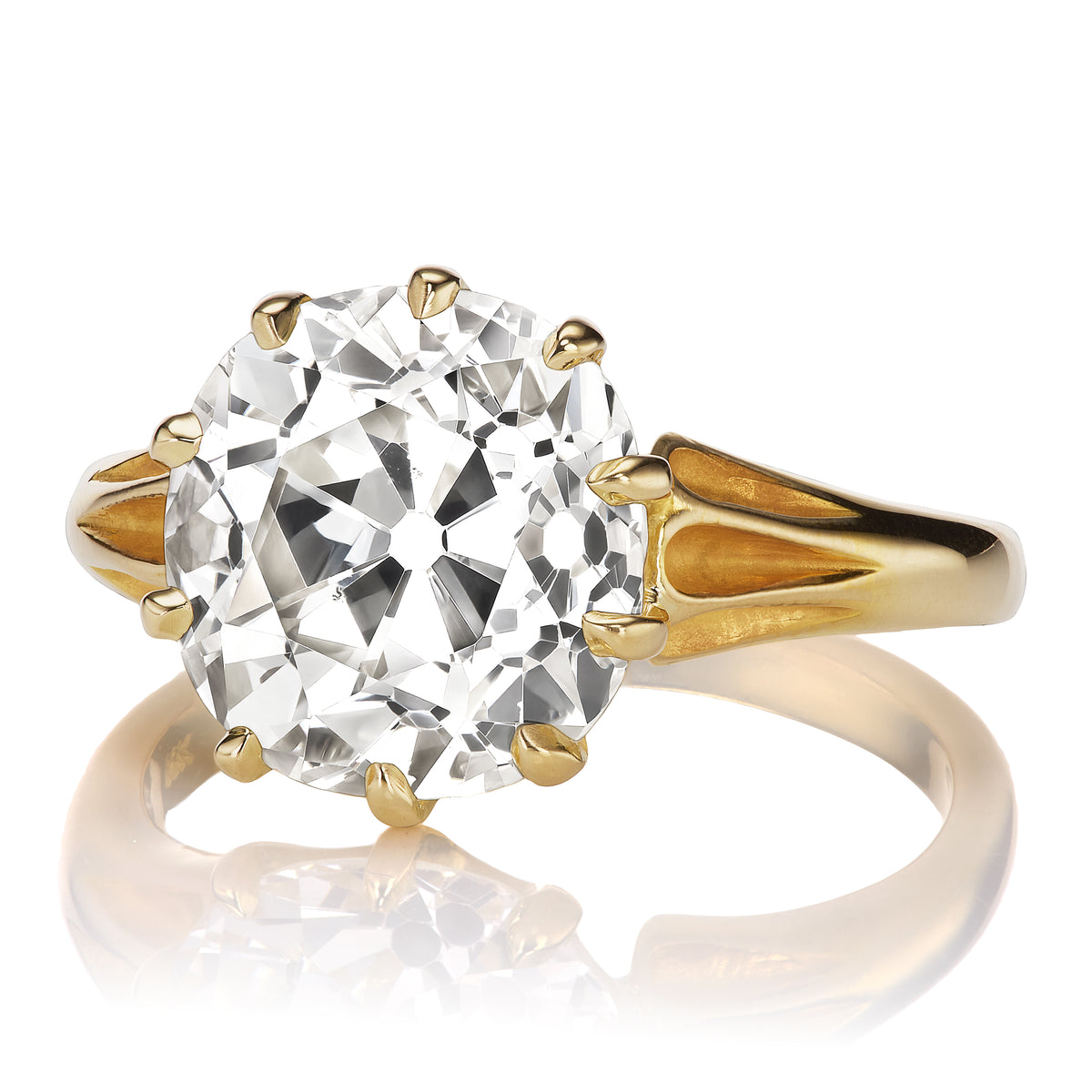
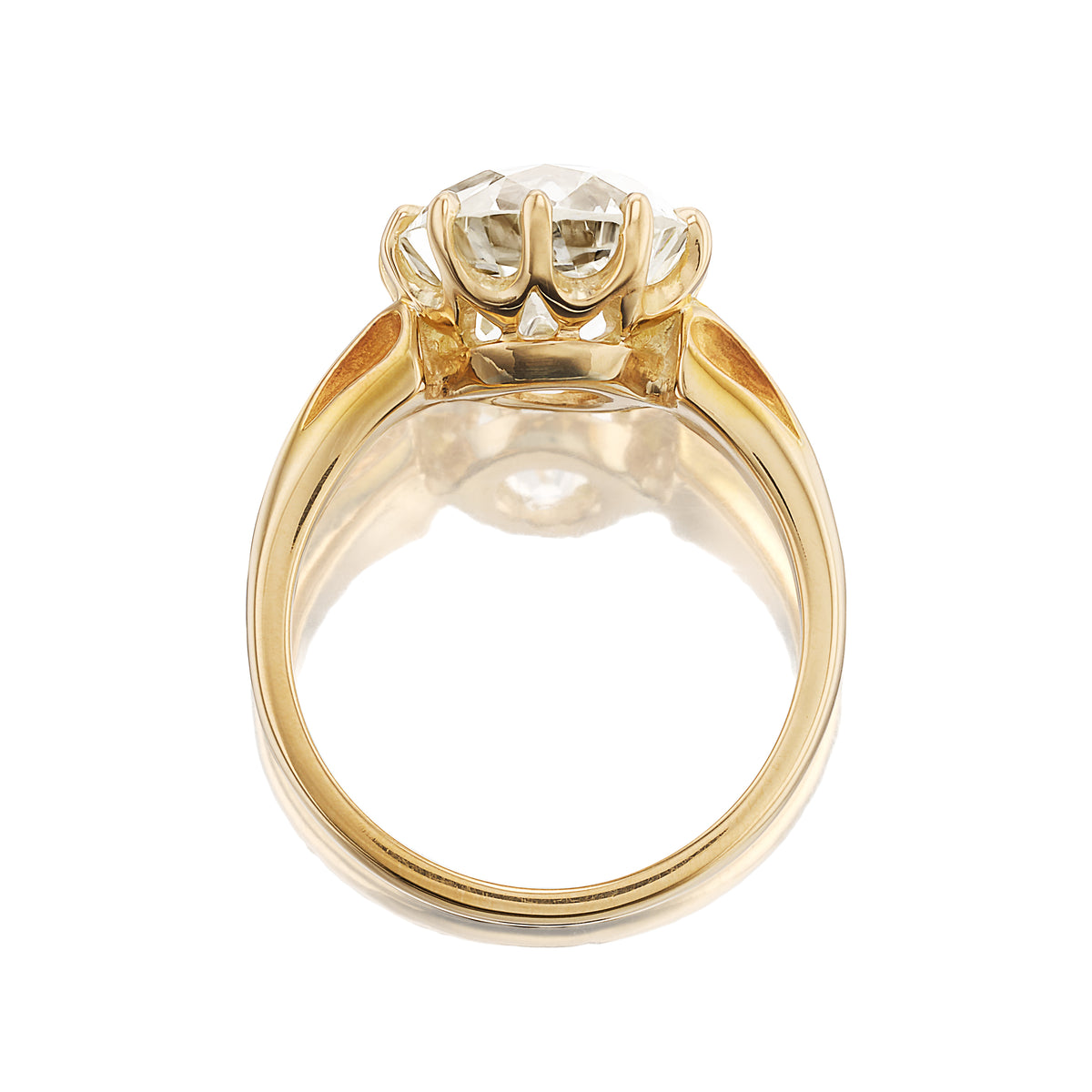
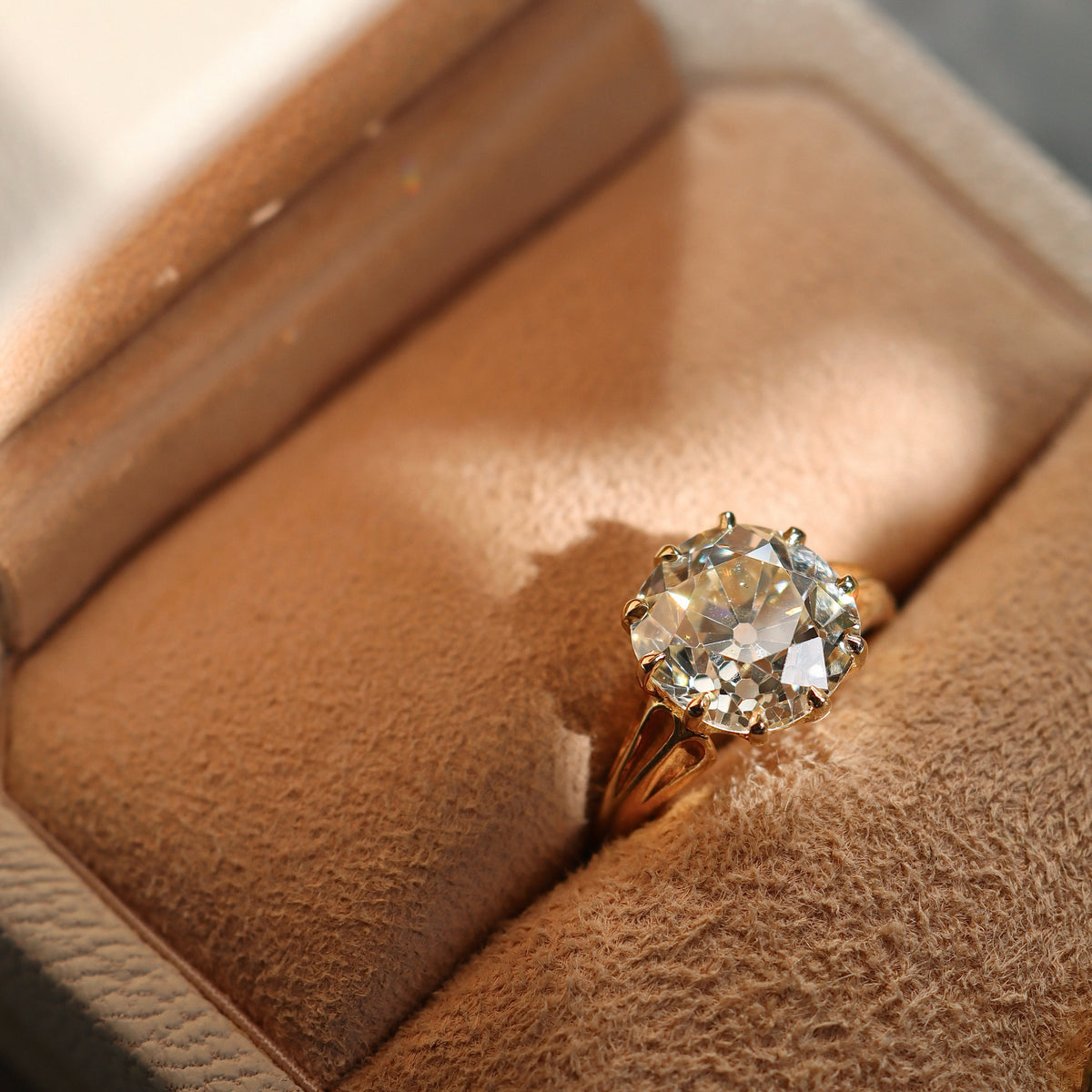
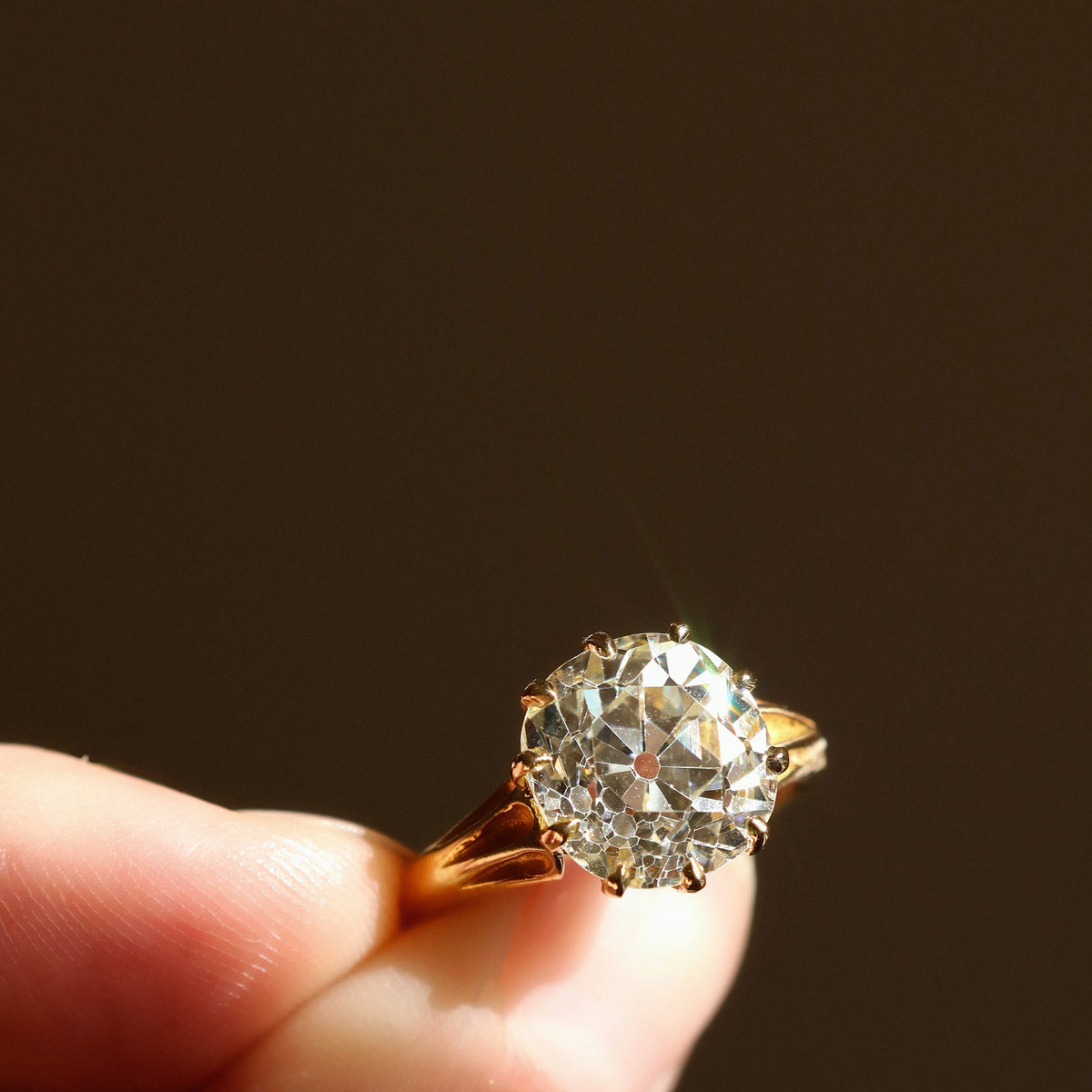
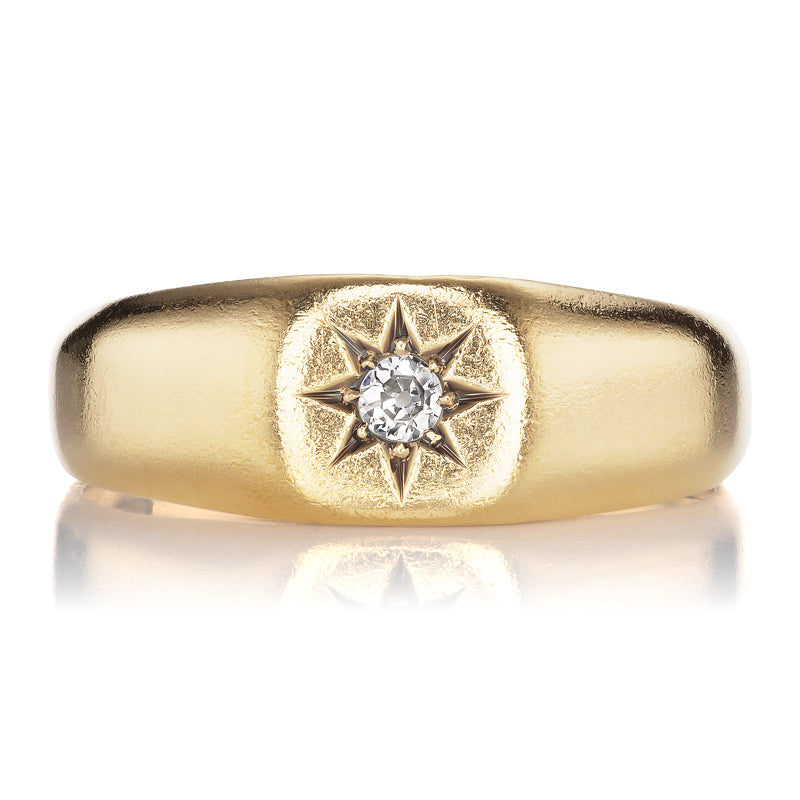
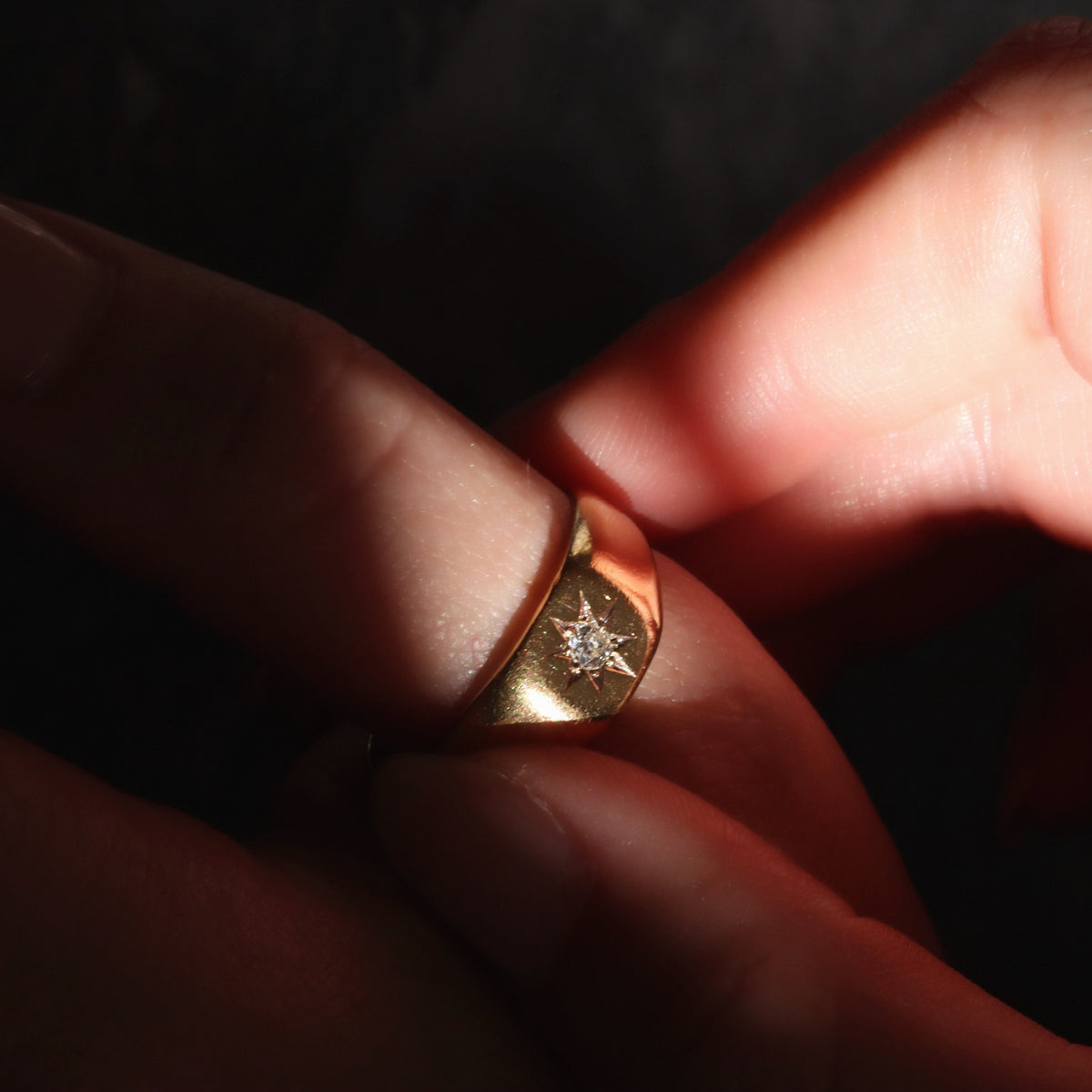
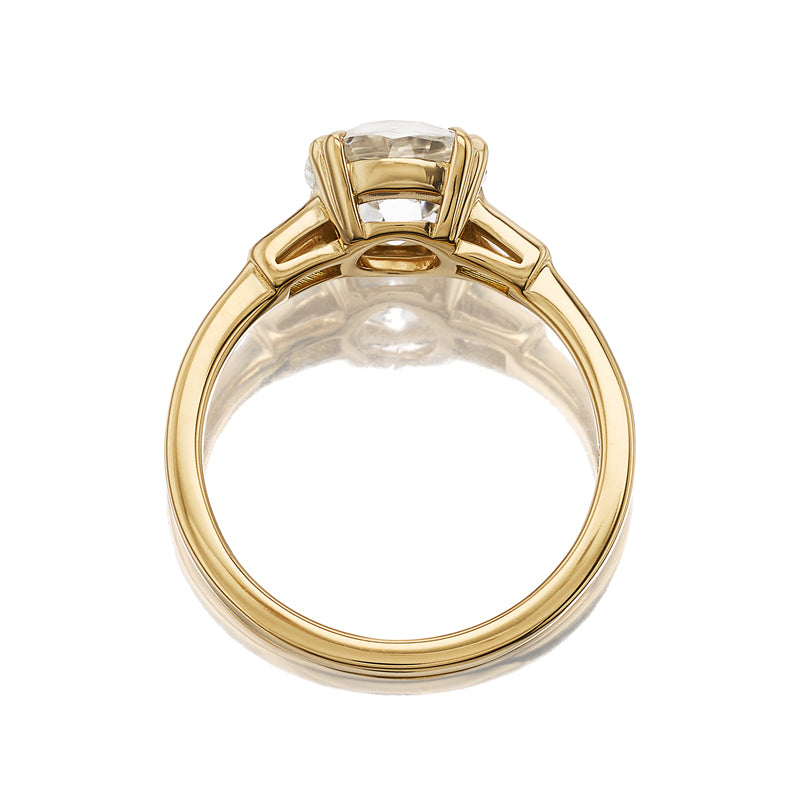
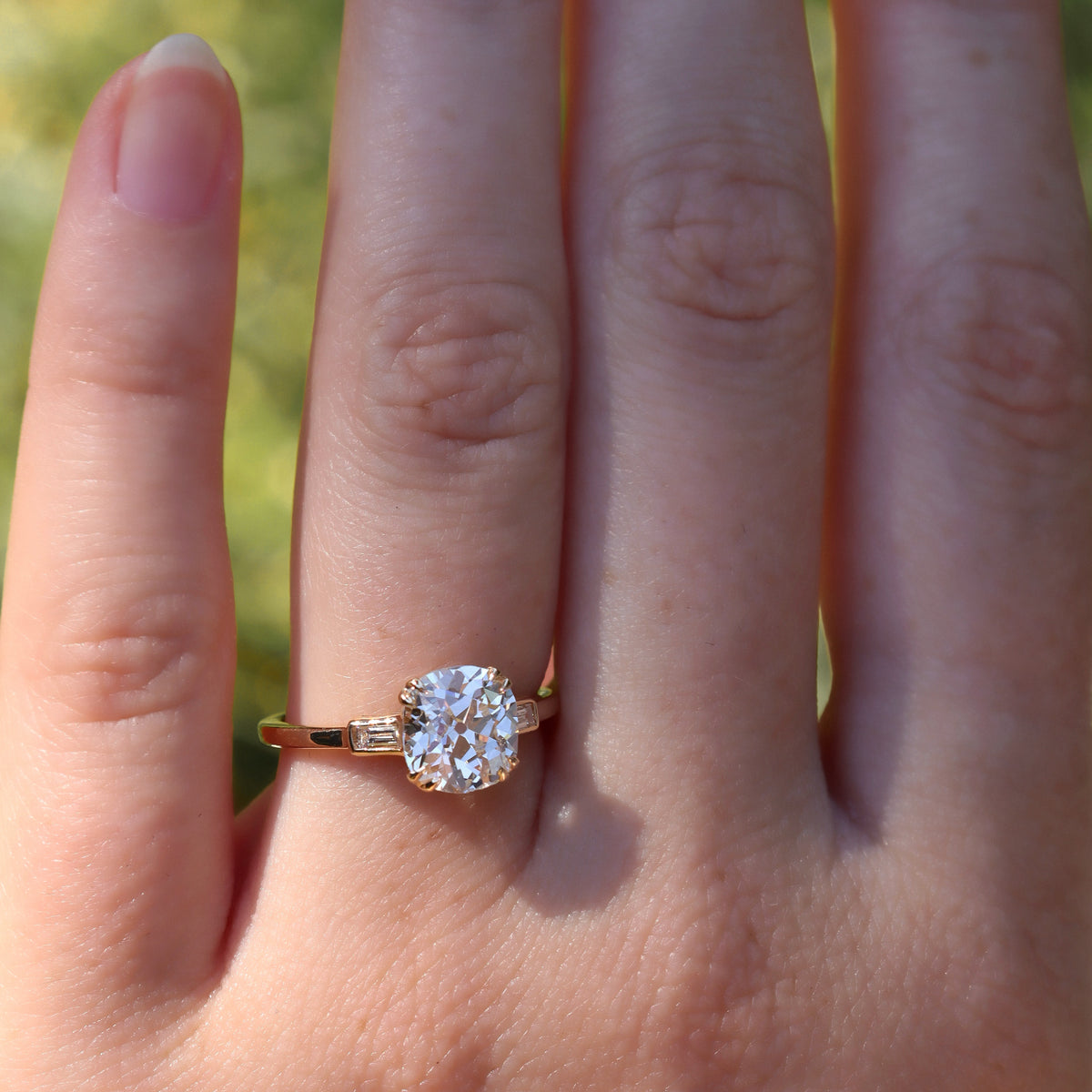
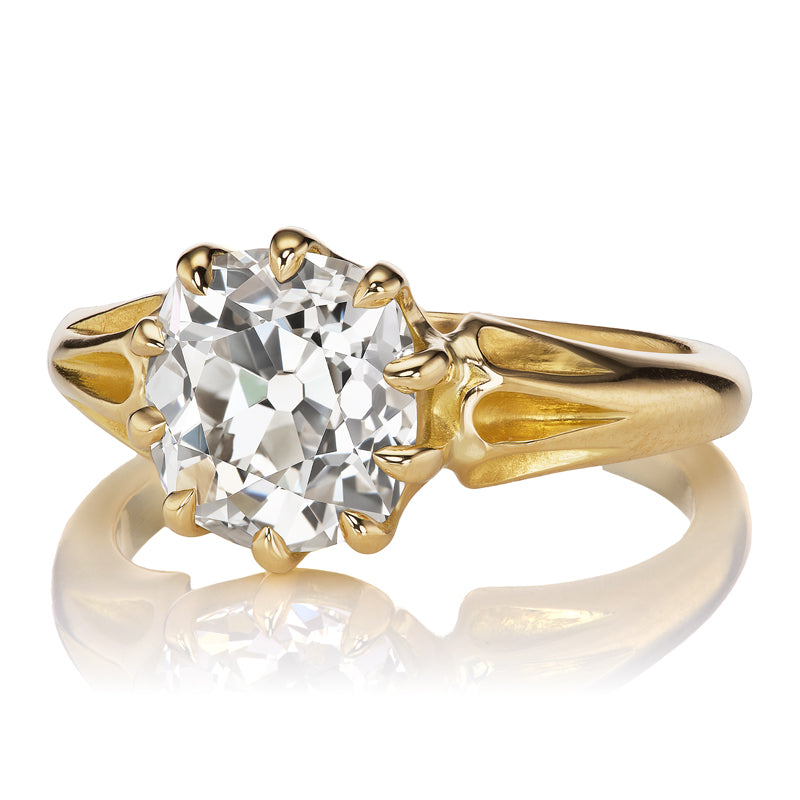
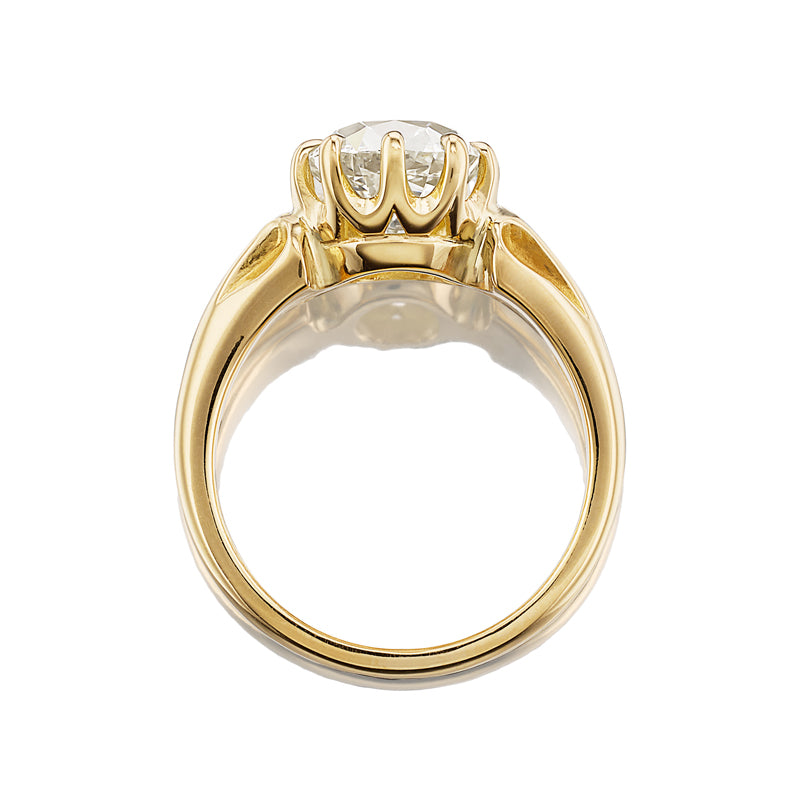
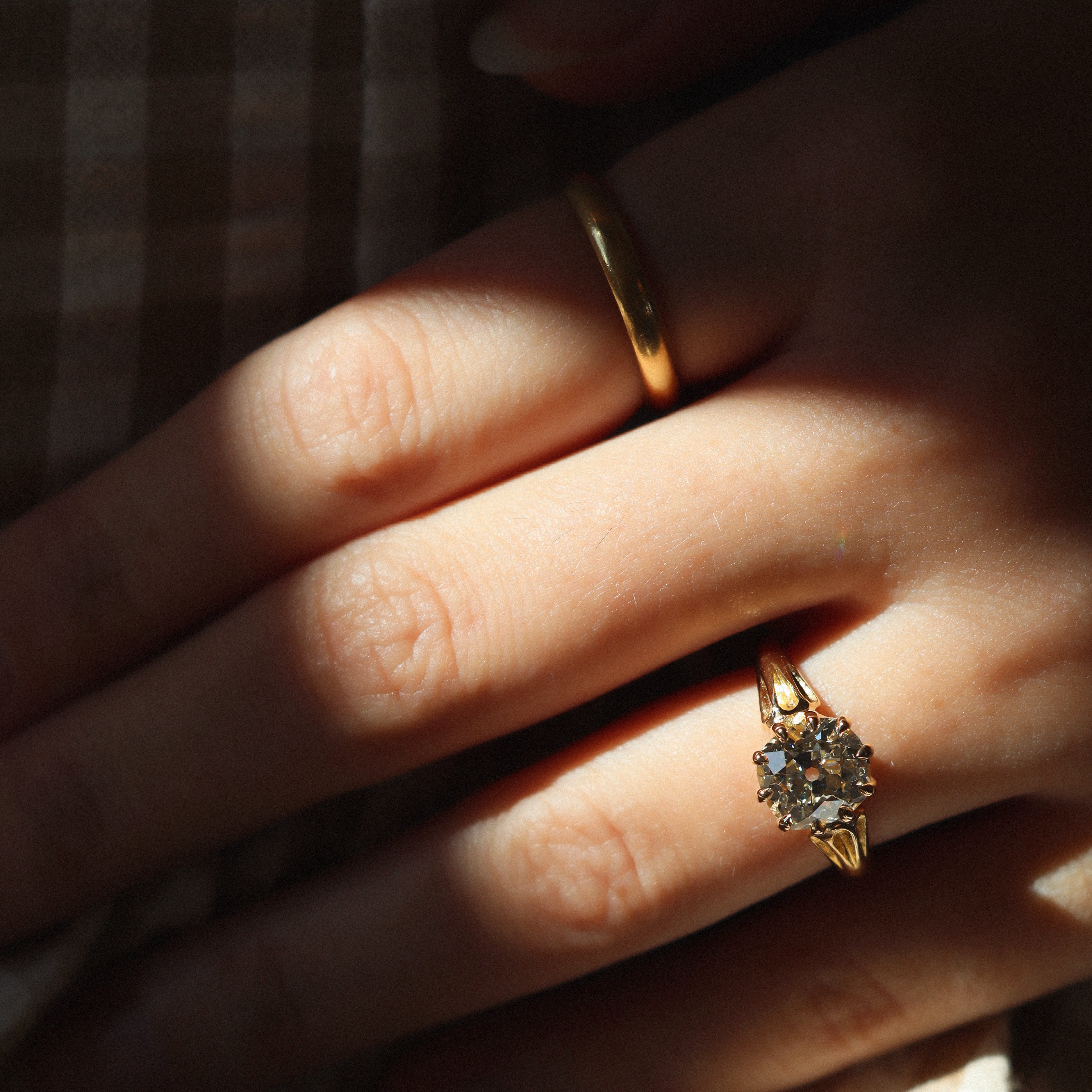
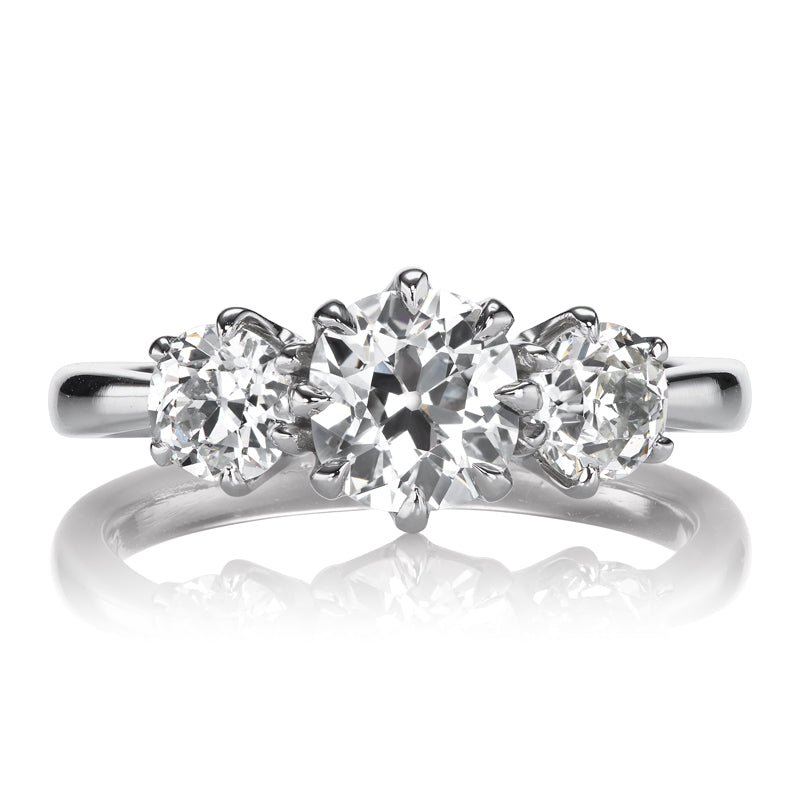
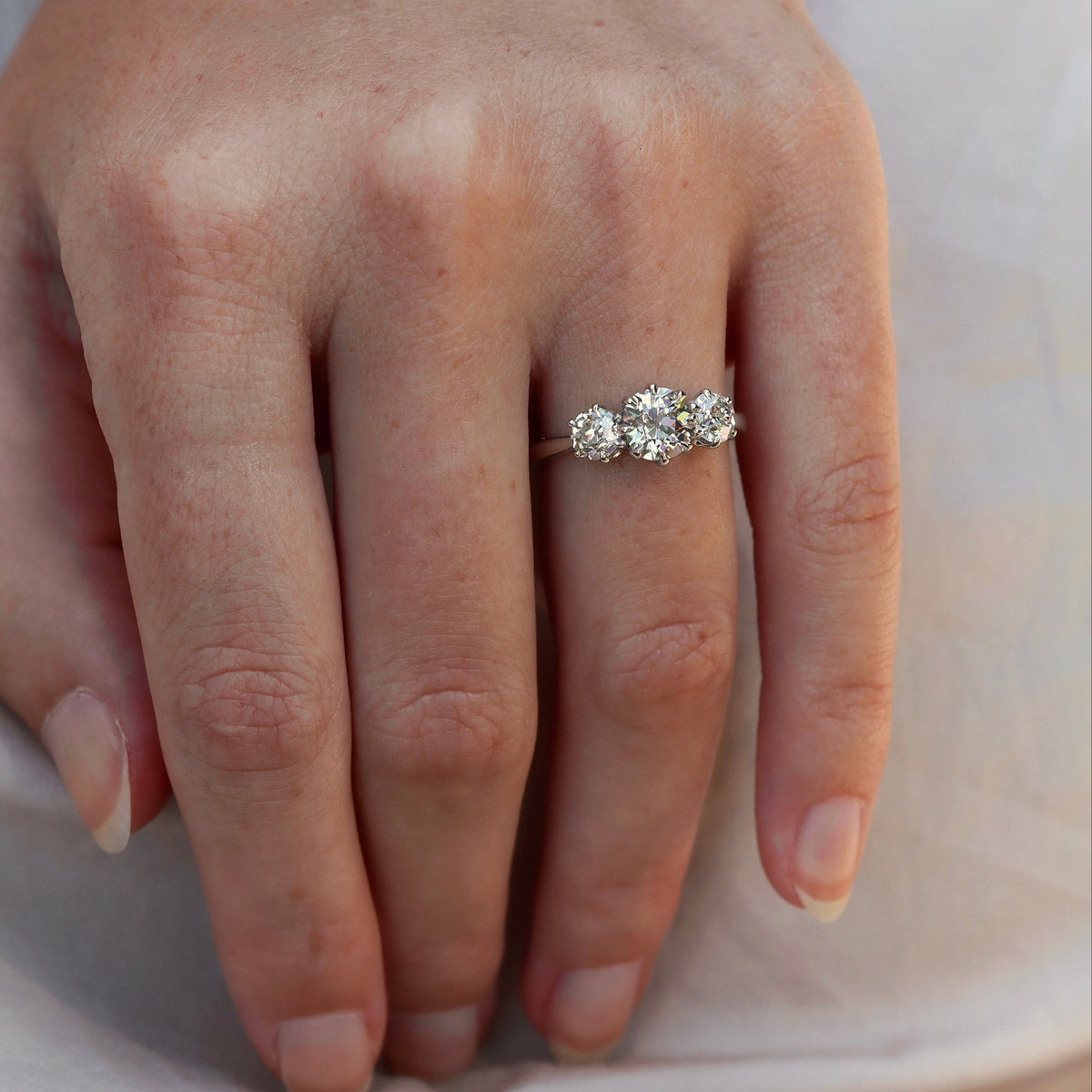
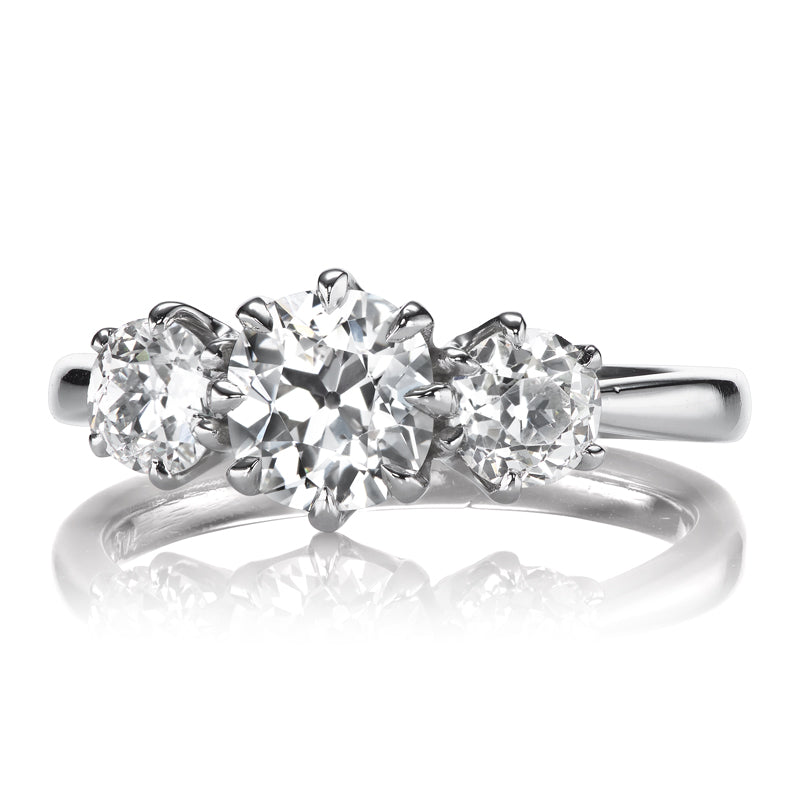
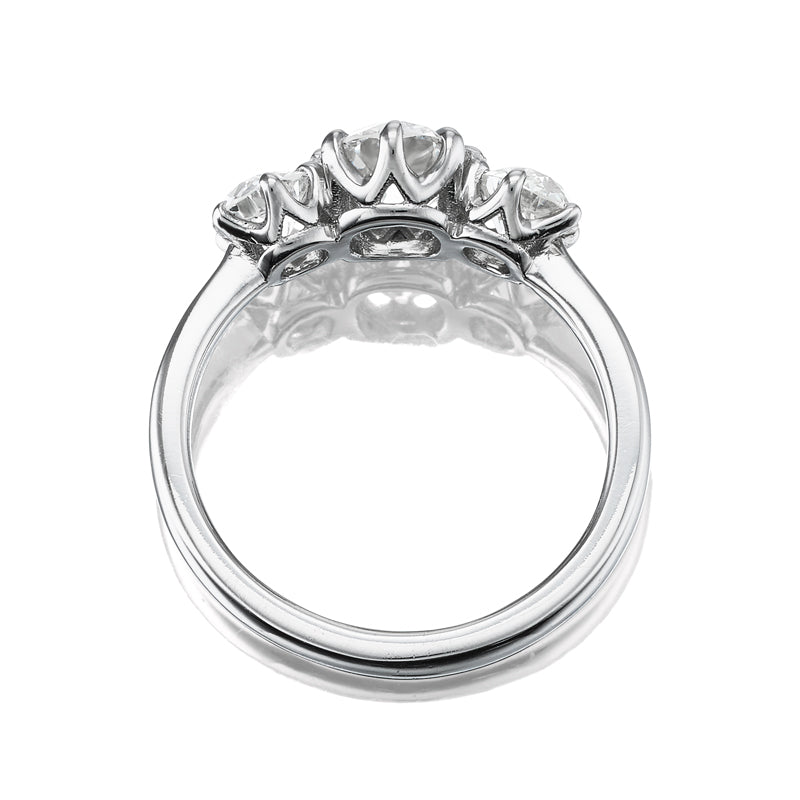
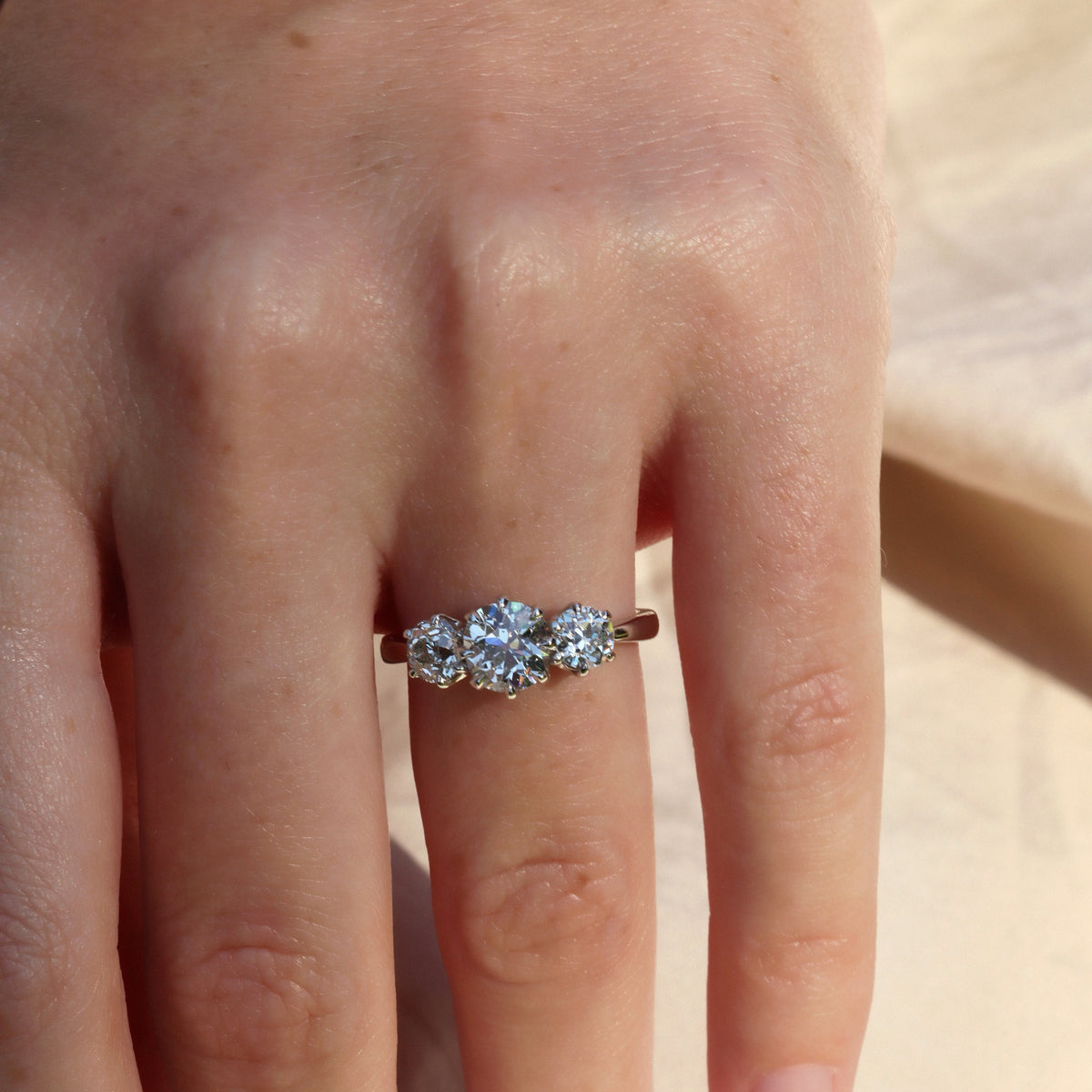
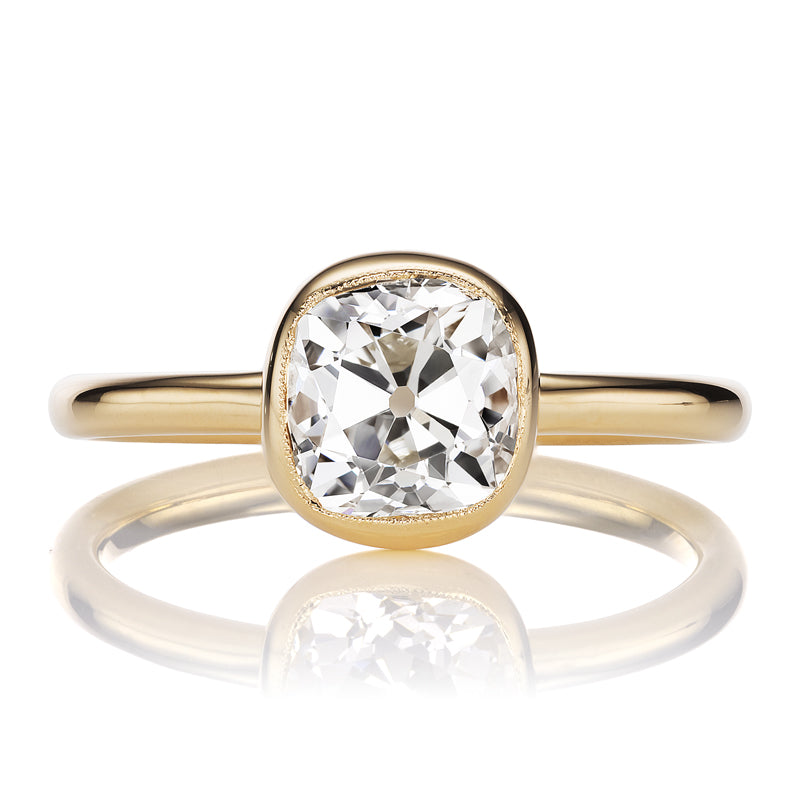
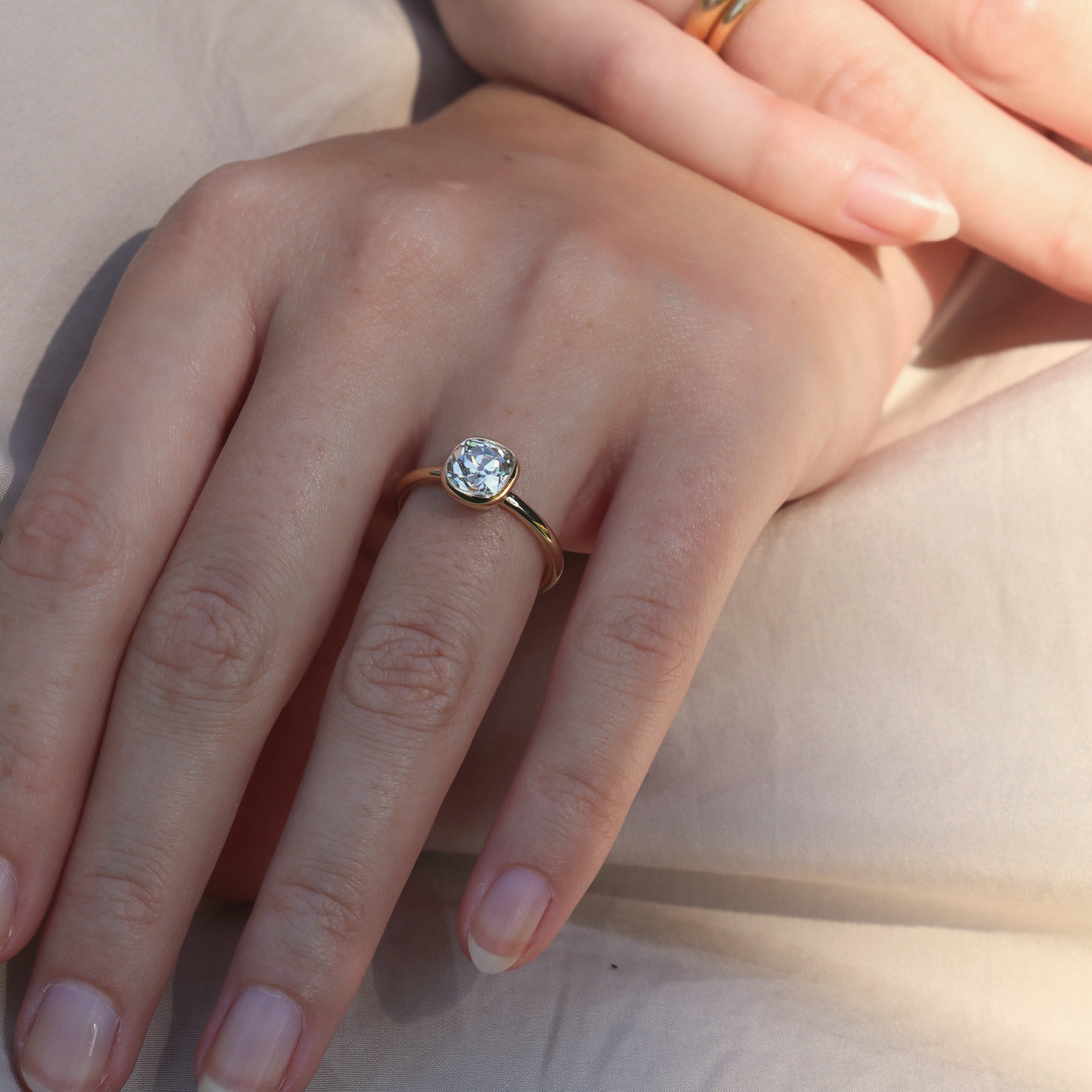
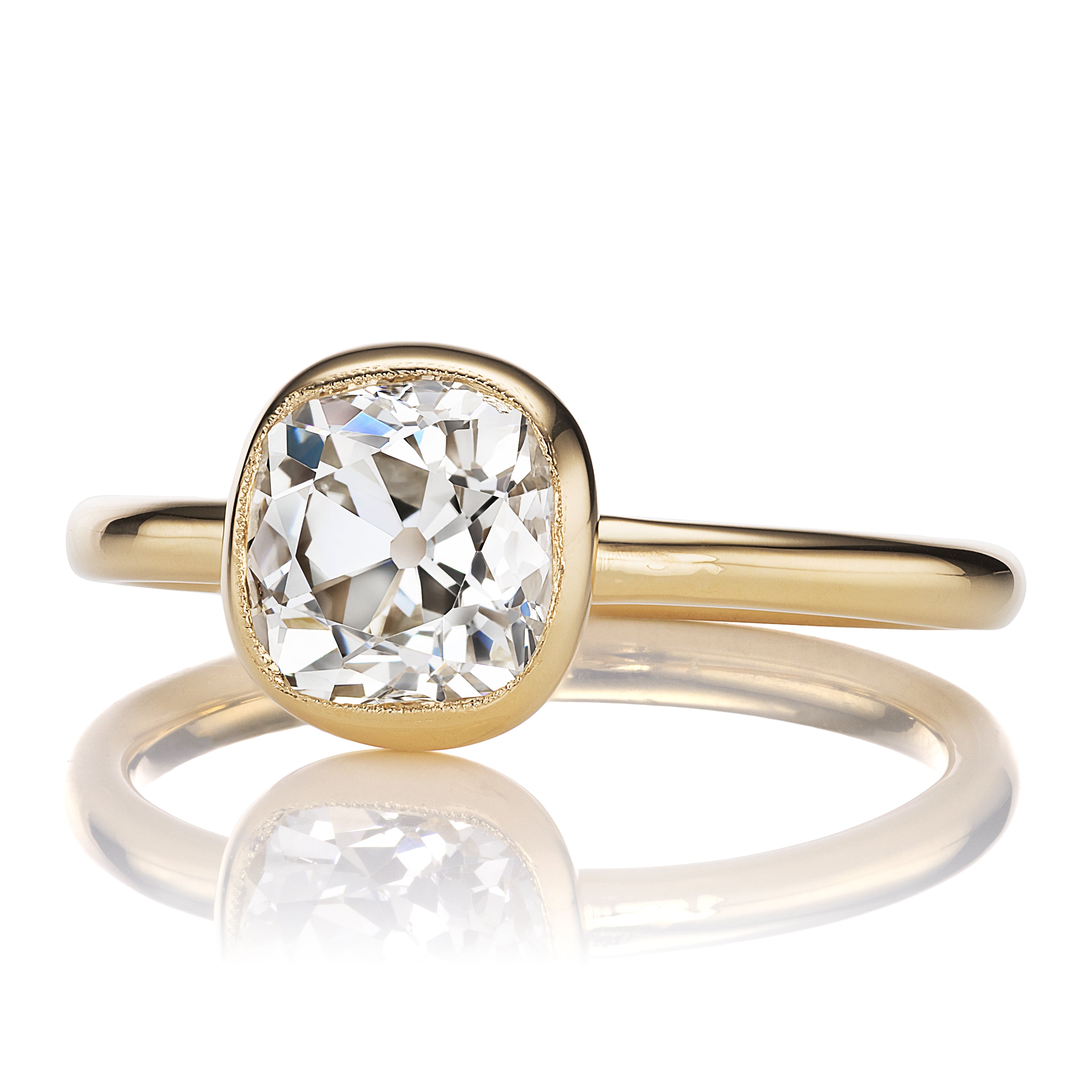
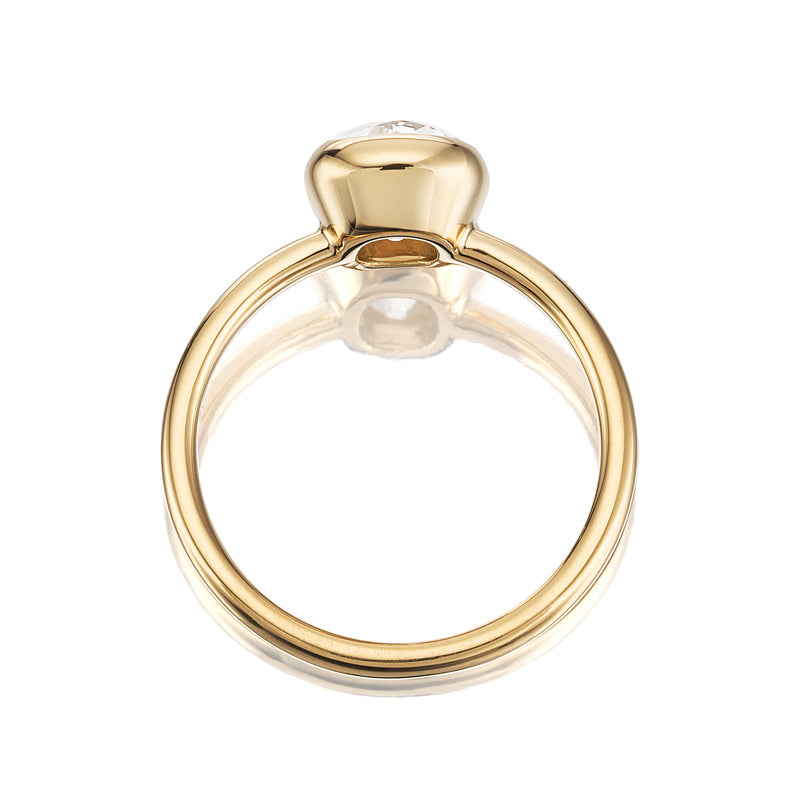
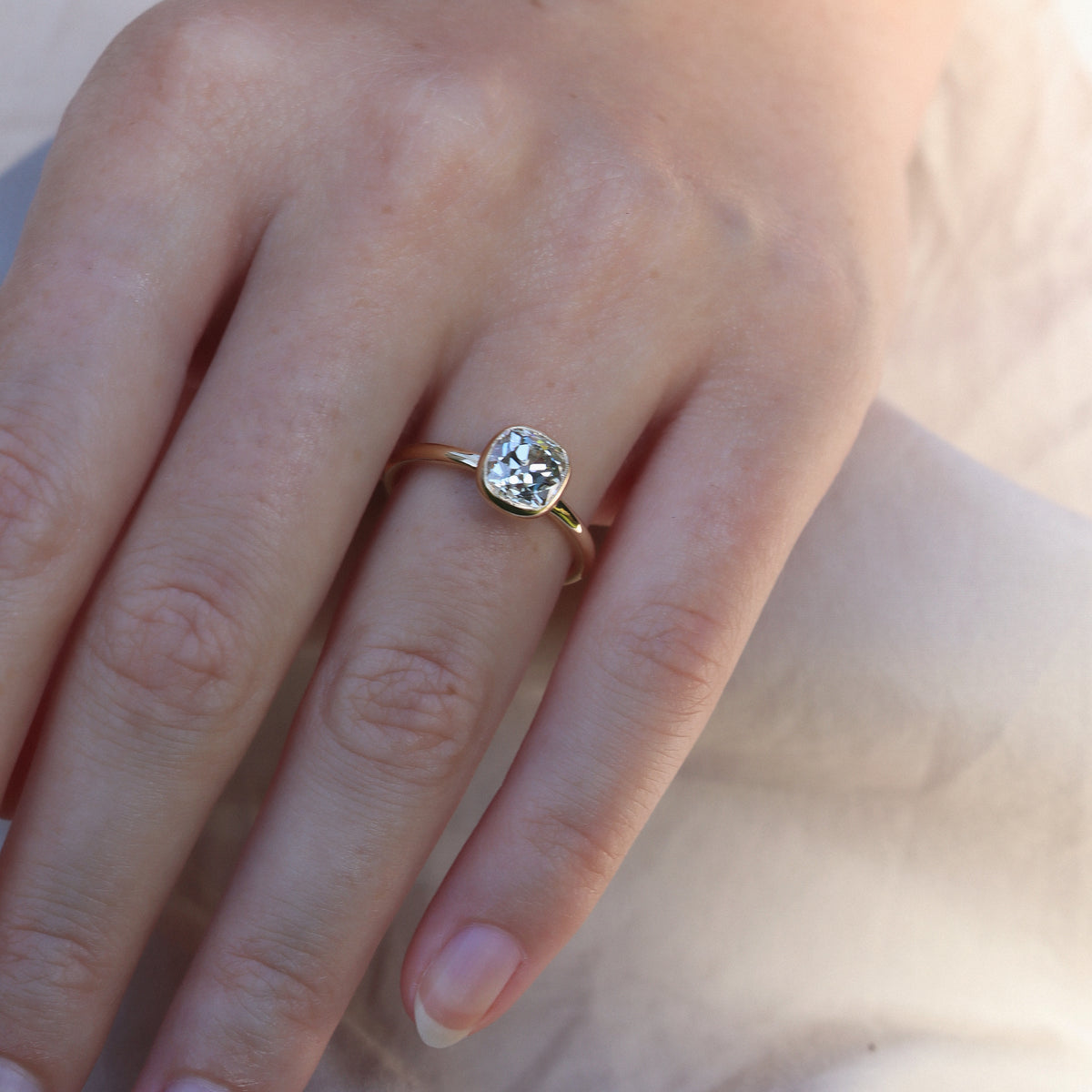
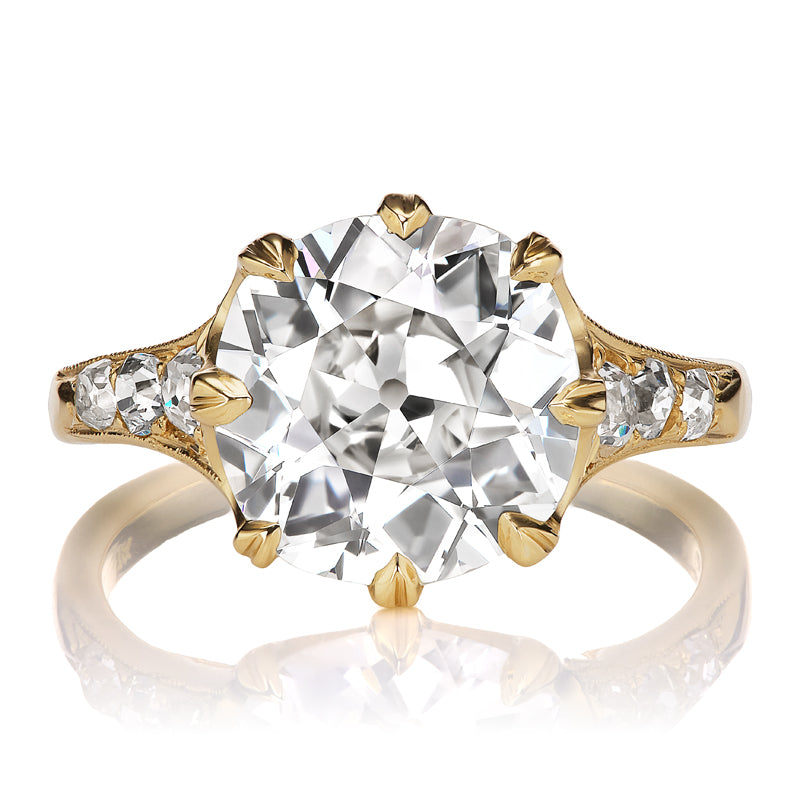
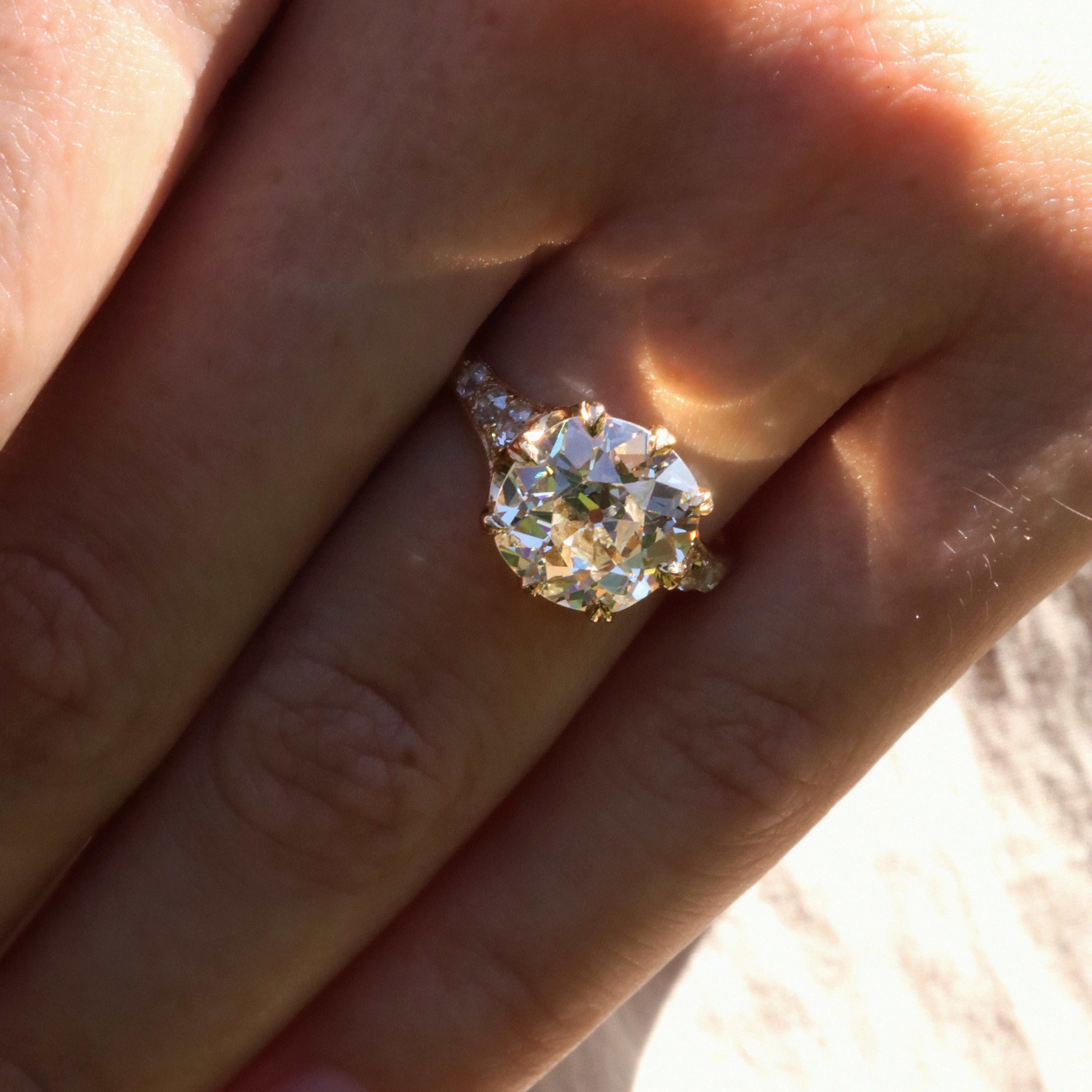
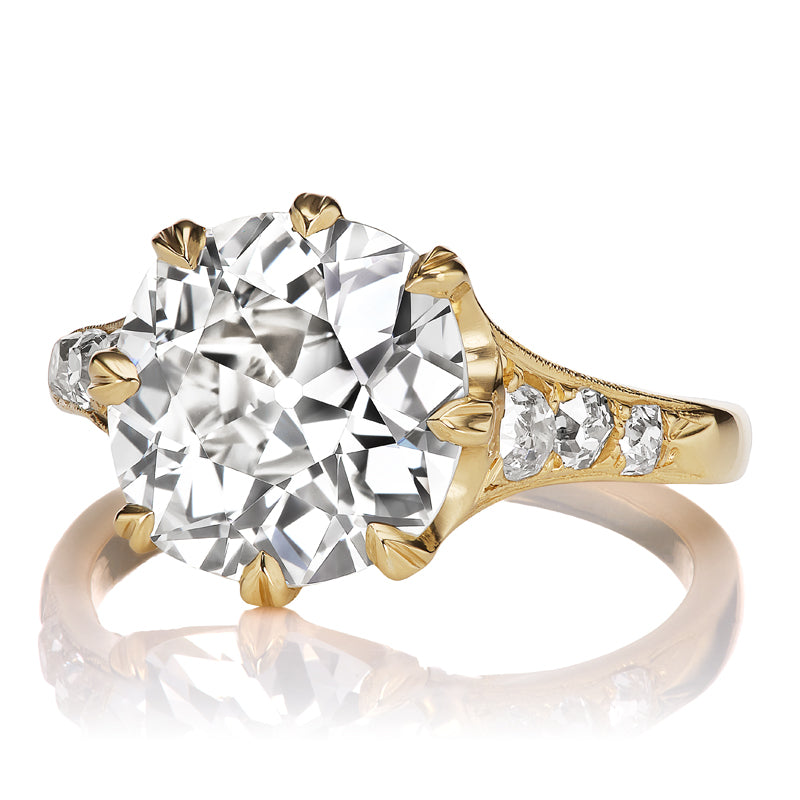
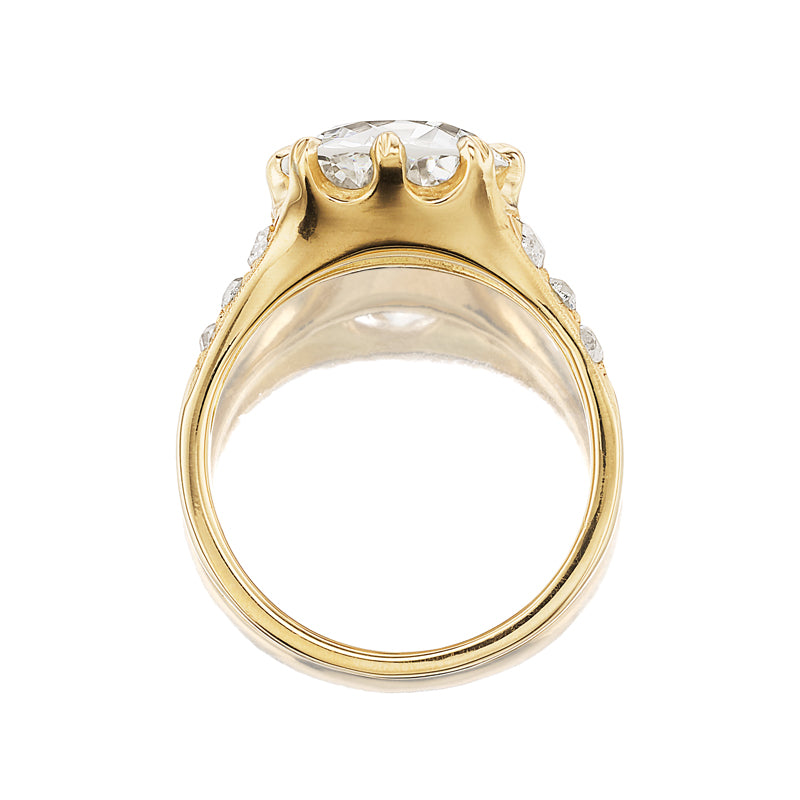
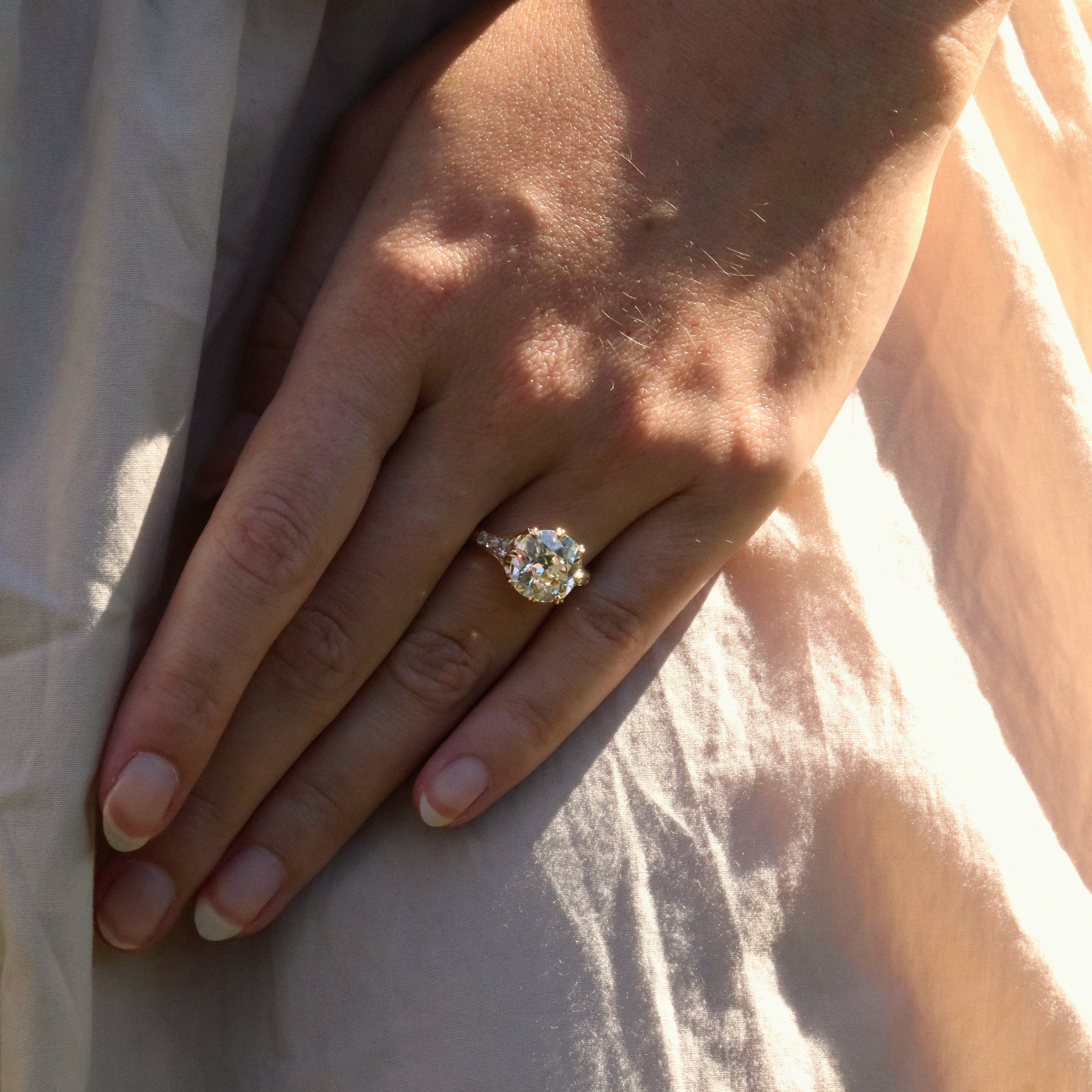
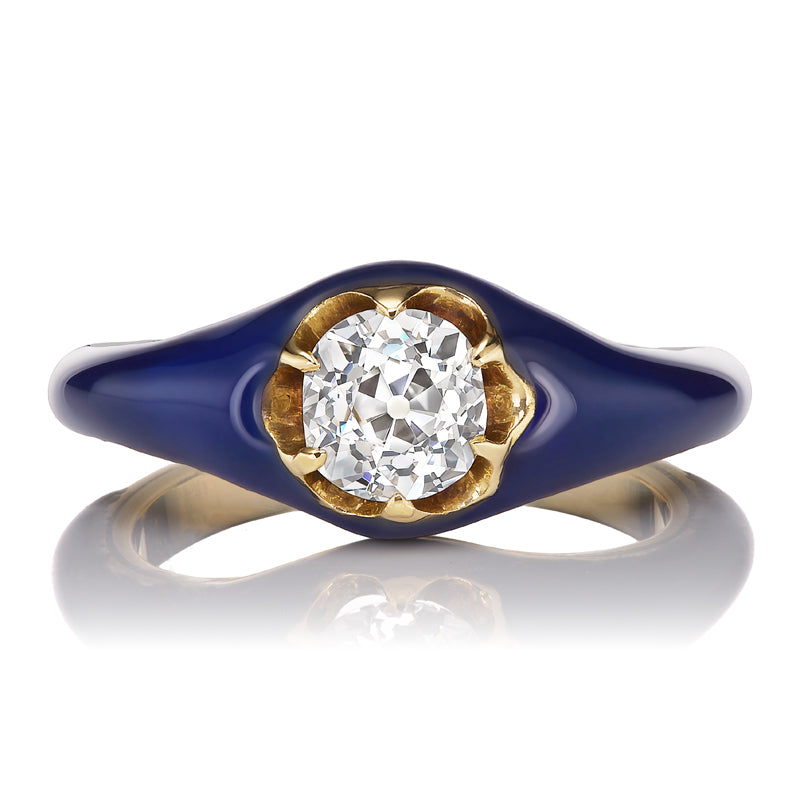
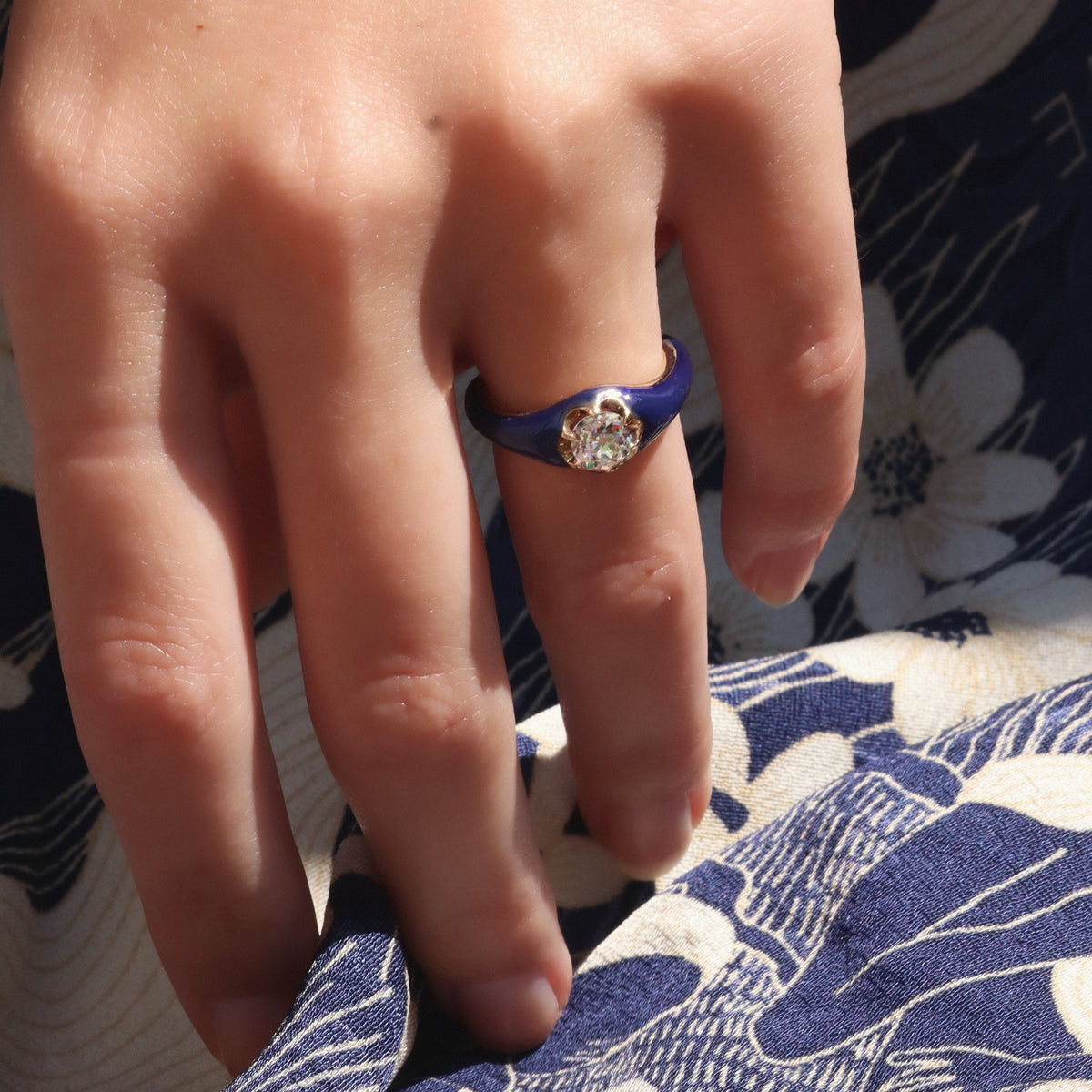
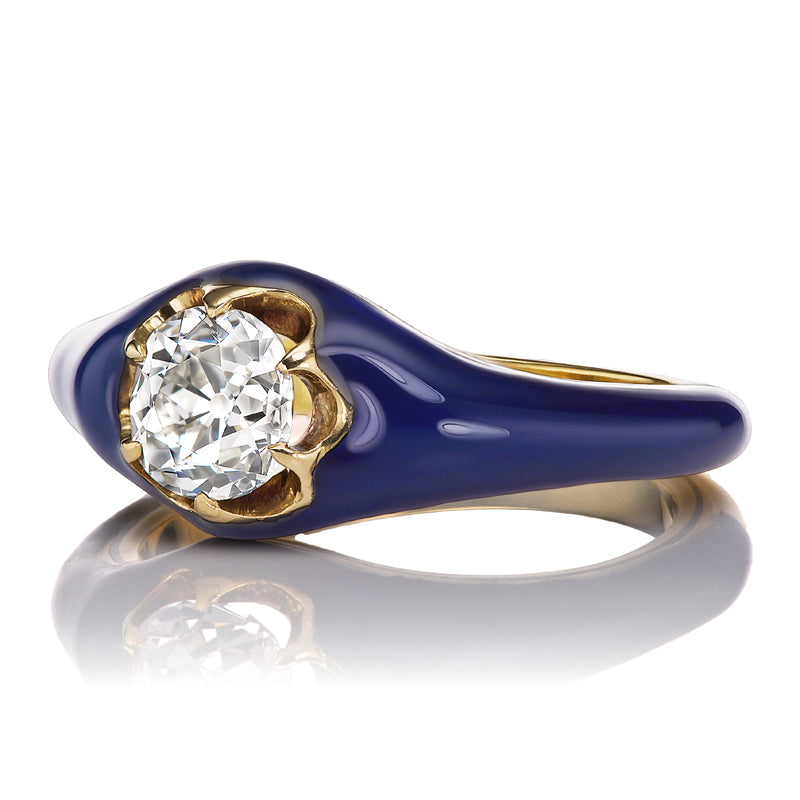
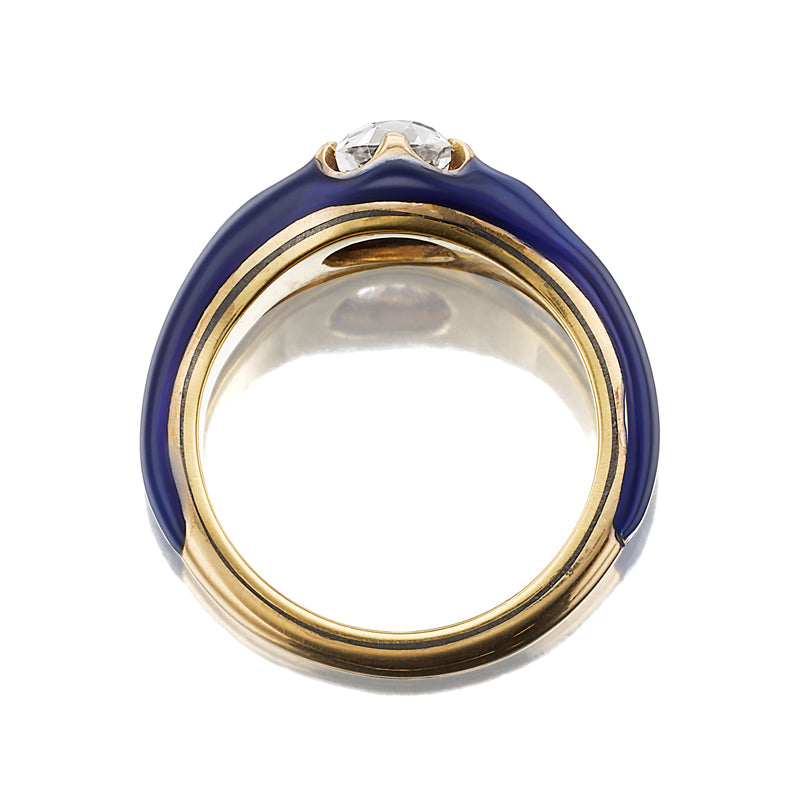
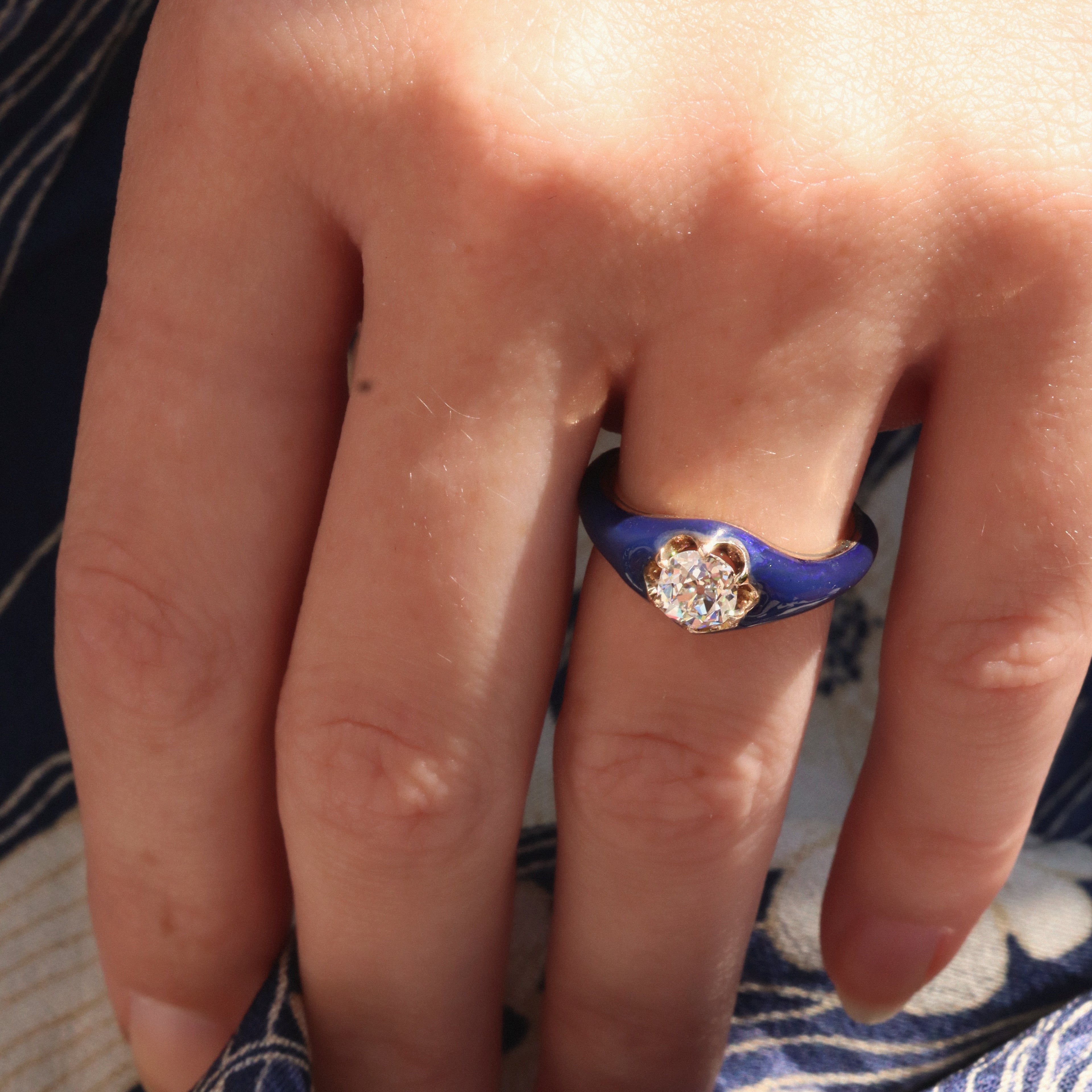
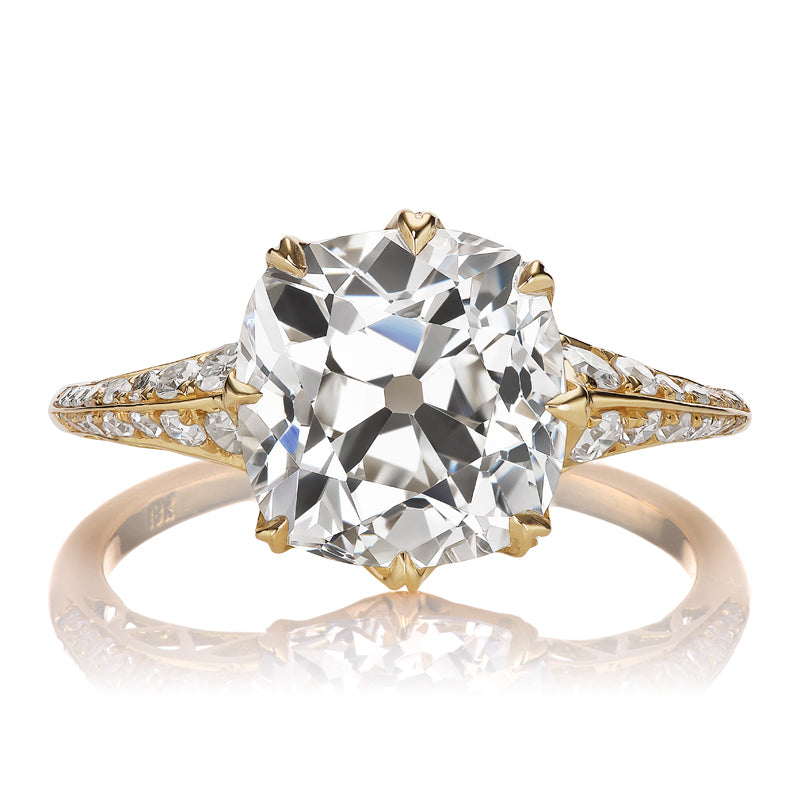
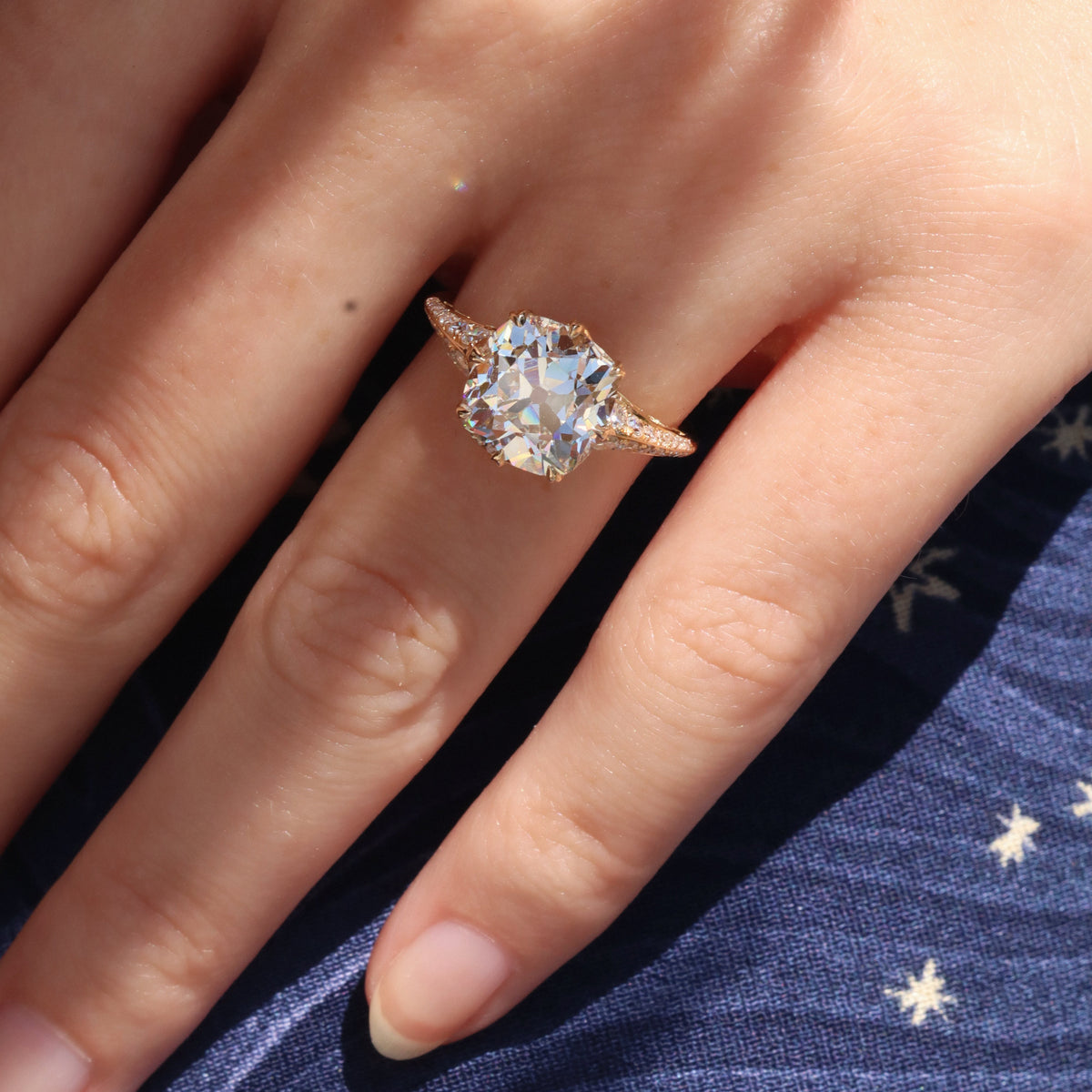
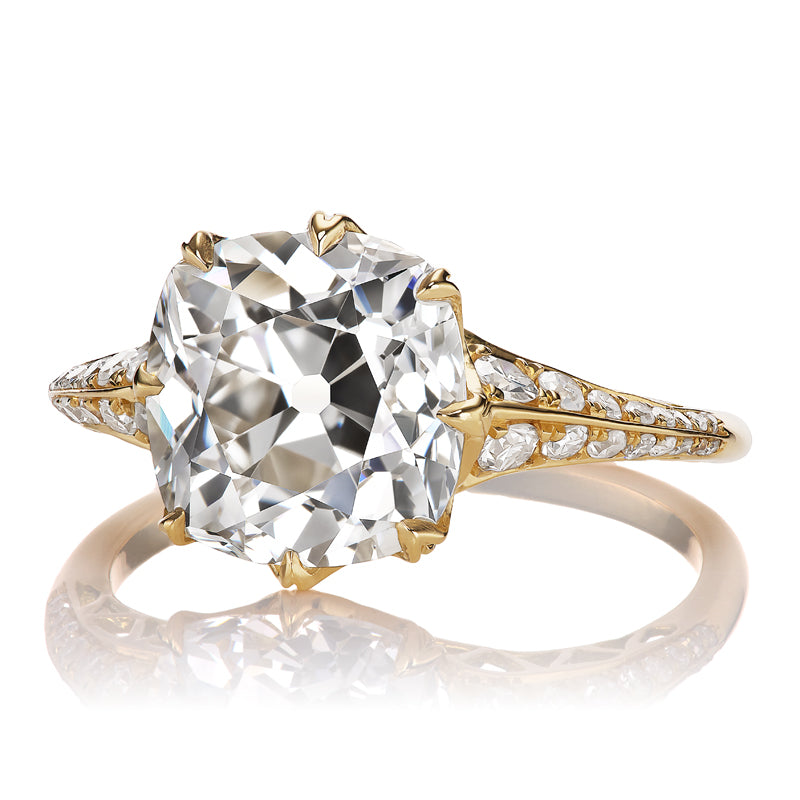
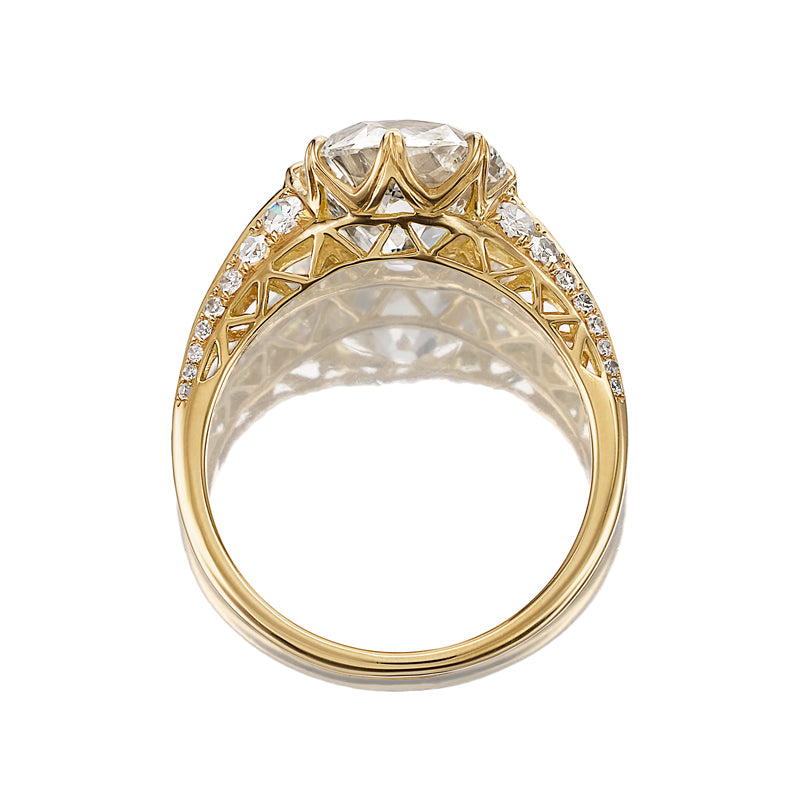
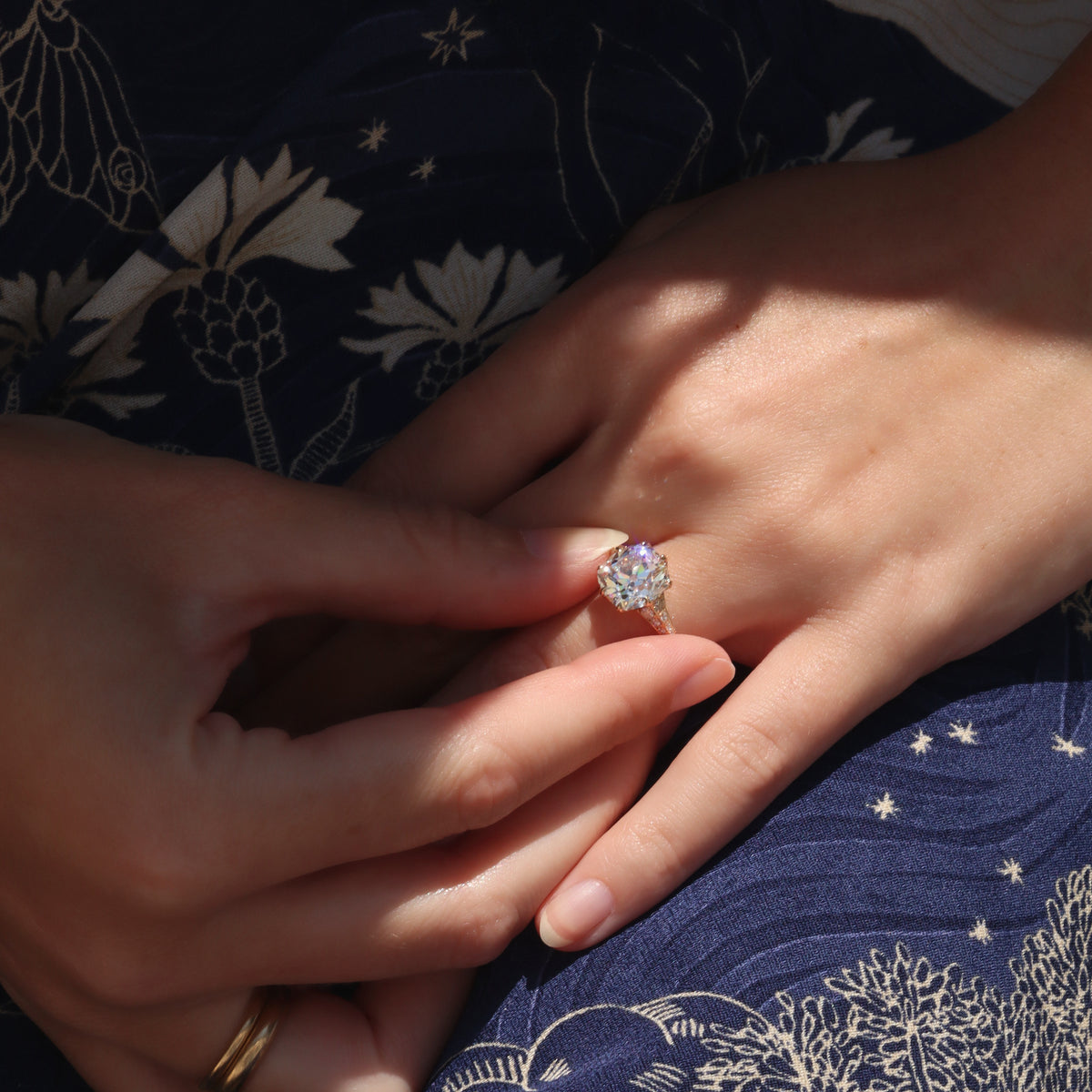
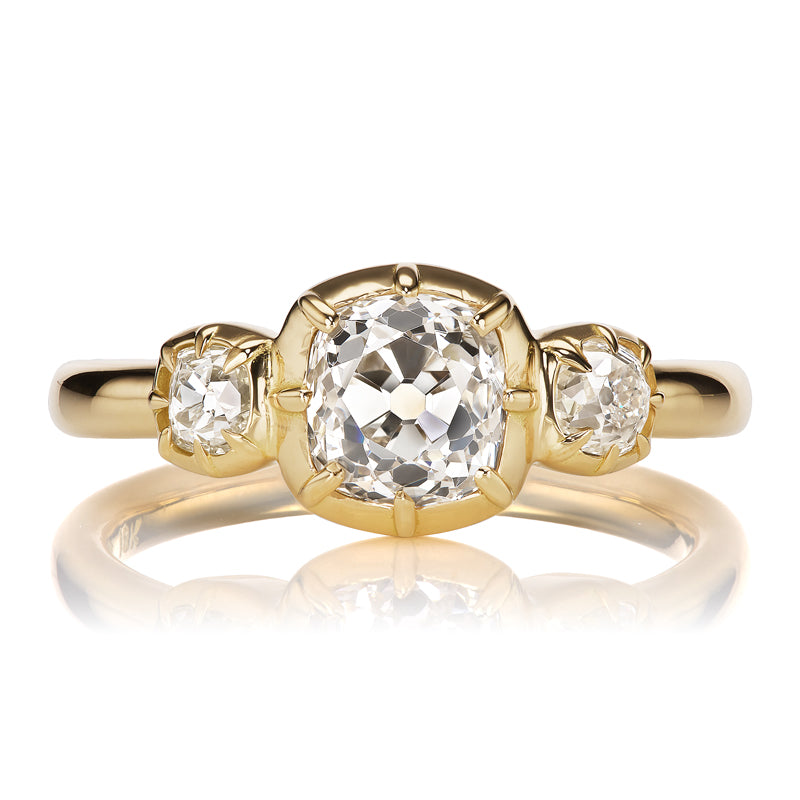
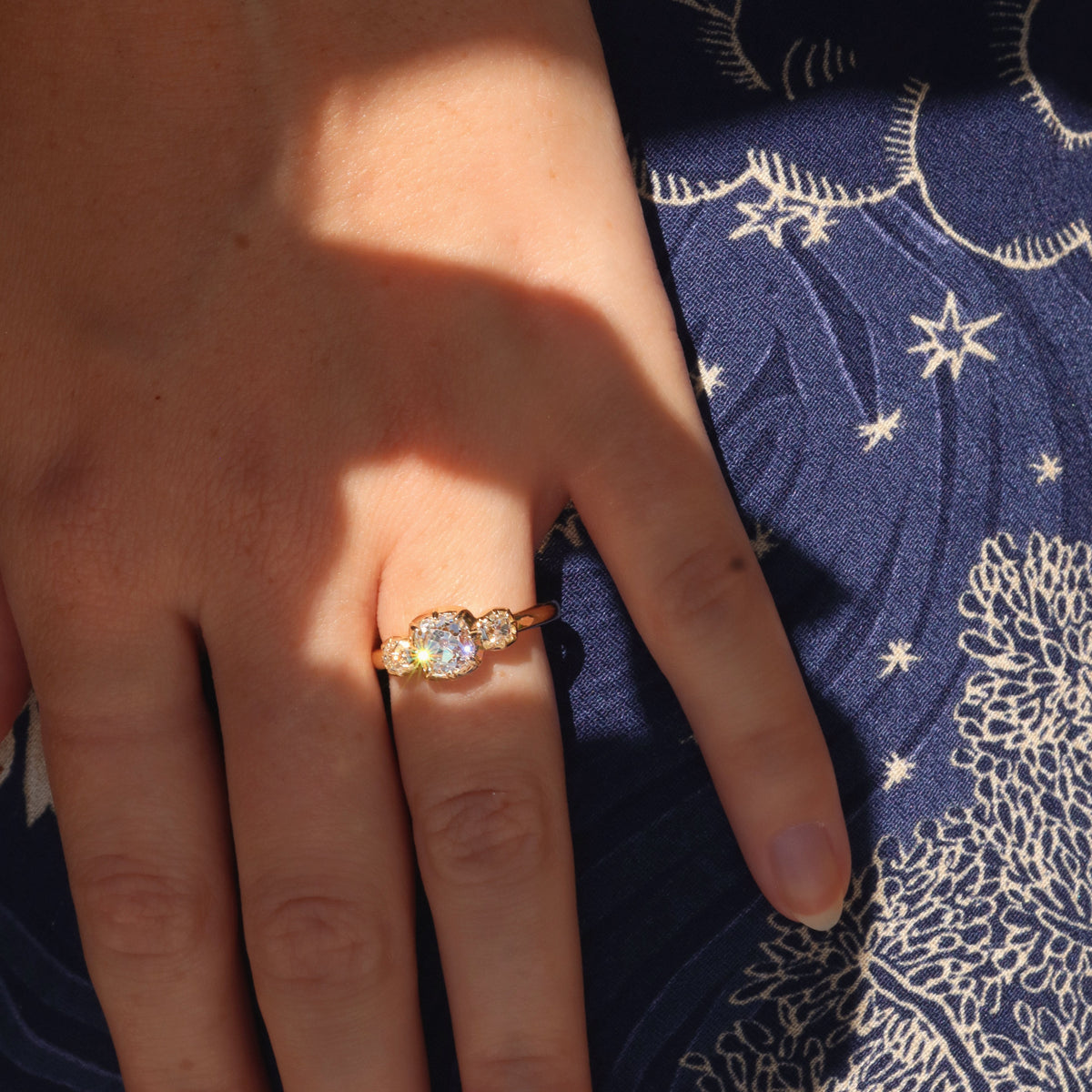
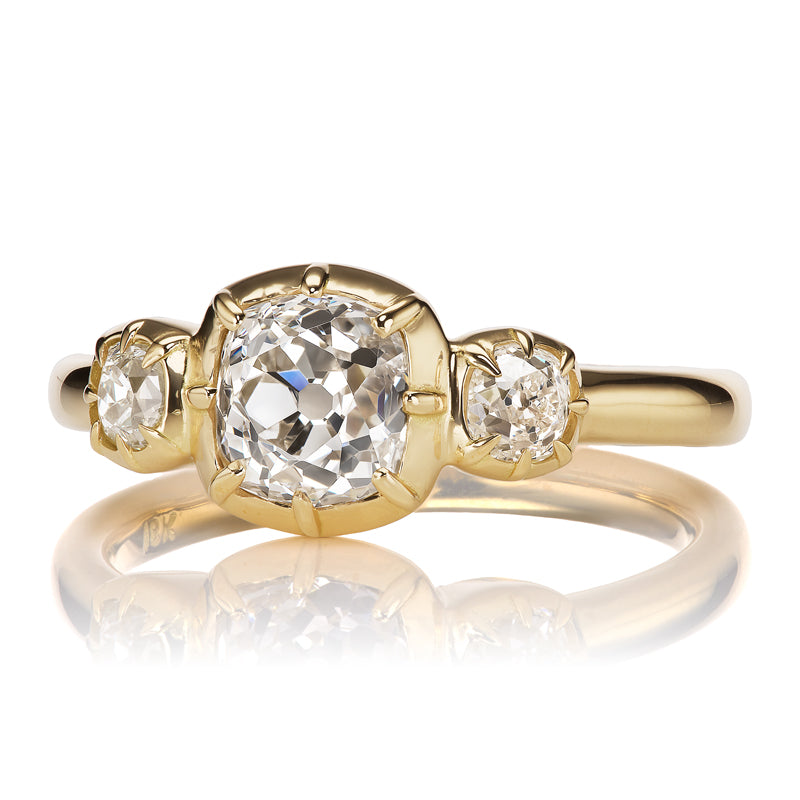
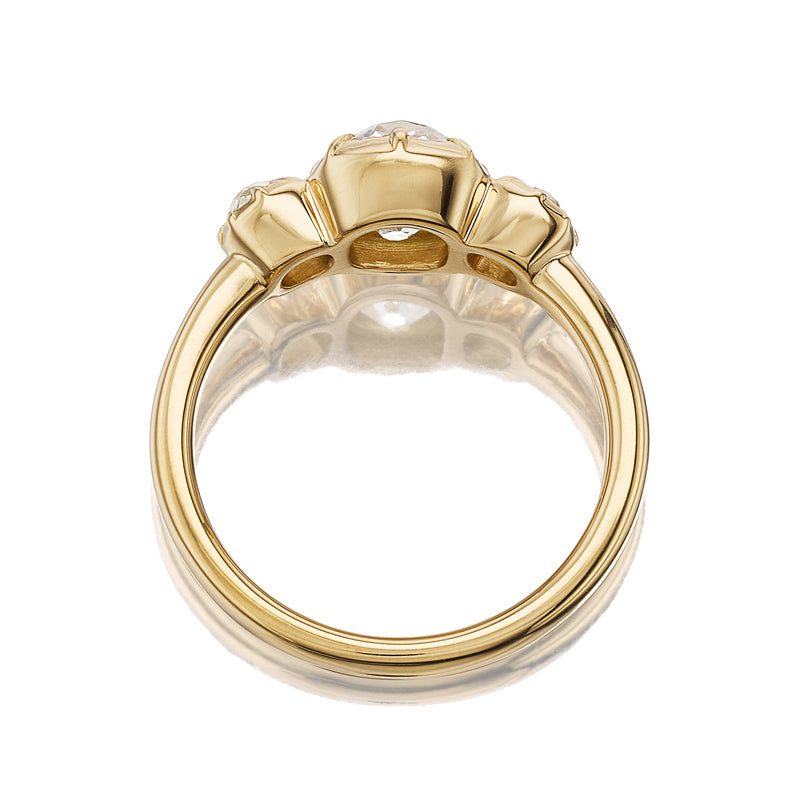
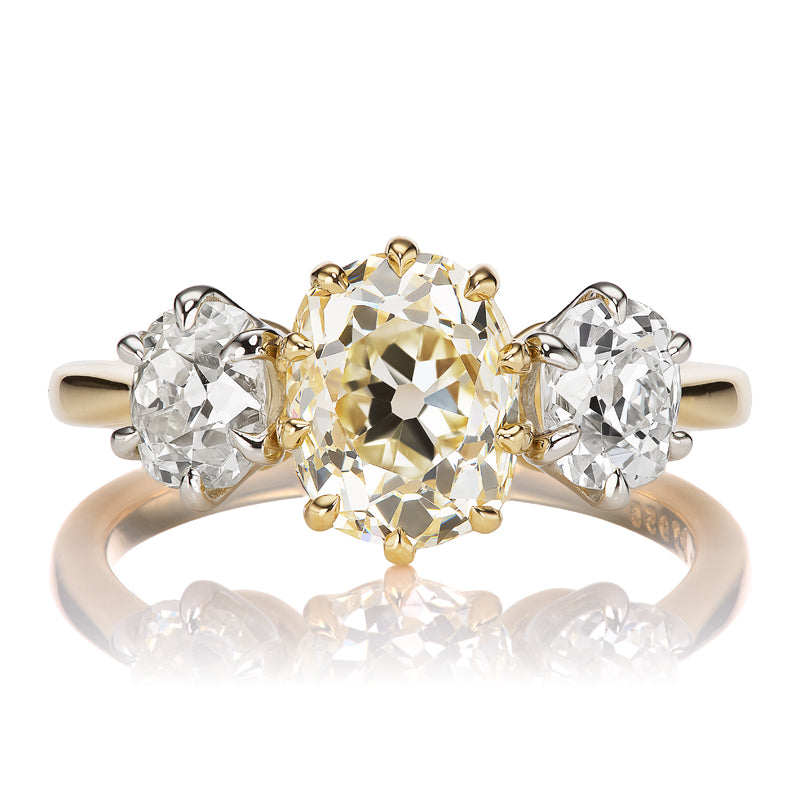
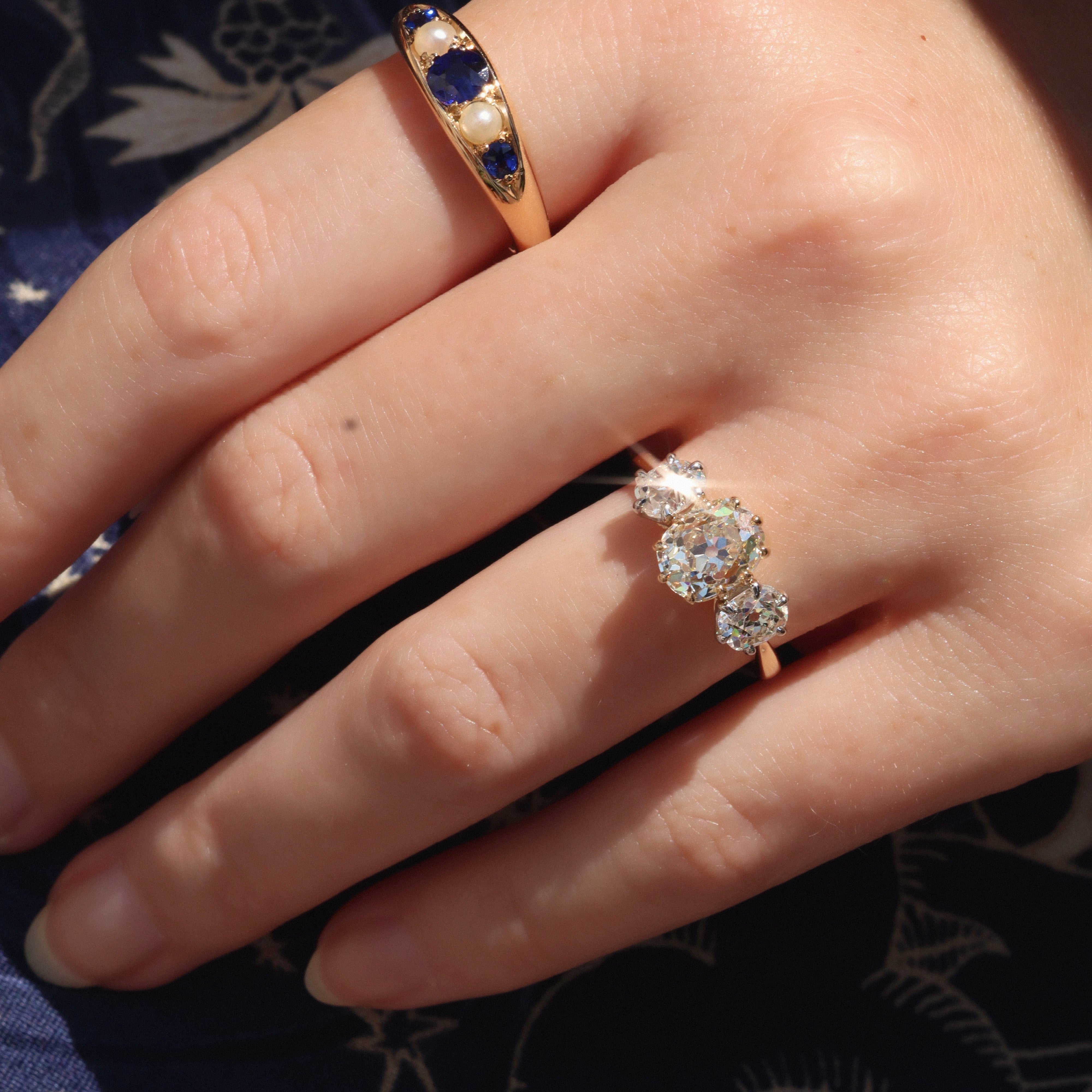
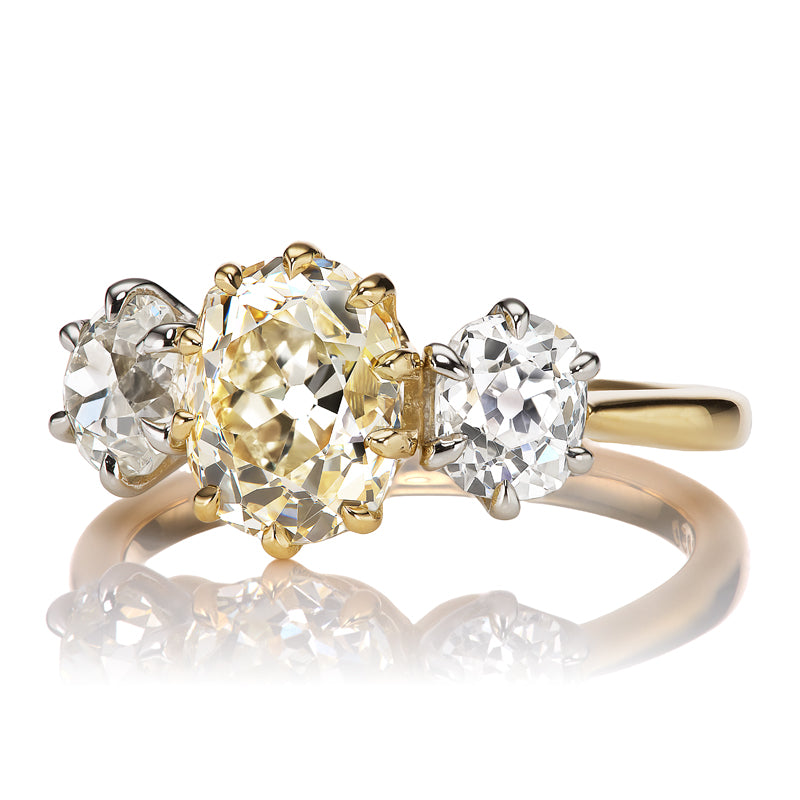
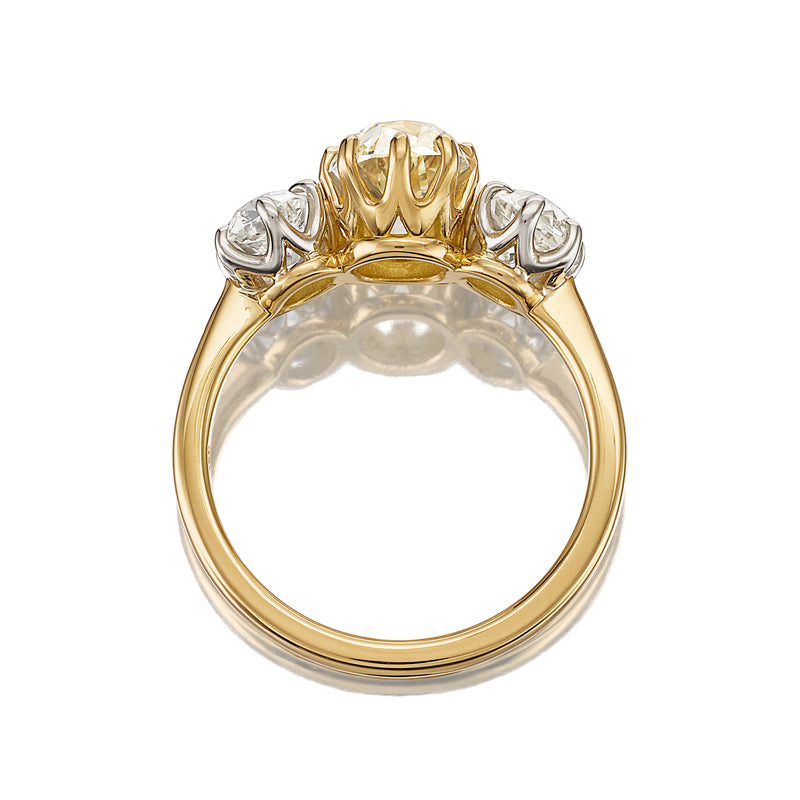
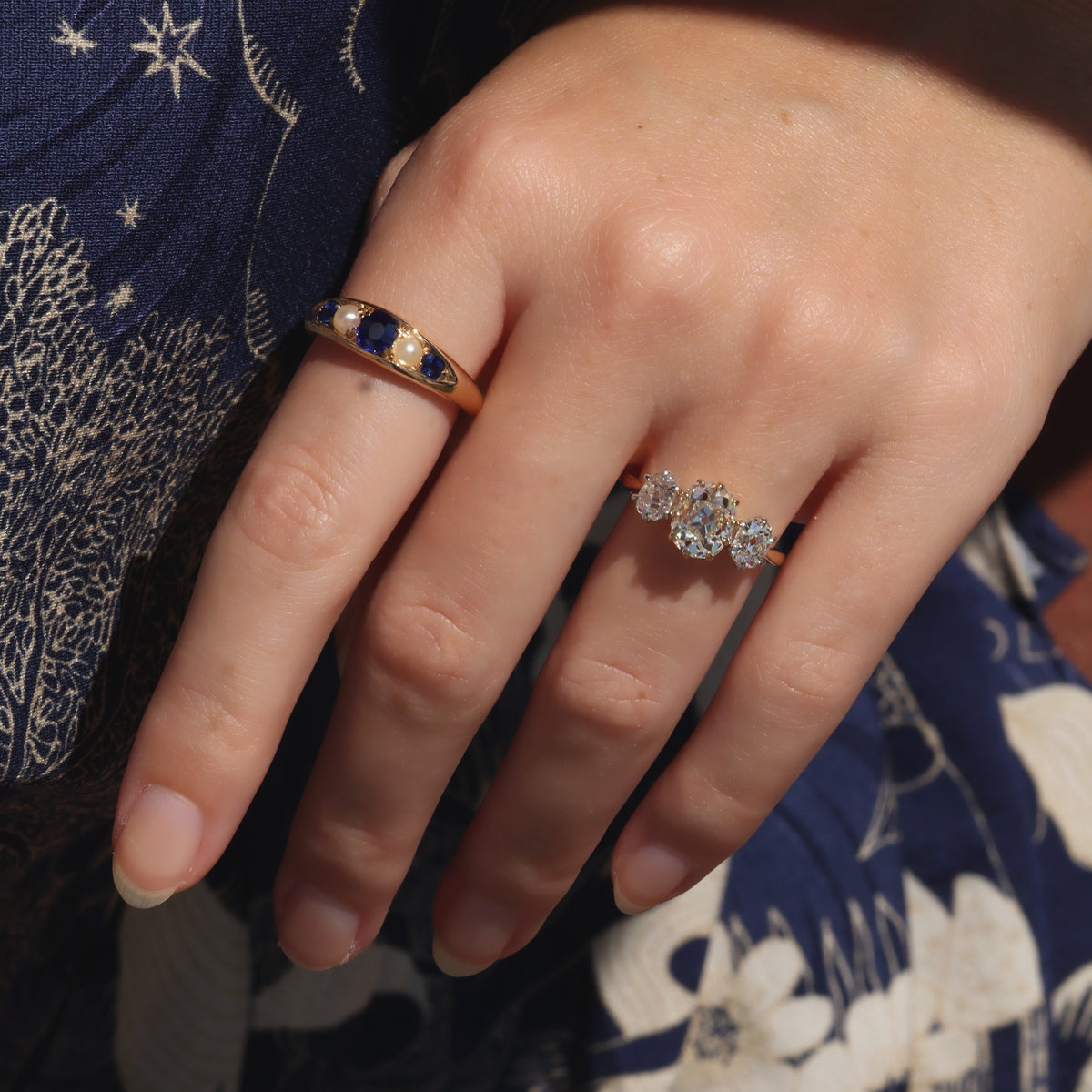
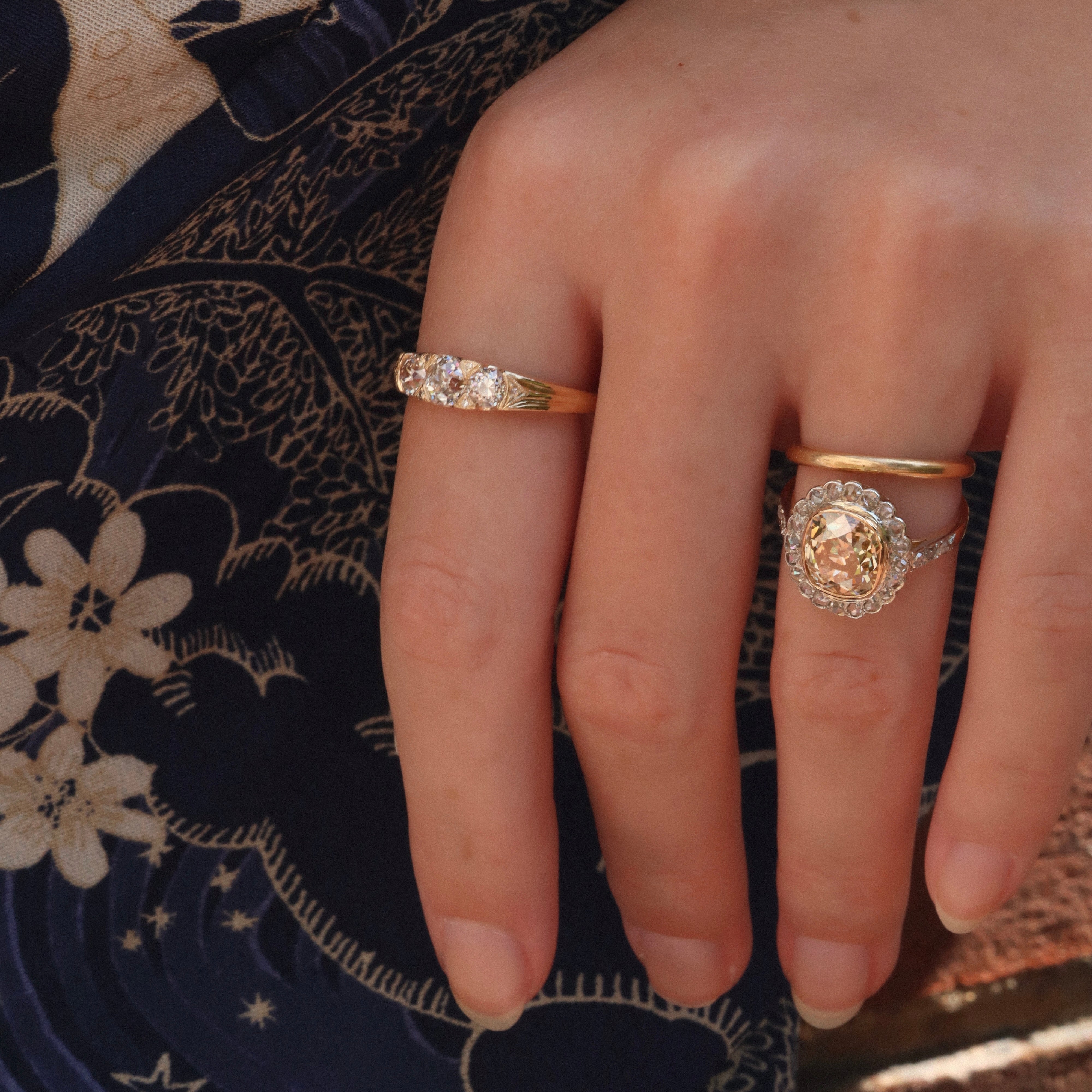
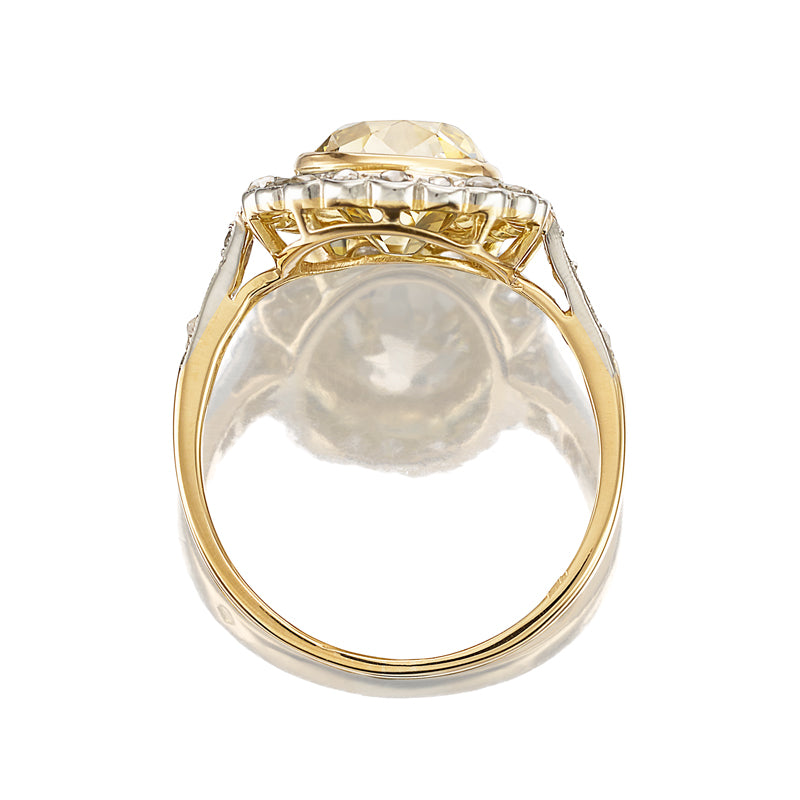
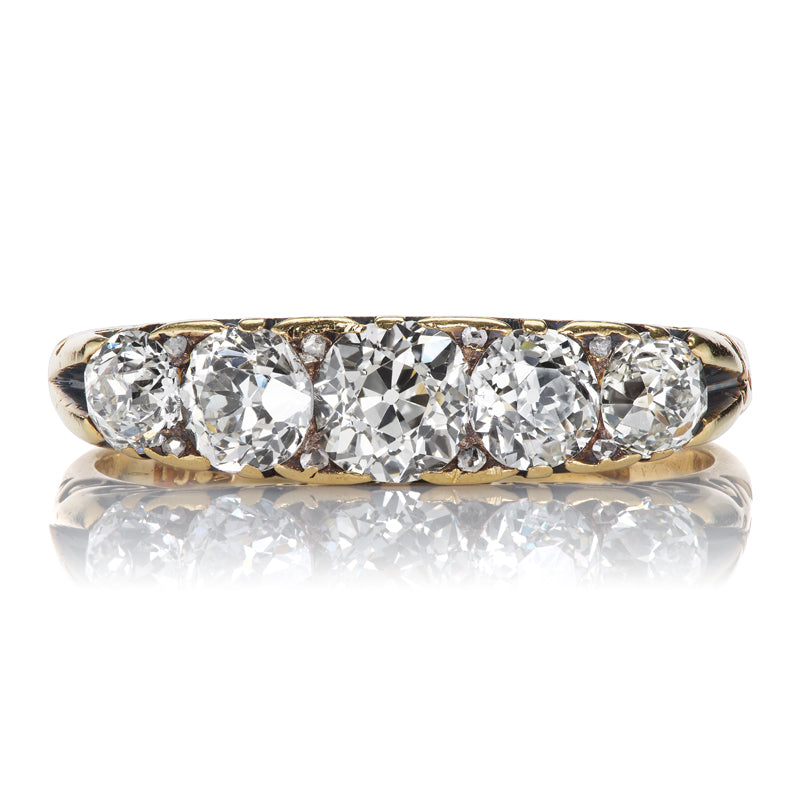
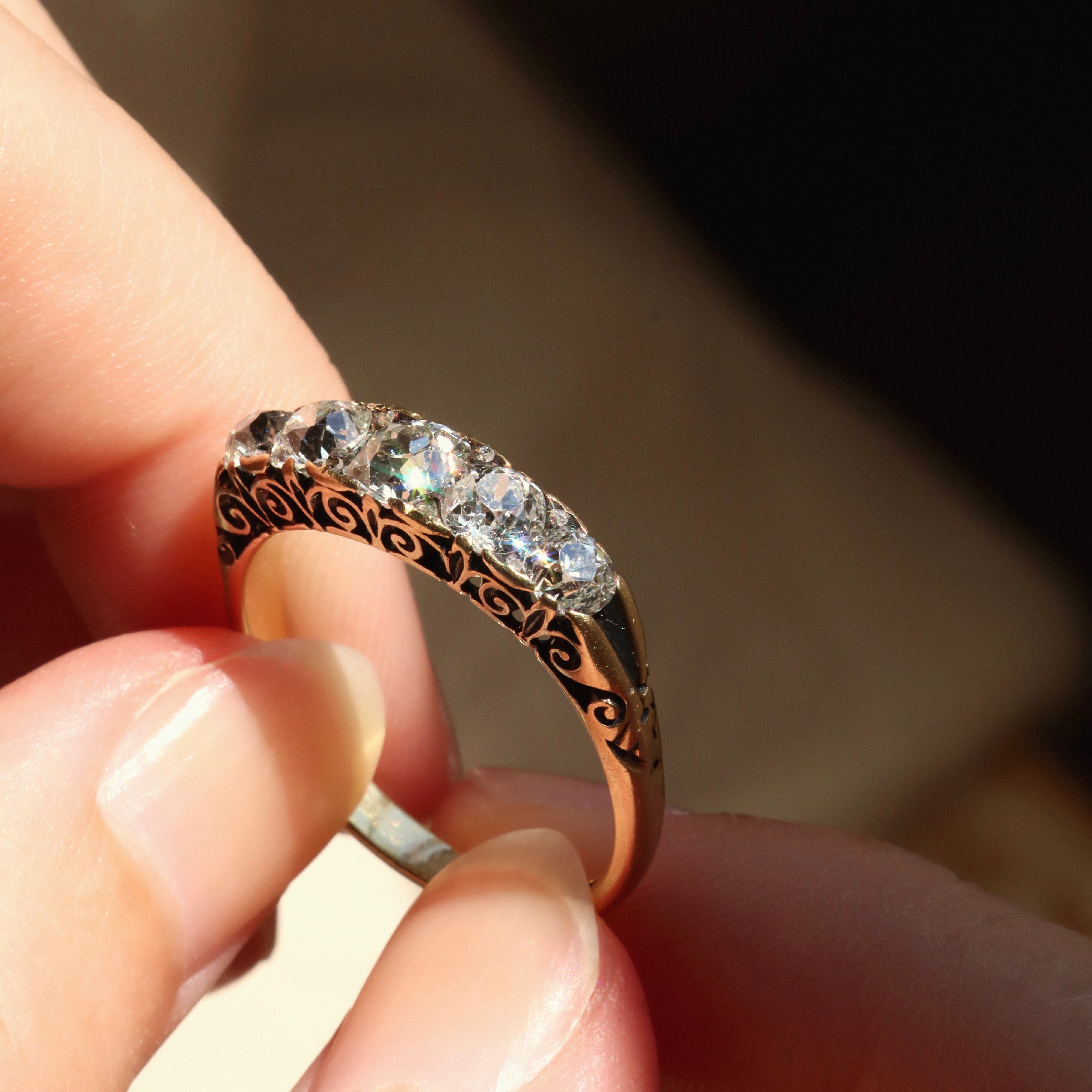
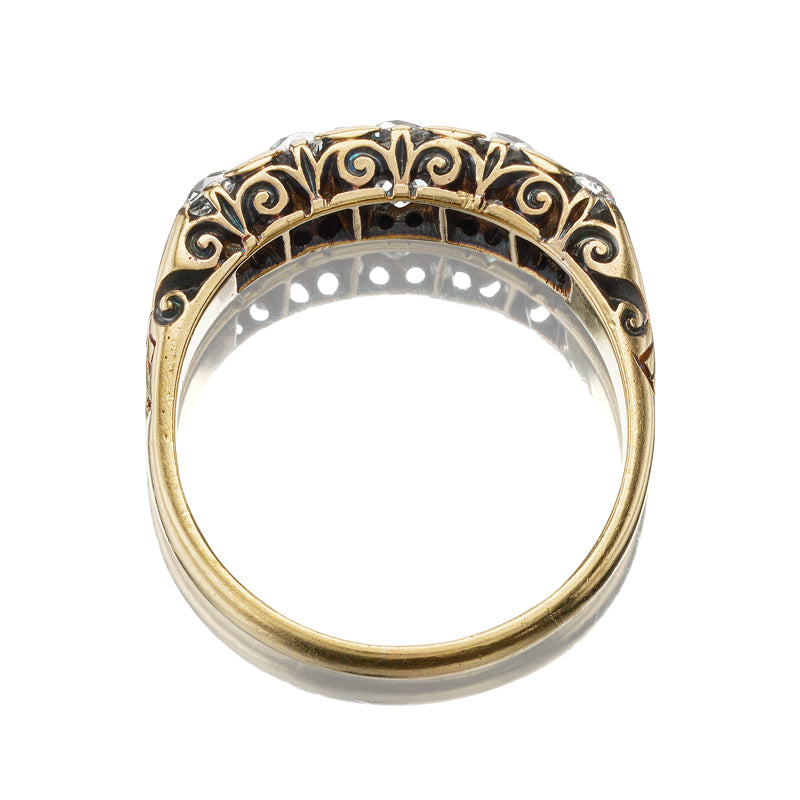
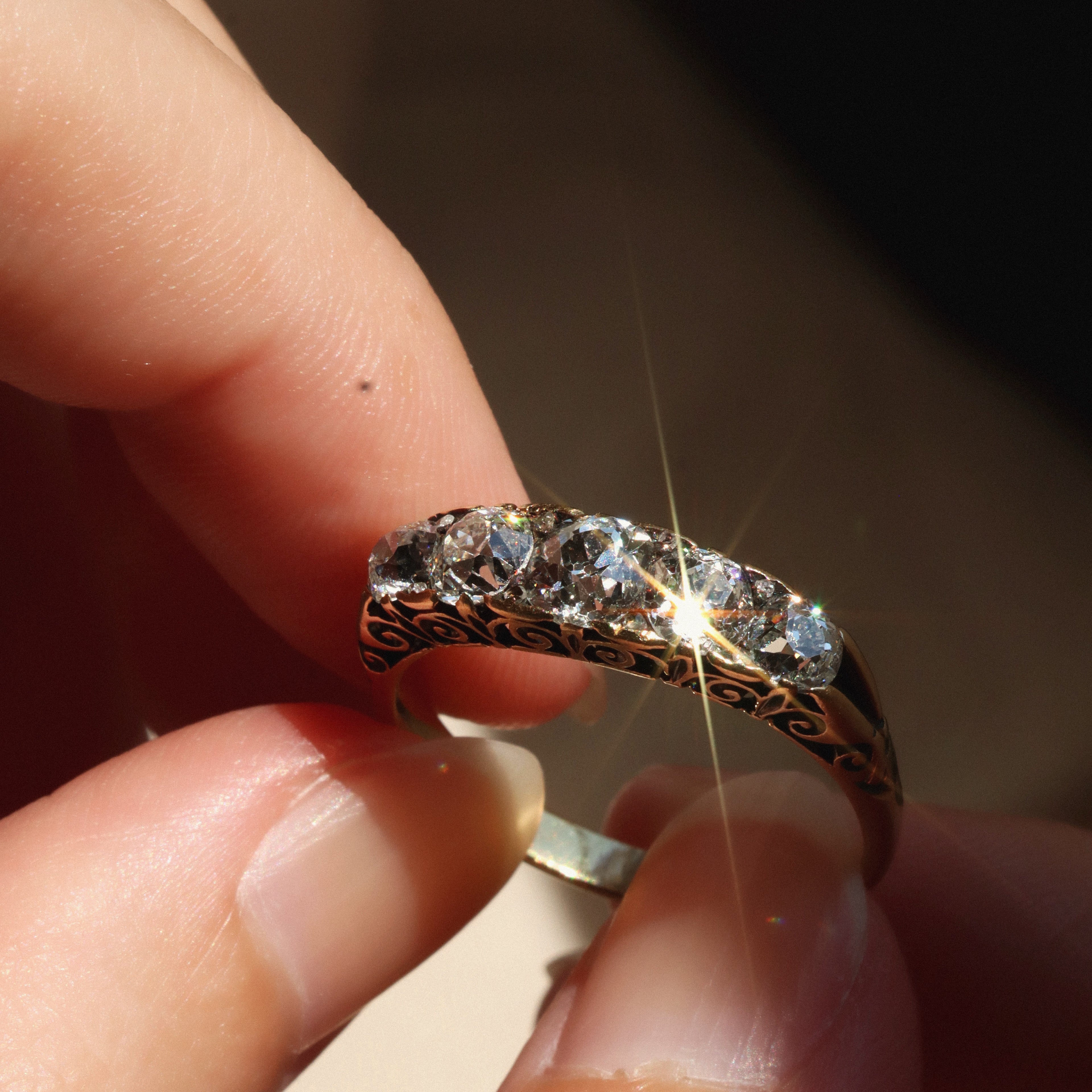
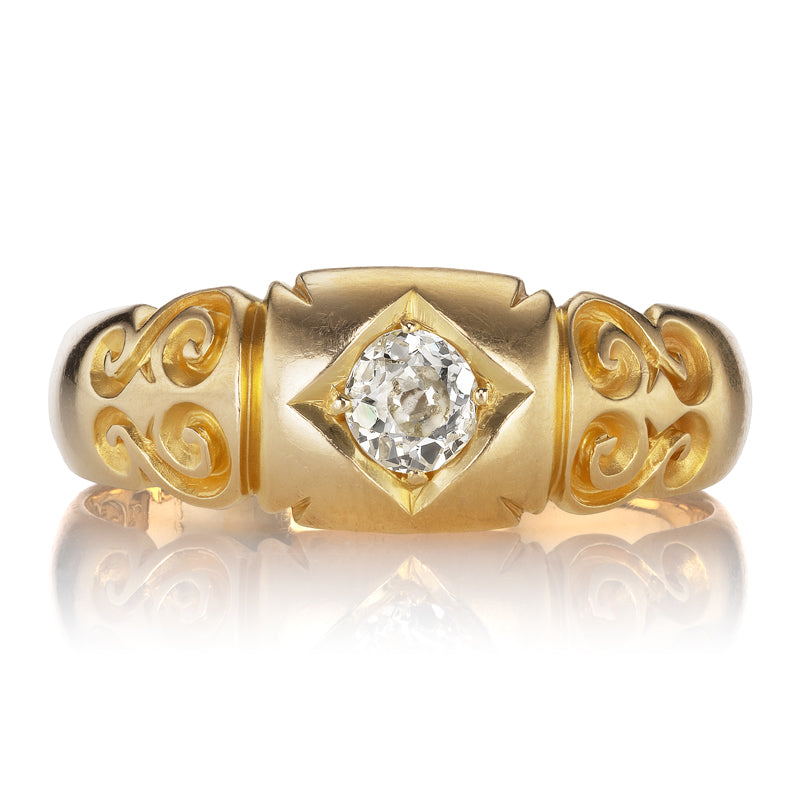
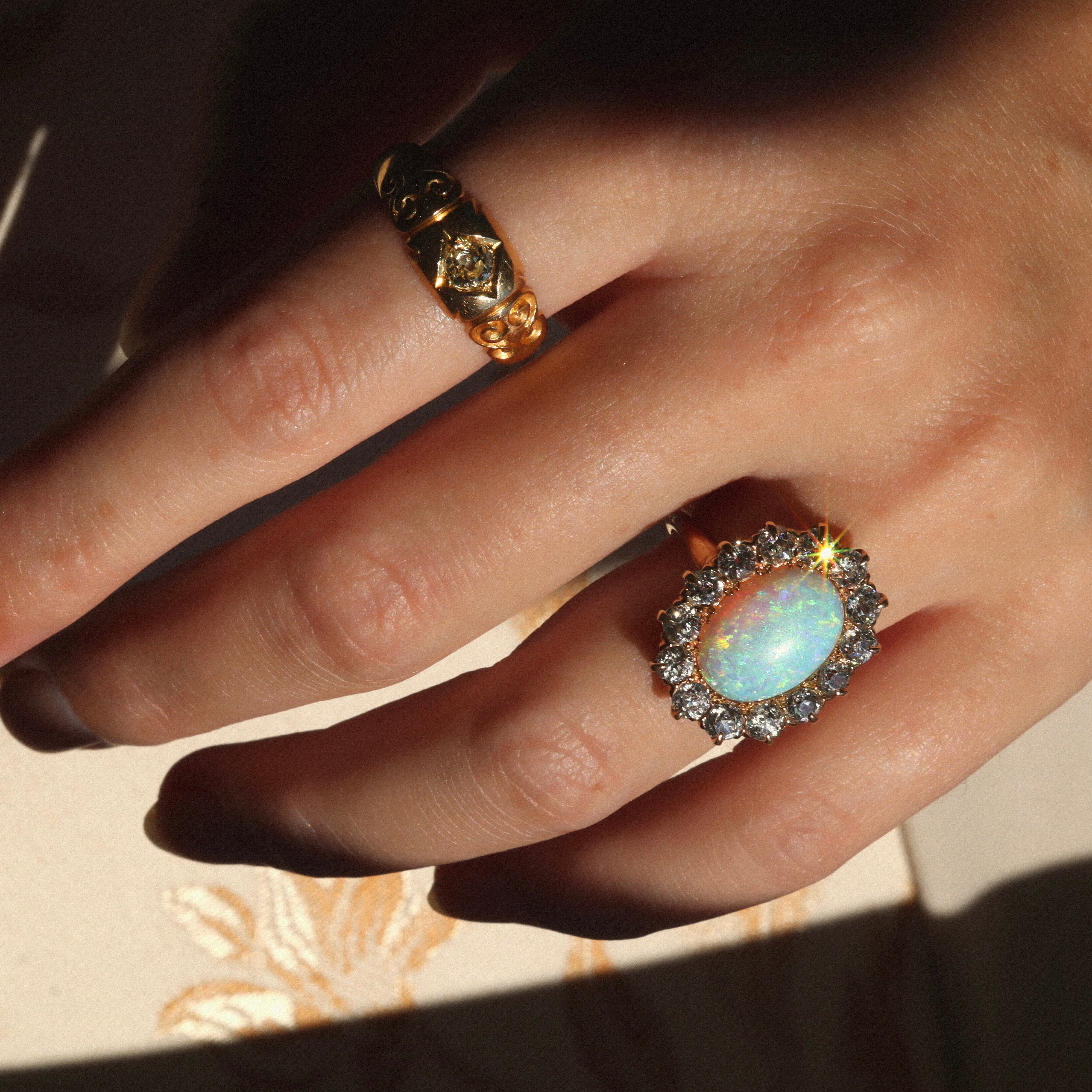
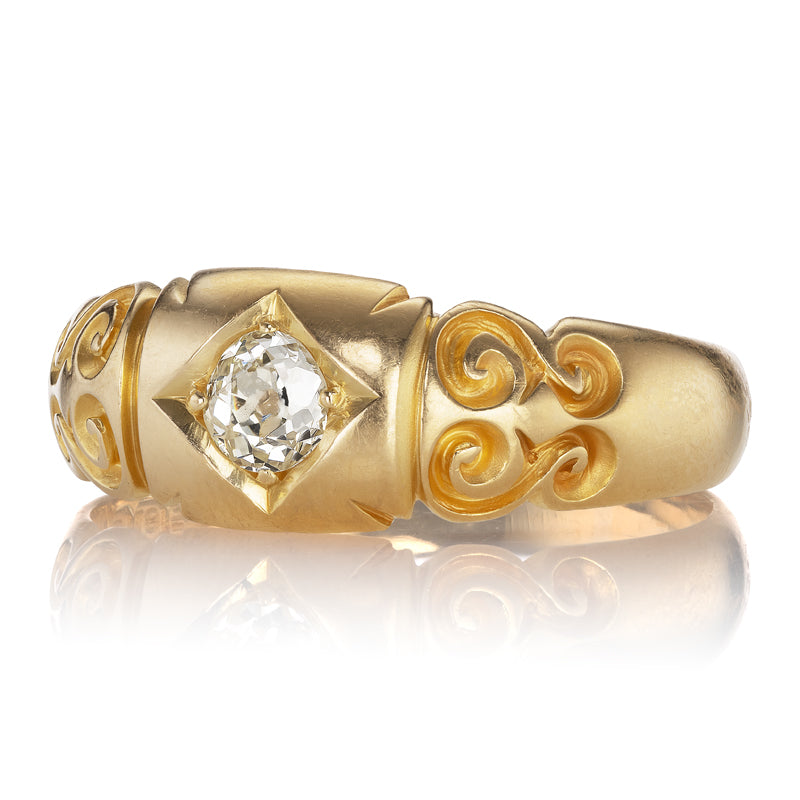
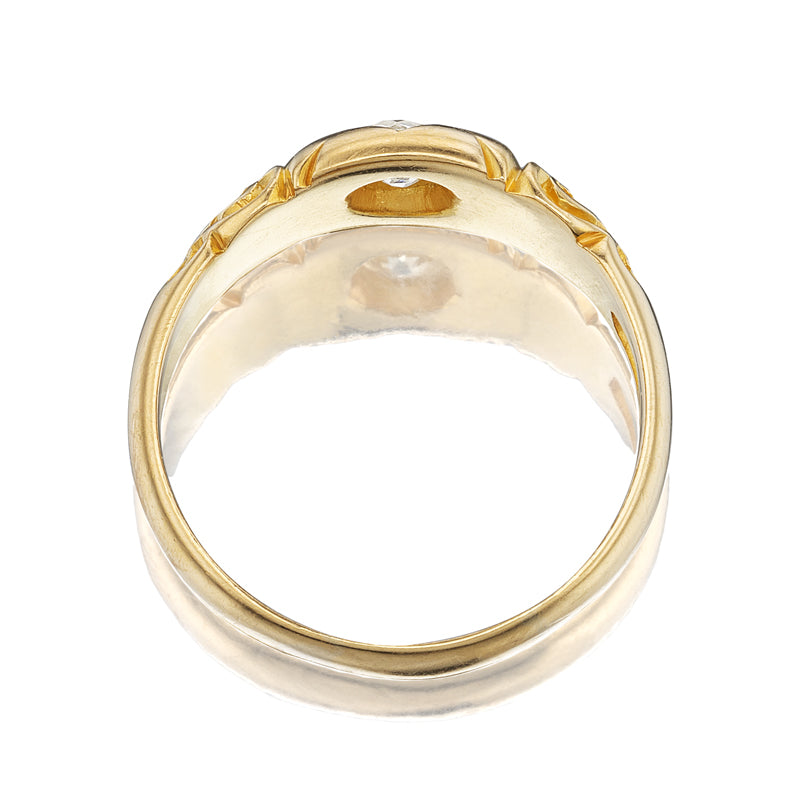
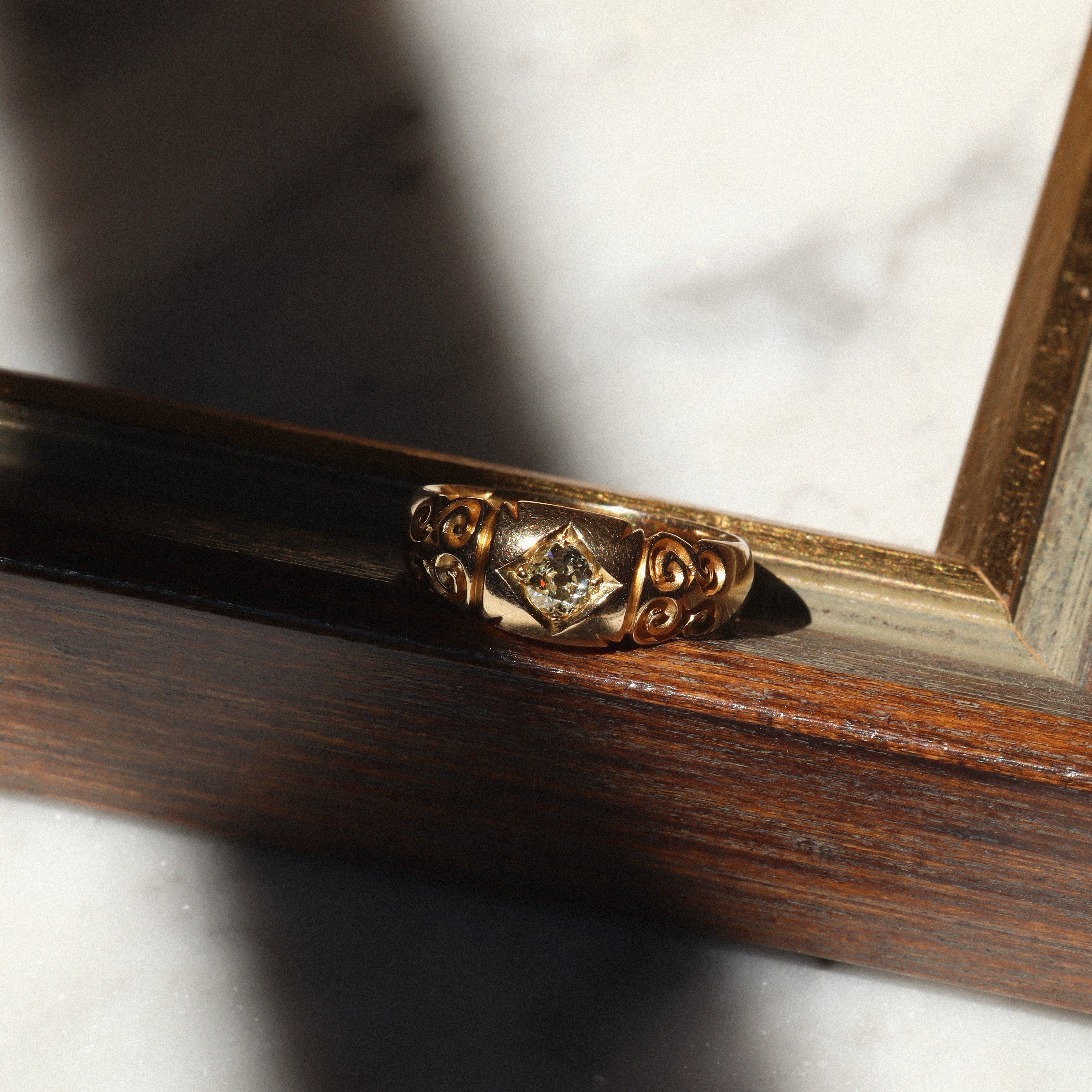
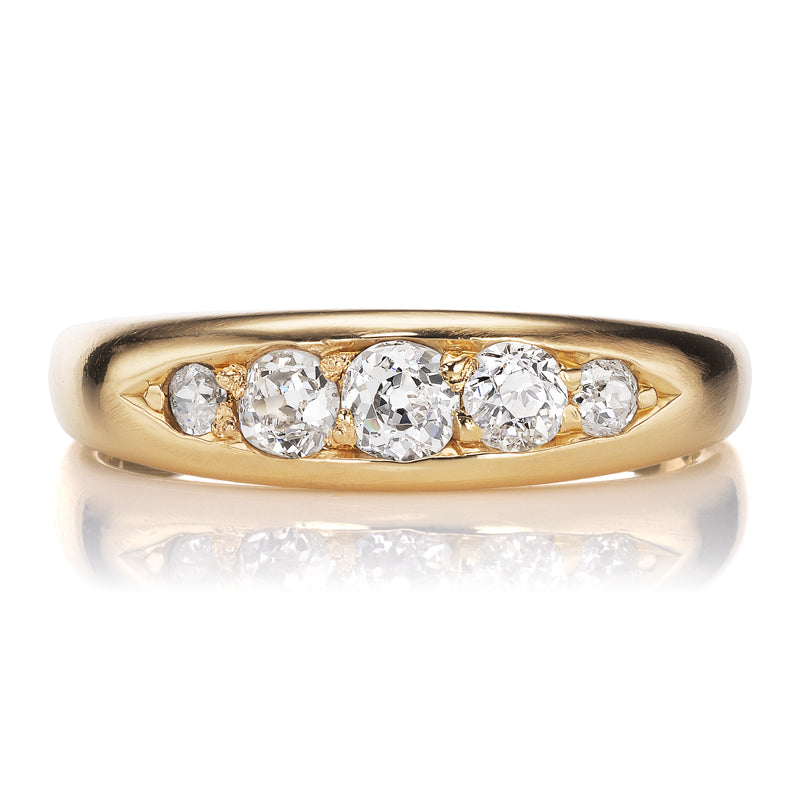
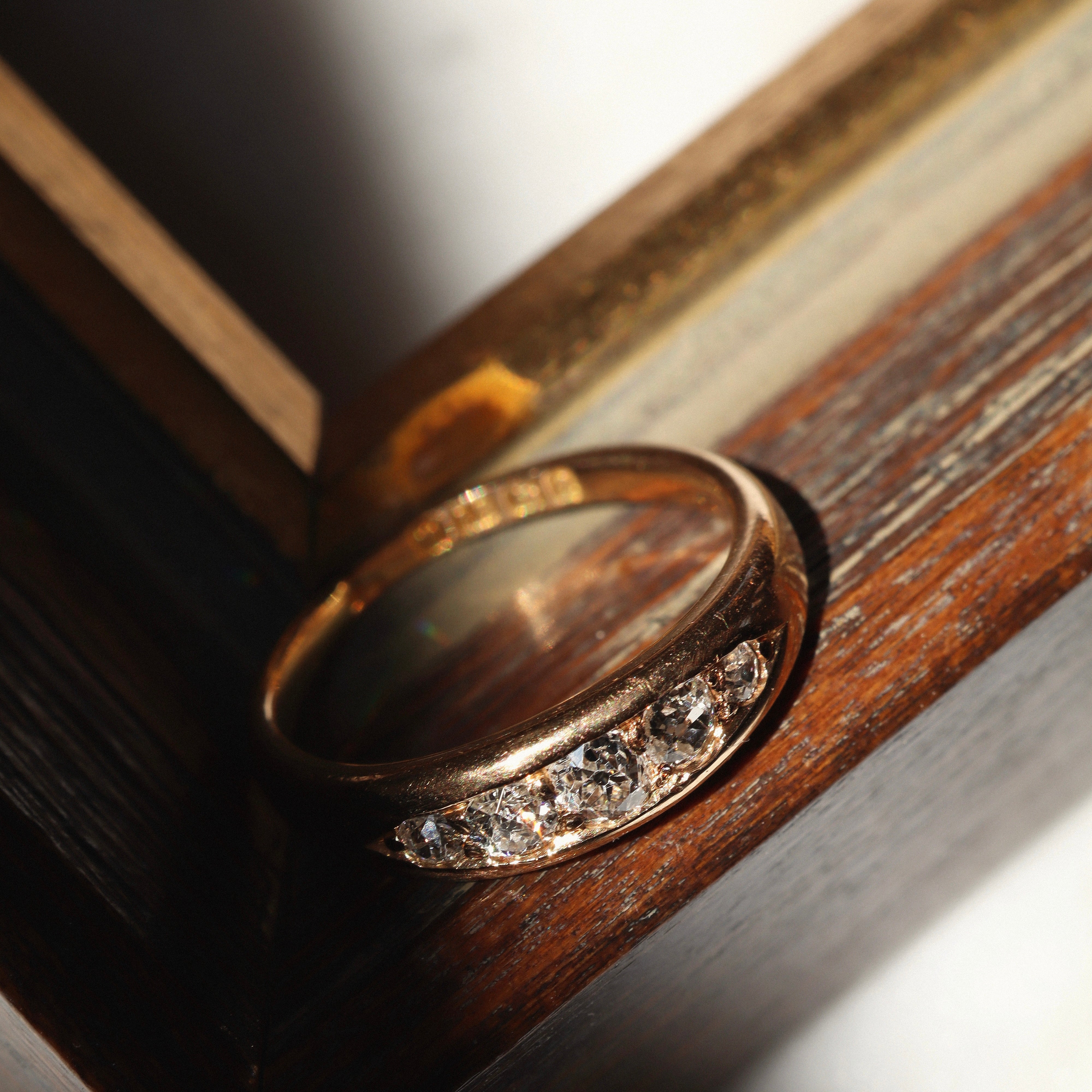
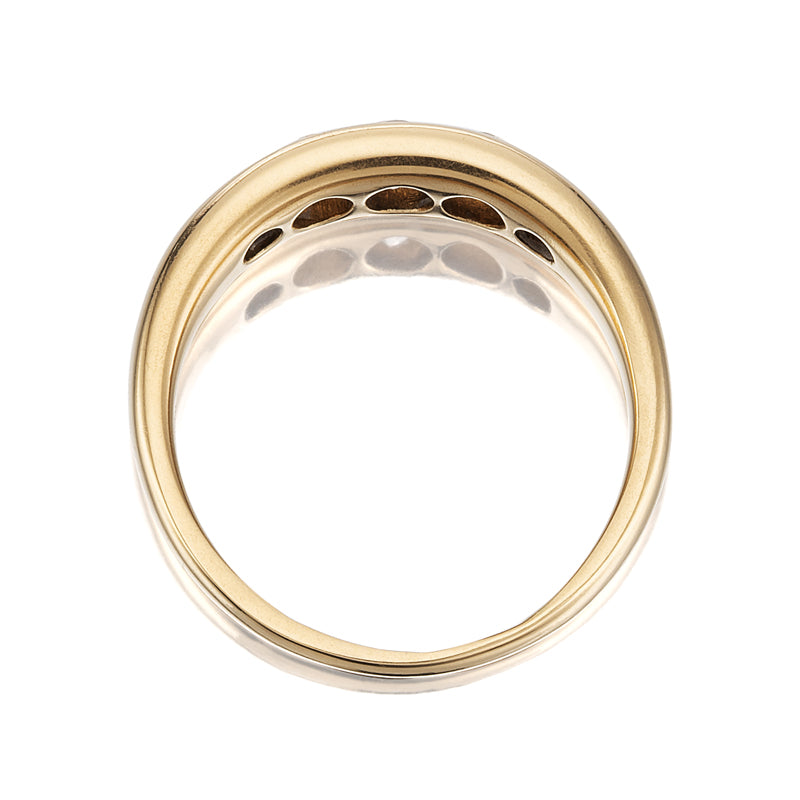
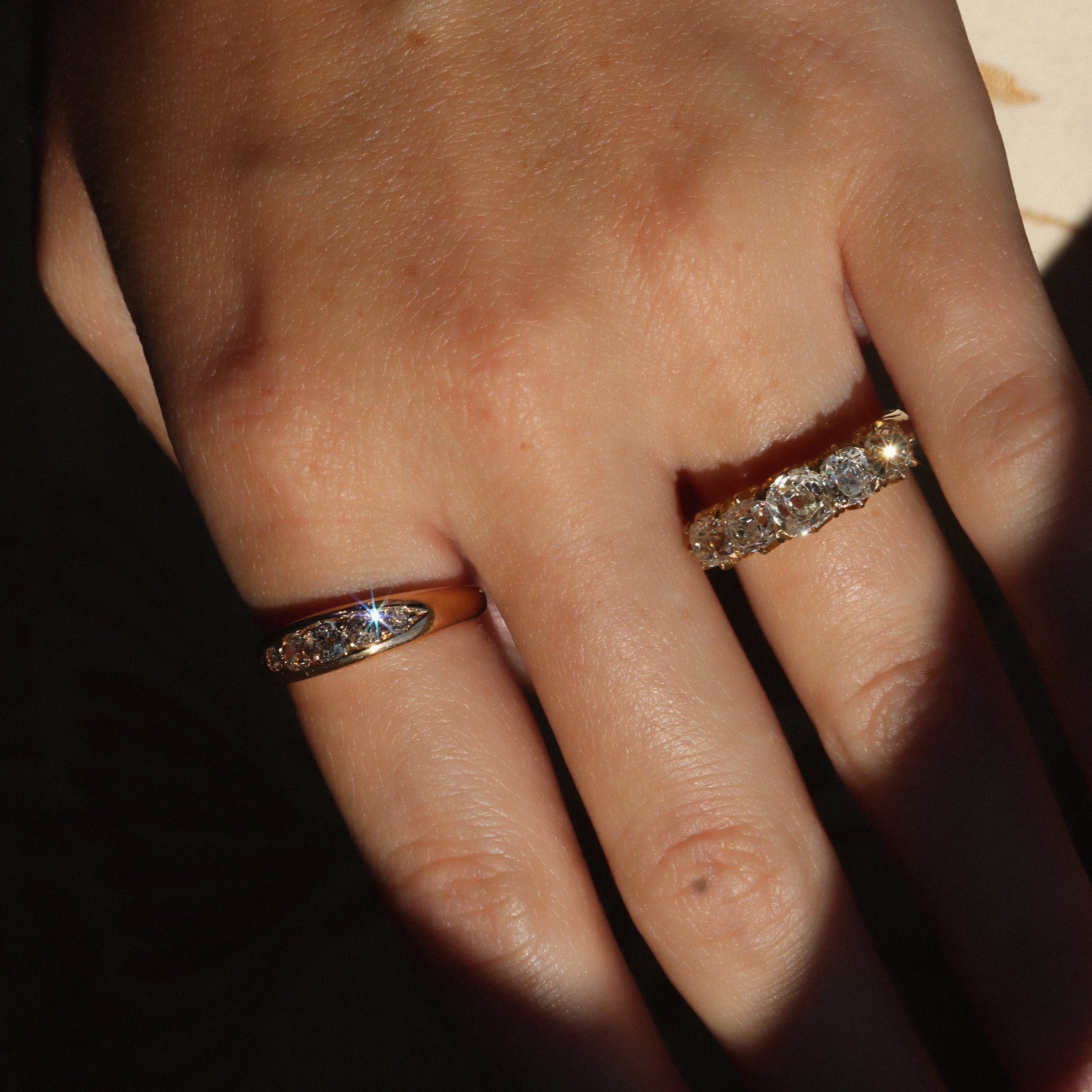
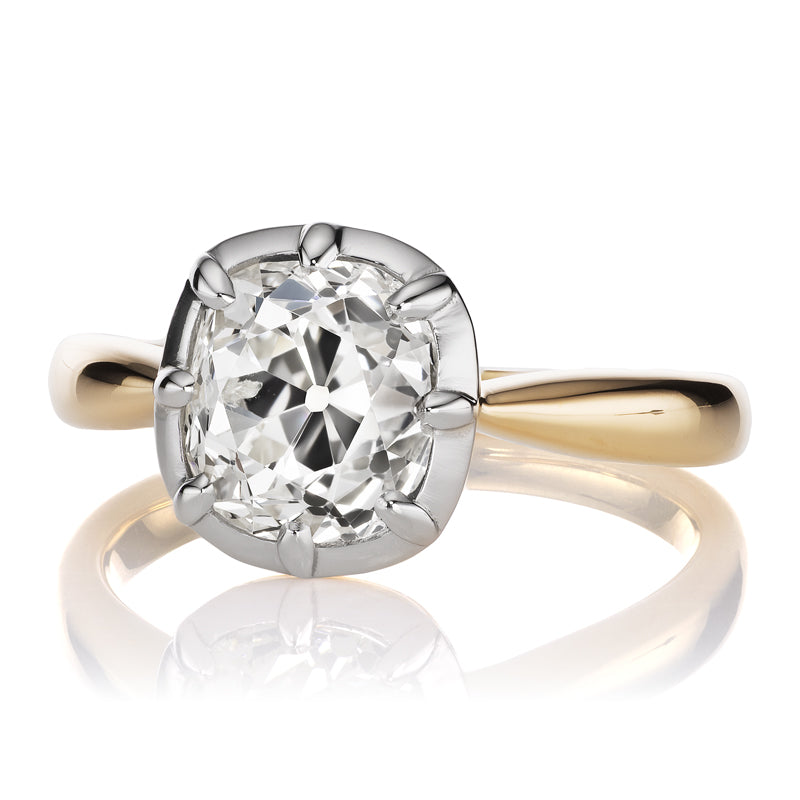
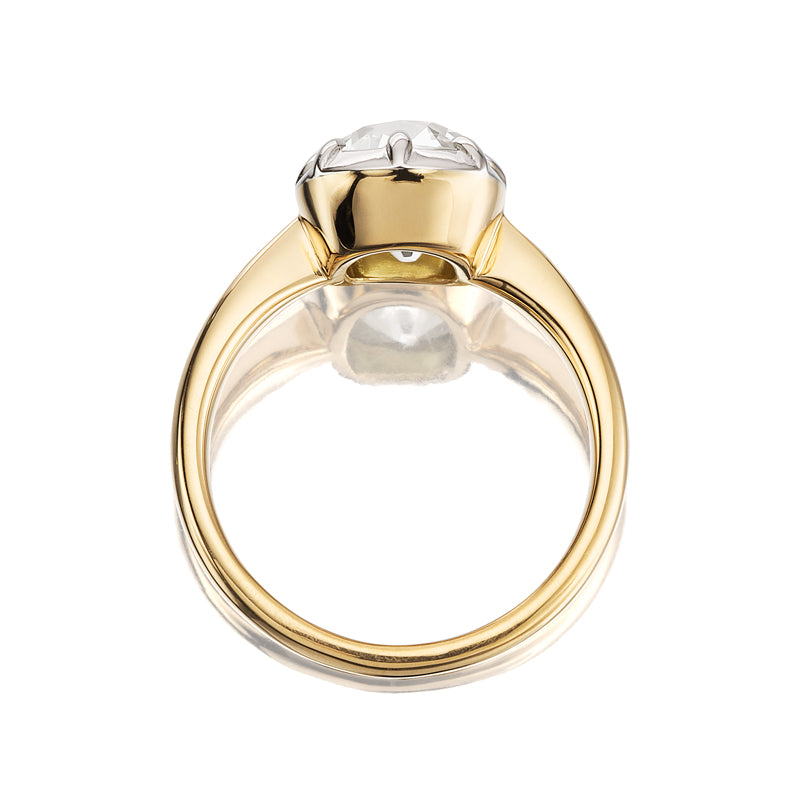
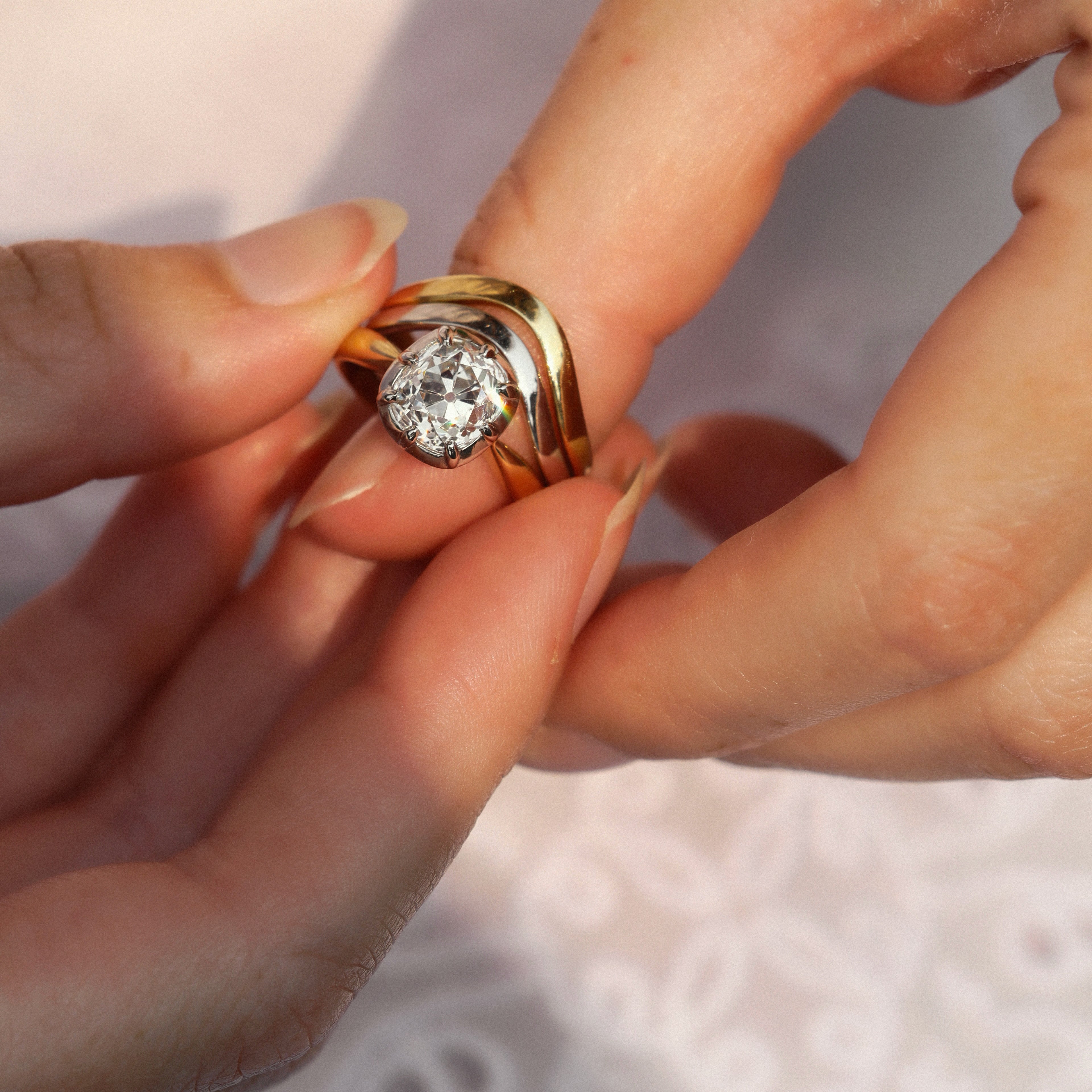
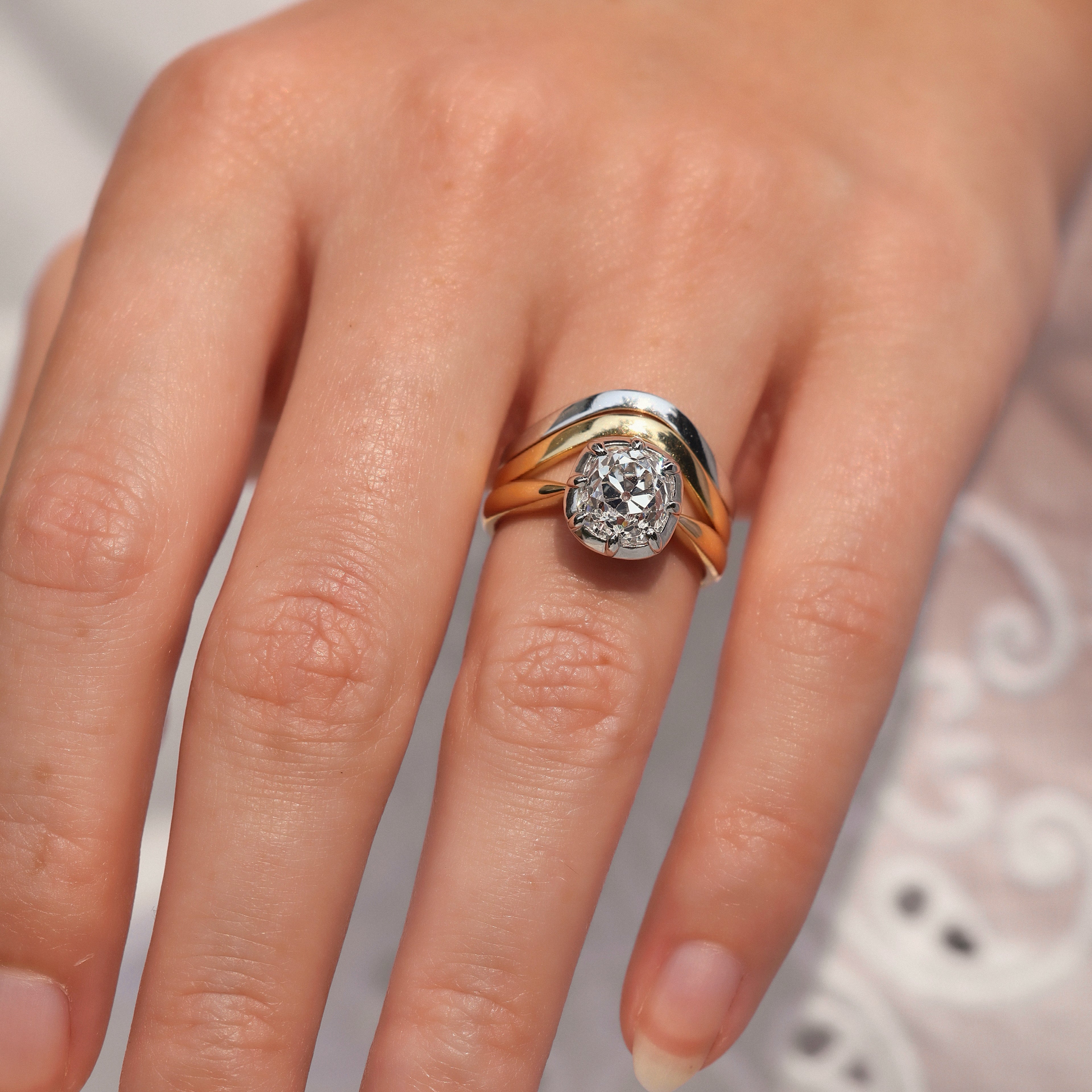
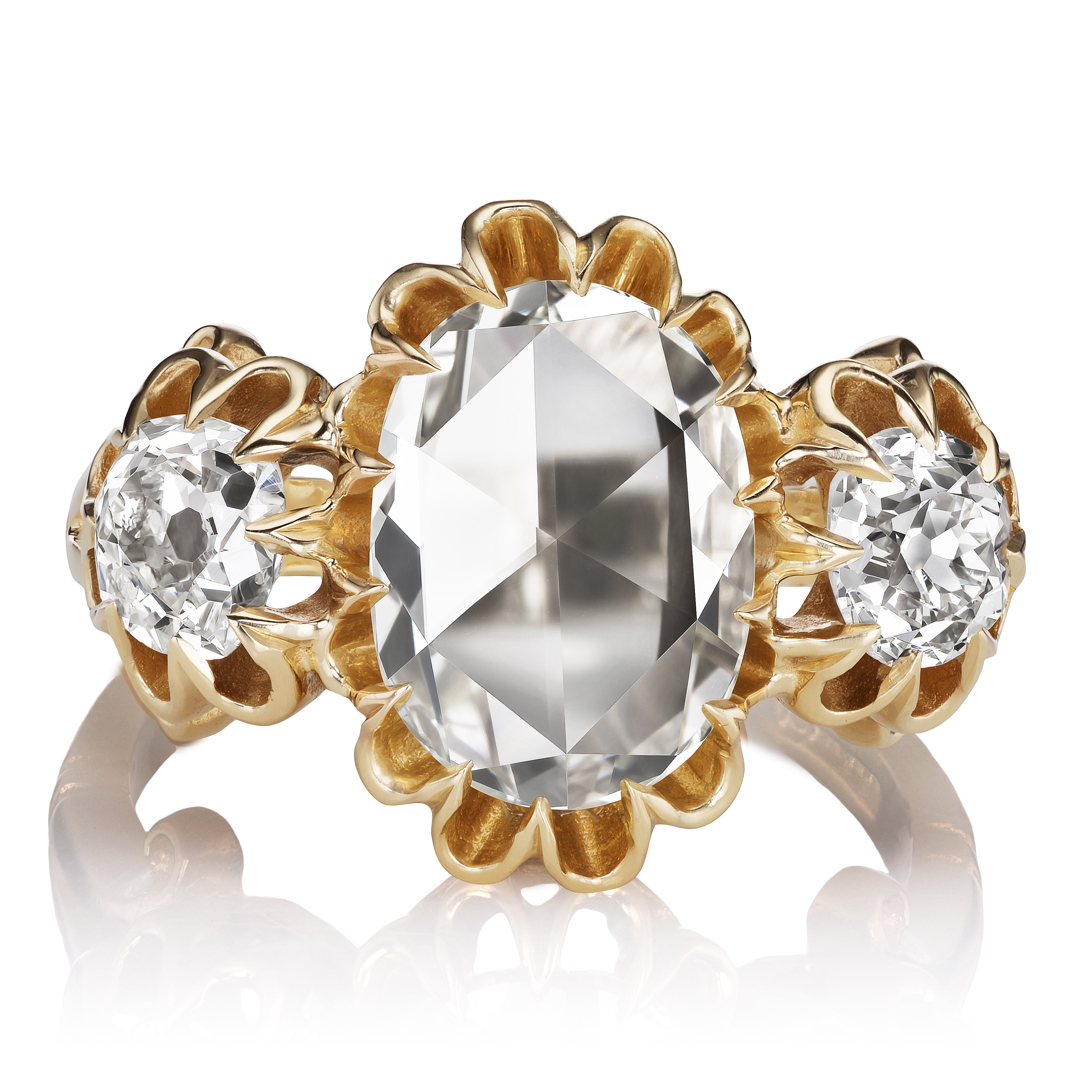
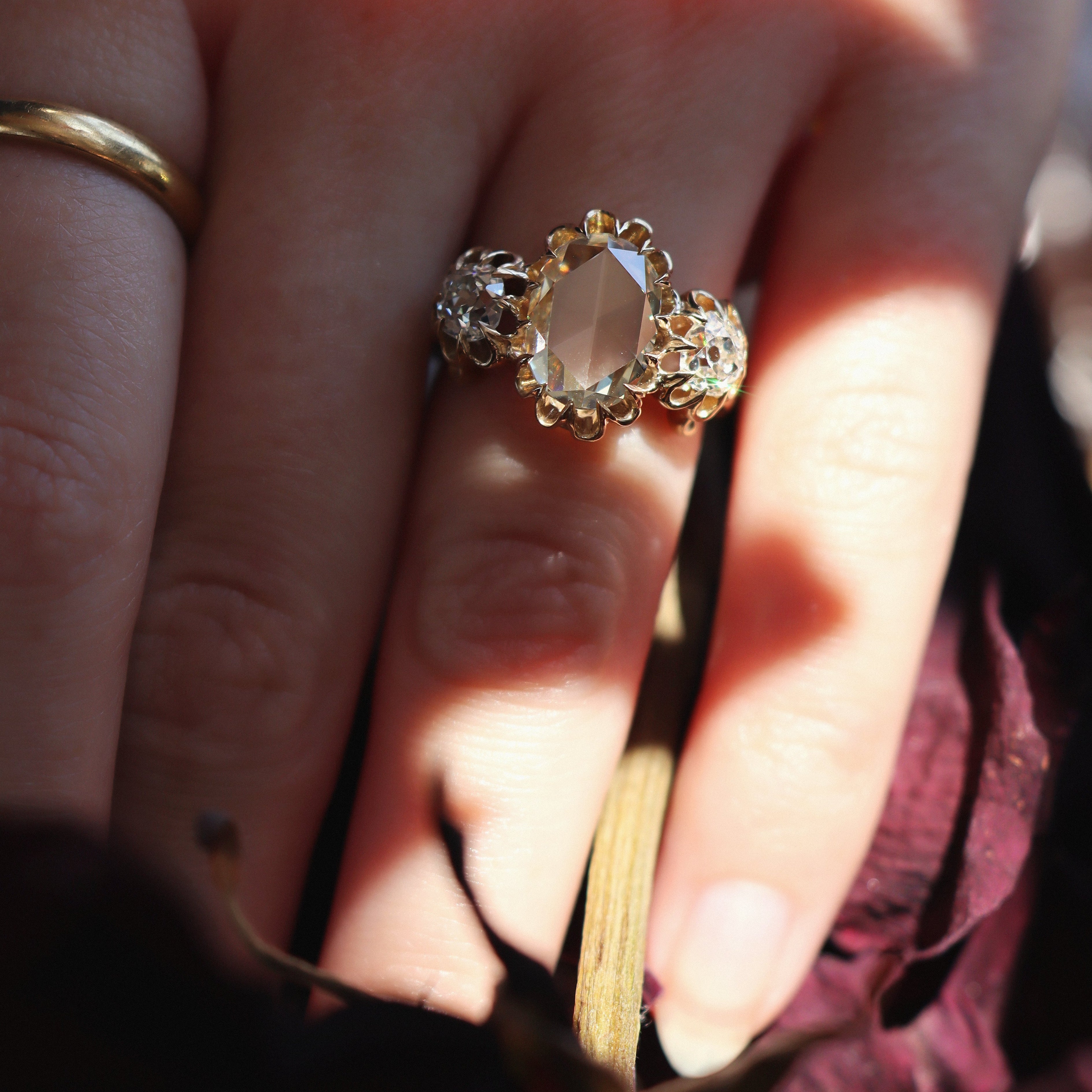
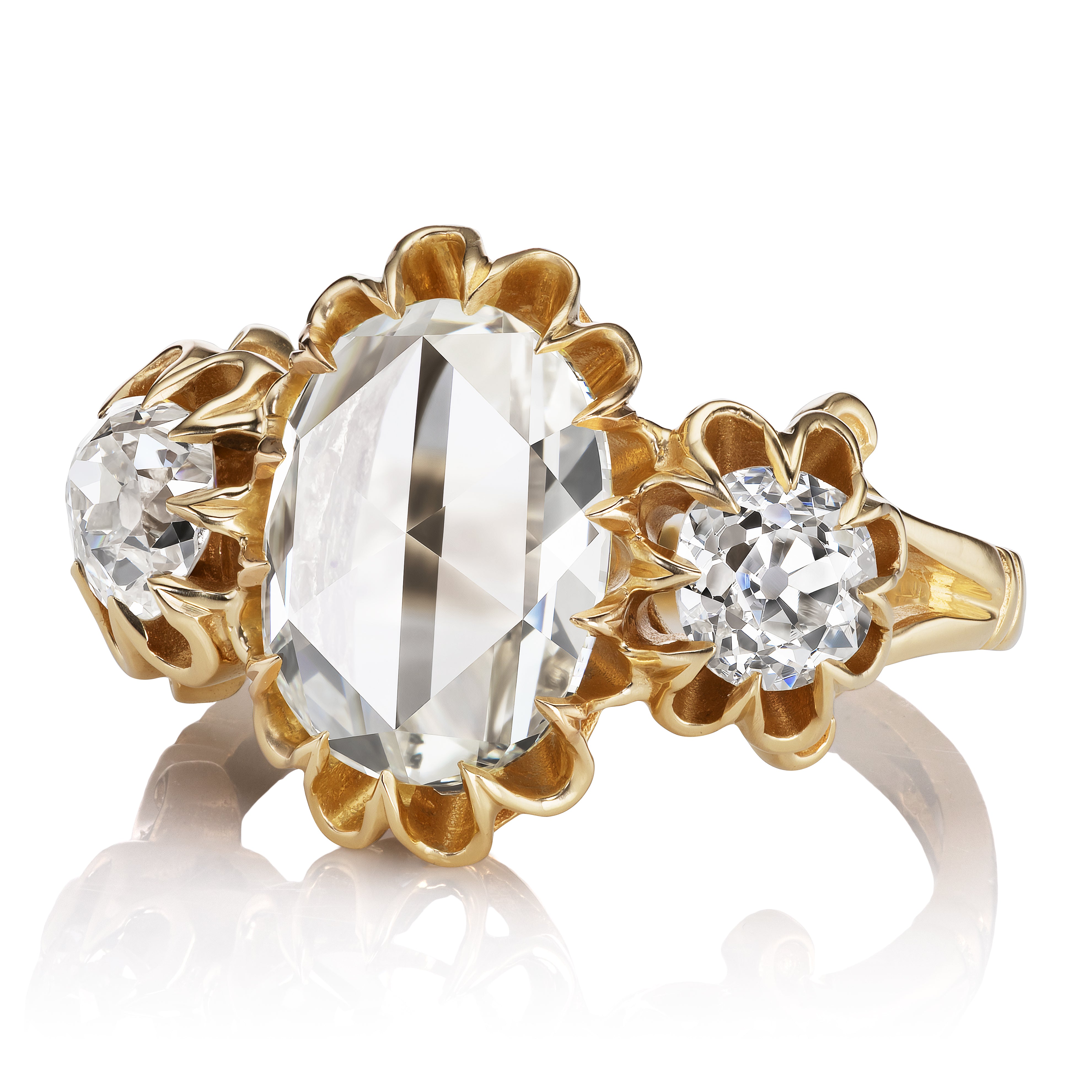
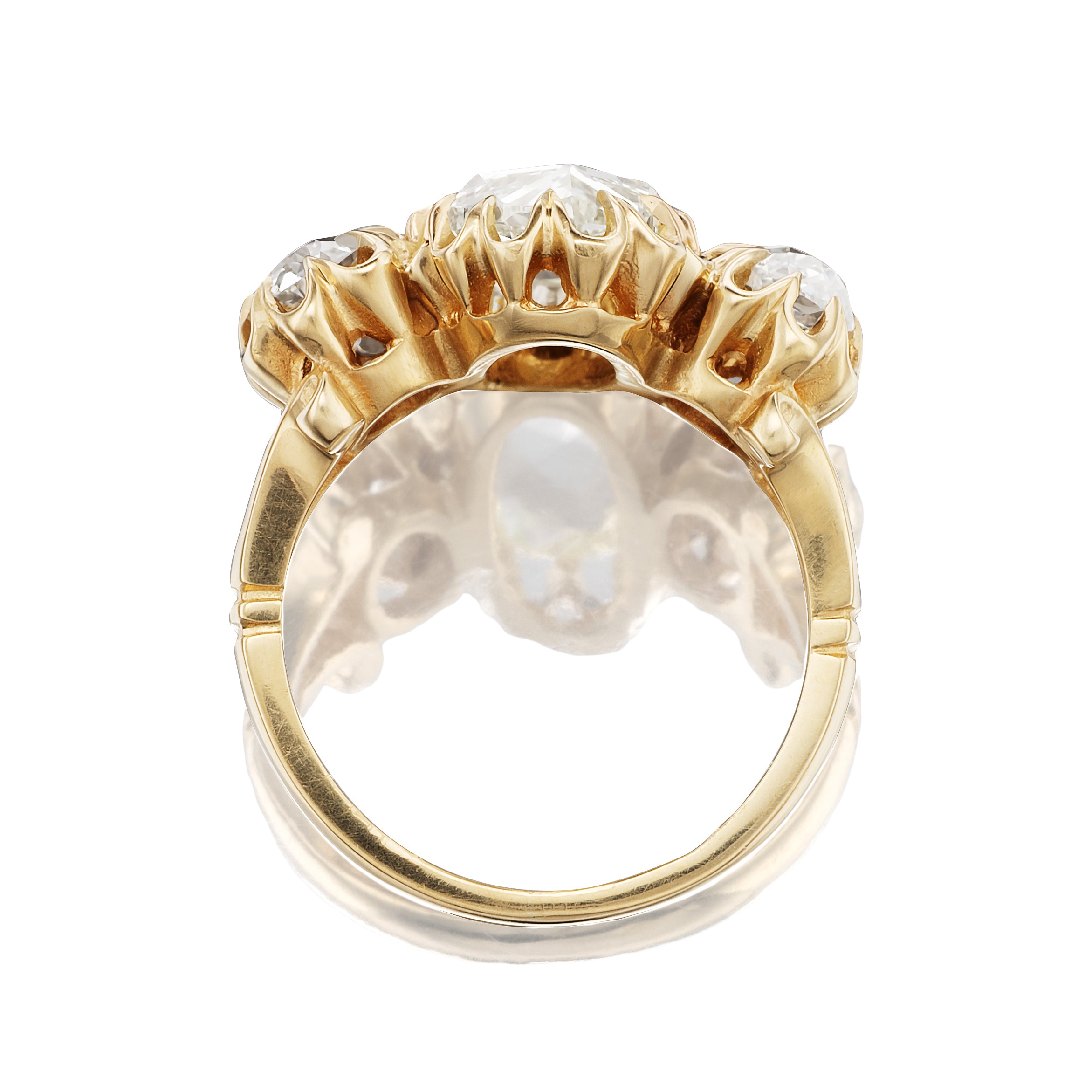
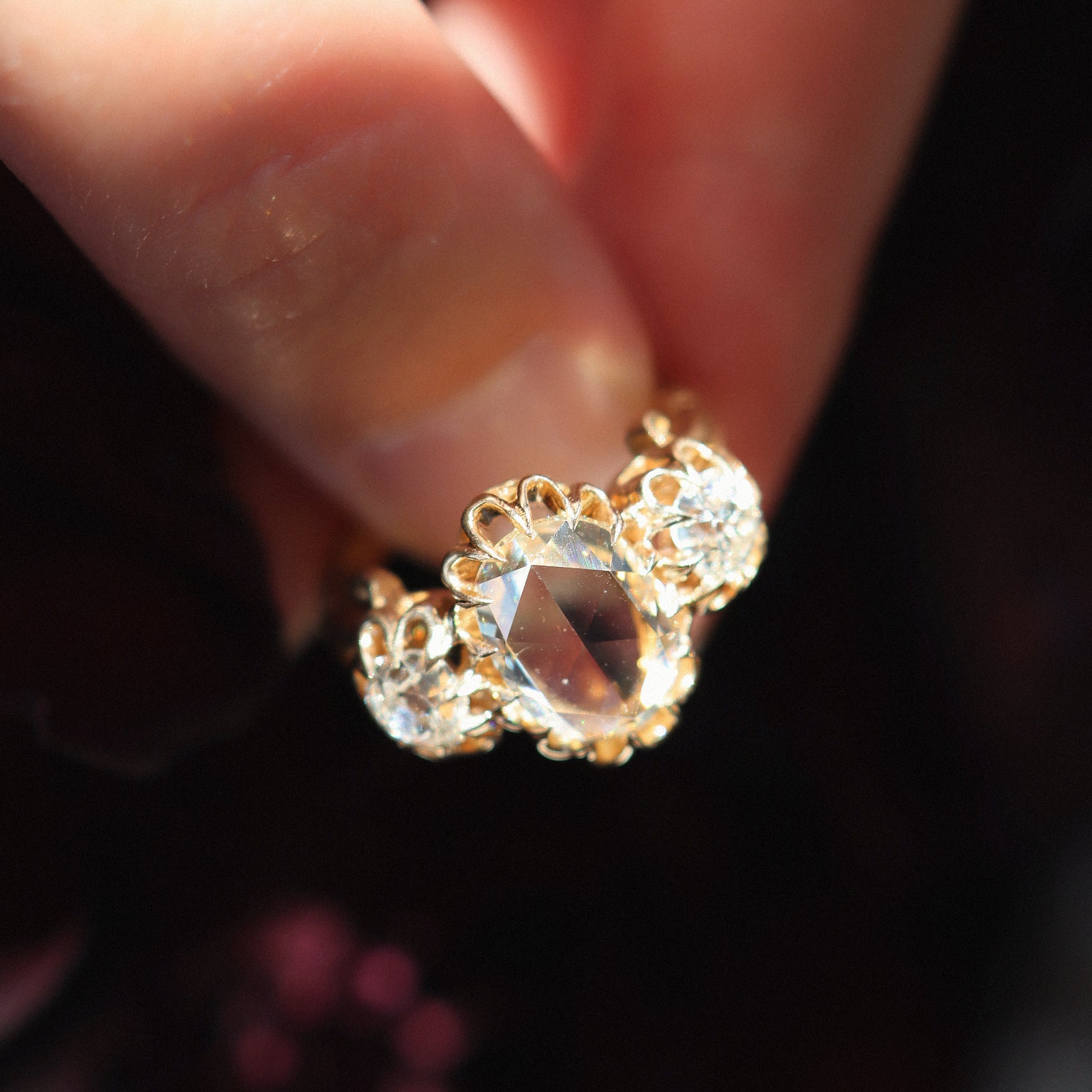
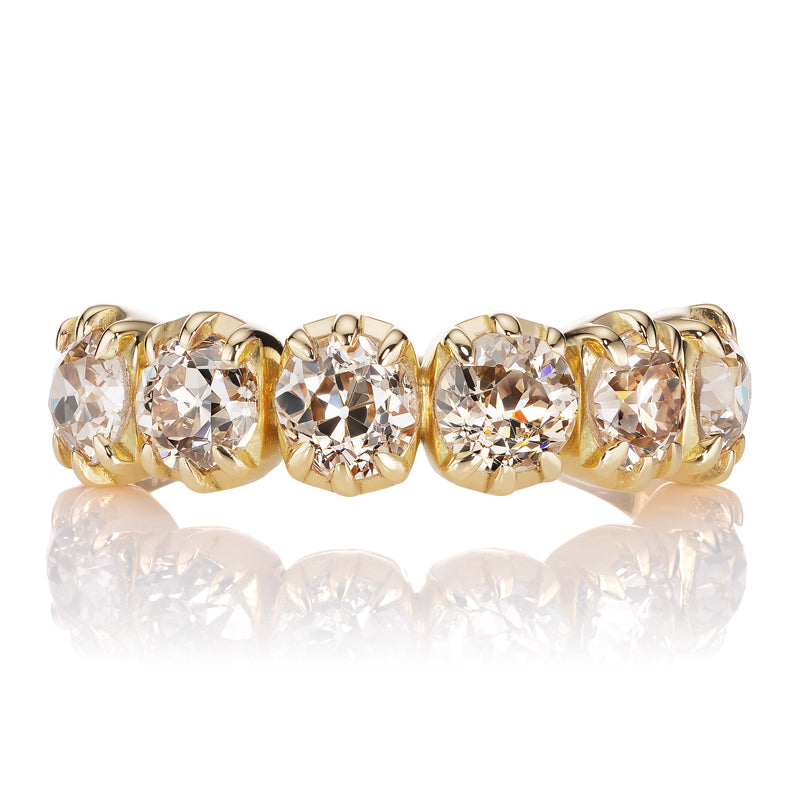
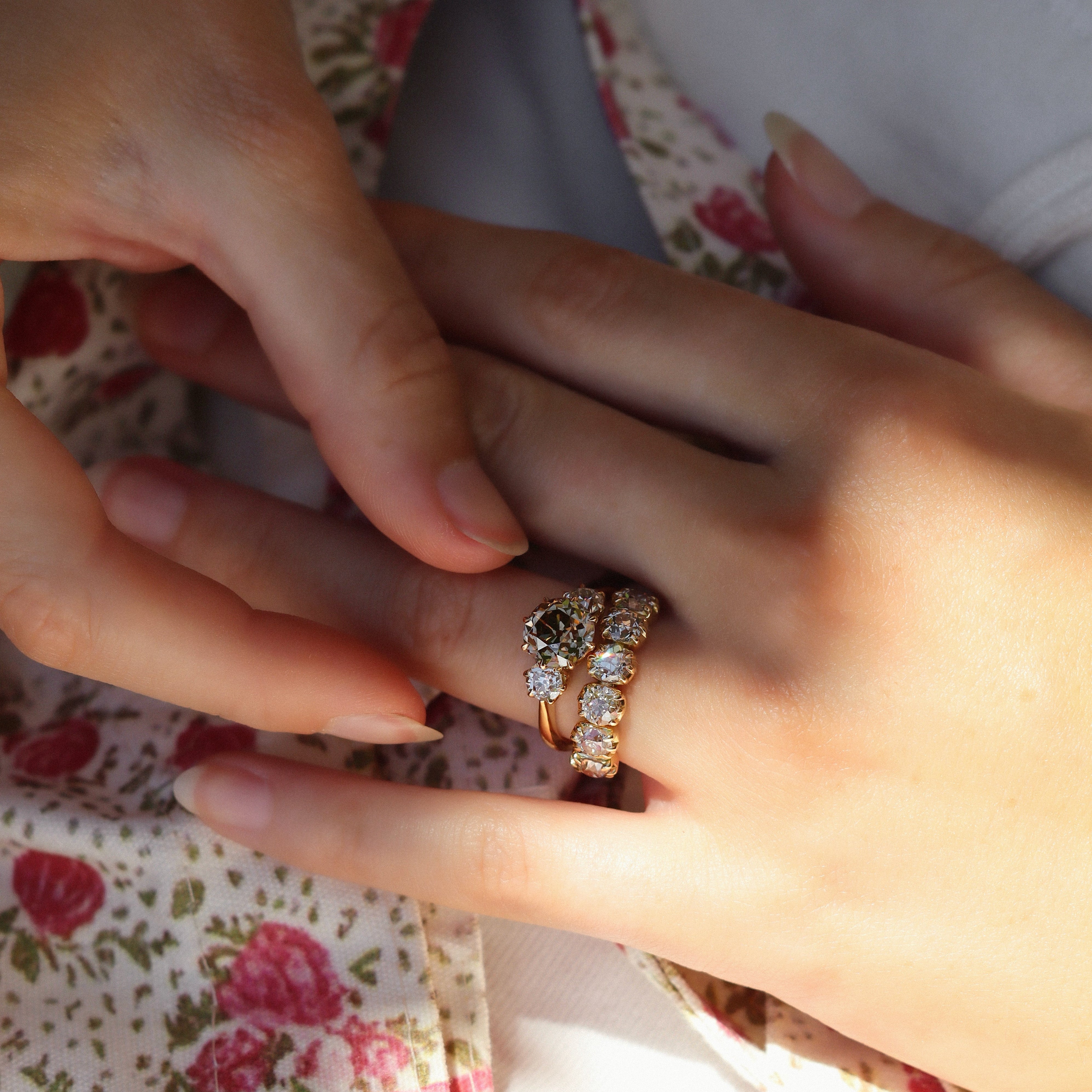
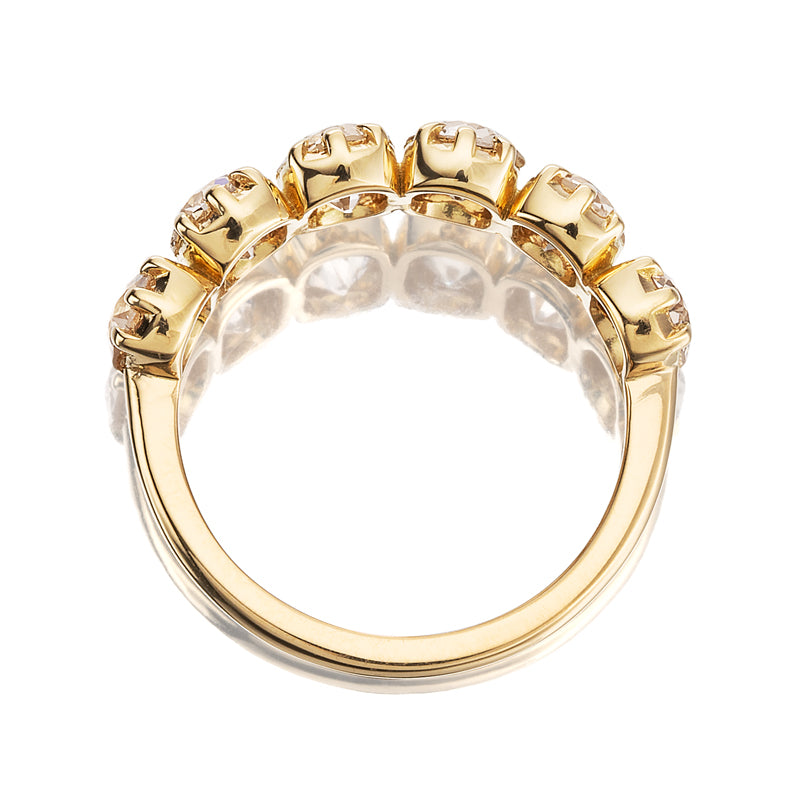
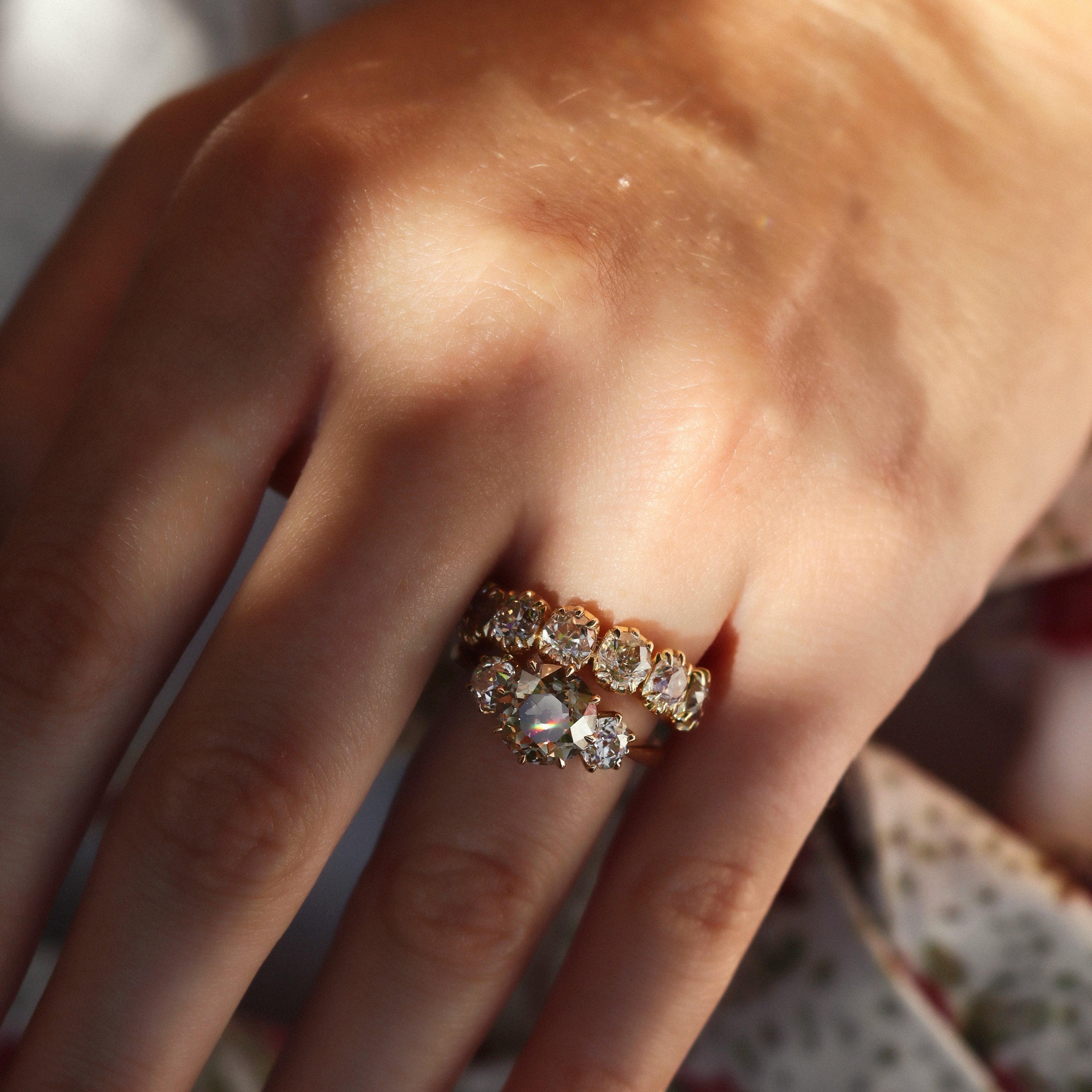
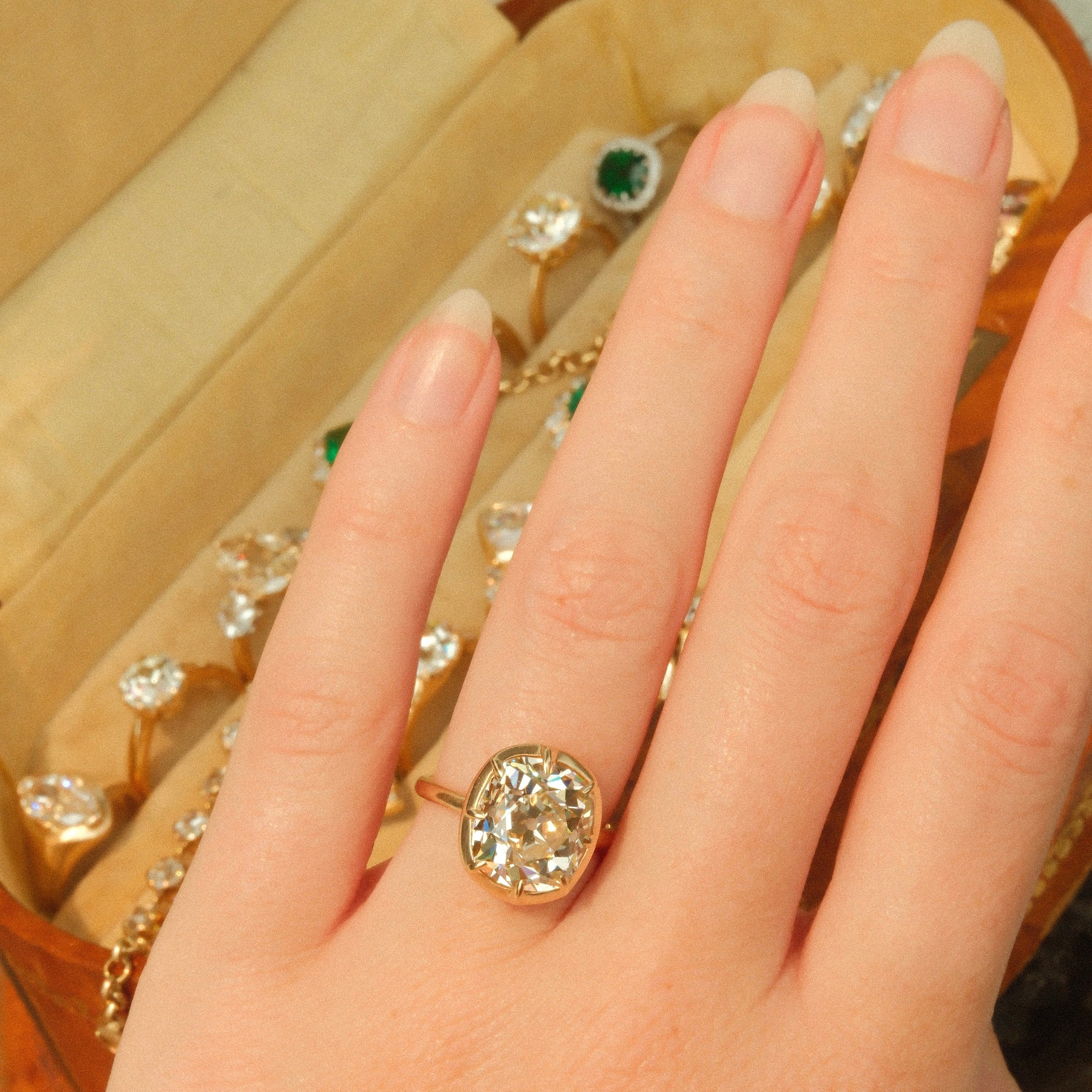
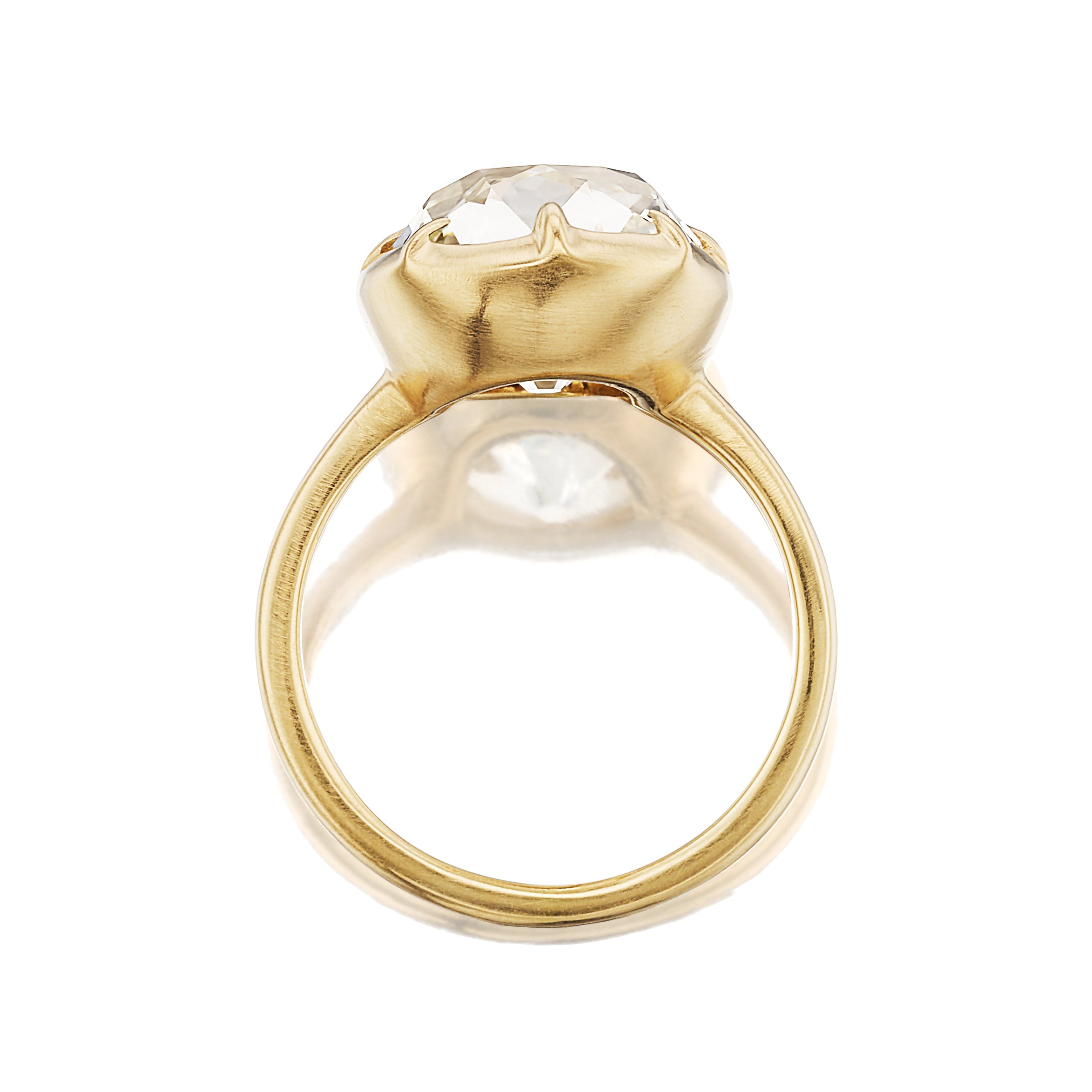
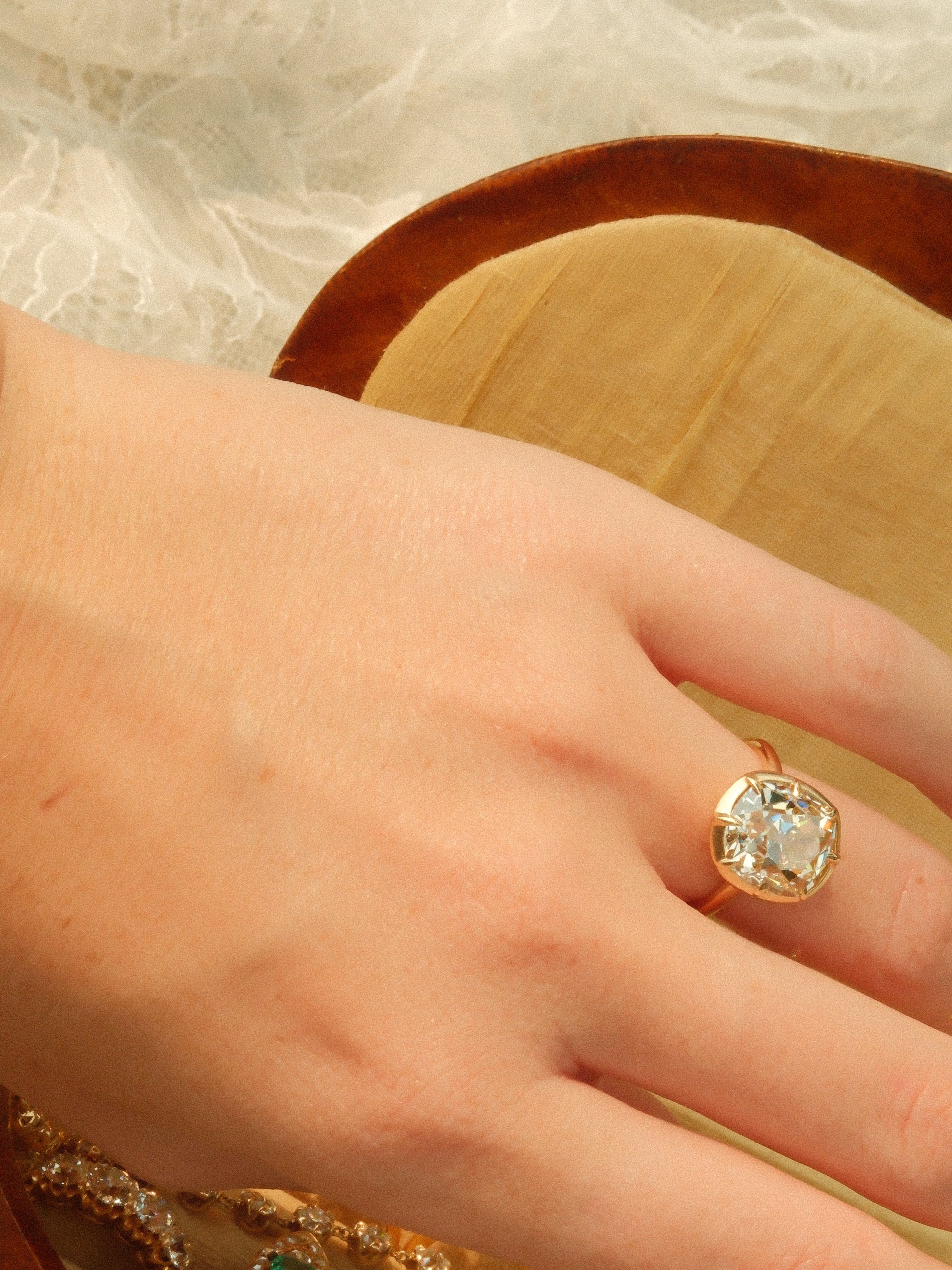
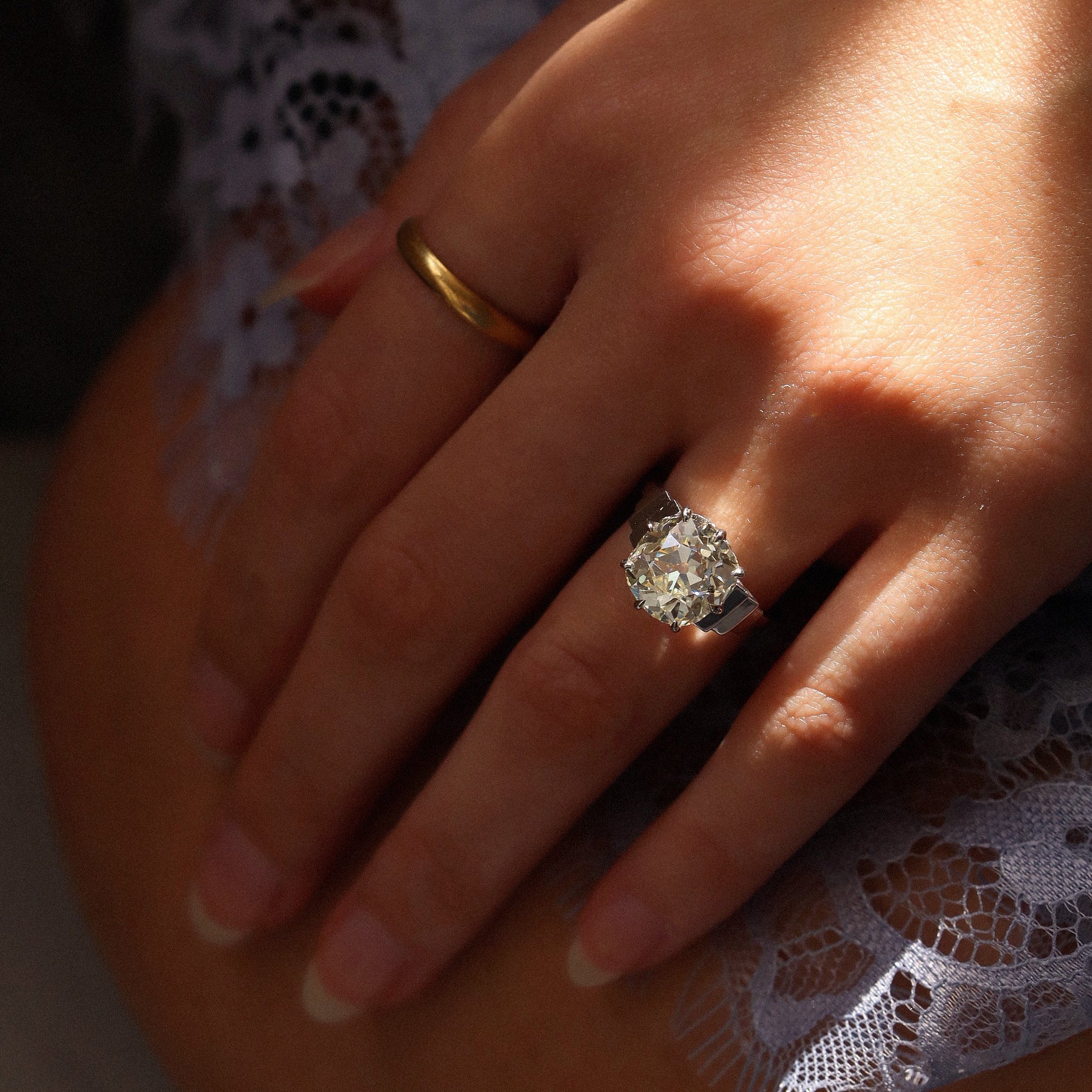
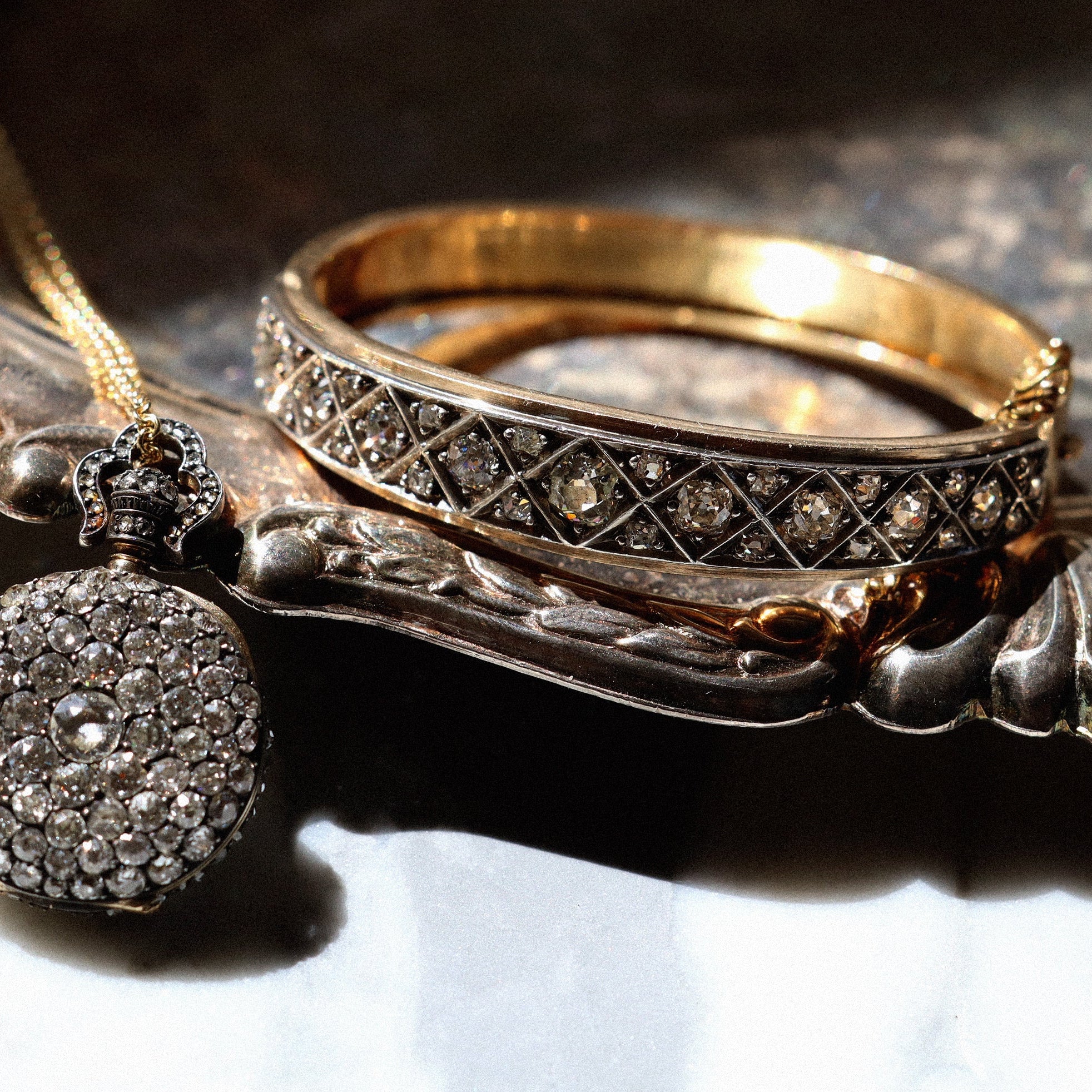
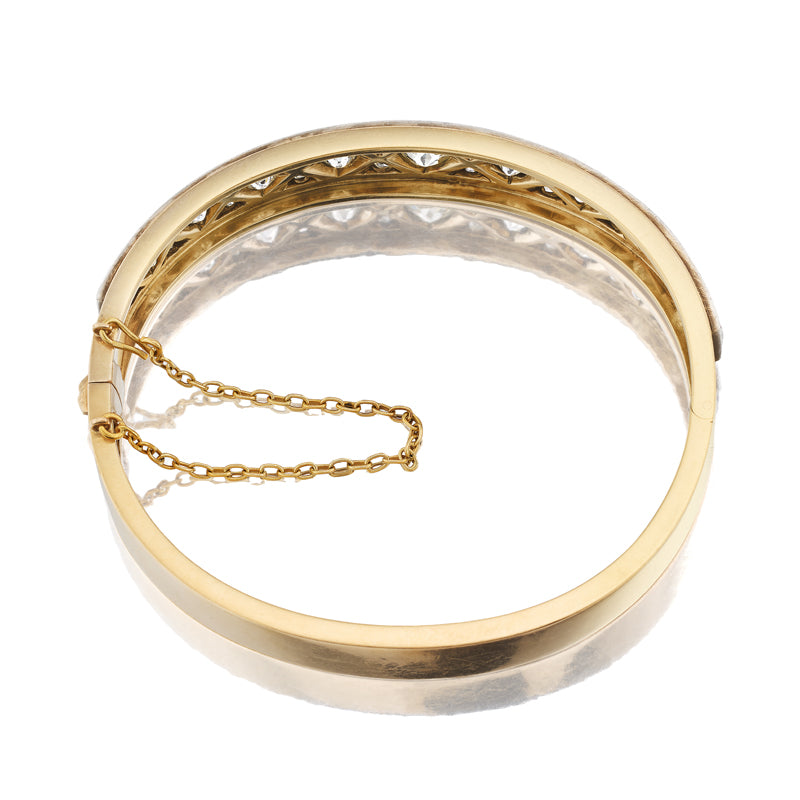
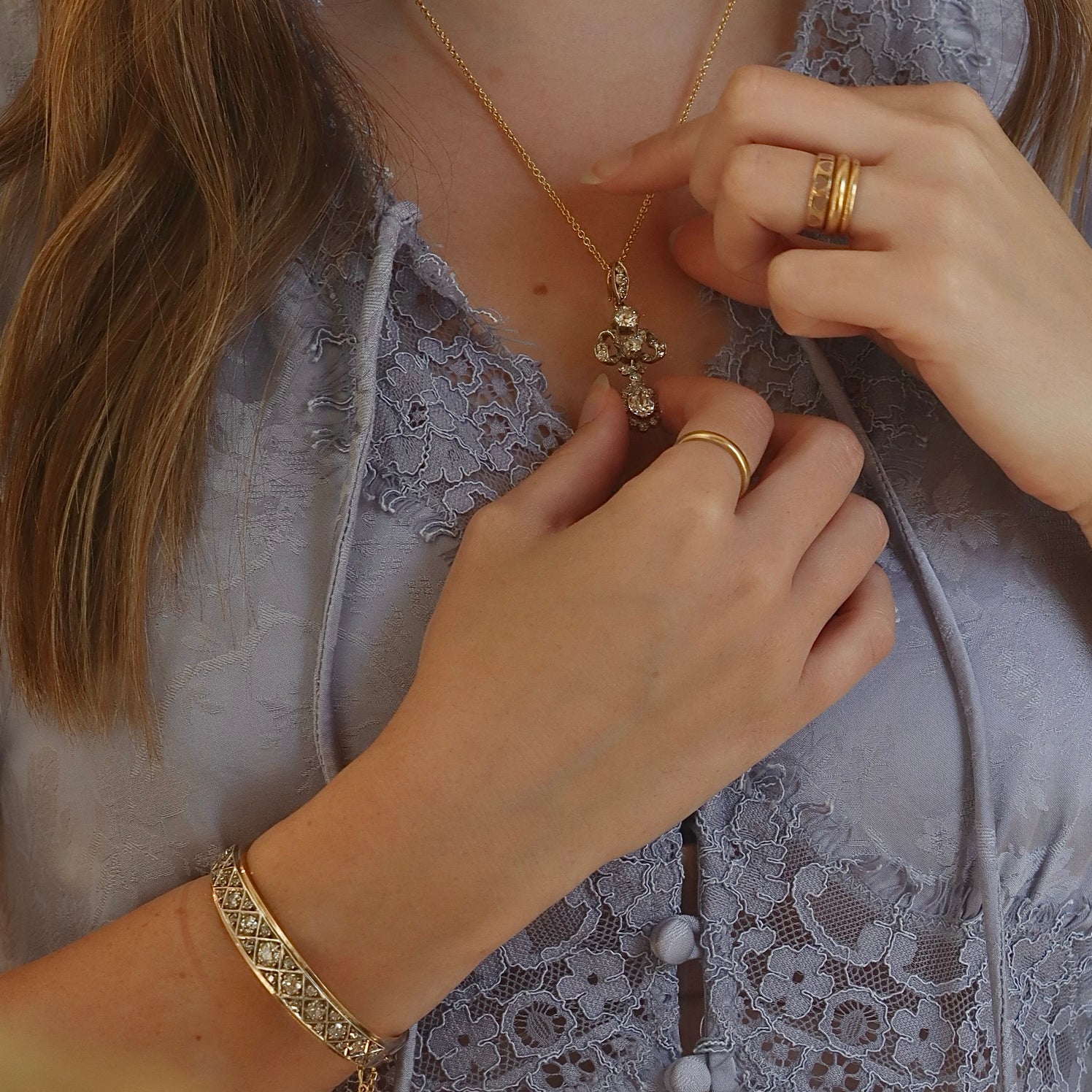
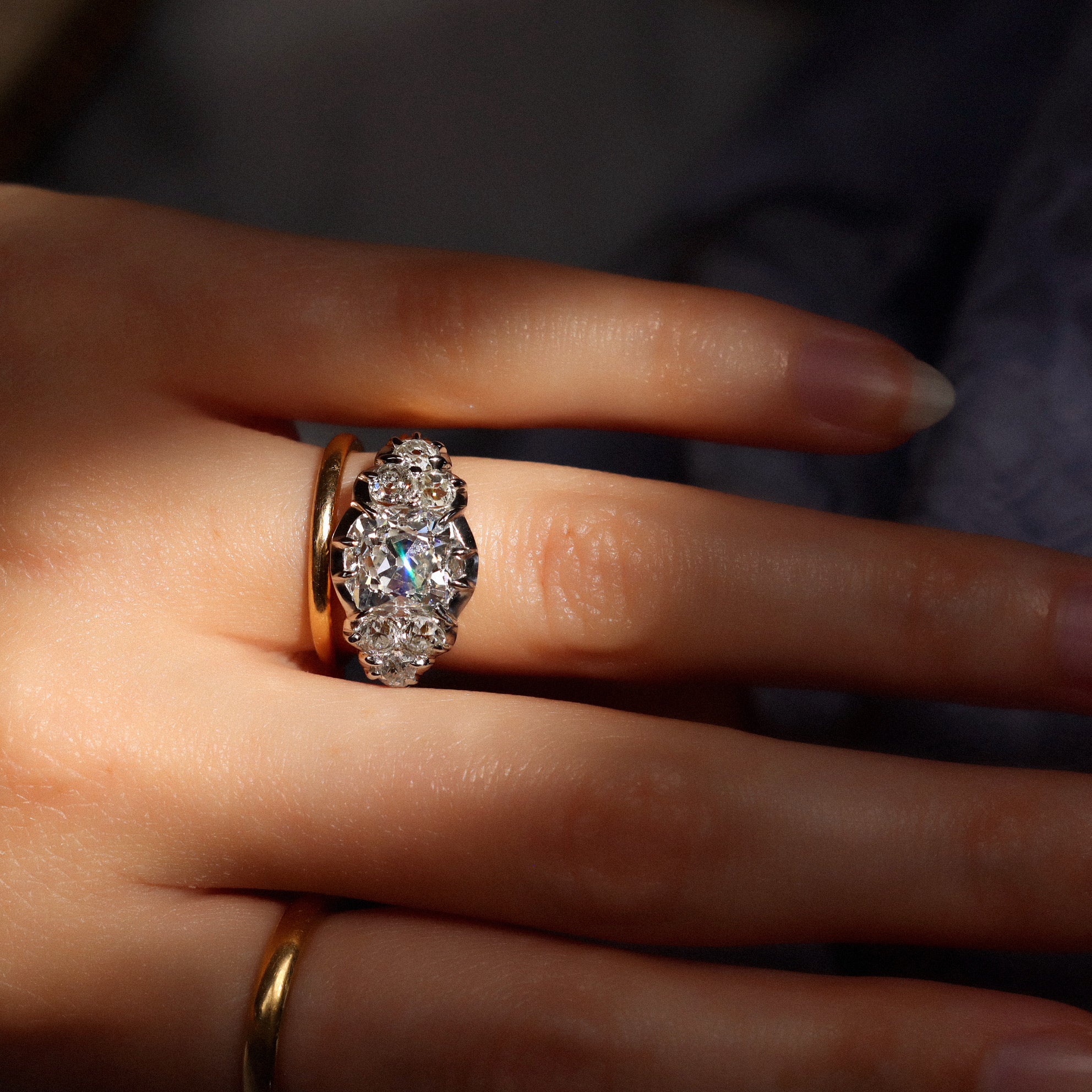
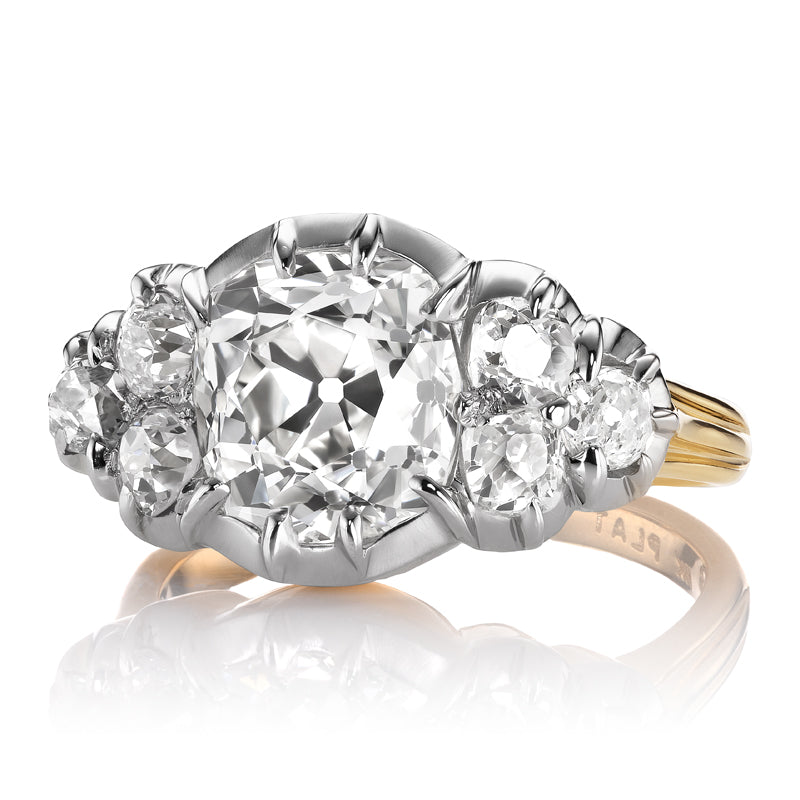
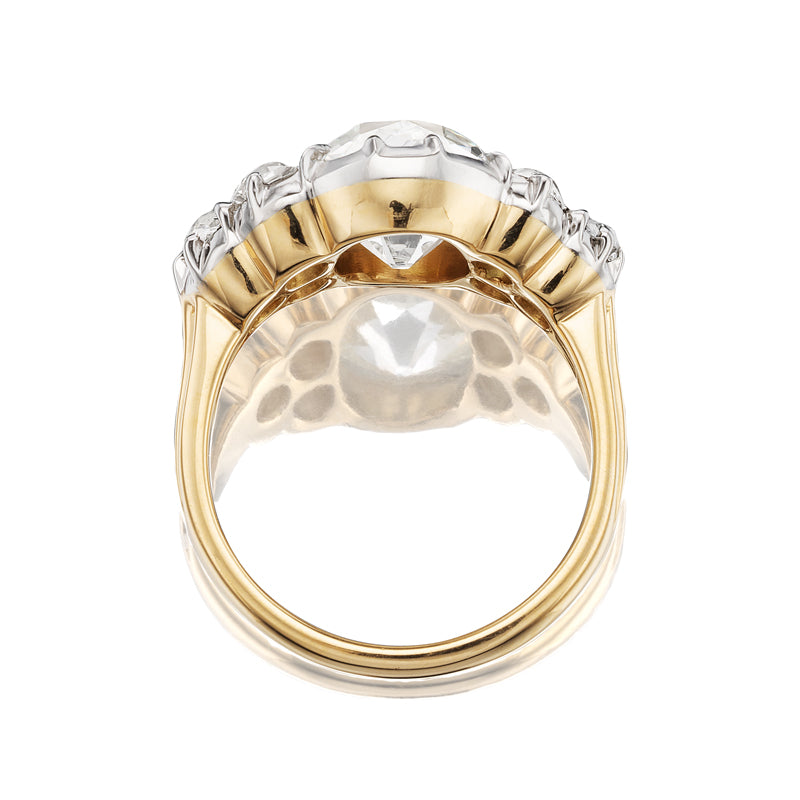
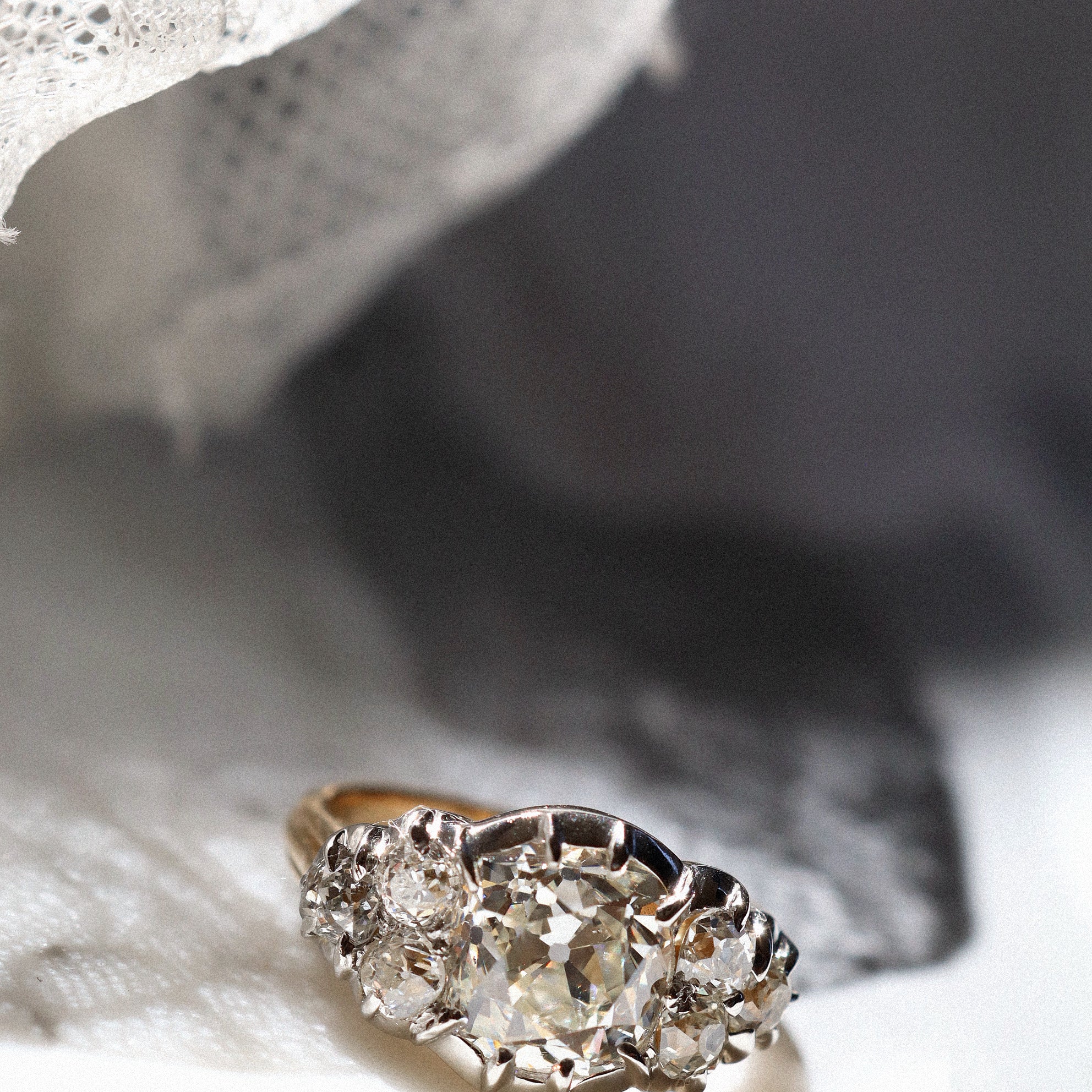
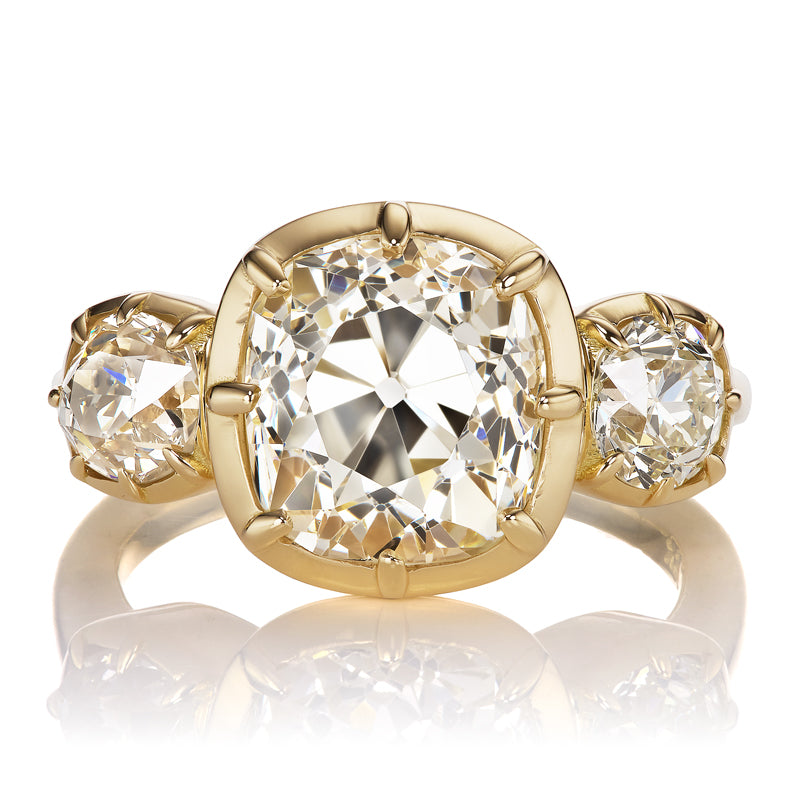
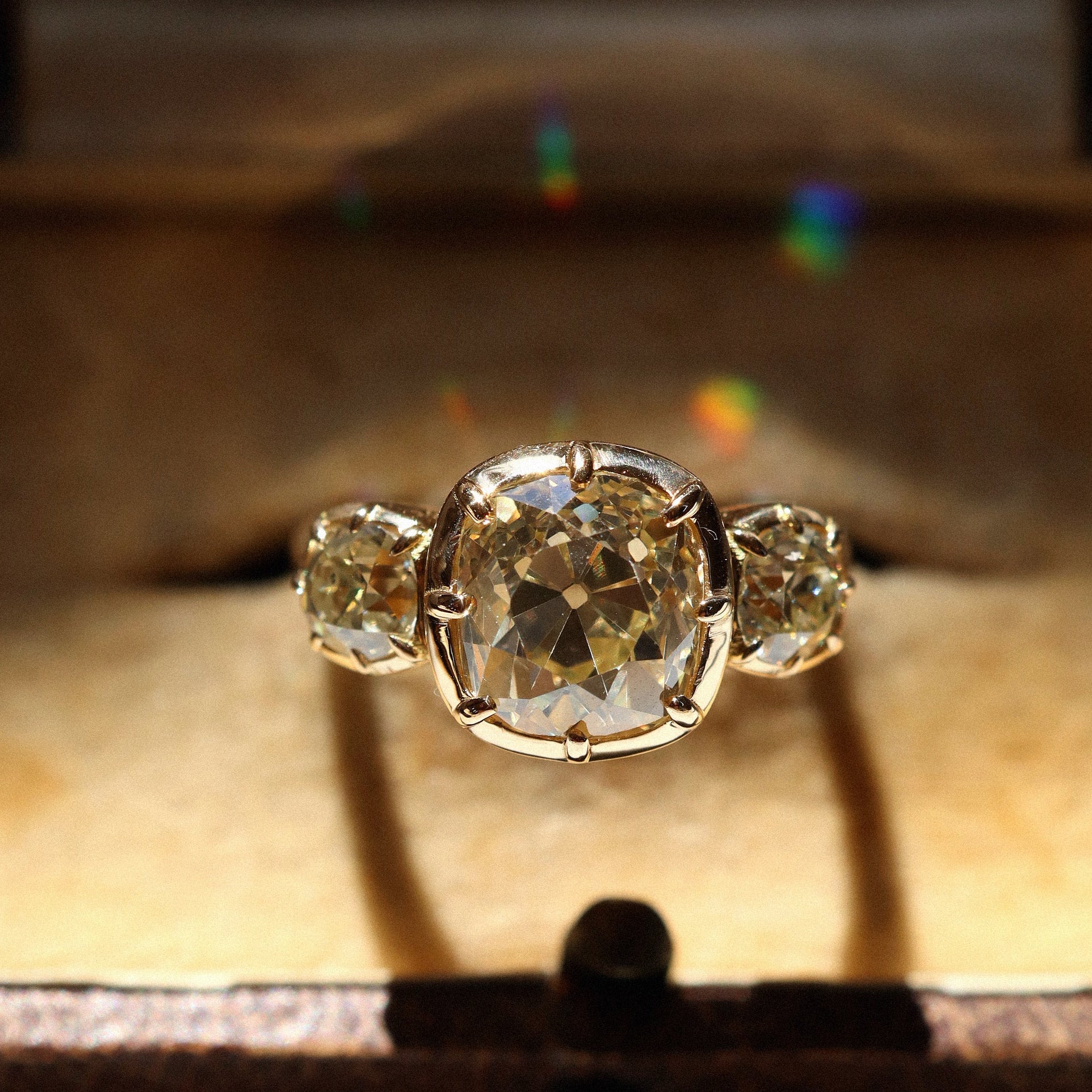
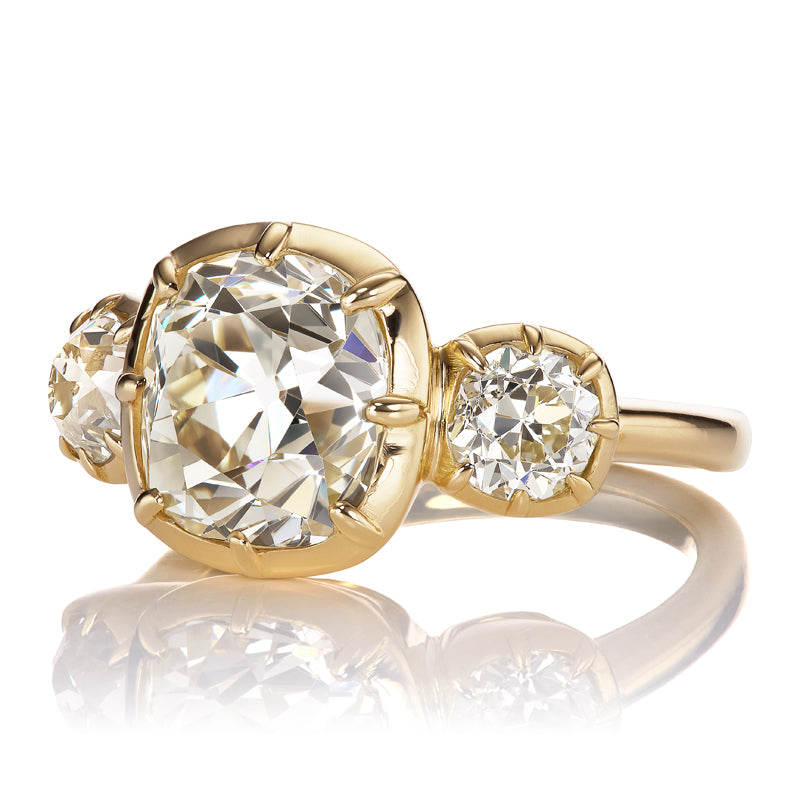
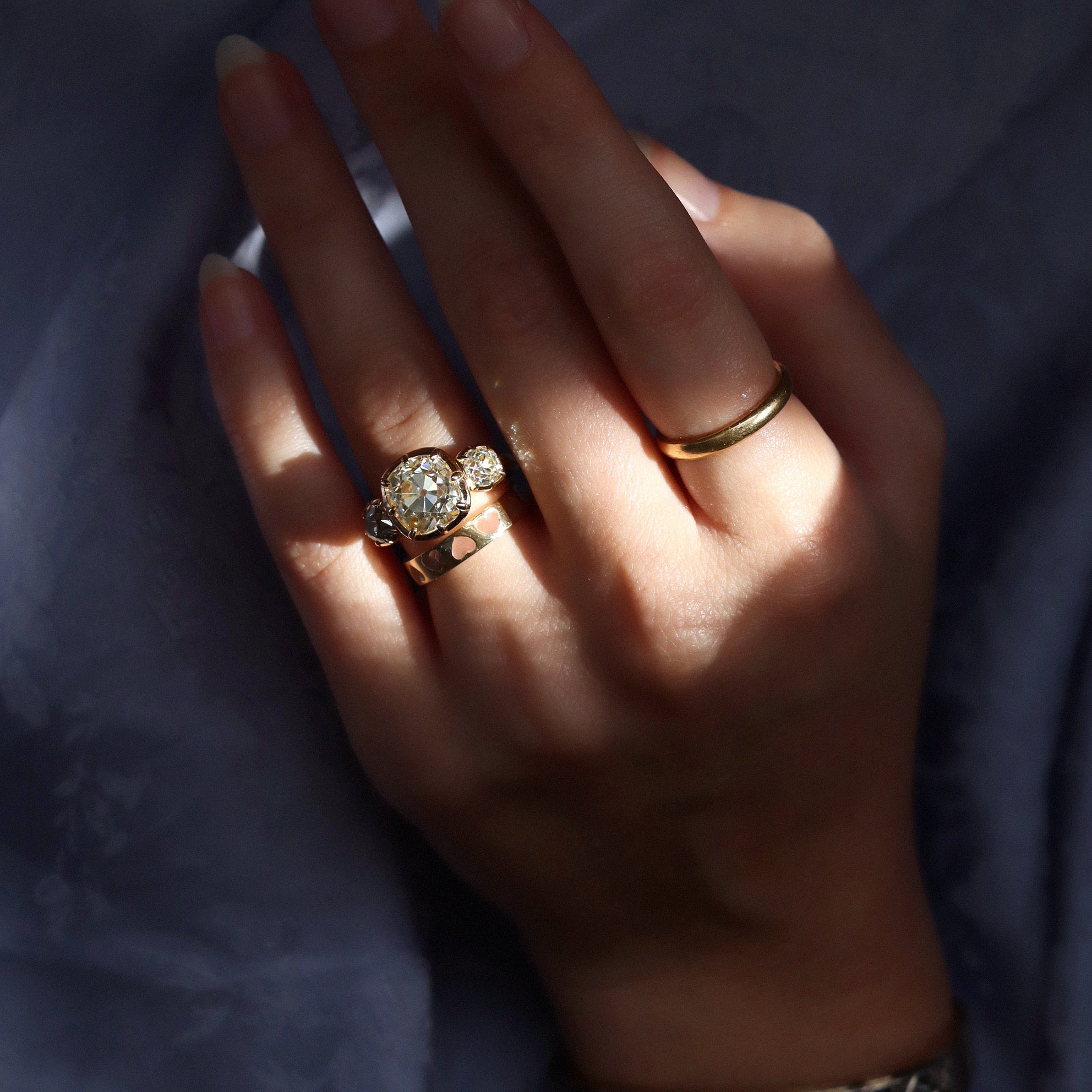
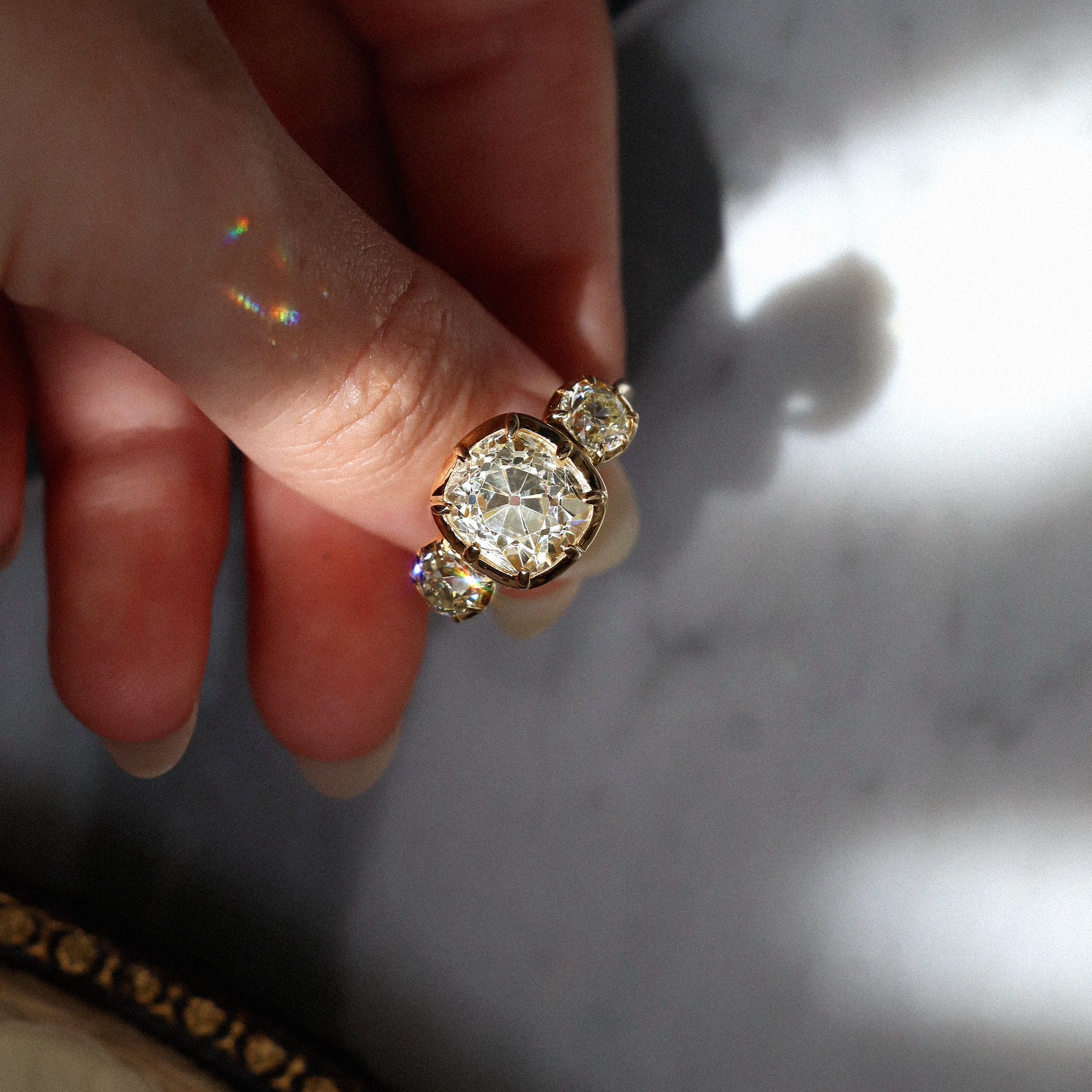
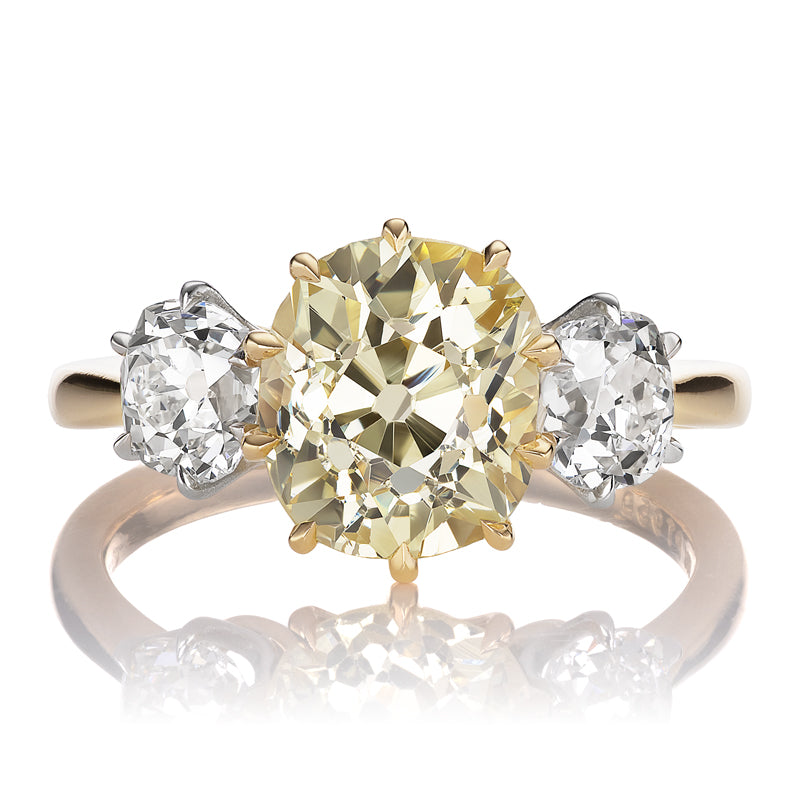
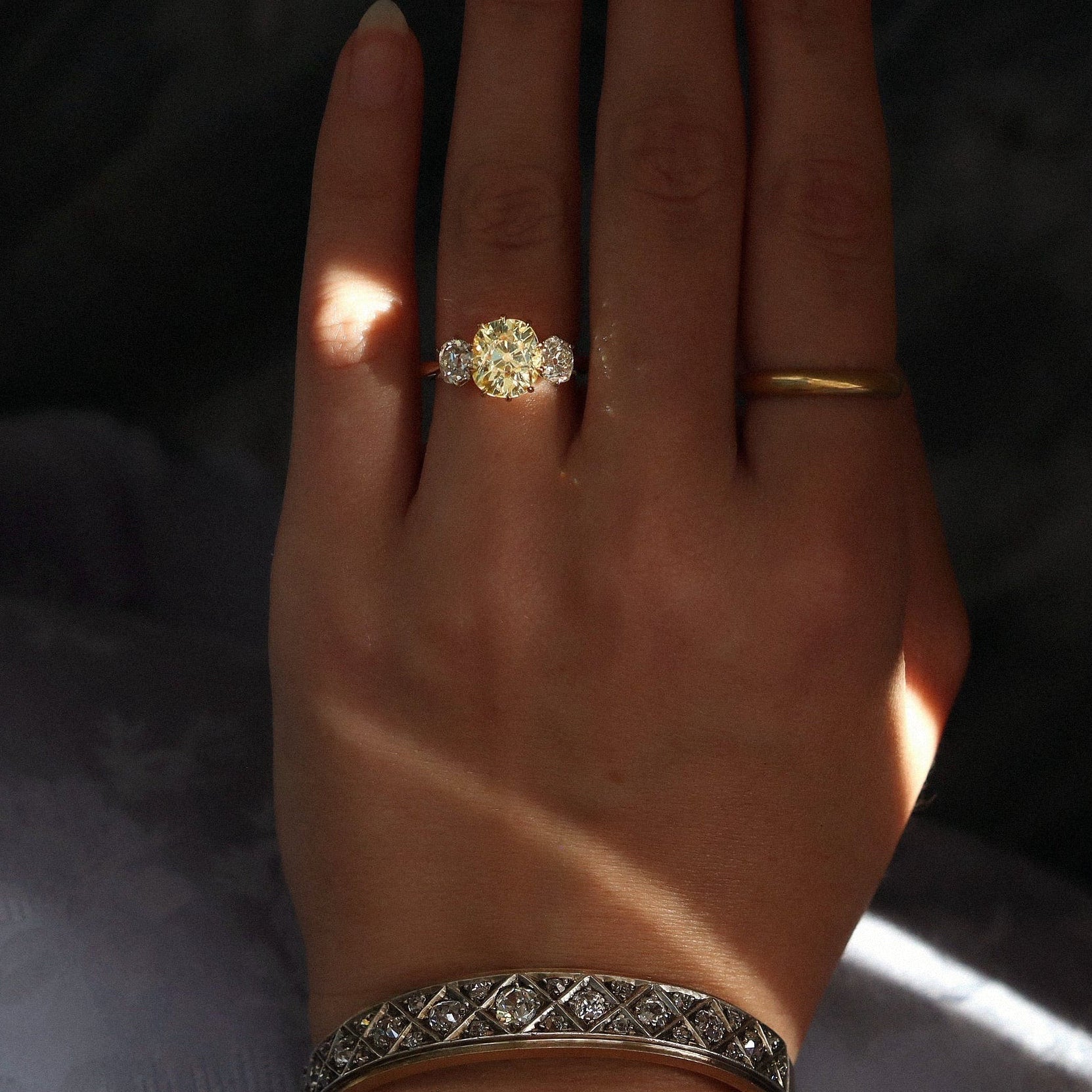
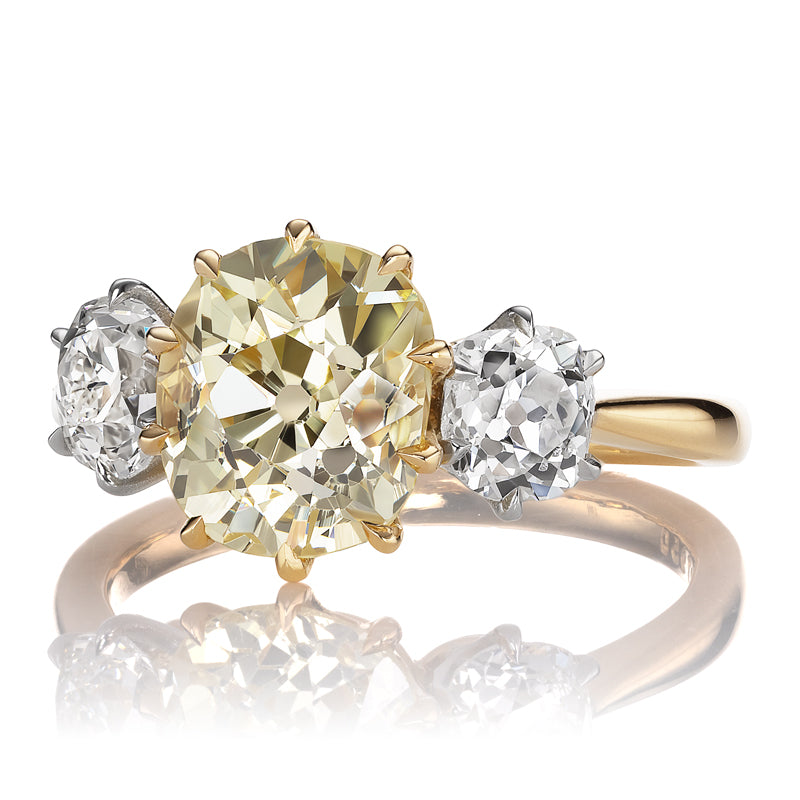
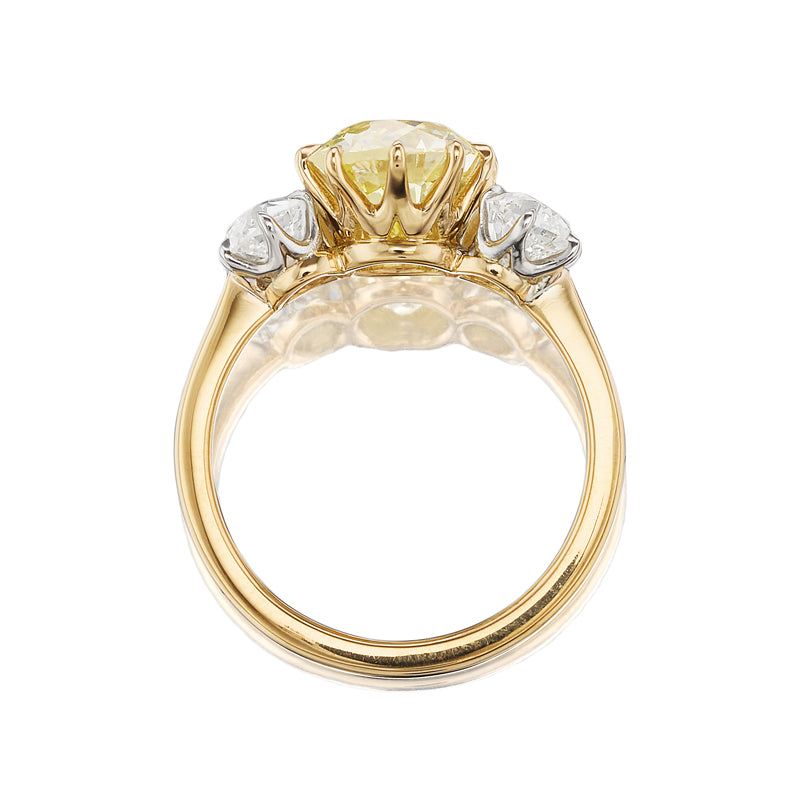
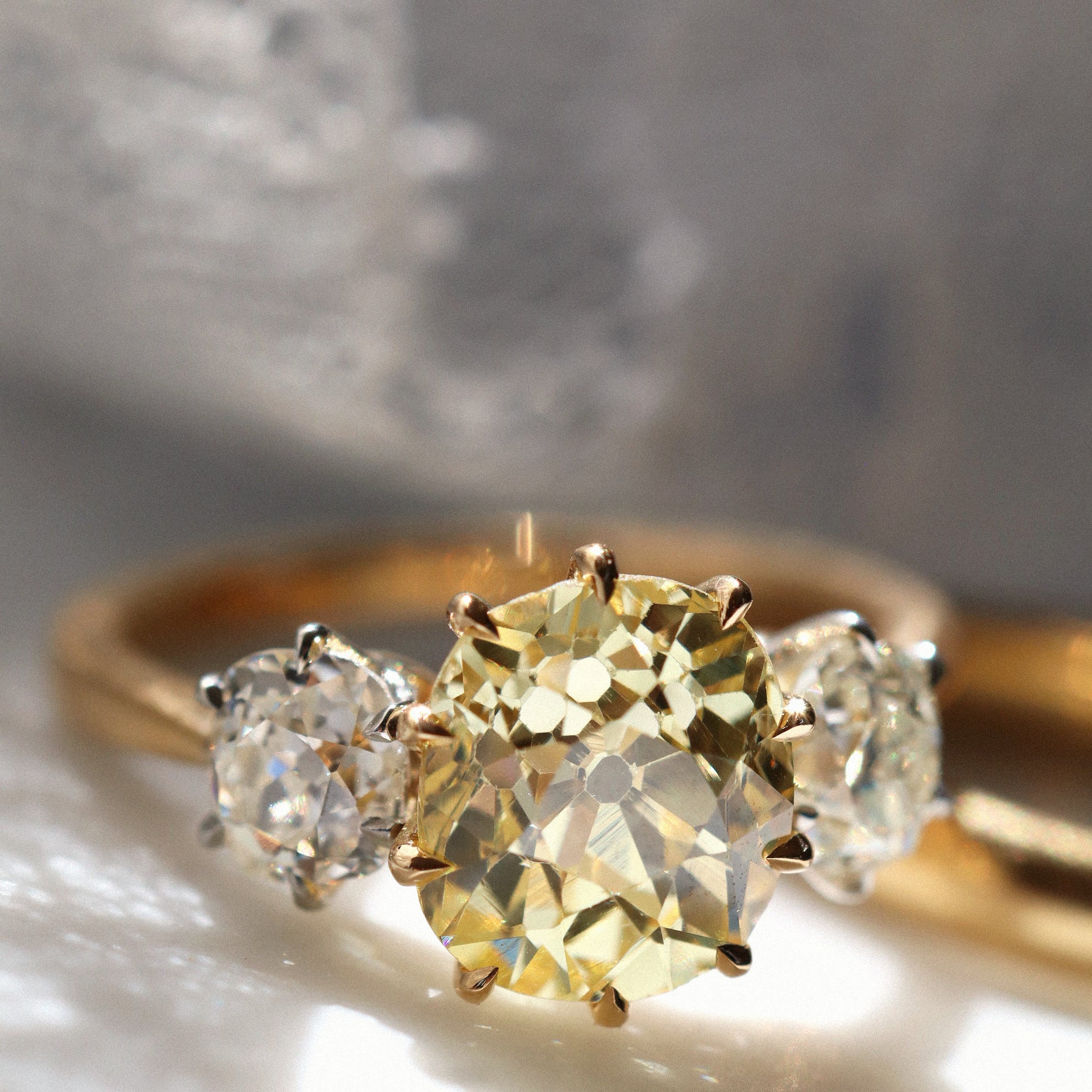
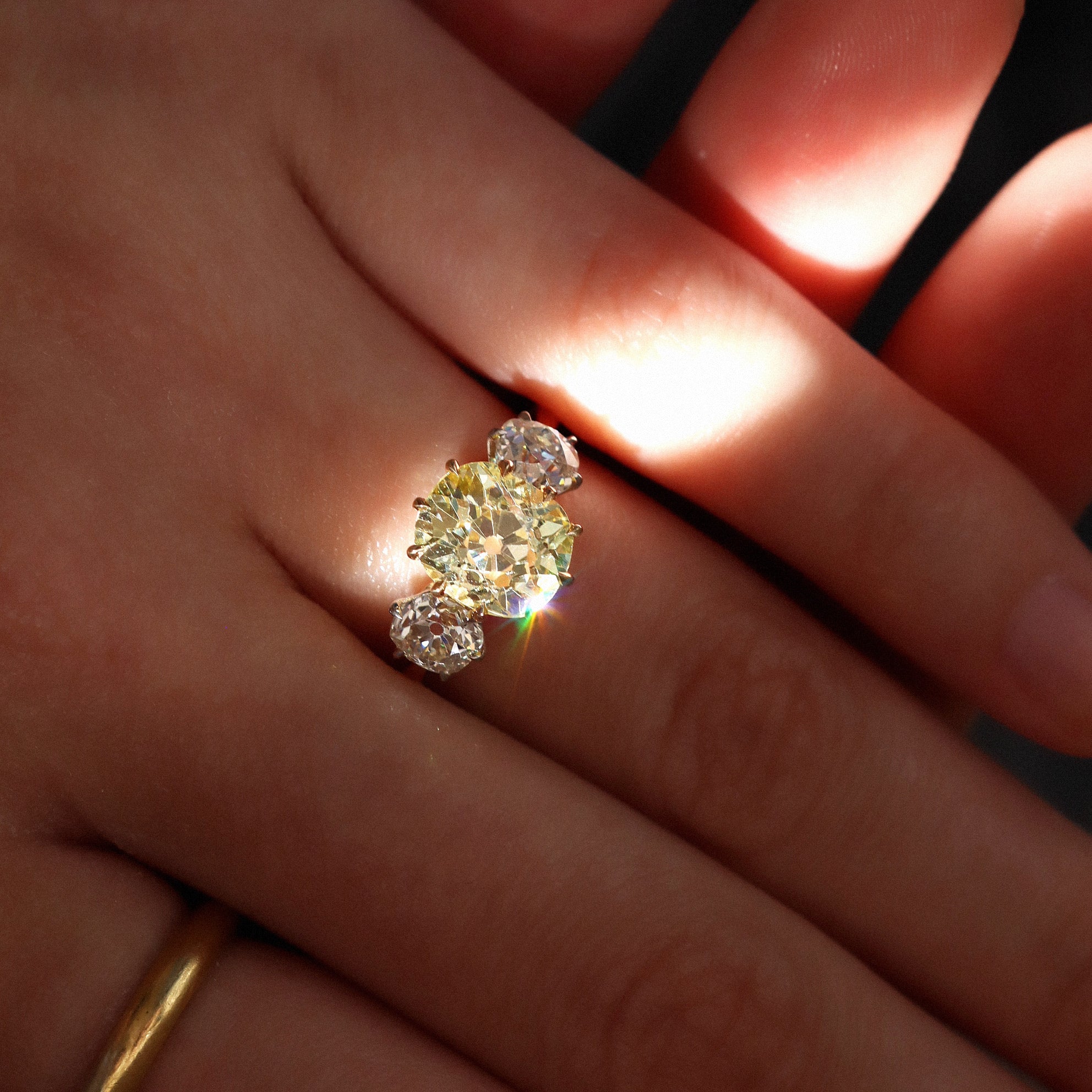
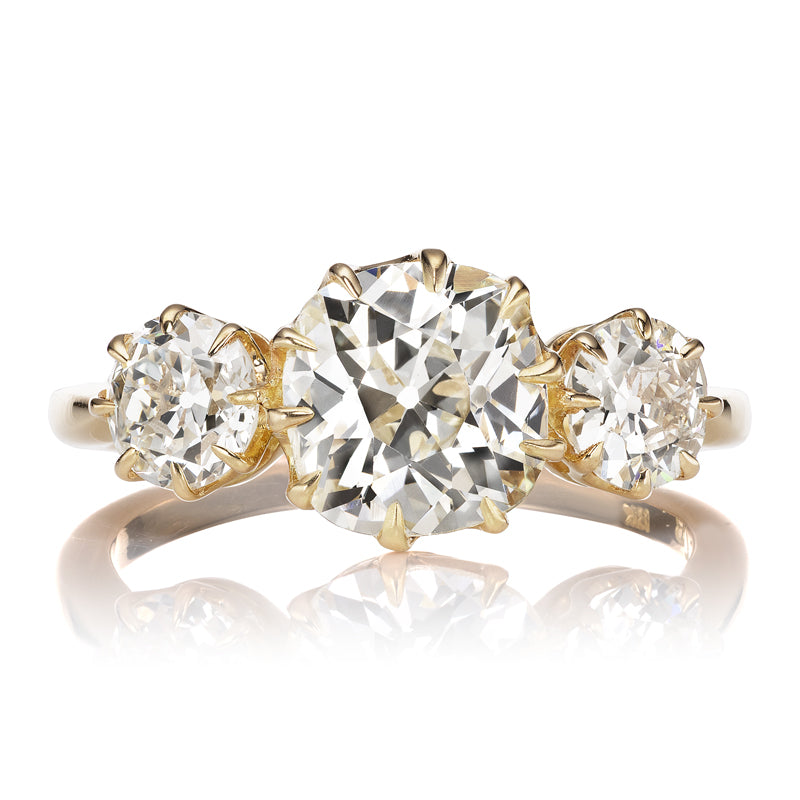
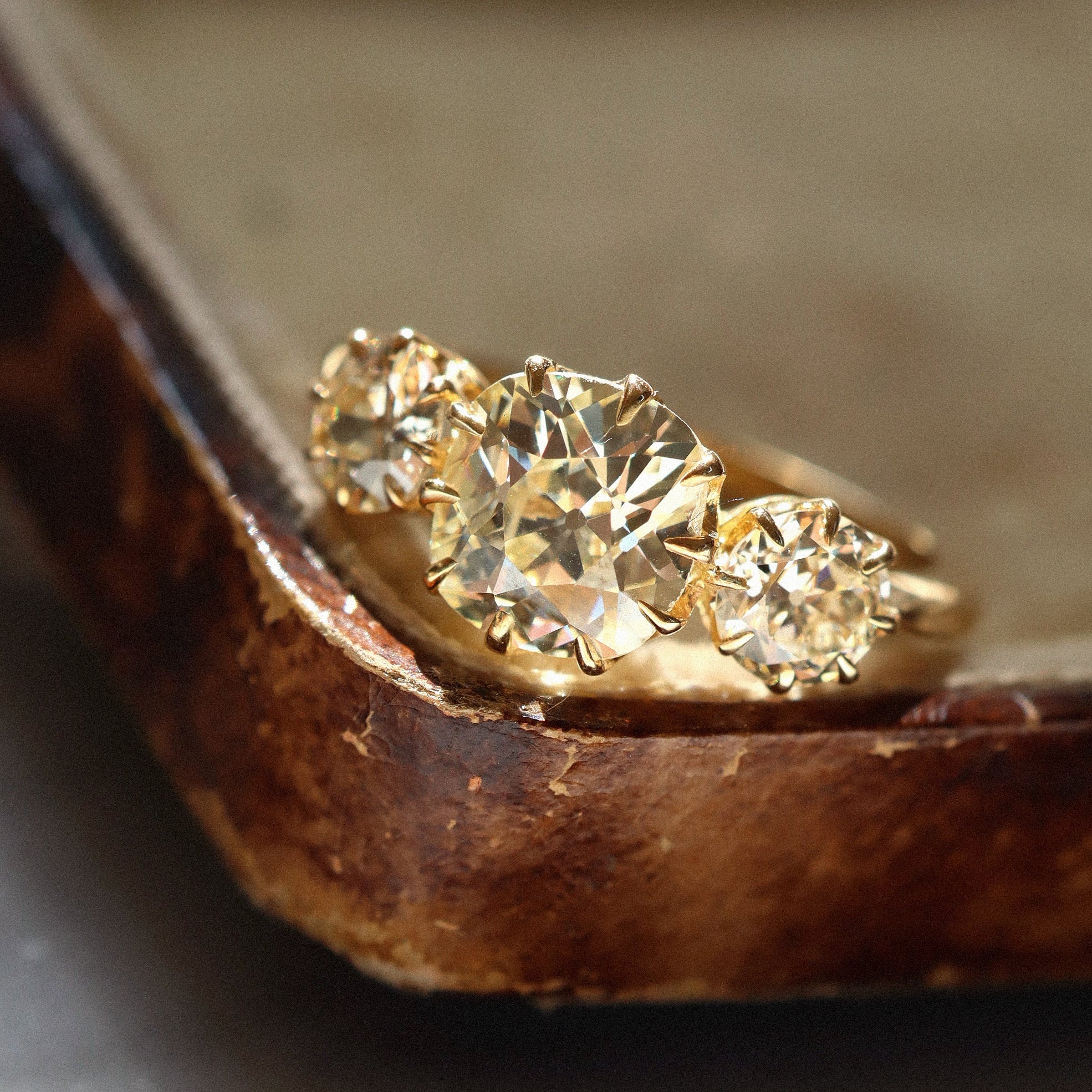
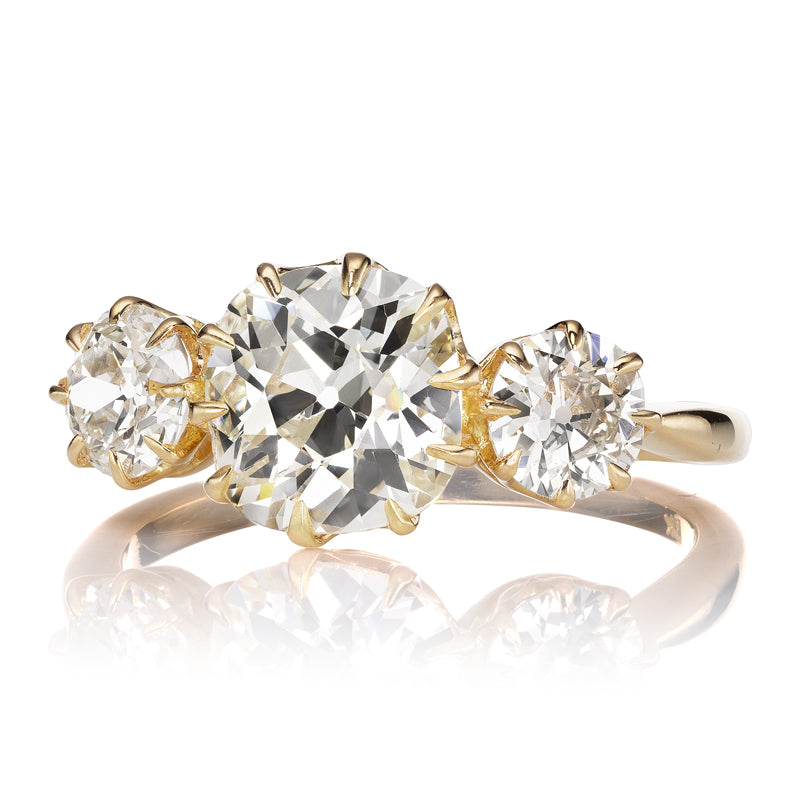
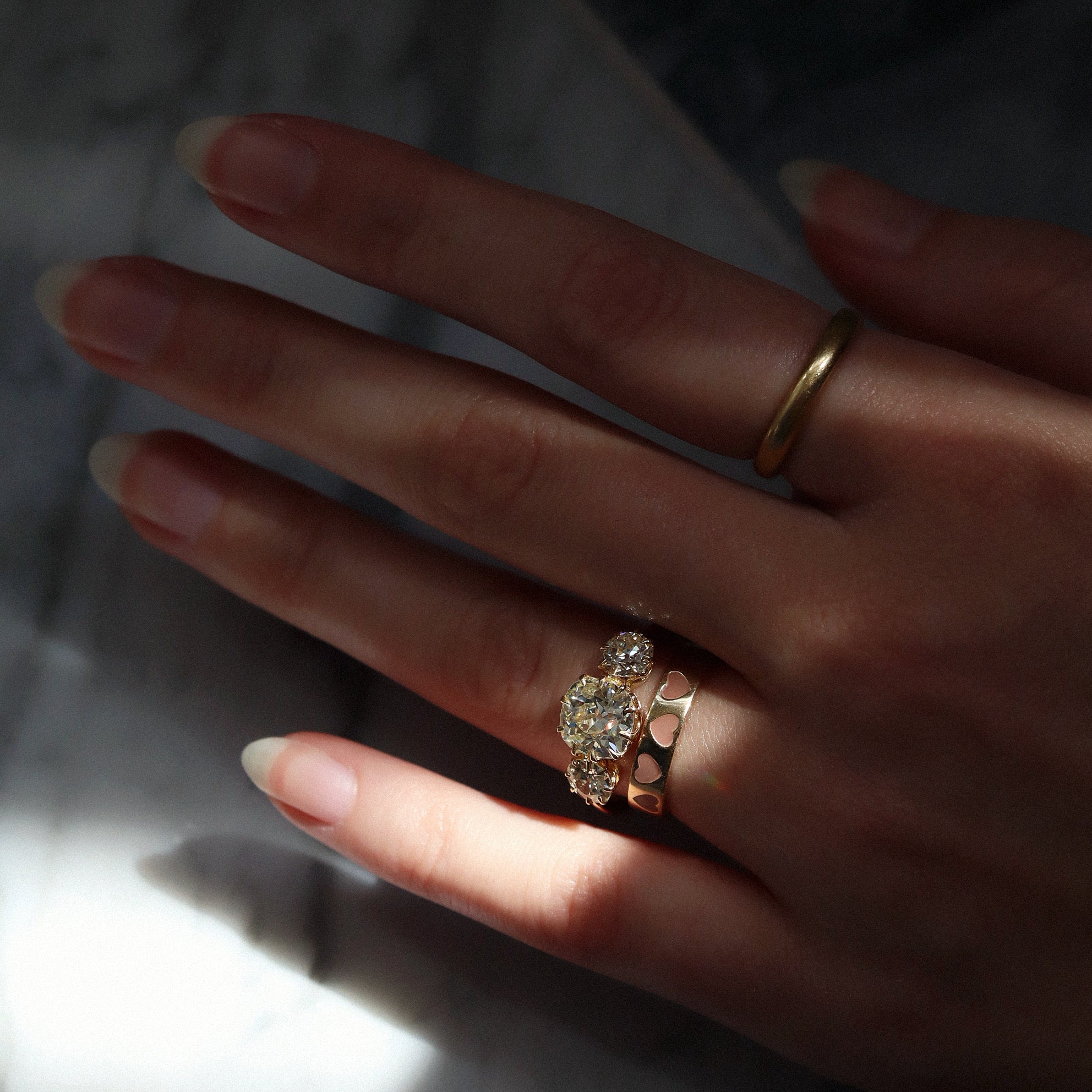
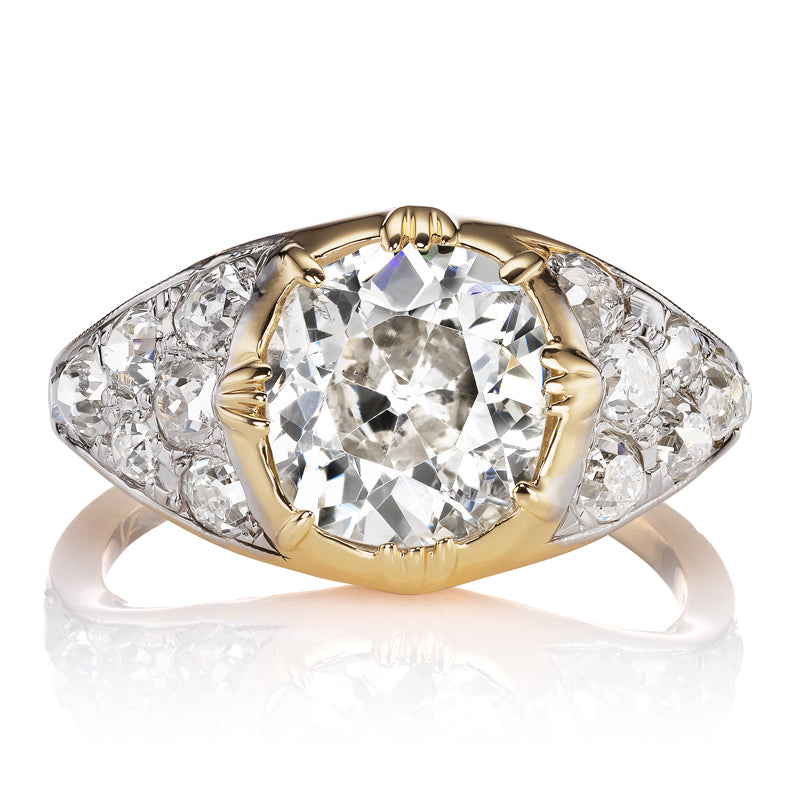
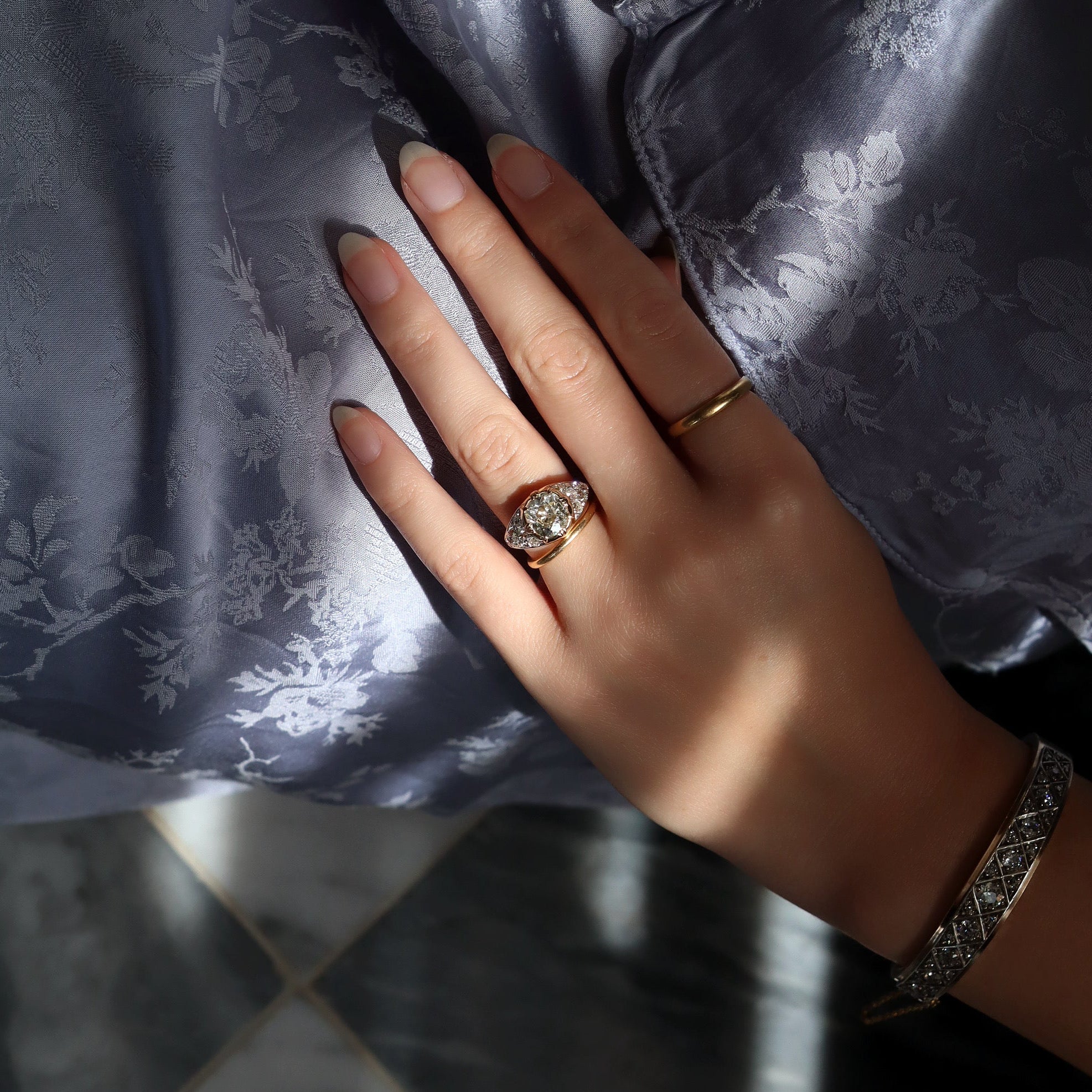
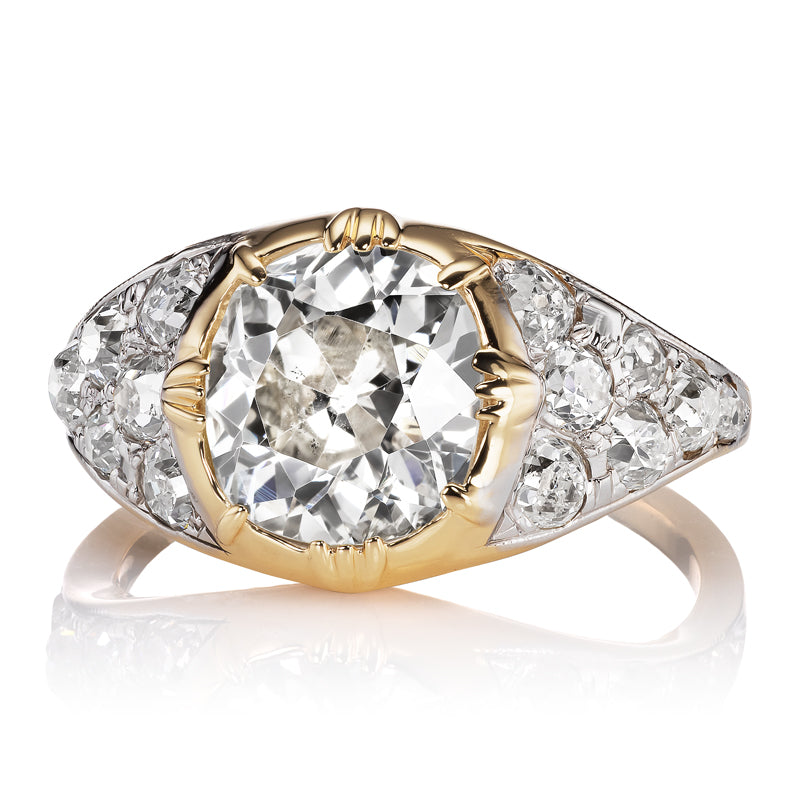
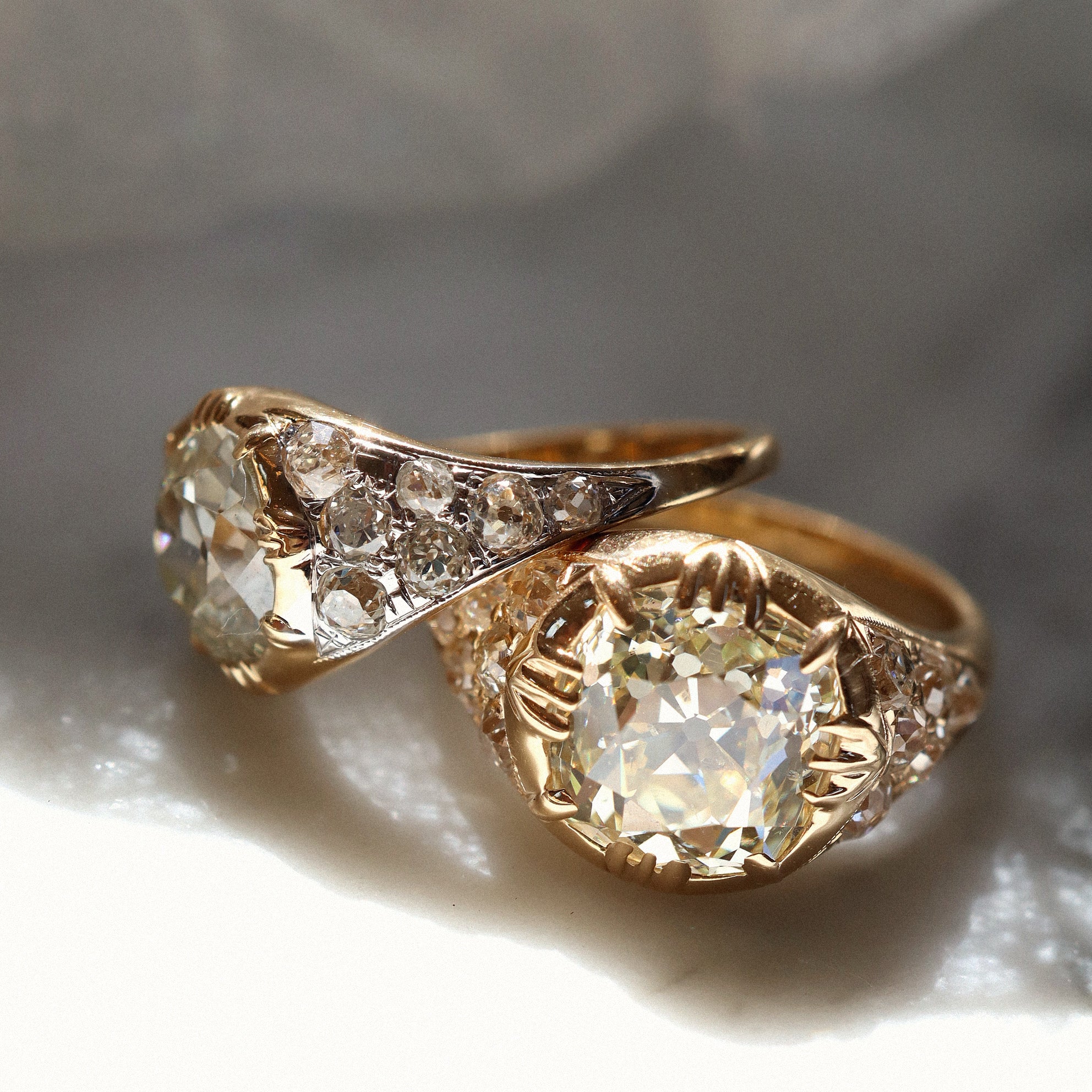
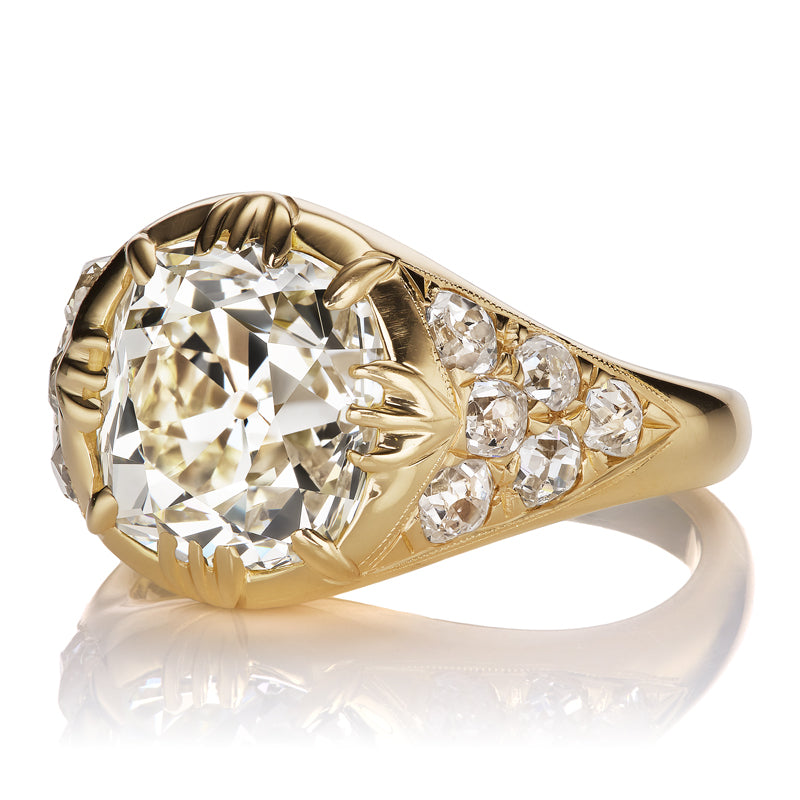
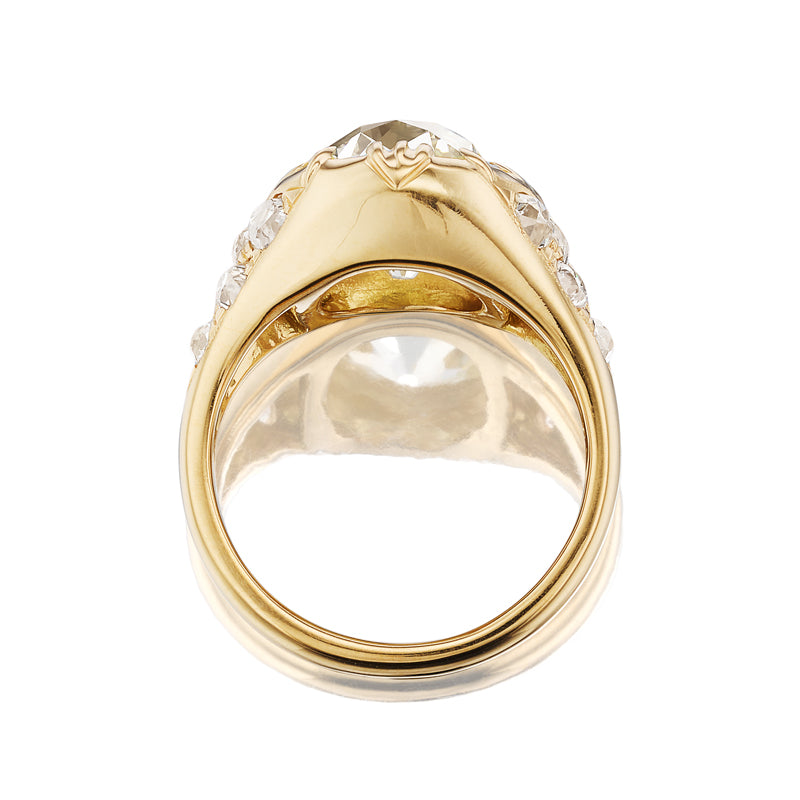
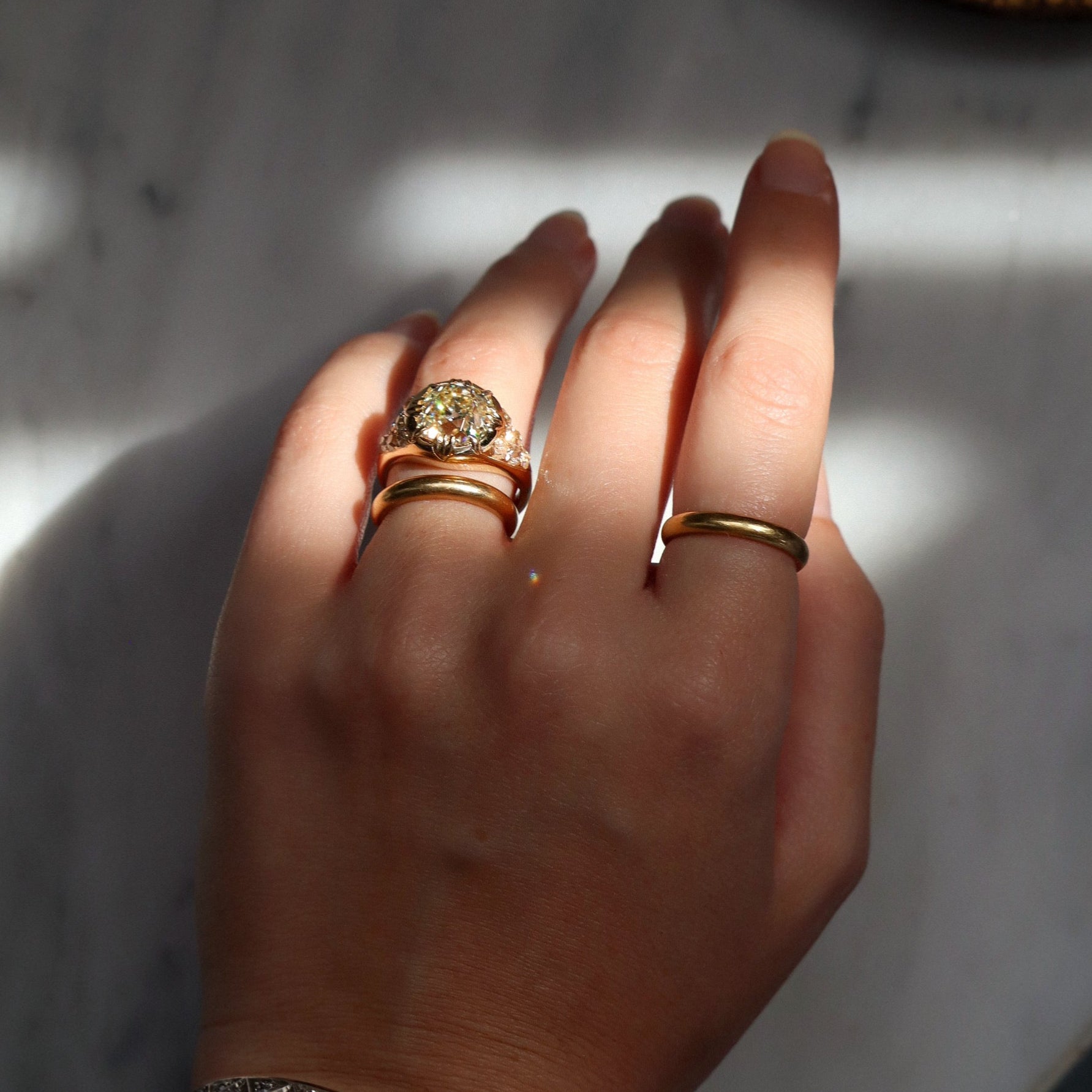
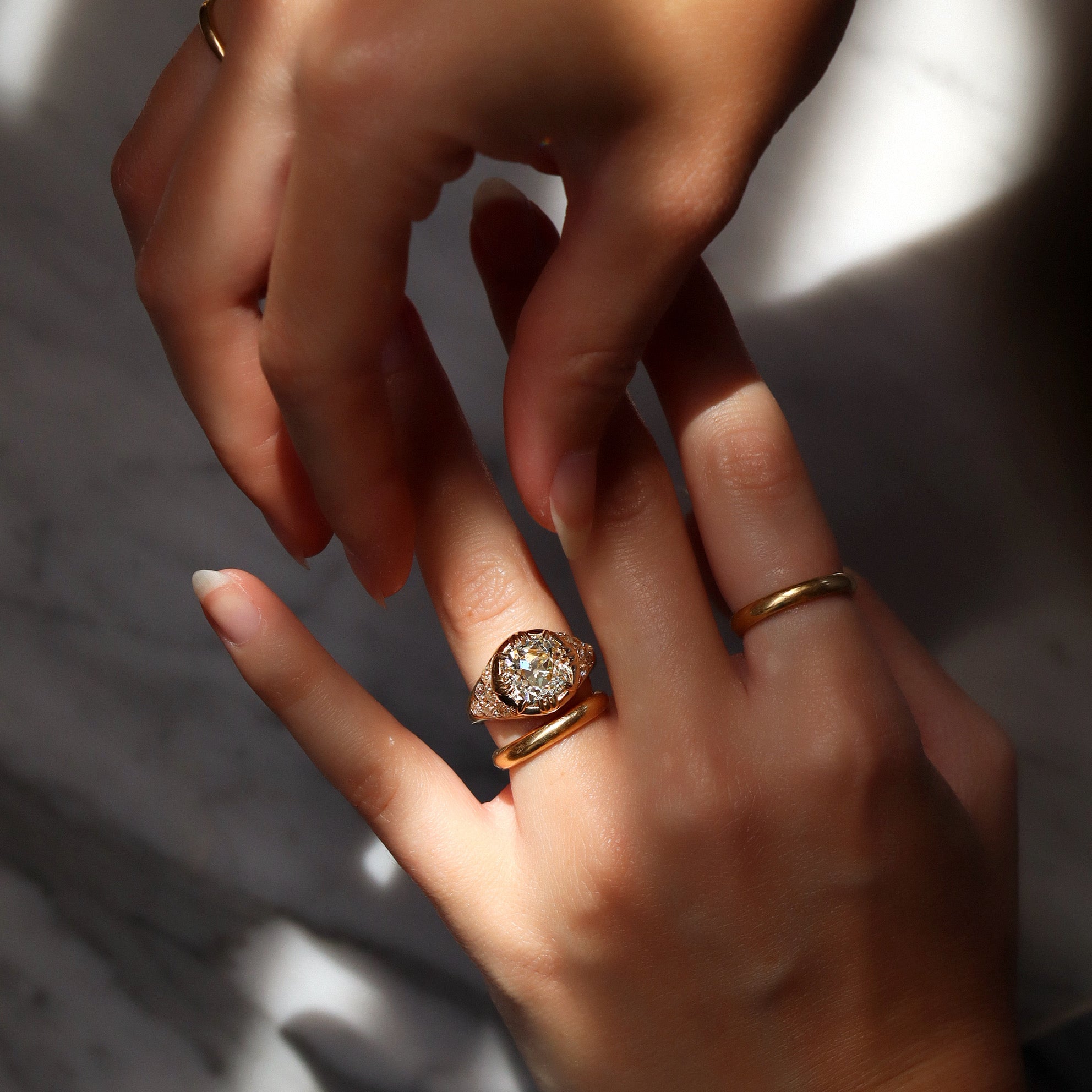
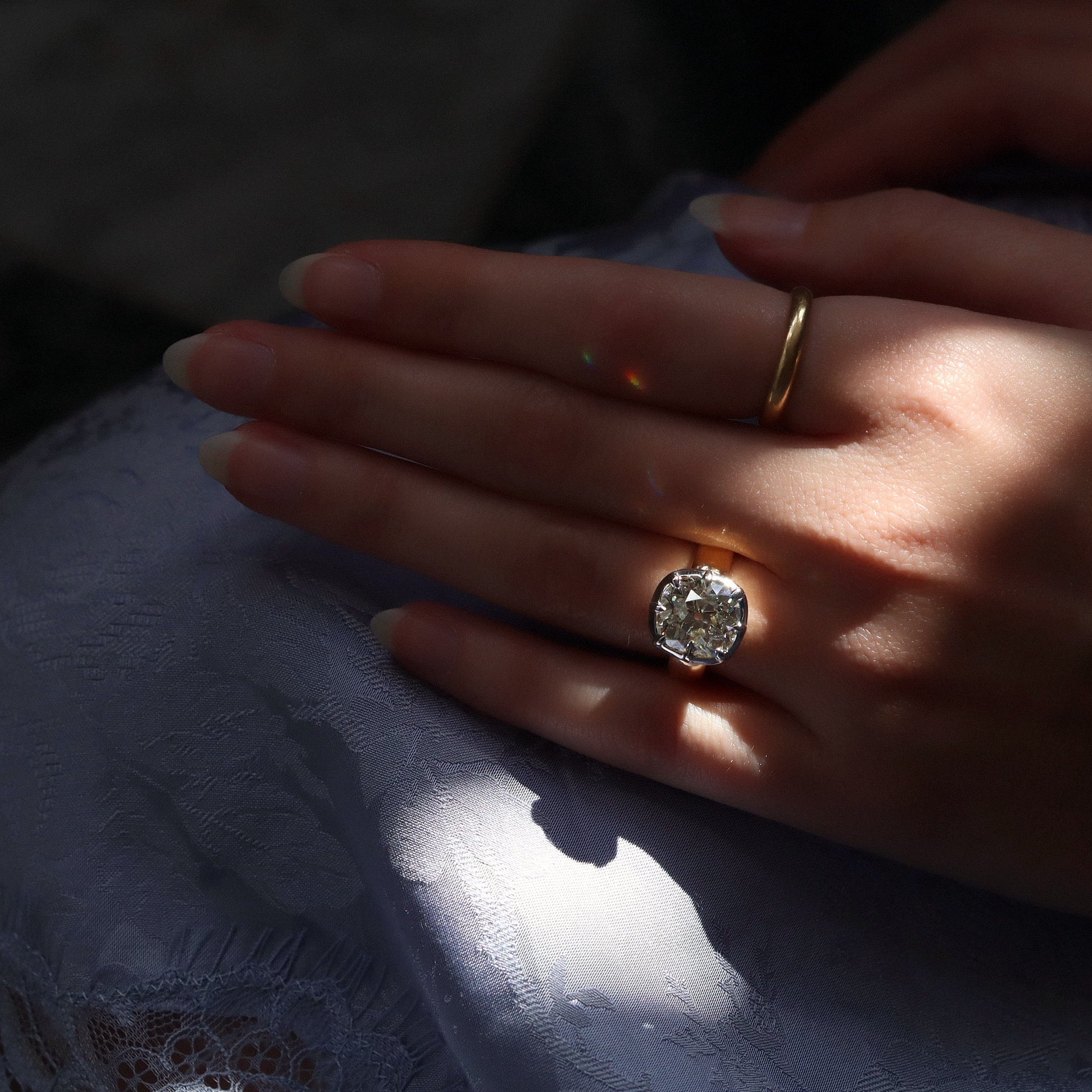

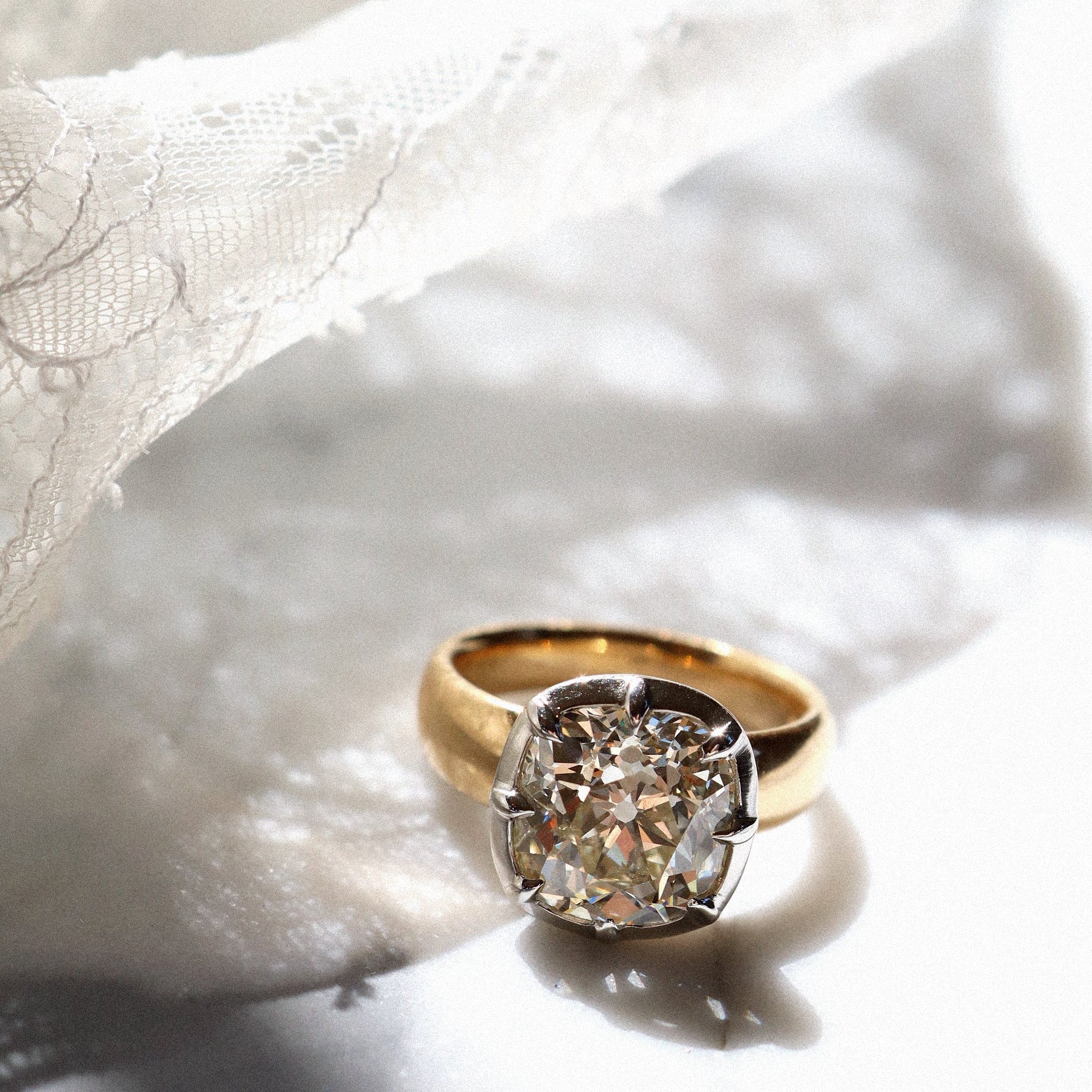
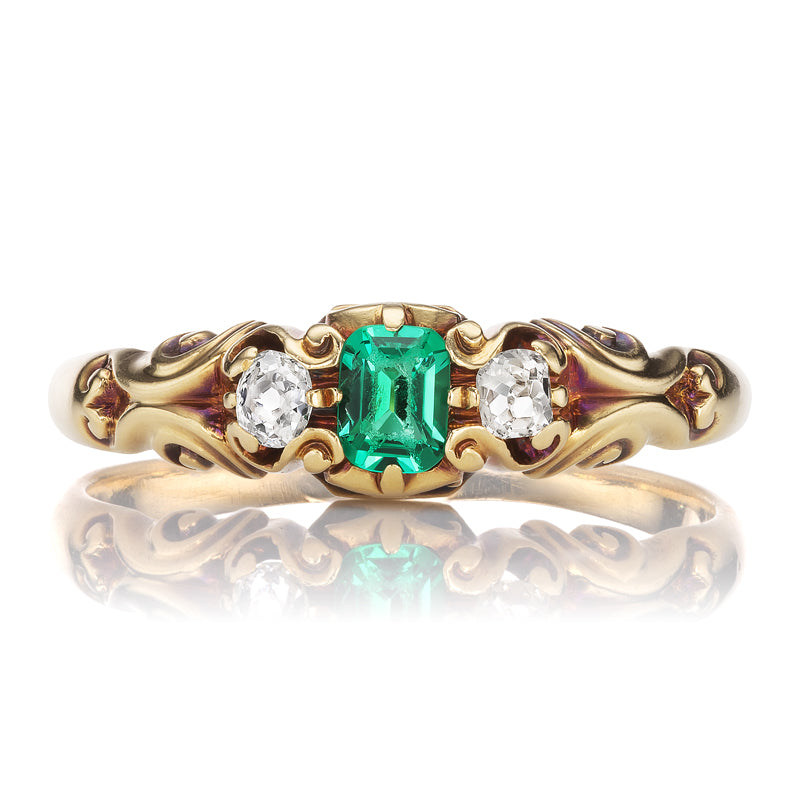
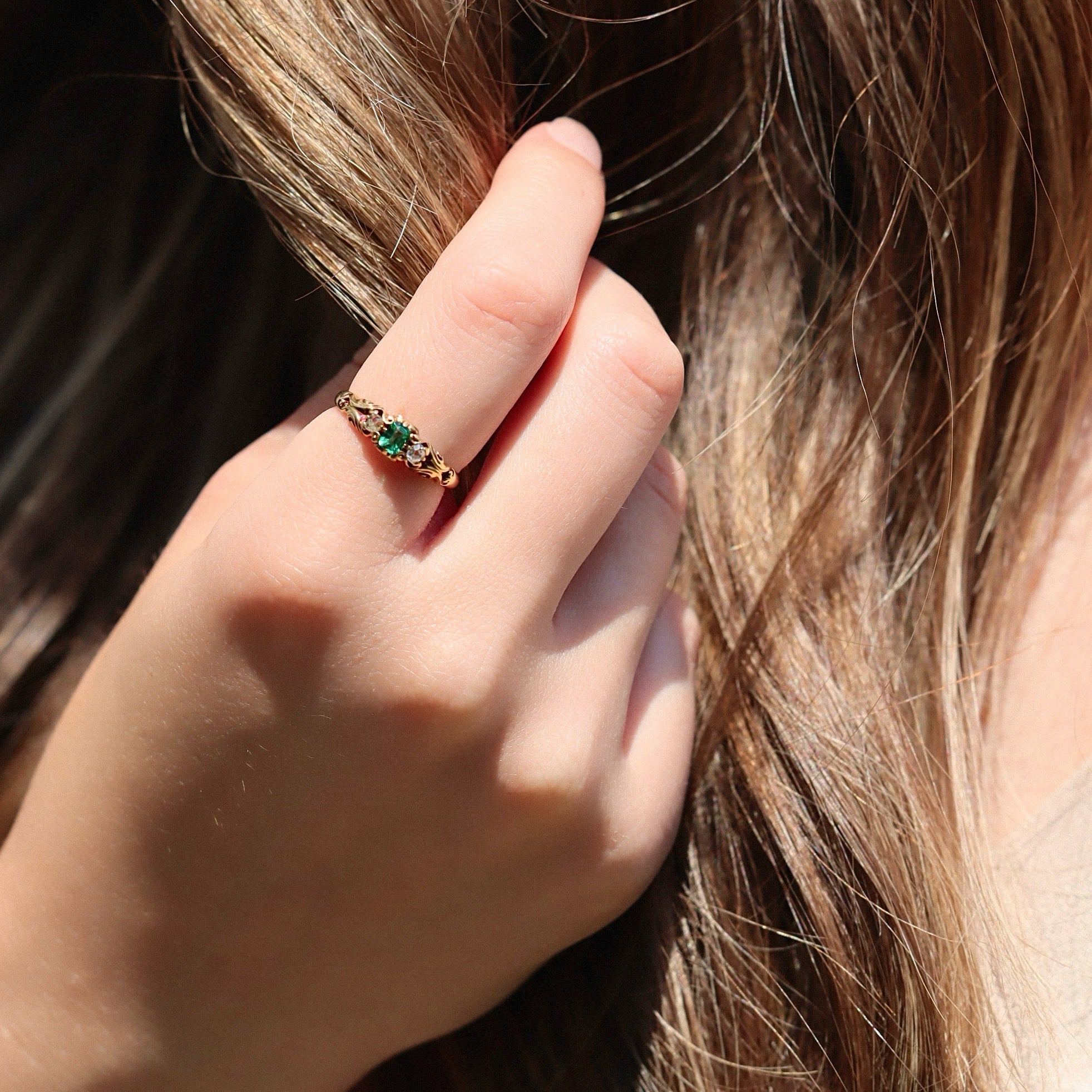
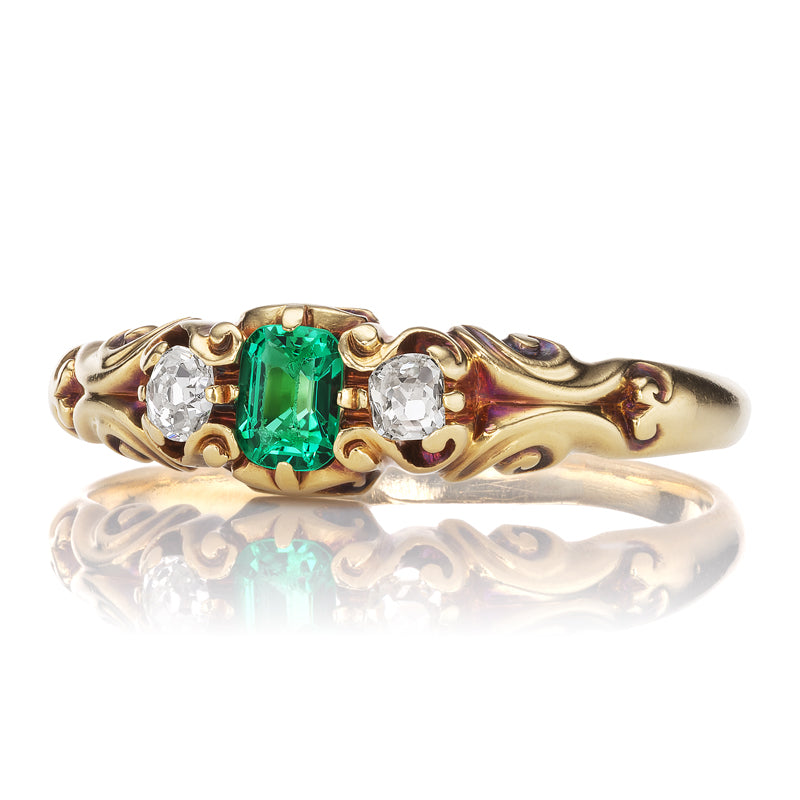
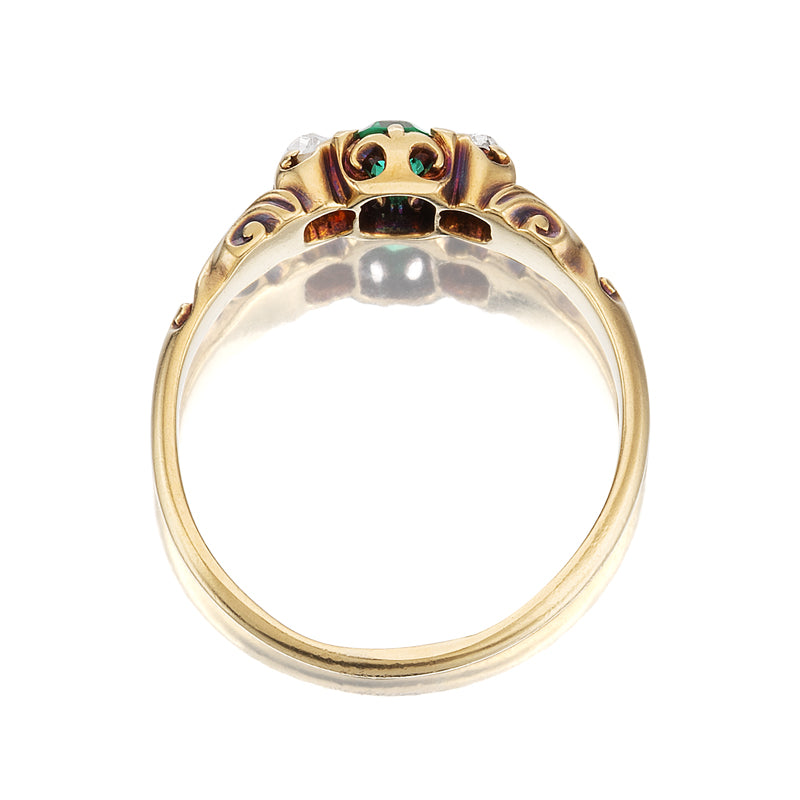
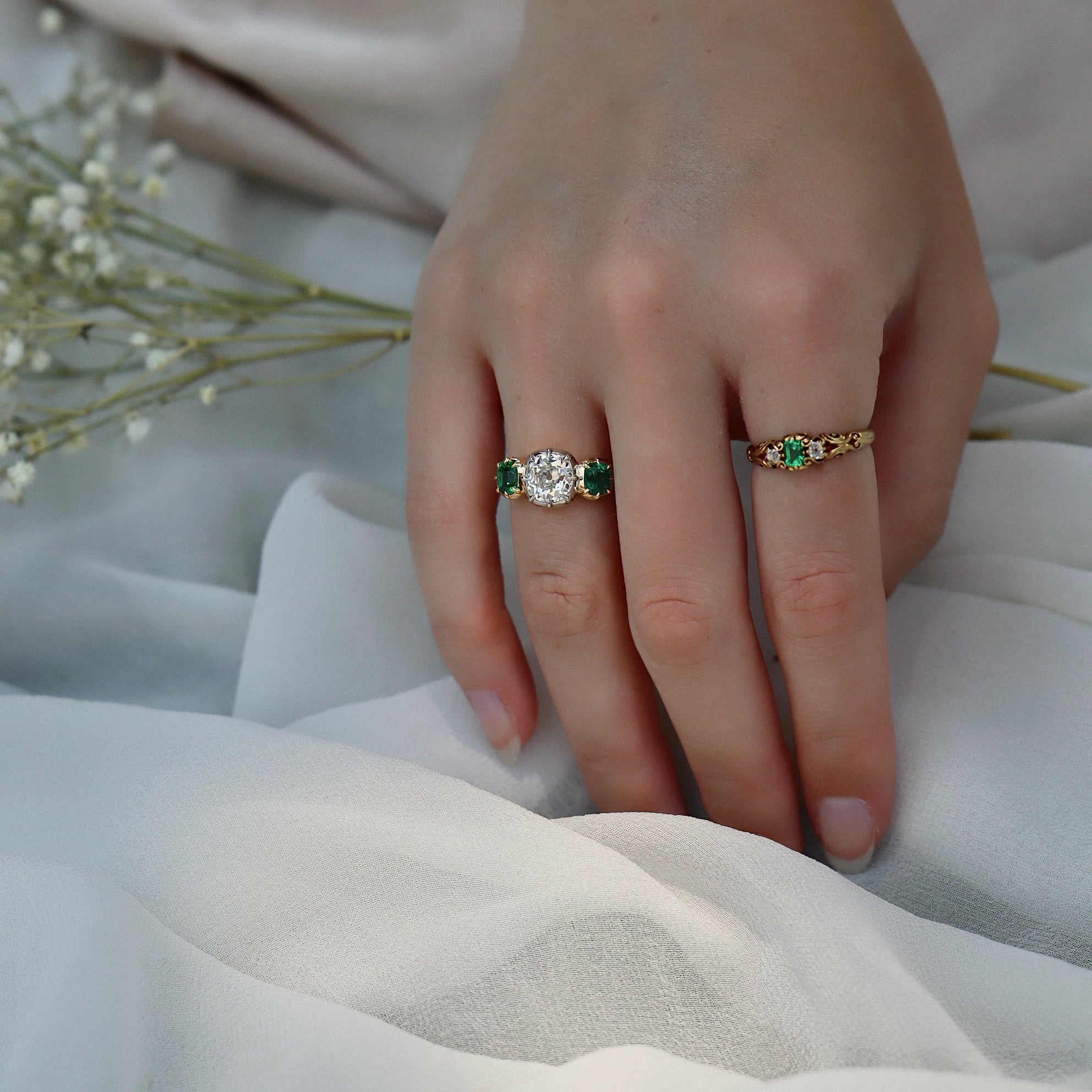
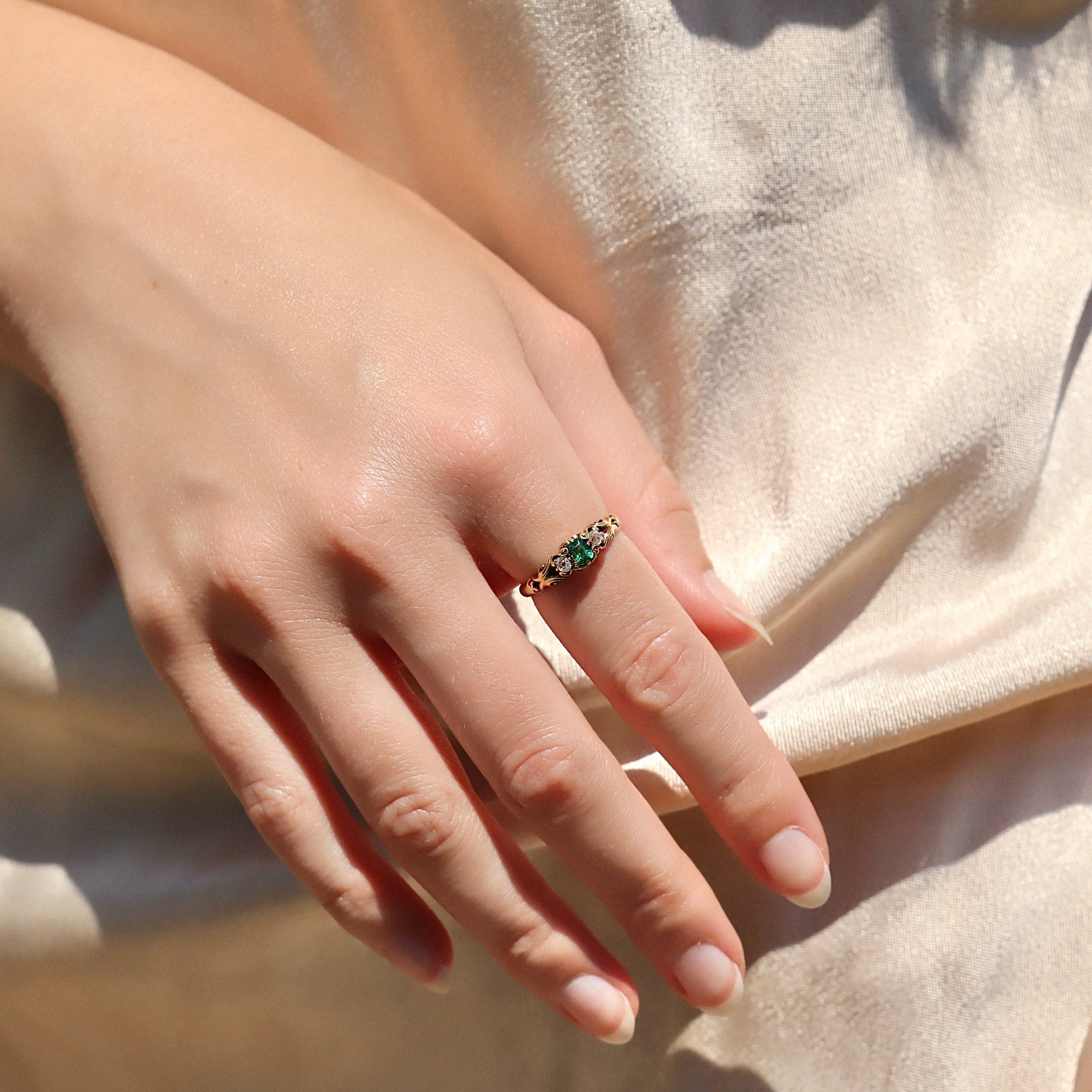
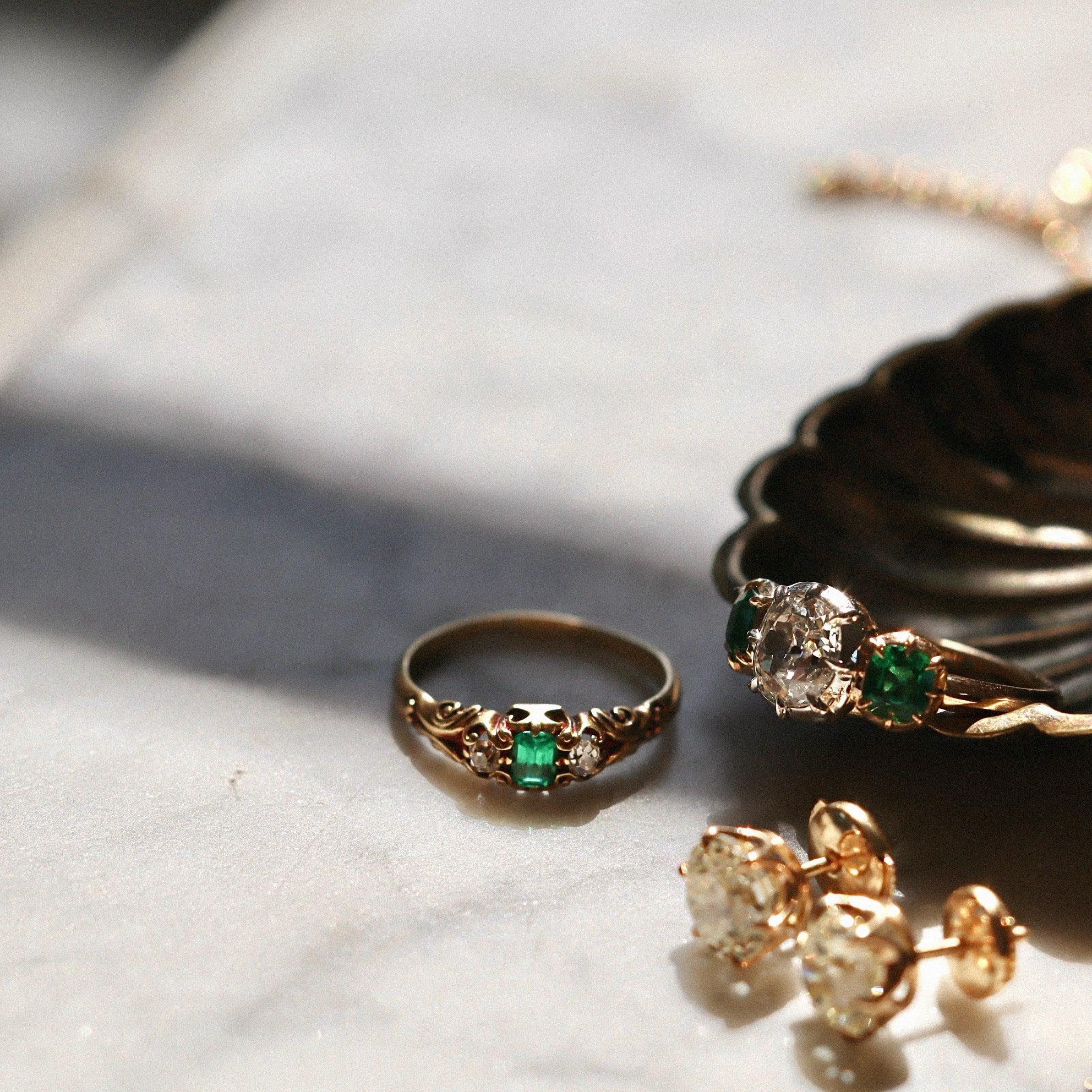
The Old Mine Cut Diamond is the quintessential cut when we talk about antiques. It is one of the earliest brilliant-style diamond cuts—and an AB staple. Hand-cut before modern diamond-cutting technology existed, each stone has its own shape, proportions, facet pattern, and personality. No two are exactly alike.
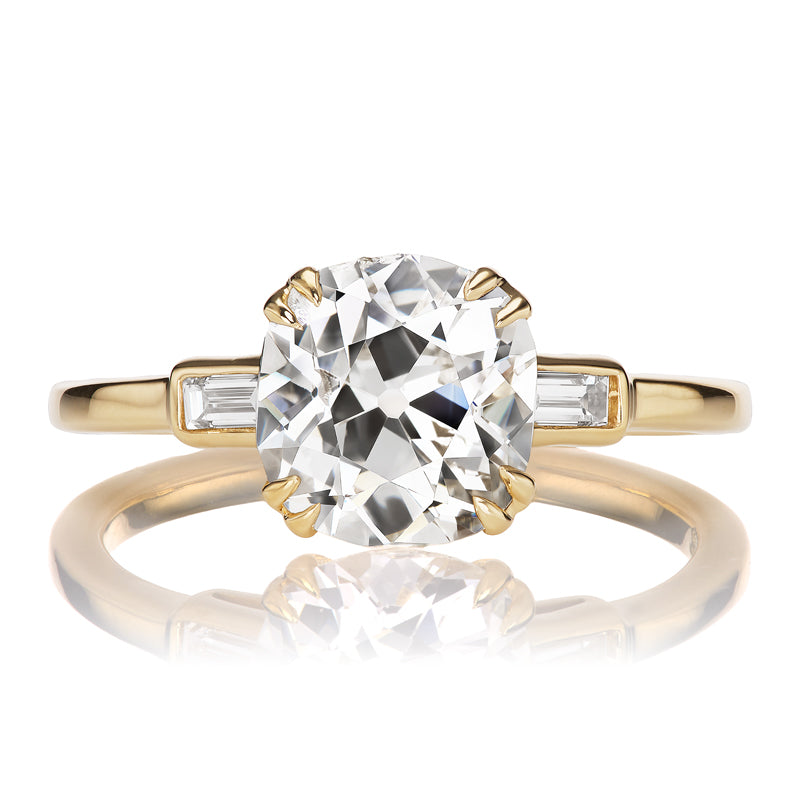
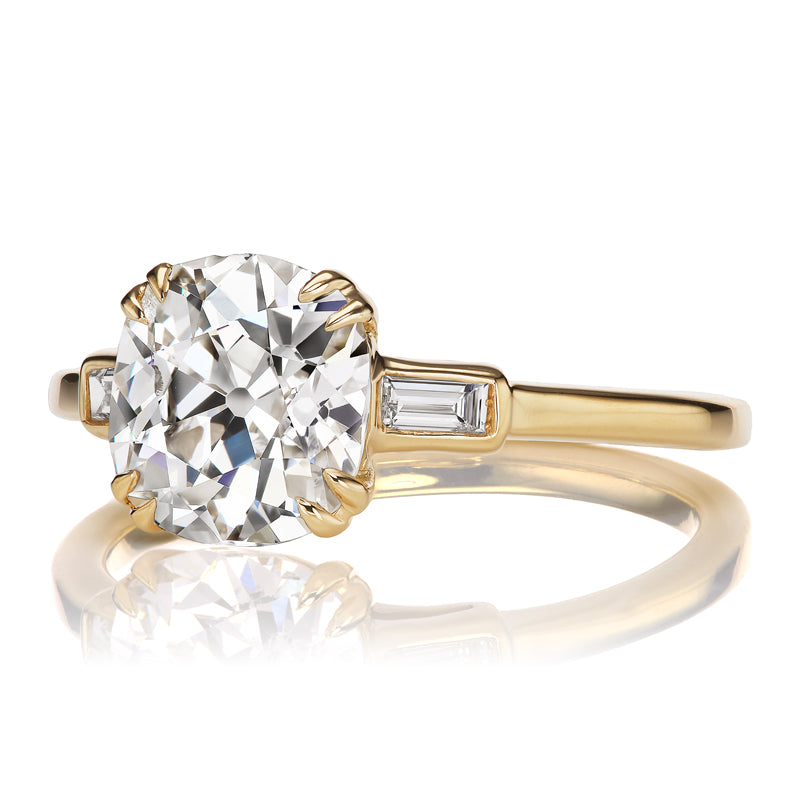
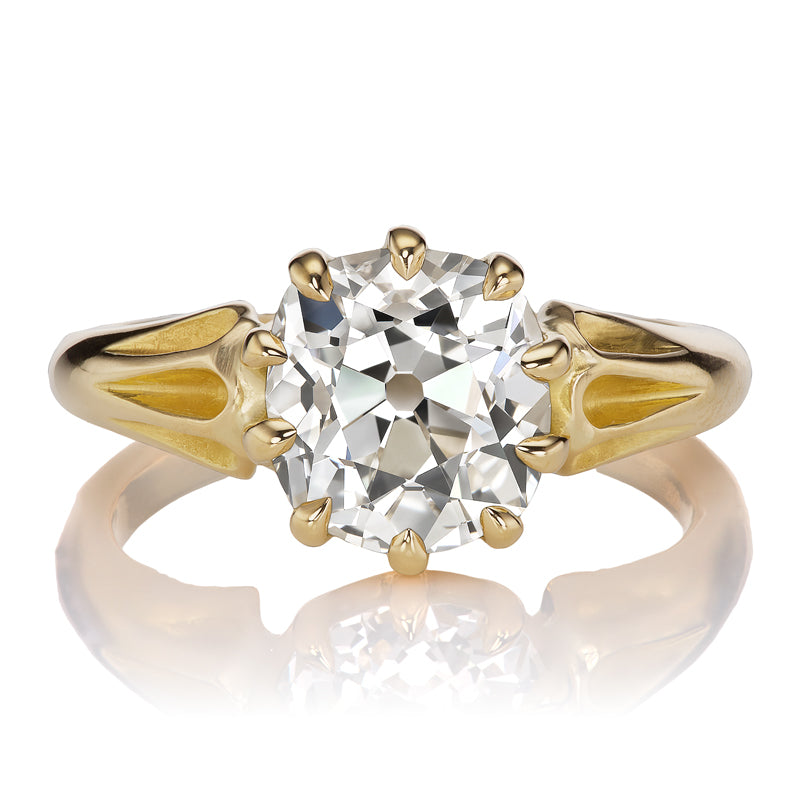
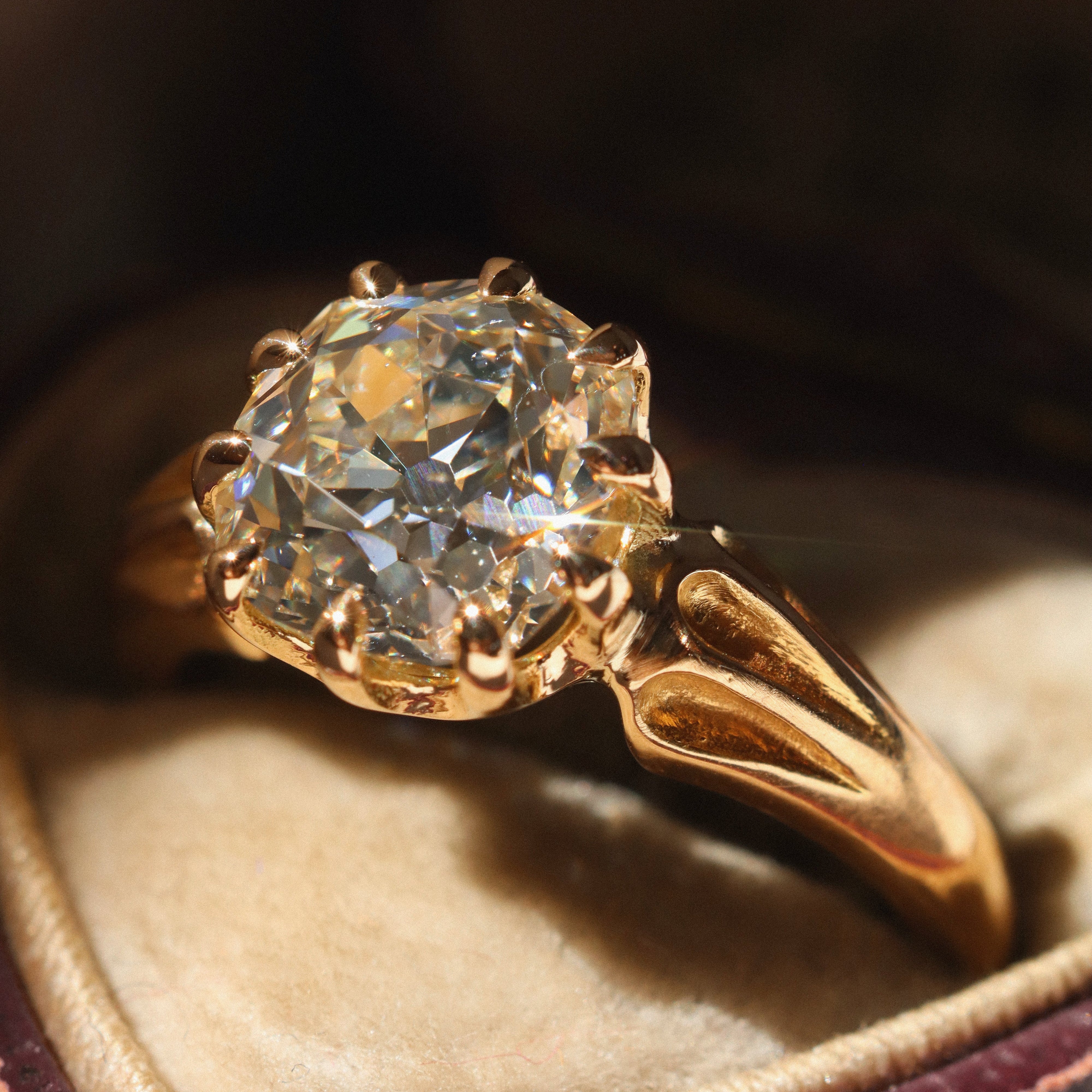
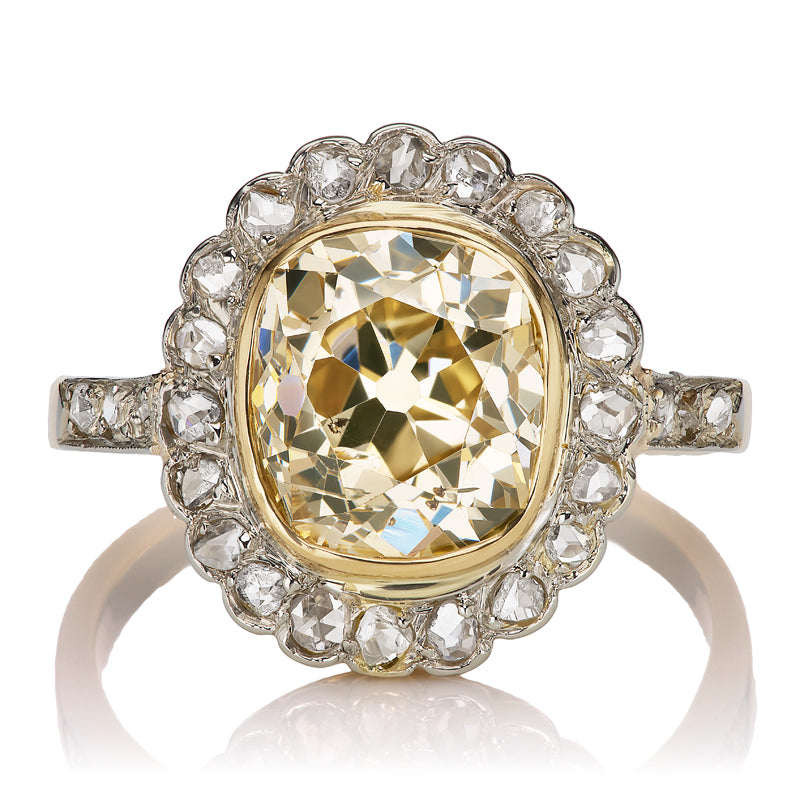
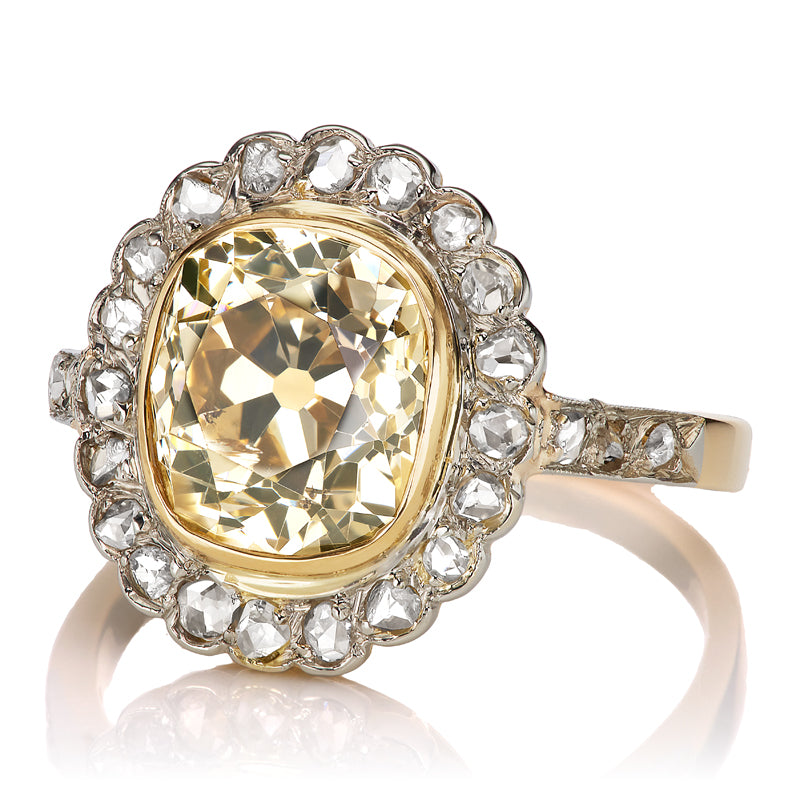
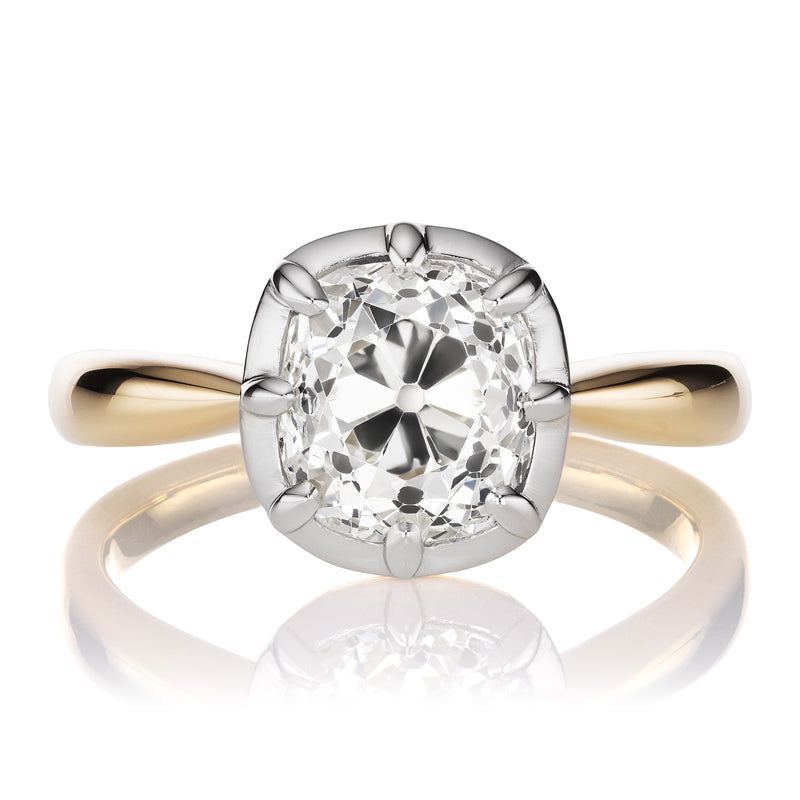
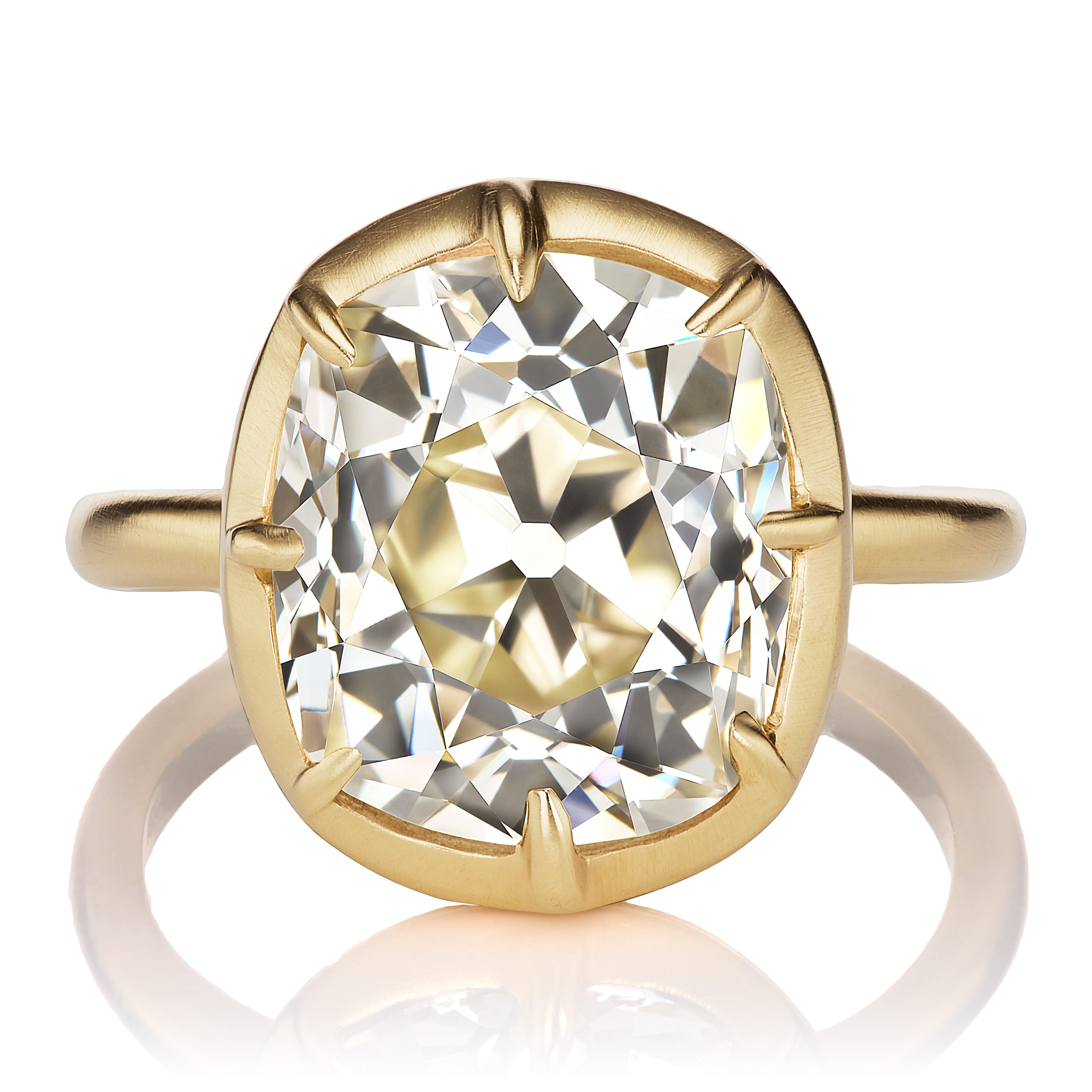
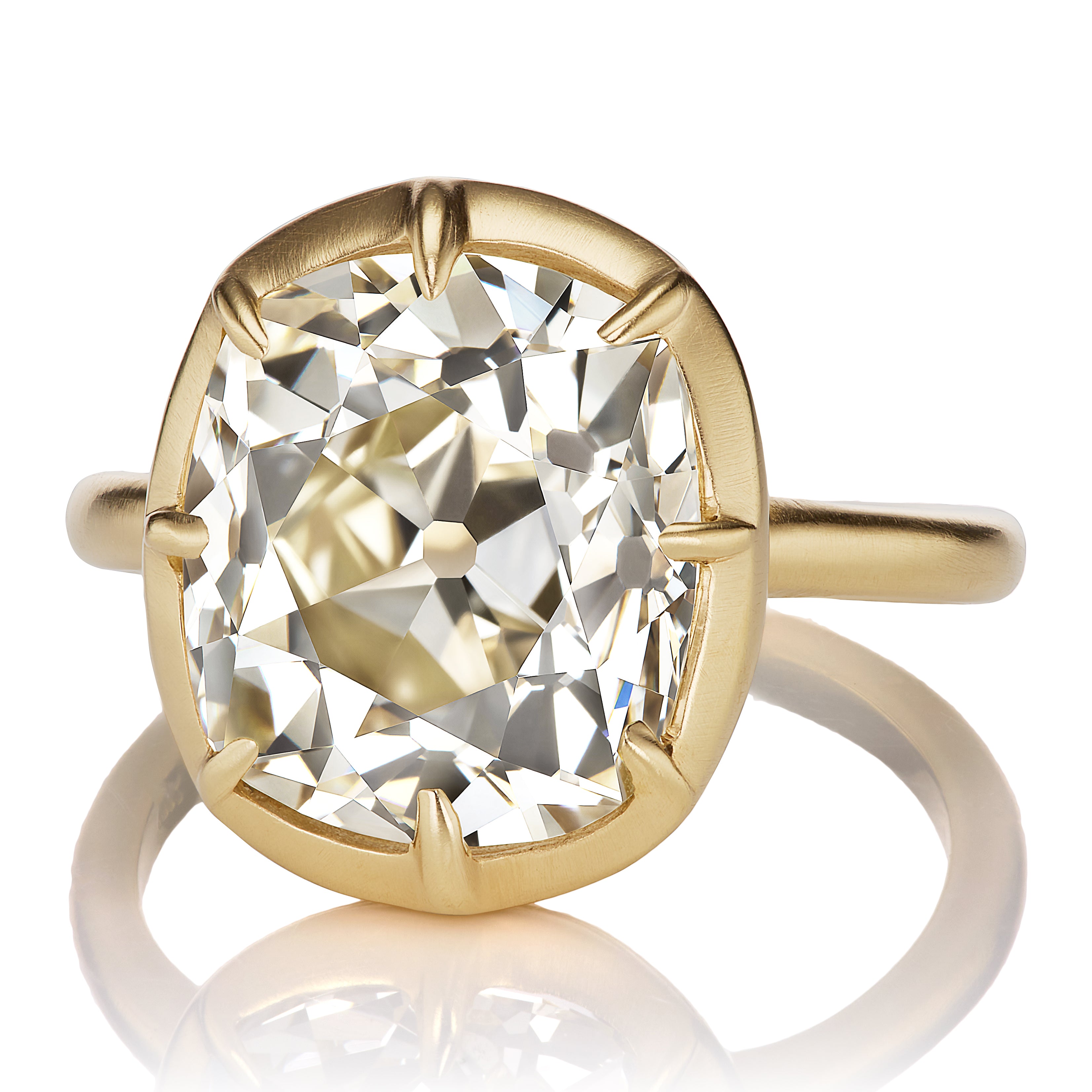
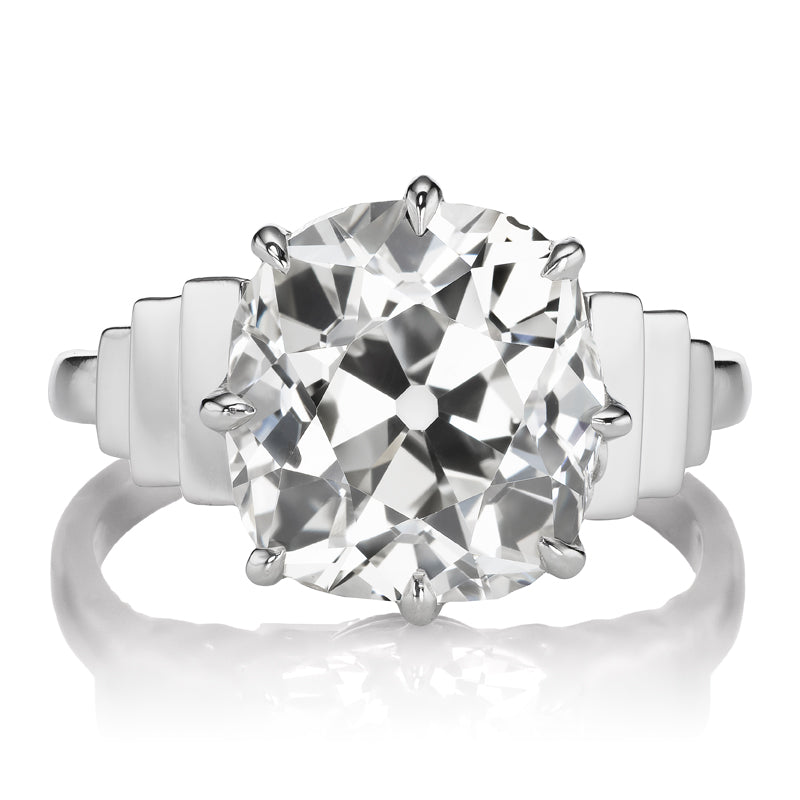
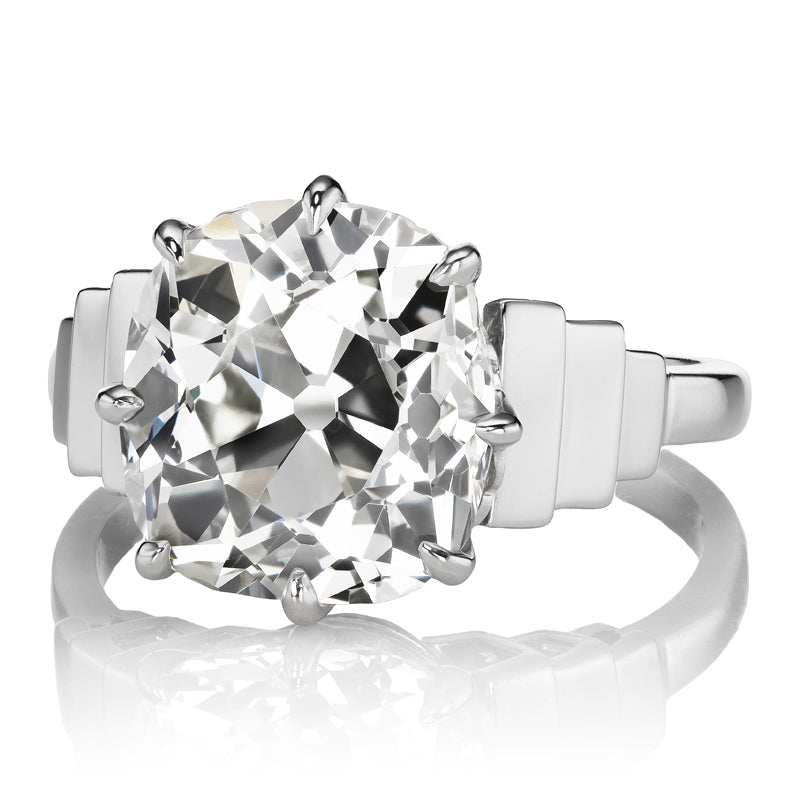
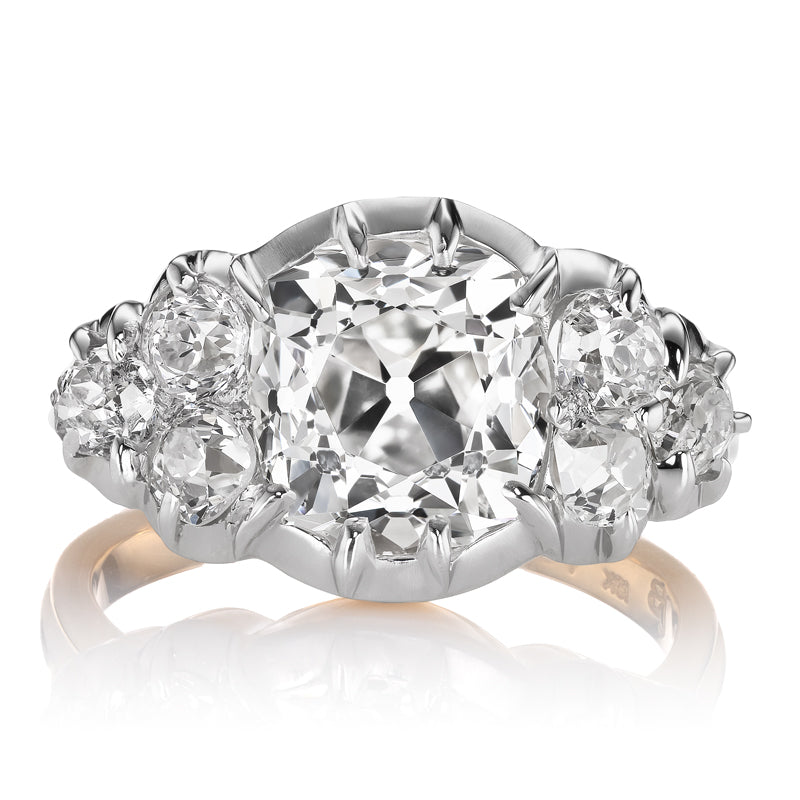
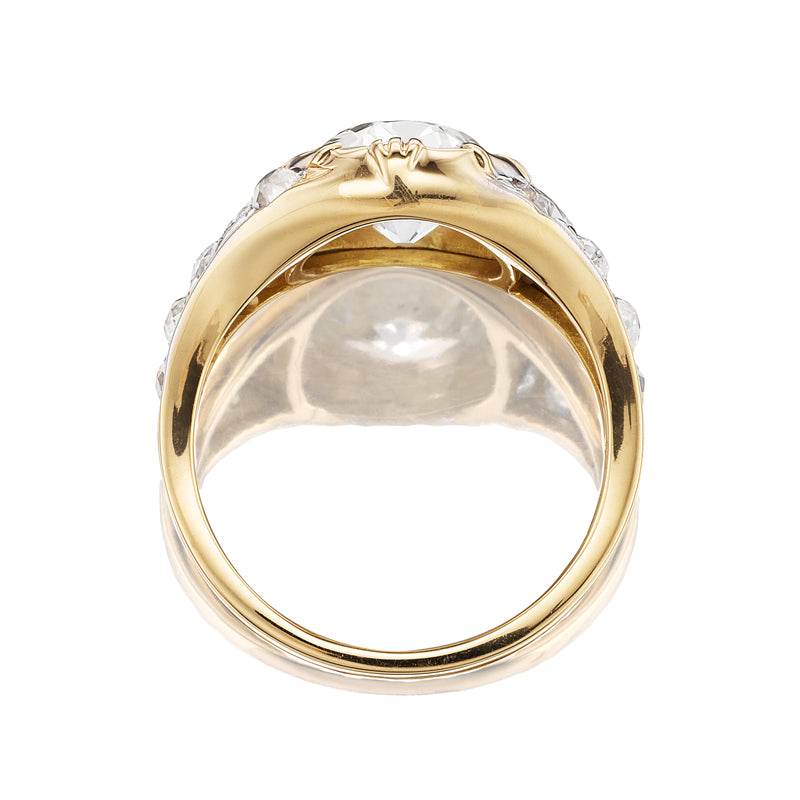
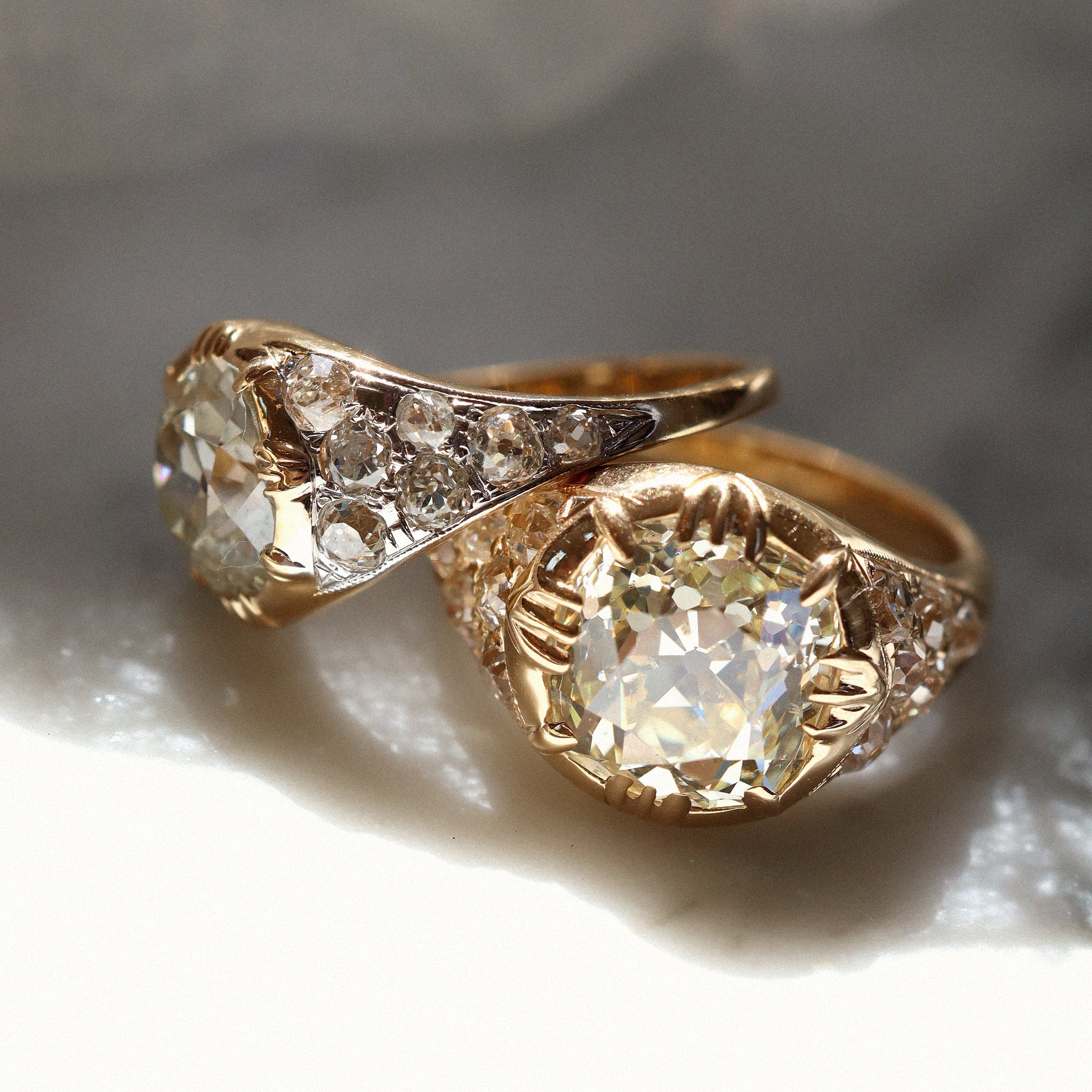
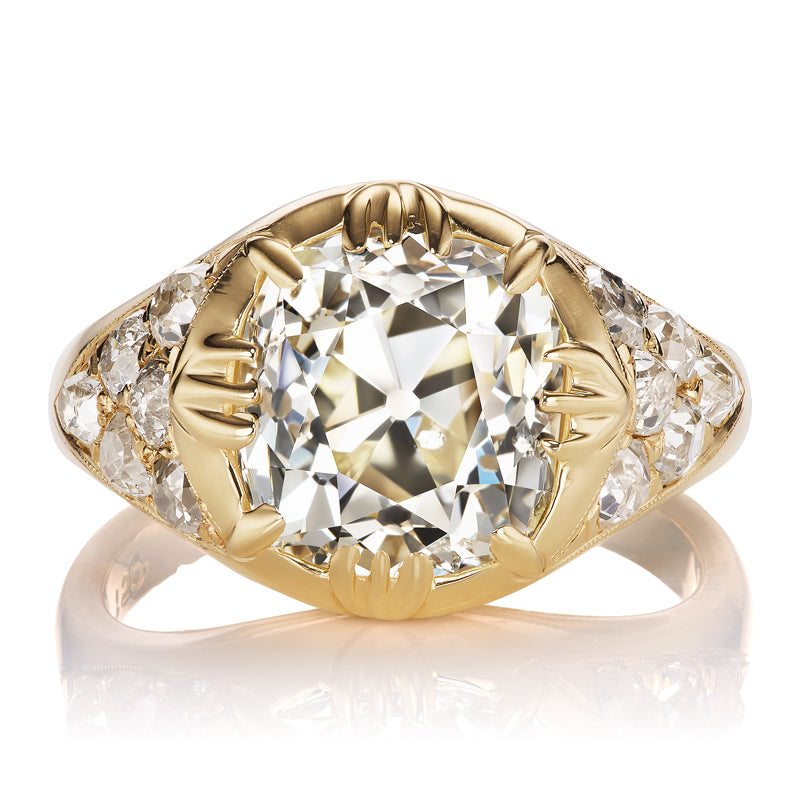
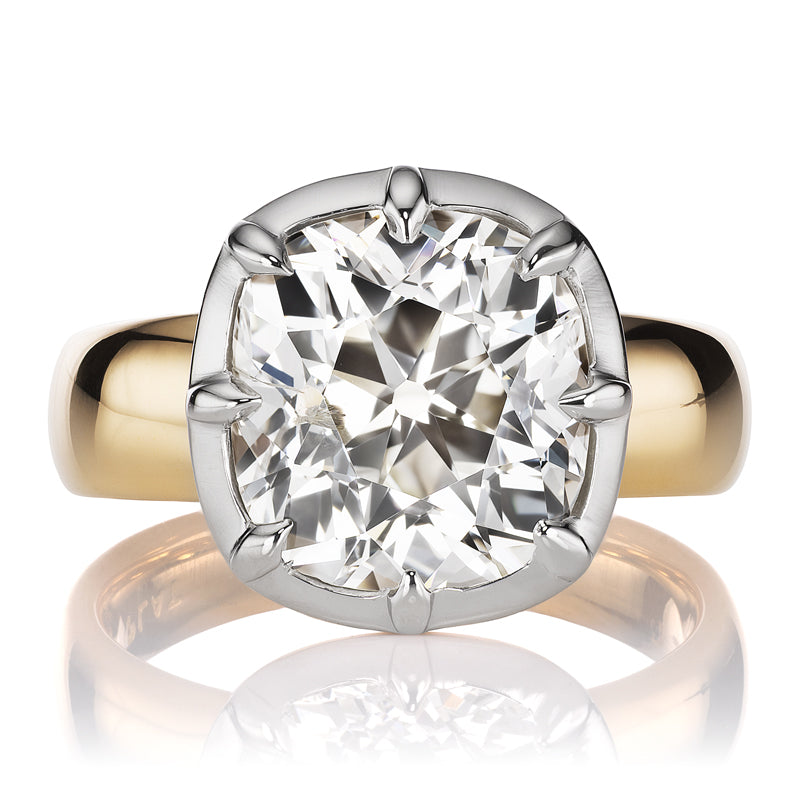
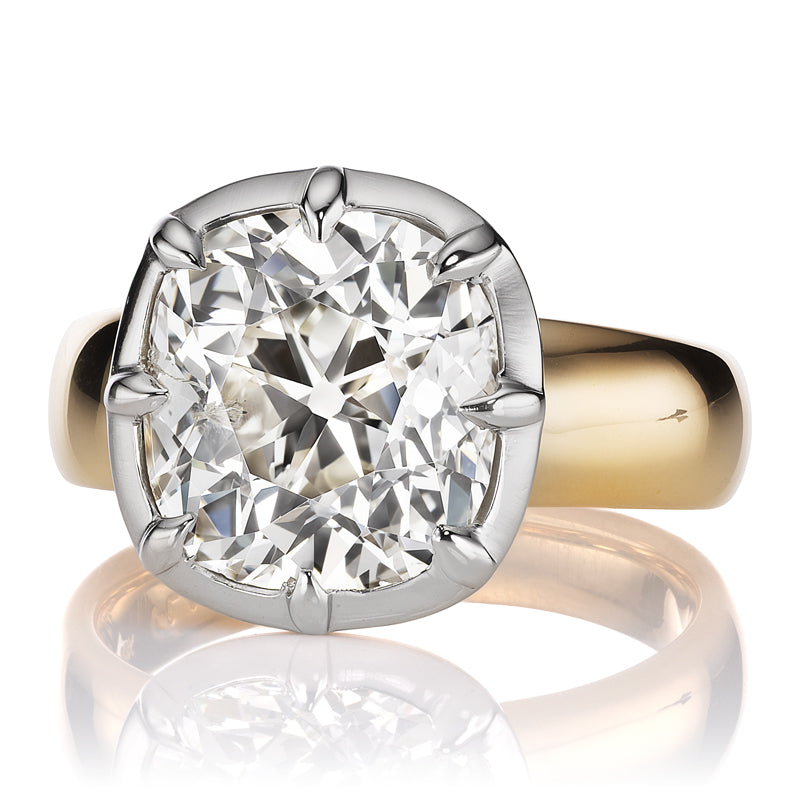
Basically, an Old Mine Cut diamond is the antique version of today's cushion cut diamond. It generally has a soft cushion outline, either squared or elongated, with rounded corners, a high crown, a small table, broad facets, and a visible open culet. The result is less of the precise, uniform sparkle you see in a modern diamond and more broad flashes of light, depth, and glow. Since there is no standardization for this cut, you will see some Old Mine Cuts (or OMCs for short) that fall outside of these criteria and don't have a high crown or are on the flatter side. And that is exactly what we love about this cut.
What Is an Old Mine Cut Diamond?
An old mine cut diamond is a cut diamond that we began seeing in jewelry in the 18th and 19th centuries and into the early 1900s. These diamonds were cut entirely by hand, often by eye, with each cutter working around the natural shape of the rough diamond rather than trying to achieve a standardized set of proportions. These master artisans had only one goal: beauty. They were not trying to hit a certain depth, maximize carat weight, or concentrate the color as is the practice with mainstream modern-day diamond cutting.
This is why old mine cuts can look wildly different from one another. Some are nearly square. Some are pillowy and rounded. Others are elongated, wonky, deep, flat, chunky, or beautifully irregular.
A classic old mine cut generally has:
-
A cushion-like square or rectangular outline with softly rounded corners
-
A high crown
-
A smaller table
-
Broad, open facets
-
A large visible open culet
-
Some degree of asymmetry from being cut by hand
And of course, there are exceptions to nearly every rule.
The History of the Old Mine Cut
Old Mine Cut diamonds became prominent during the Georgian era (mid 1700s) and were seen throughout the Victorian and Art Deco Eras (1930s). They are what create the quintessential antique jewelry look- especially during the Georgian and Victorian Eras.
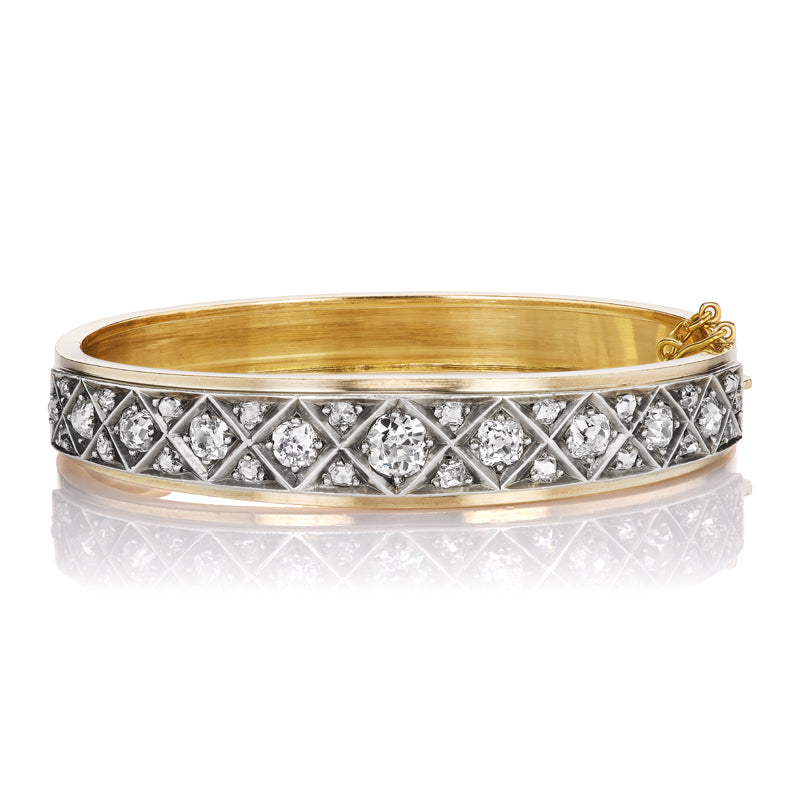
An interesting difference between diamond cutting today and back then is that diamonds were often shaped for the piece that was being created. Cutters worked with the diamond "rough" in front of them, coaxing beauty from each stone, and then putting it directly into the piece of jewelry. This is why the OMCs in antique pieces have the same "make" and why they coordinate in an individual piece but not necessarily piece to piece.
They were also cut for a very different world of light. Candlelight and gaslight reward large facets and broad flashes of fire, which helps explain the warm, romantic glow associated with antique diamonds.
As cutting technology evolved, the old mine cut gradually gave way to the near-perfectly round Old European Cut and, eventually, the modern round brilliant.
What Makes Old Mine Cut Diamonds Different?
Modern diamonds are generally prized for precision, symmetry, and optimized light performance. Old mine cuts are almost the opposite. Their charm comes from the evidence of the hand that made them. Facet sizes can vary. Corners may not match perfectly. The culet may sit slightly off center. One side may be a little fuller than the other.
Rather than seeing those traits as imperfections, collectors of antique diamonds often seek them out. They are what give an old mine cut its distinctive face, make one stone feel completely different from the next, and give it a distinctly "handmade" feeling that this modern world is missing.
Old Mine Cut vs. Modern Cushion Cut
Old mine cuts and modern cushion cuts share a similar softly squared shape, which is why old mine cuts are often described as the antique predecessor to the cushion cut.
But visually, they can be very different.
Modern cushion cuts tend to have more precise symmetry and a tighter, more uniform sparkle pattern. Old mine cuts usually have a higher crown, smaller table, larger facets, visible culet, and more irregular outline.
The easiest distinction is often simply the feeling: a modern cushion tends to look crisp and polished, while a true old mine cut has a softer, chunkier, more individual character.
Old Mine Cut vs. Old European Cut
Both Old Mine Cuts and Old European Cuts are hand-cut antique diamonds, but the easiest difference to spot is shape.
Old mine cuts are generally cushion-shaped—square or rectangular with softened corners. Old European cuts are round.
The old mine cut came first. As diamond-cutting equipment became more sophisticated in the late 19th century, cutters were able to produce increasingly round stones, eventually leading to the Old European Cut.
And of course, there is a grey area. Is it exactly round or is it cushion? Sometimes, there is no answer, and it is its own perfect antique diamond shape.
If you love antique diamonds but prefer a round silhouette, explore our Old European Cut Diamond Engagement Rings.
What to Look for When Buying an Old Mine Cut Diamond
We don't shop for antique diamonds the same way we shop for modern diamonds.
Look at the stone, not just the certificate.
Two old mine cut diamonds with identical color, clarity, and carat grades can look completely different. Facet pattern, shape, proportions, warmth, and personality matter much more to us.
Note the shape.
There is no single correct old mine silhouette. Some people love chunky, almost-square stones. Others want an elongated old mine cut. Others fall for an irregular antique shape they never would have thought to search for.
Don't fear warmth.
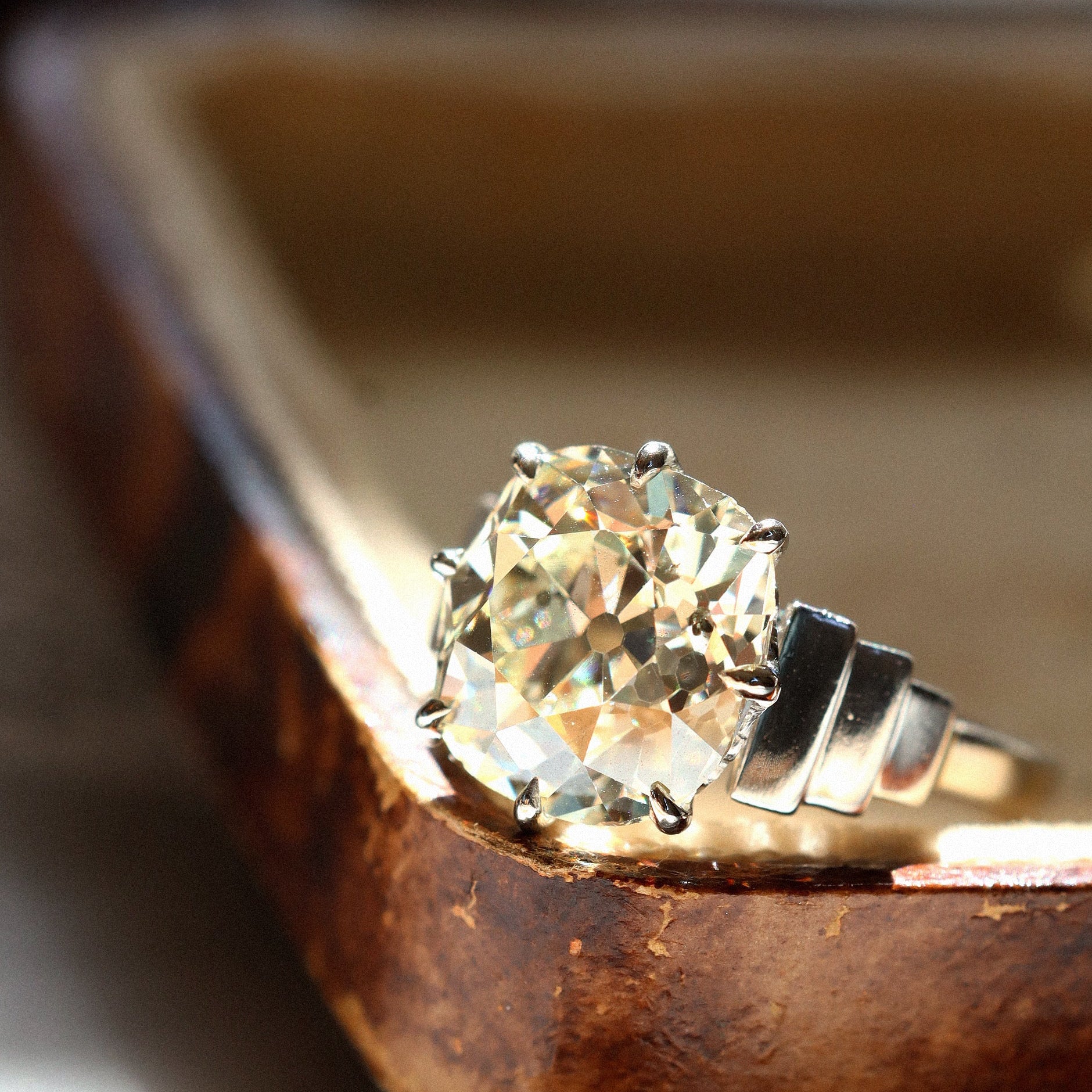
Many antique diamonds fall into warmer color ranges, and that warmth can be incredibly beautiful—particularly in yellow gold. We evaluate the stone as a whole rather than dismissing it because of a letter on a grading report. We also see diamonds lower on the scale (M-N-O-P) as a* warm* white- not a yellow diamond. That warm white invites a softer, more romantic feel.
Expect asymmetry.
Old mine cuts were created by hand. Slight asymmetry, irregular girdles, and imperfectly matched facets can be completely appropriate for the cut. The symmetry grade on the GIA report is effectively irrelevant- it's more important to look with your eye and see if you love it.
Look at the culet.
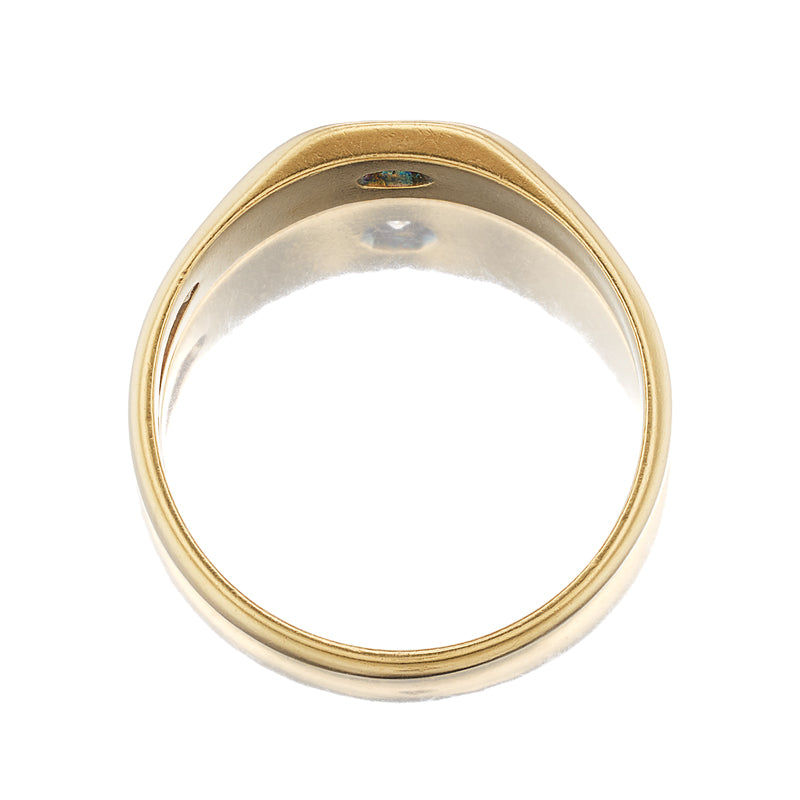
When viewed from above, many old mine cuts have a visible circle or small shape in the center of the diamond. That is the open culet: a facet at the very bottom of the diamond instead of the sharp point seen in most modern stones.
It isn't a defect. It's one of our favorite signatures of an antique cut and something we seek when looking for Old Mine Cut diamonds. For avid collectors- the bigger the better!
Are Old Mine Cut Diamonds Rare?
Yes, and increasingly so.
Authentic antique Old Mine Cut diamonds are a finite supply. New "Antique-Style" diamonds are being created, but the true old are few and far between. Beautiful examples are increasingly sought after by collectors, jewelers, and couples looking for something different from a modern brilliant.
Historically, many antique diamonds were also recut into more modern shapes, which further reduced the number of original old mine cuts still in existence. This happened primarily from the 1950-2020- and still happens today! This was especially true for higher color diamonds as they could be recut to "modern" standards and drive a higher price. Now- antique diamonds are some of the most in-demand and valuable diamonds on the market.
That scarcity is part of why exceptional old mine cut diamonds can be difficult to replace. When we find one with a particularly beautiful shape and facet pattern, we know we may never see another quite like it.
Frequently Asked Questions
Do old mine cut diamonds sparkle?
Absolutely, but differently from modern brilliant-cut diamonds. Their larger facets create broader, slower flashes of light rather than the smaller, rapid sparkle associated with many modern cuts. They have such an interesting play of light that ripples across the facets- creating flashes of light and darkness. This contrast is what makes the stone feel more alive and dynamic than modern diamonds. It creates a different look in each lighting situation, whereas modern faceting remains about the same.
Are old mine cut diamonds actually antique?
Original old mine cut diamonds are antique diamonds, but diamonds are also cut in the old mine style today. Because the look has become increasingly desirable, modern cutters now recreate antique-inspired proportions and facet patterns. Sometimes it can be well-done and sometimes not so much.
At Andria Barboné, we believe the distinction matters. Our collection includes authentic antique jewelry as well as AB Made pieces, and we clearly identify what you're looking at on each product page.
Are old mine cut diamonds GIA certified?
They can be. Antique diamonds can be sent to modern gemological laboratories such as GIA for grading just like newly cut diamonds. The report describes the diamond's characteristics today; it does not mean the diamond itself is modern. It is also important to note that the GIA are more scientist than historian. If it has certain percentages and proportions, it can be labeled "Old Mine Cut" even if it is a newly cut diamond. The inverse is also true that an antique stone can be labeled "Modified Cushion Brilliant" even though it is a bona fide antique diamond.
Are old mine cut diamonds more expensive?
It depends entirely on the stone. Carat weight, color, clarity, beauty of the cut, shape, rarity, and whether the diamond is an authentic antique all influence value.
Exceptional old mine cuts are increasingly desirable and increasingly difficult to source, so particularly beautiful examples can command a premium.
What setting is best for an old mine cut engagement ring?
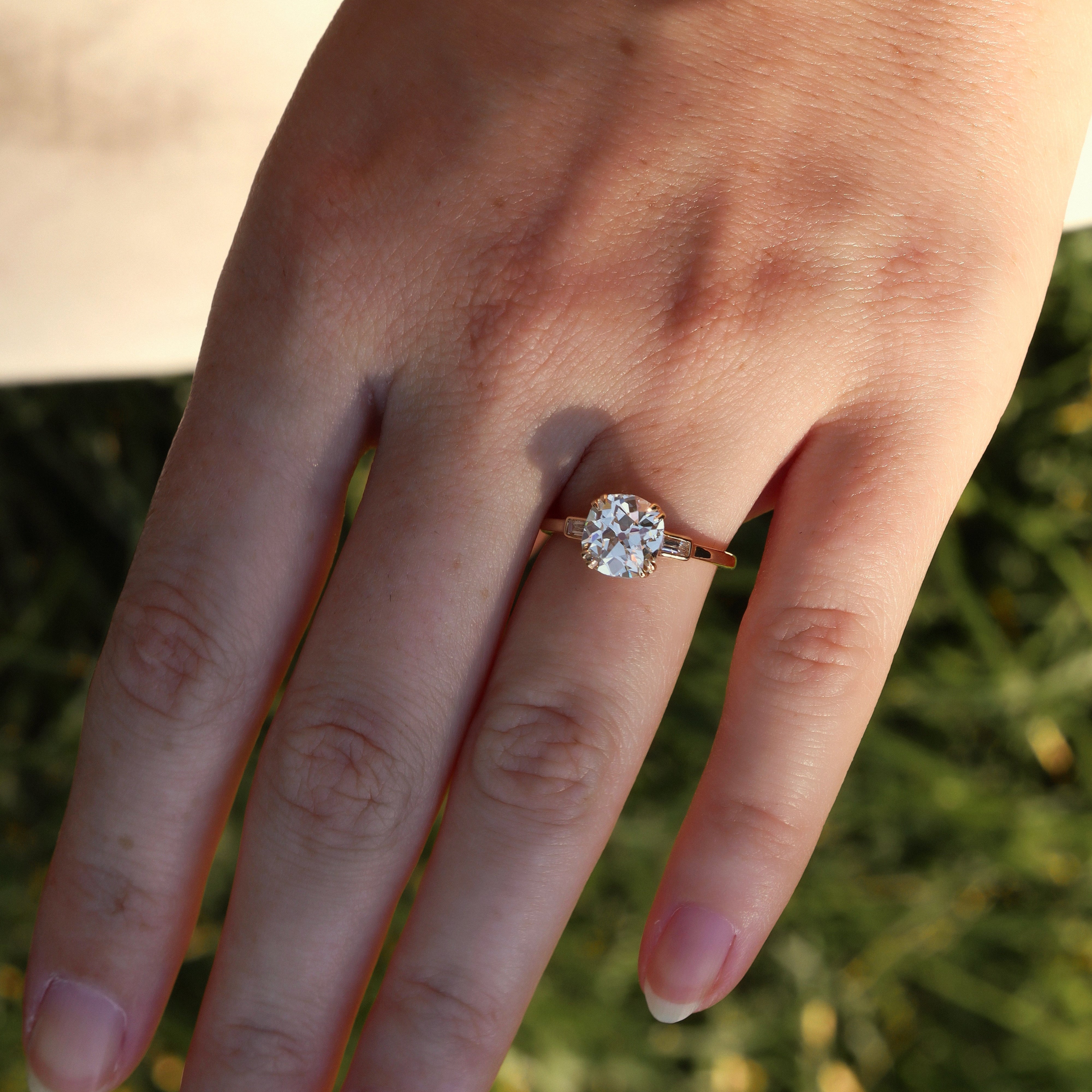
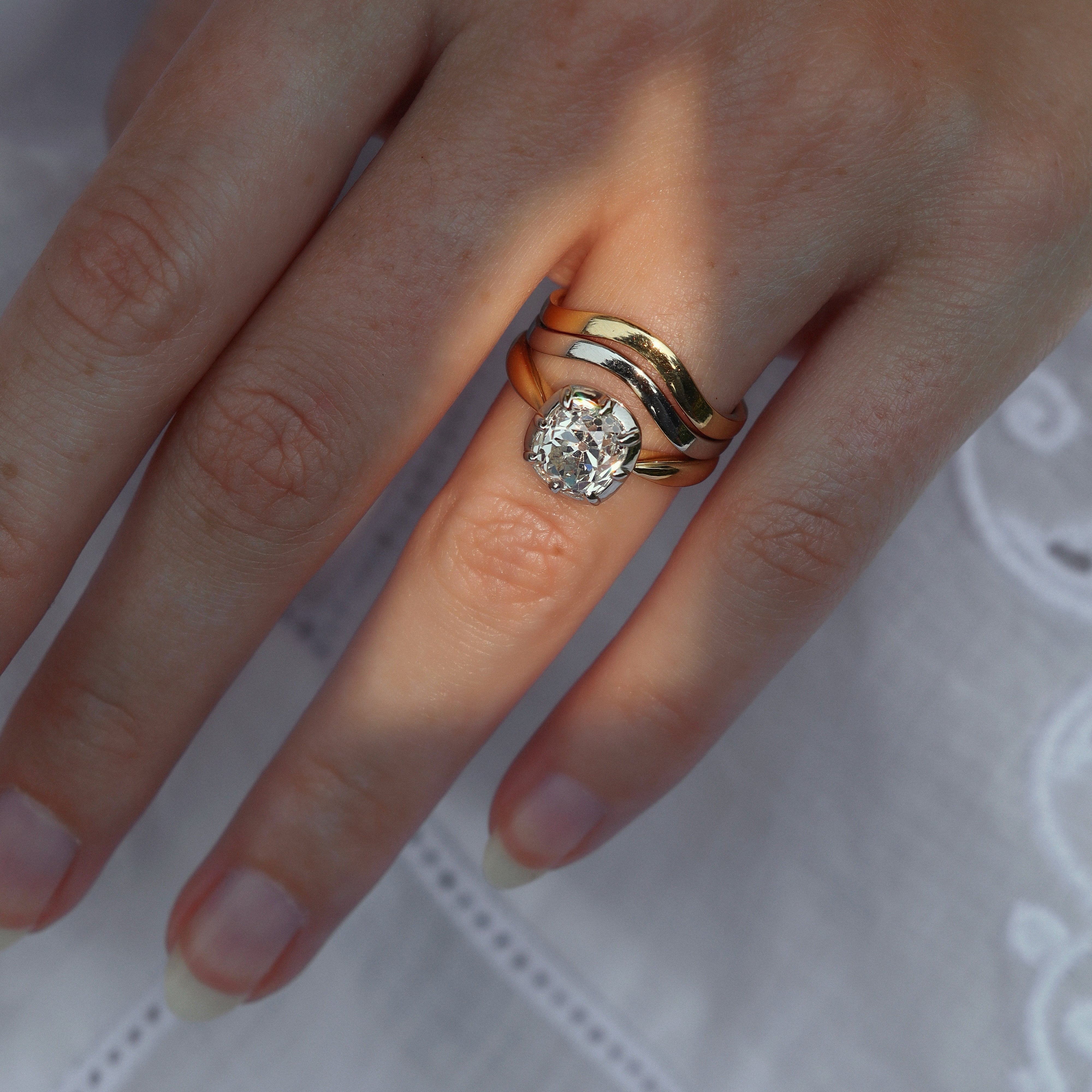
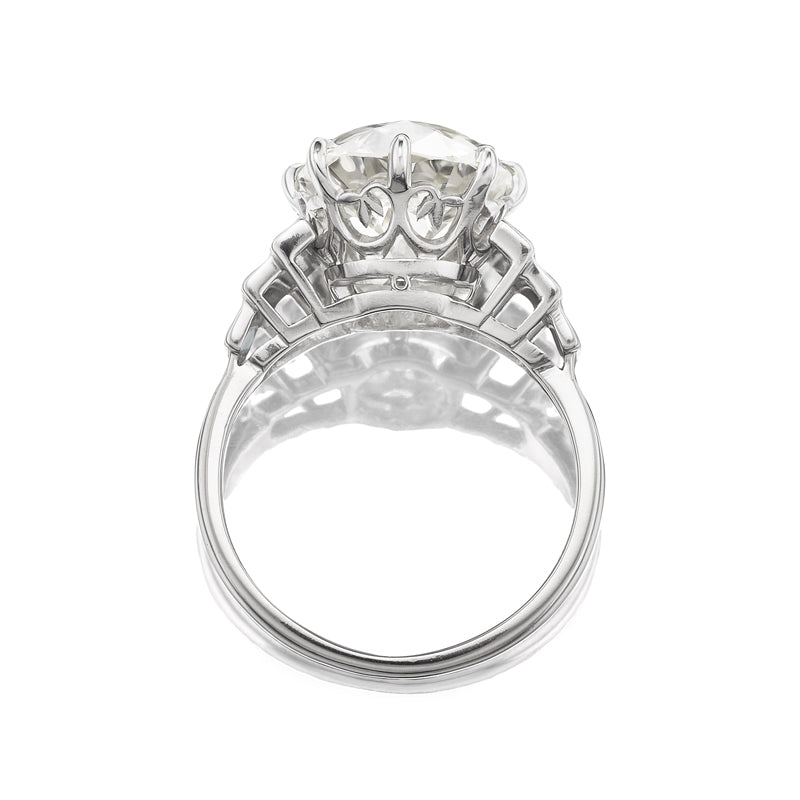
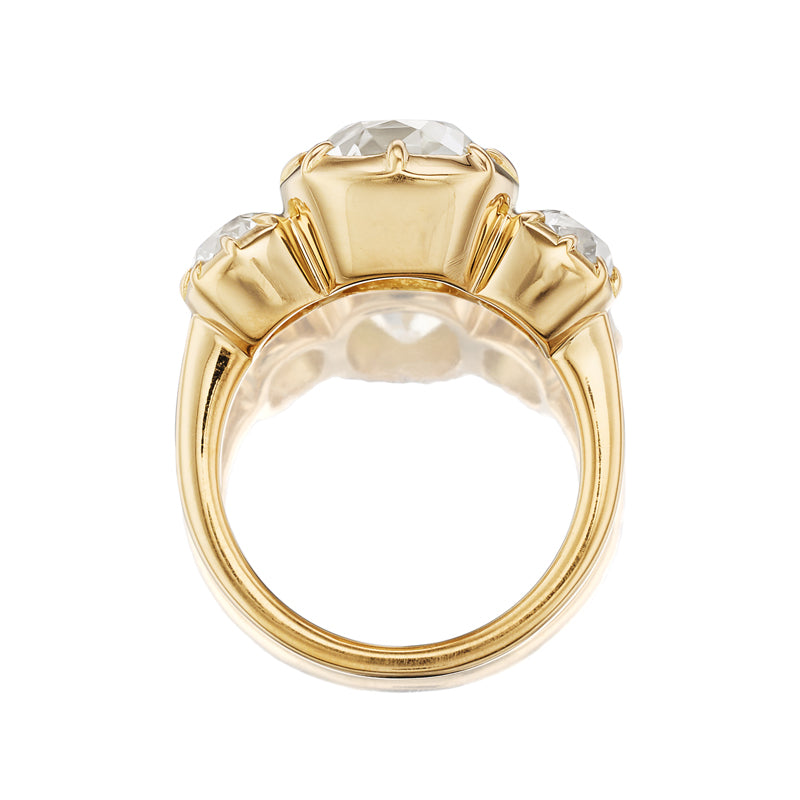
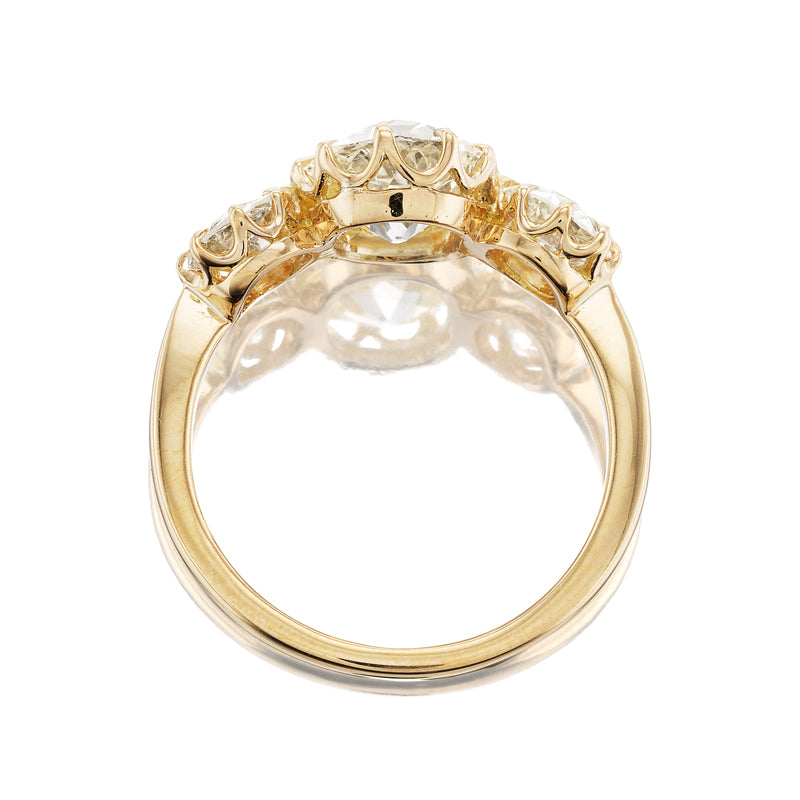
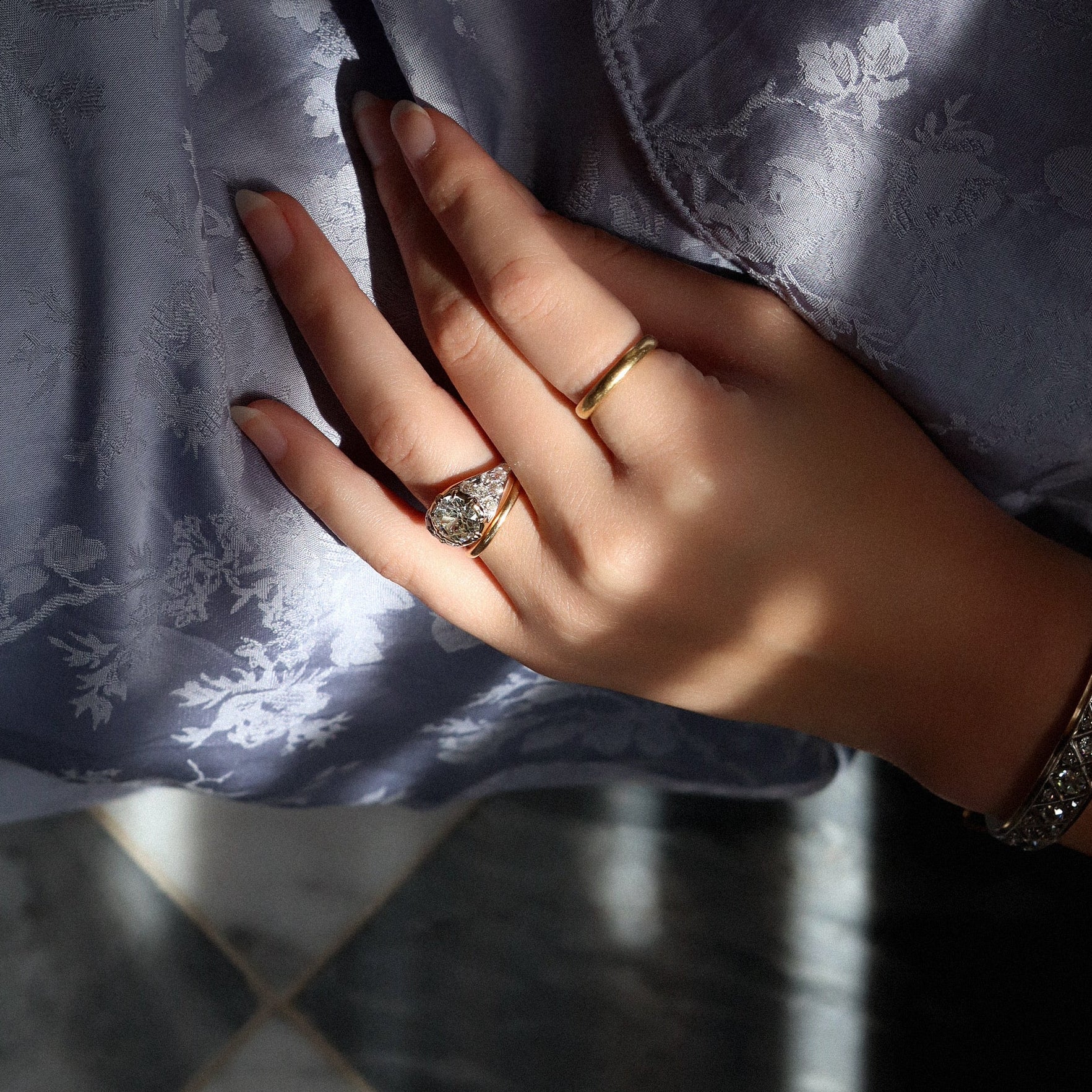
There isn't one. We love old mine cuts in antique settings, simple solitaires, chunky gold bezels, delicate prong settings, three-stone rings, and nearly everything in between.
Because every old mine cut has a slightly different outline and depth, the best settings are designed around the individual stone rather than forcing the diamond into a standardized shape.
Of course, we love the "Collet" setting for Old Mine Cut diamonds, which was commonly used throughout the Georgian and Victorian Eras. However, we also love a chunky modern setting as a fun juxtaposition of old and new.
The More You Know...
The term Old Mine Cut generally refers to the cushion shape, but historically people in the trade (or diamond business) have referred to ALL antique diamonds as Old Mine Cut or "Old Miners"- an antique pear was called "Old Mine Cut" or "Old Mine Pear" As they grew in popularity, we had to further distinguish and define each shape.
Today you will hear some people refer to an Old European Cut diamond as an "Old Miners" and while they are not wrong- they may just be a little more old-school.
Why Andria Barboné
Antique diamonds have been at the heart of Andria Barboné since our very beginning.
We spend our days looking at old mine cuts—comparing their shapes, facet patterns, culets, proportions, color, and that difficult-to-describe quality that makes one diamond feel extraordinary while another simply doesn't- what we refer to as the "make".
The old mine cut is the diamond we return to again and again because it embodies everything we love about antique jewelry: craftsmanship, individuality, history, and beauty that was never intended to be perfectly uniform.
Whether you're searching for an authentic antique old mine cut engagement ring or an AB Made piece centered around a beautiful old mine cut diamond, every stone in this collection was chosen because we thought it deserved to be here.
No two are quite alike- and isn't it more romantic that they aren't? <3
