

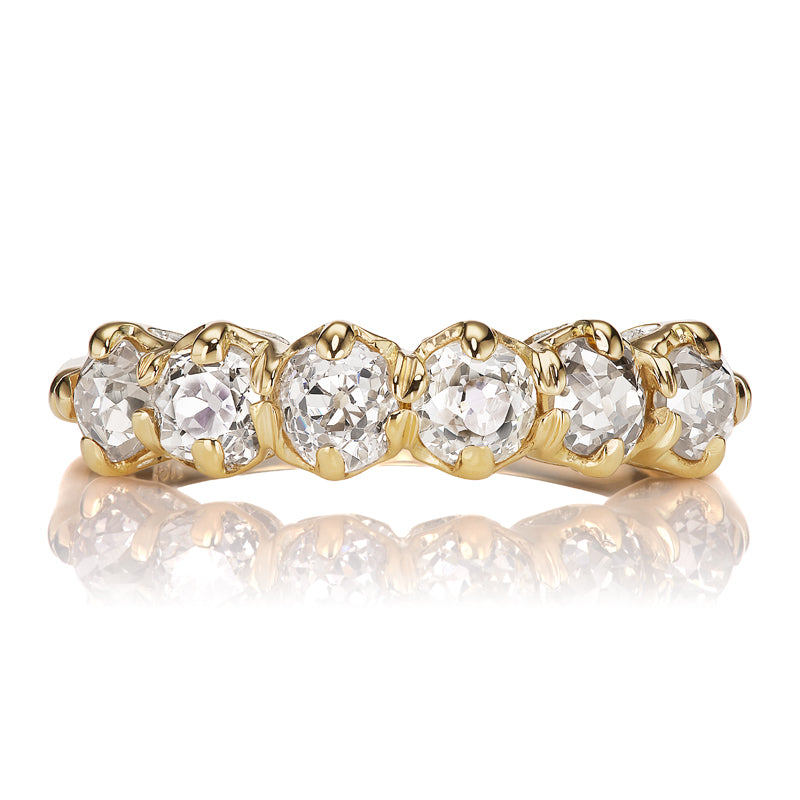
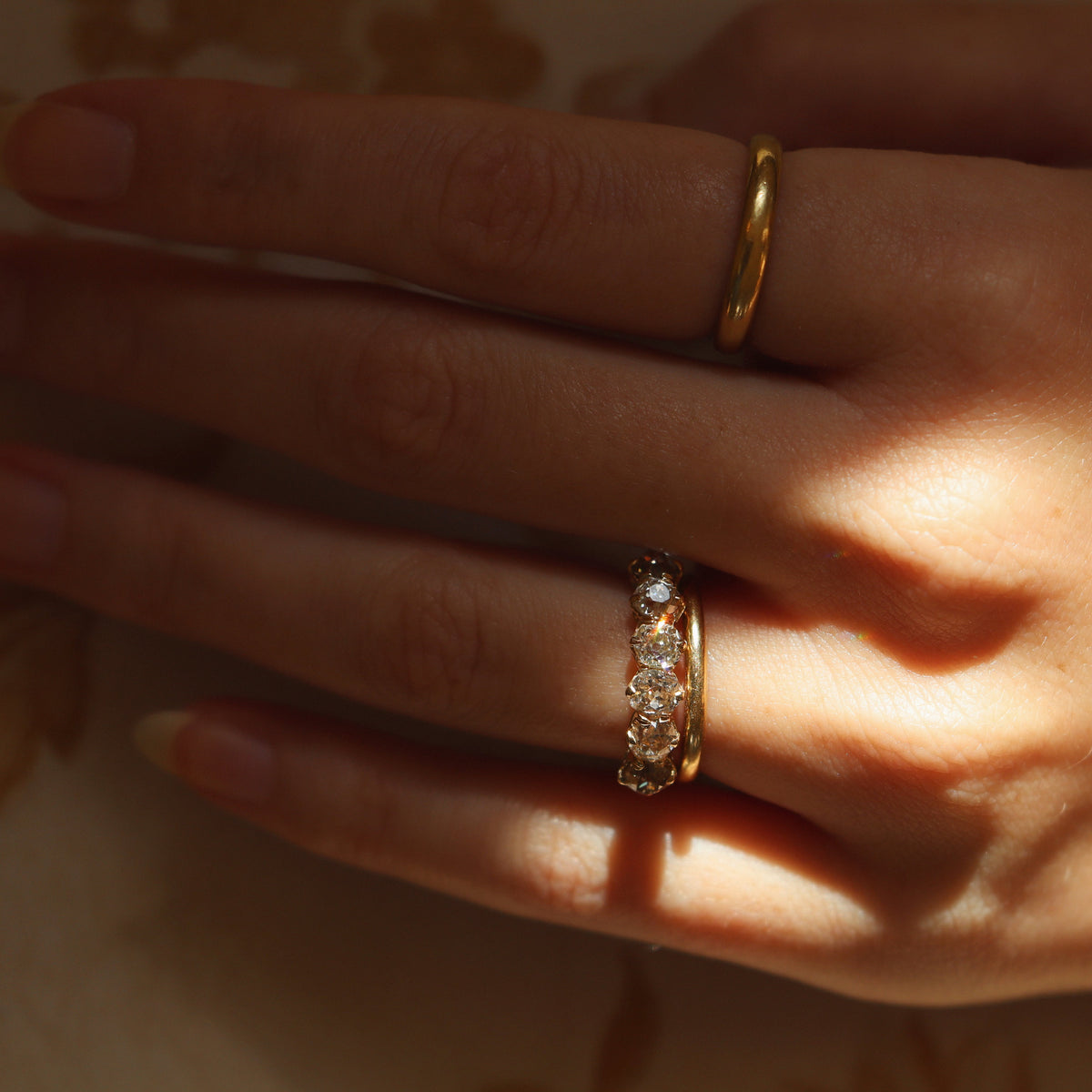
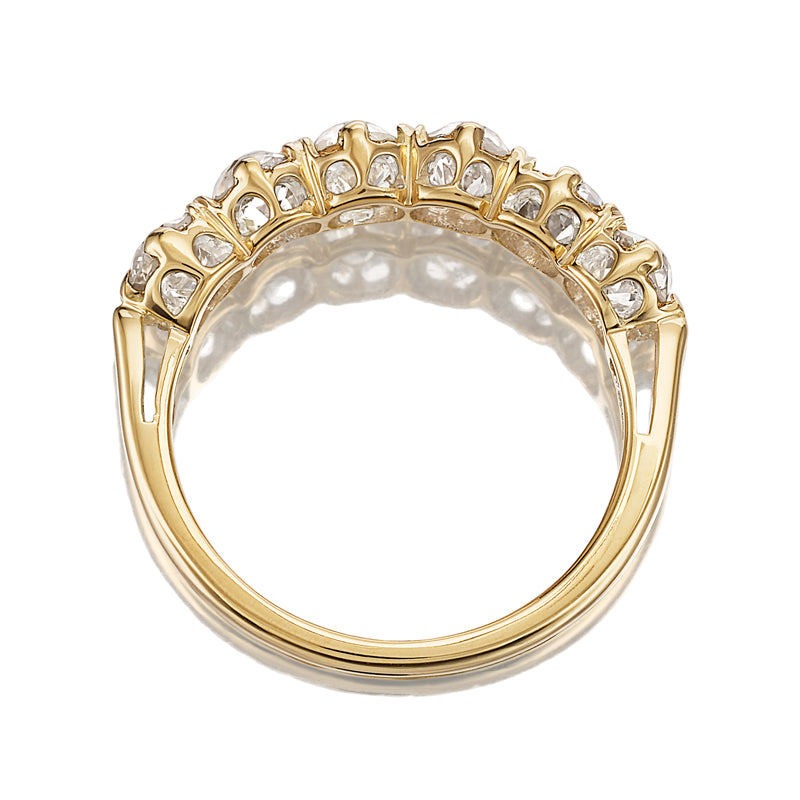
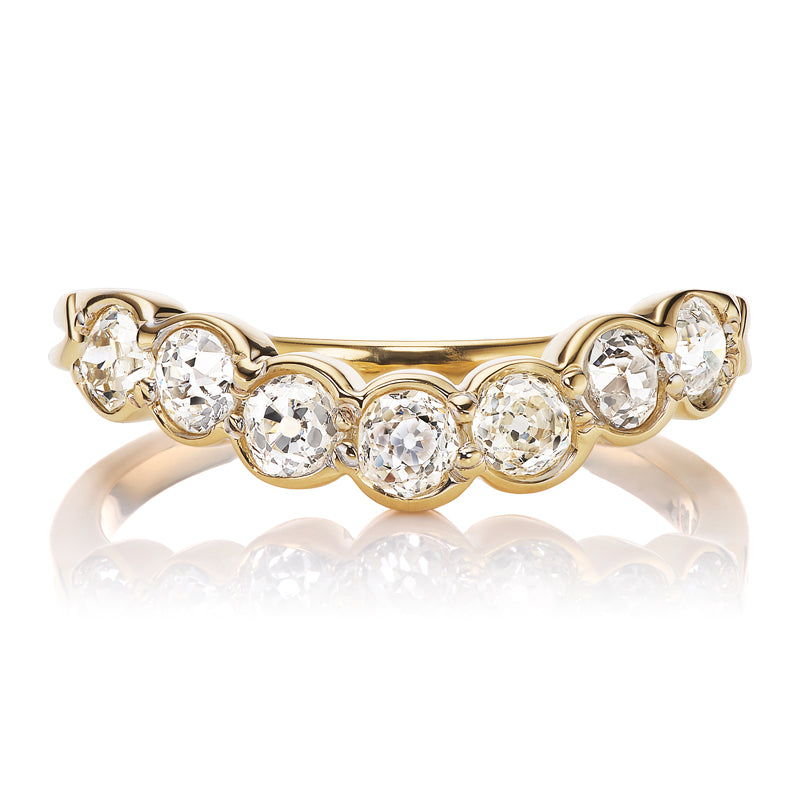
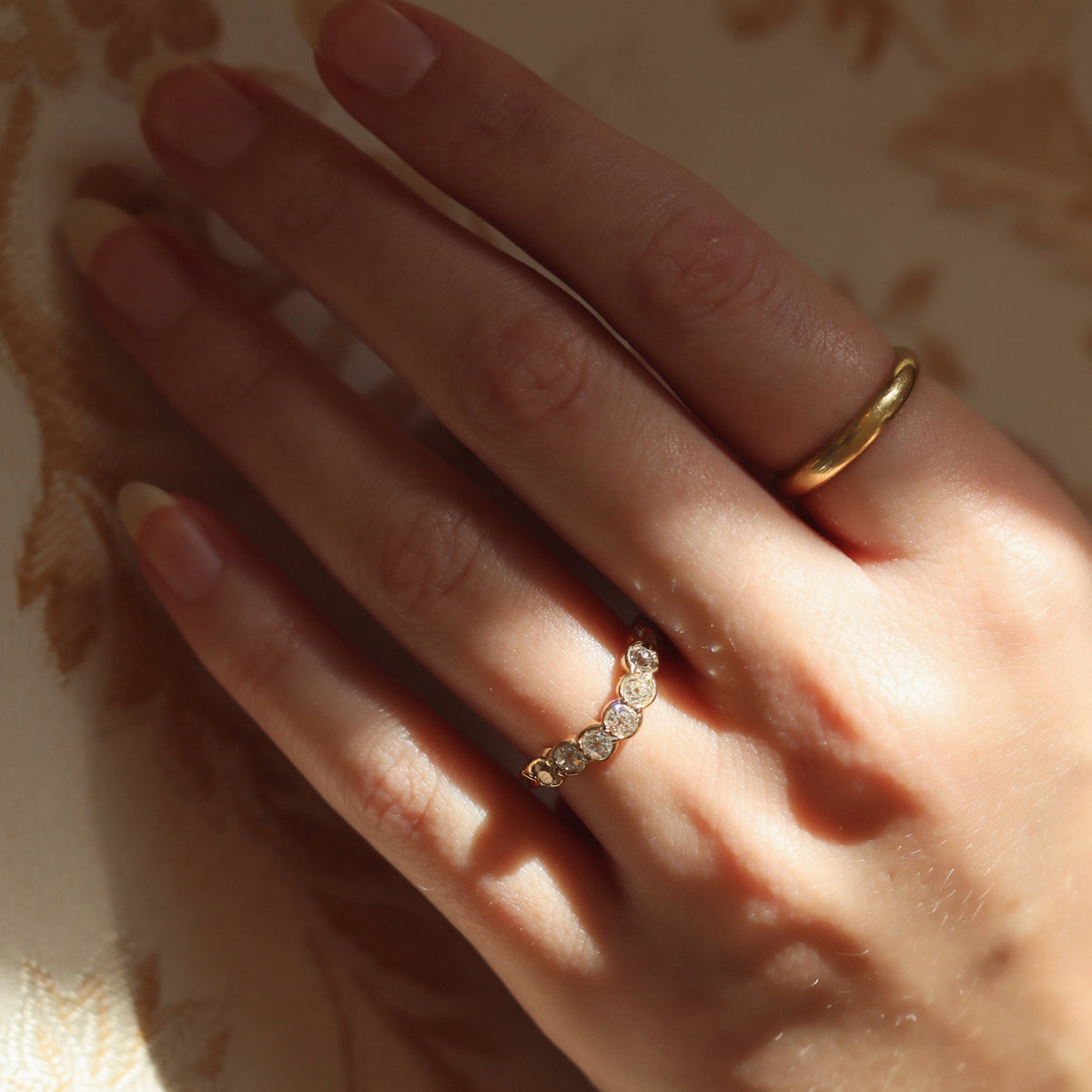
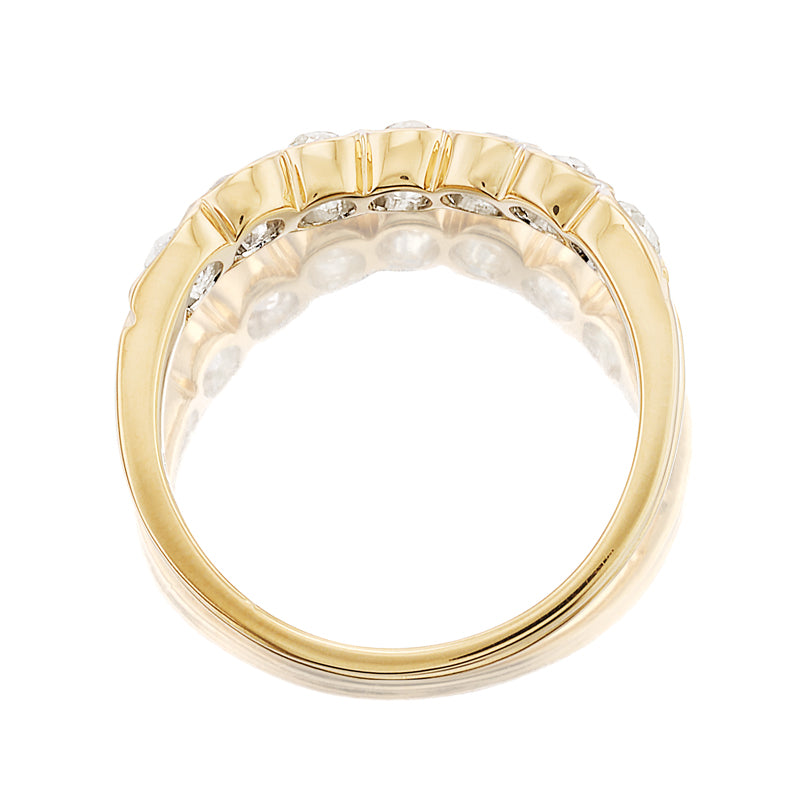
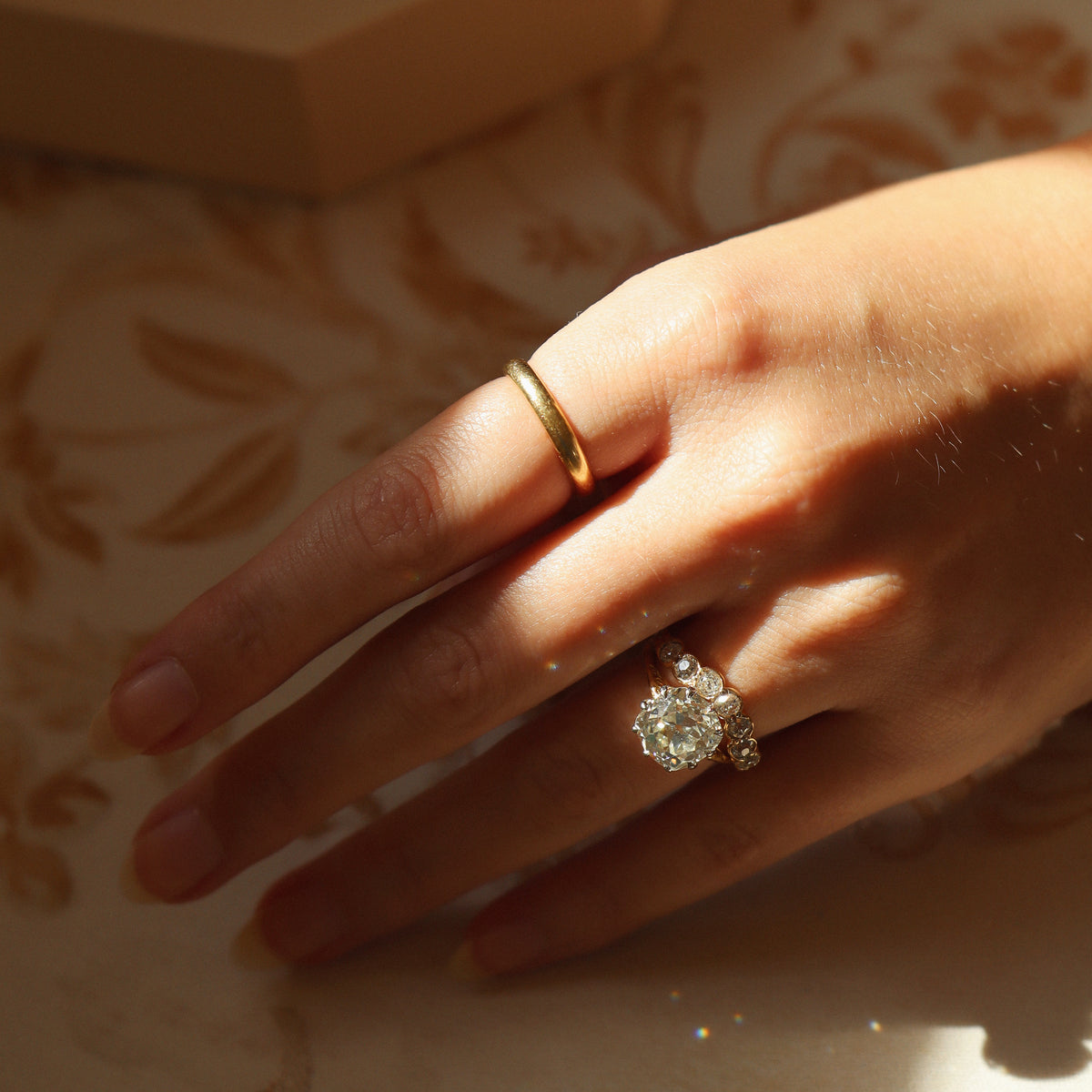
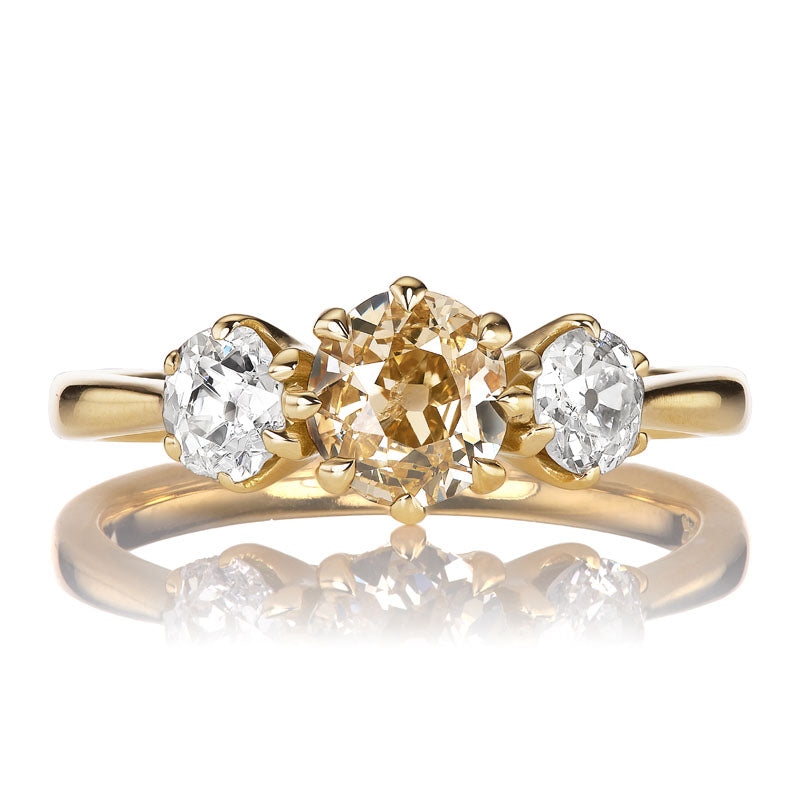
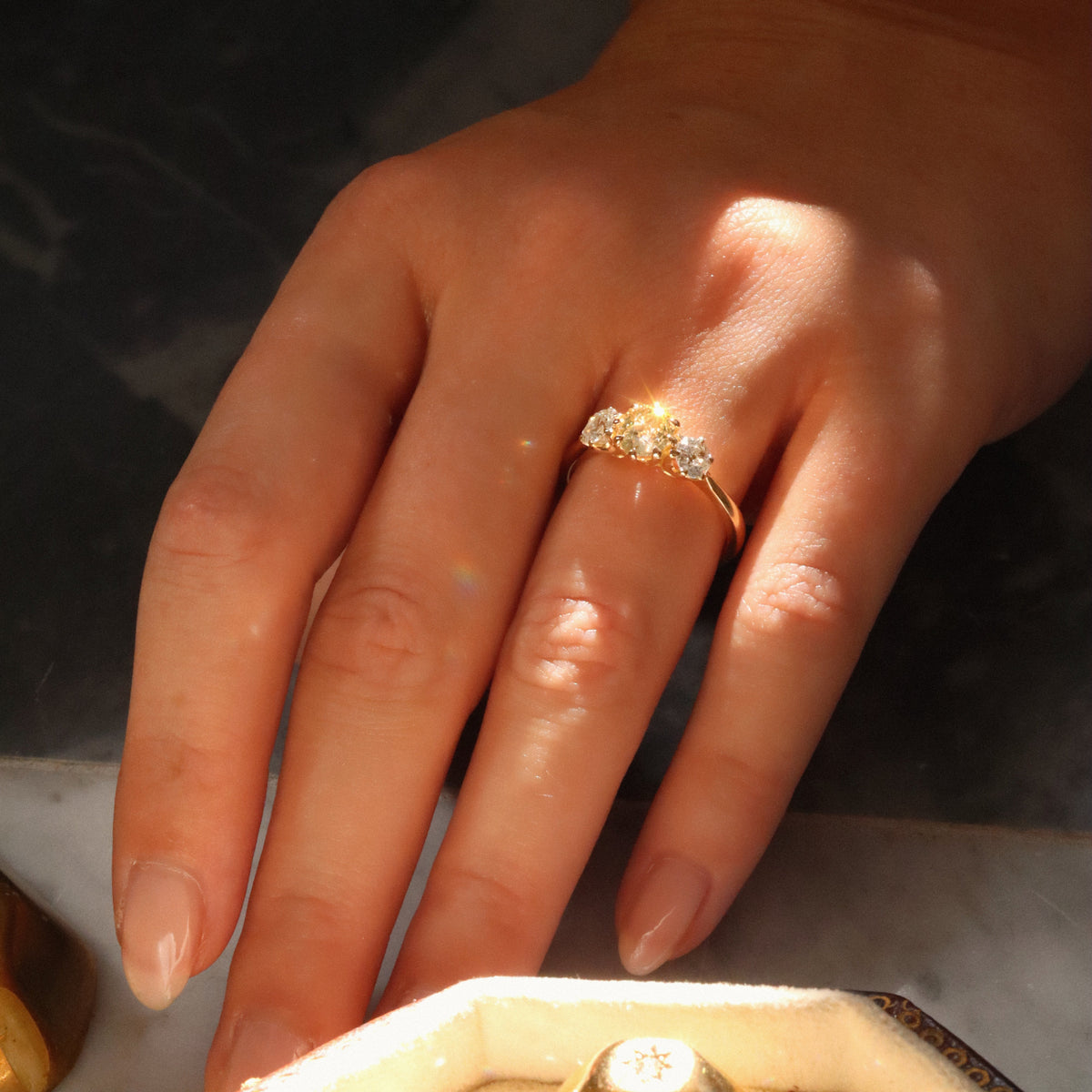
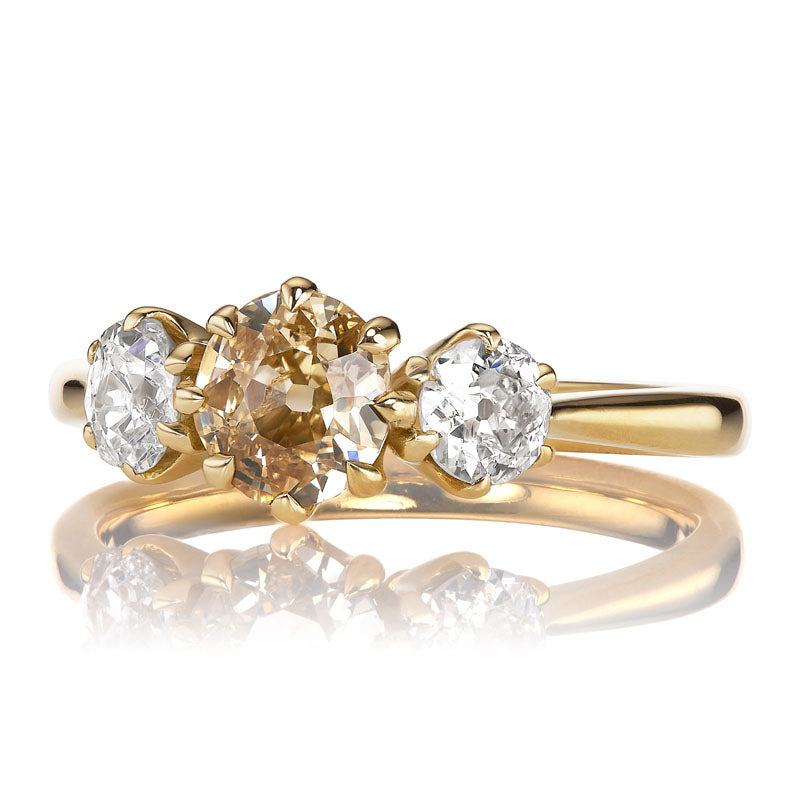
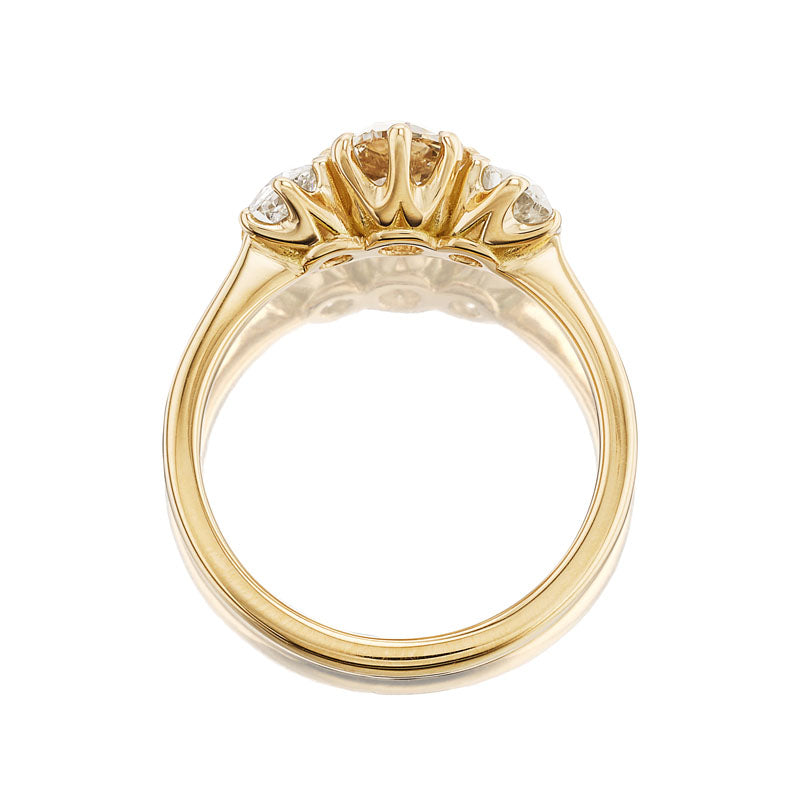
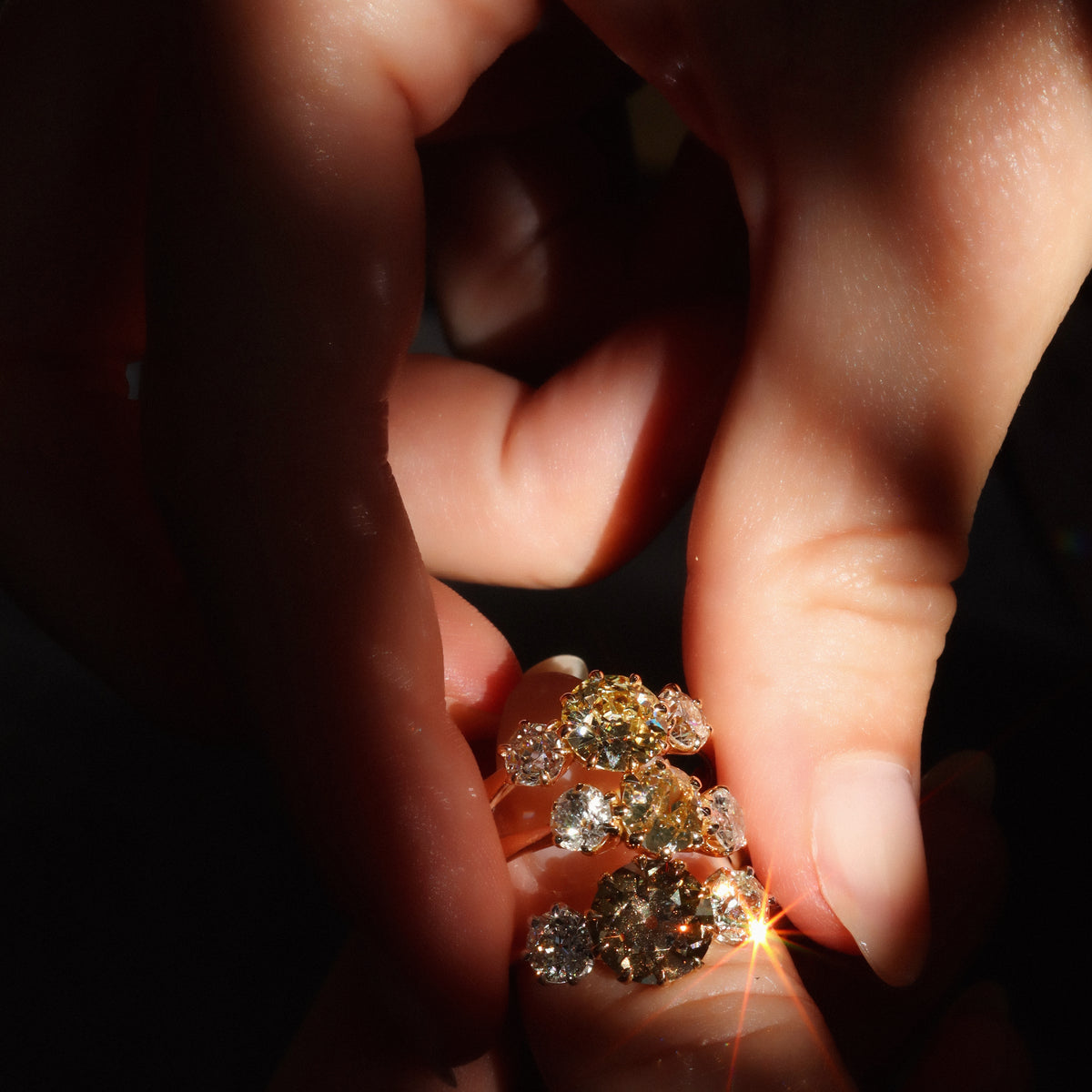
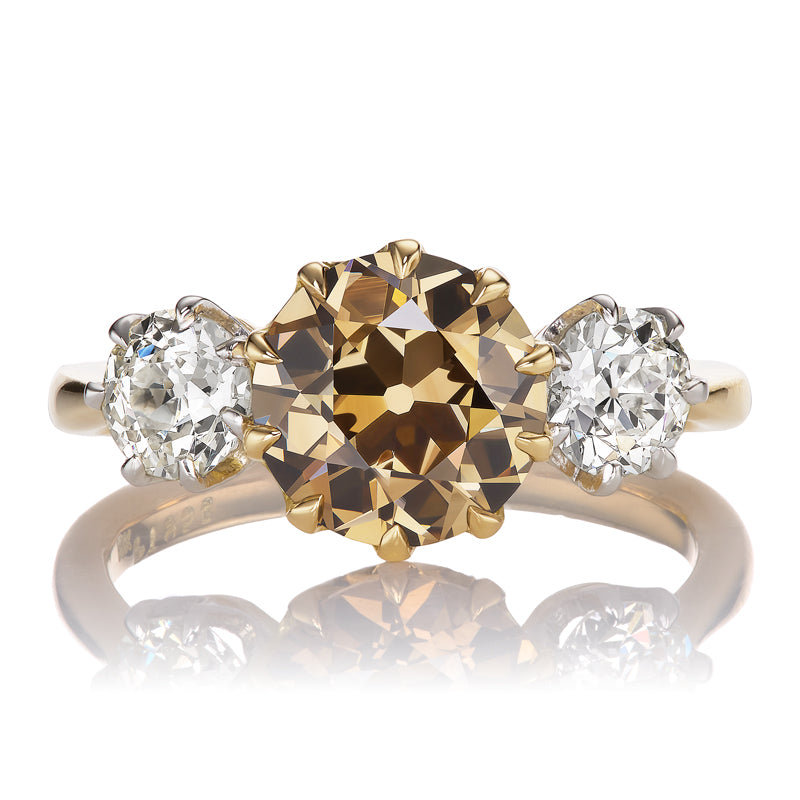
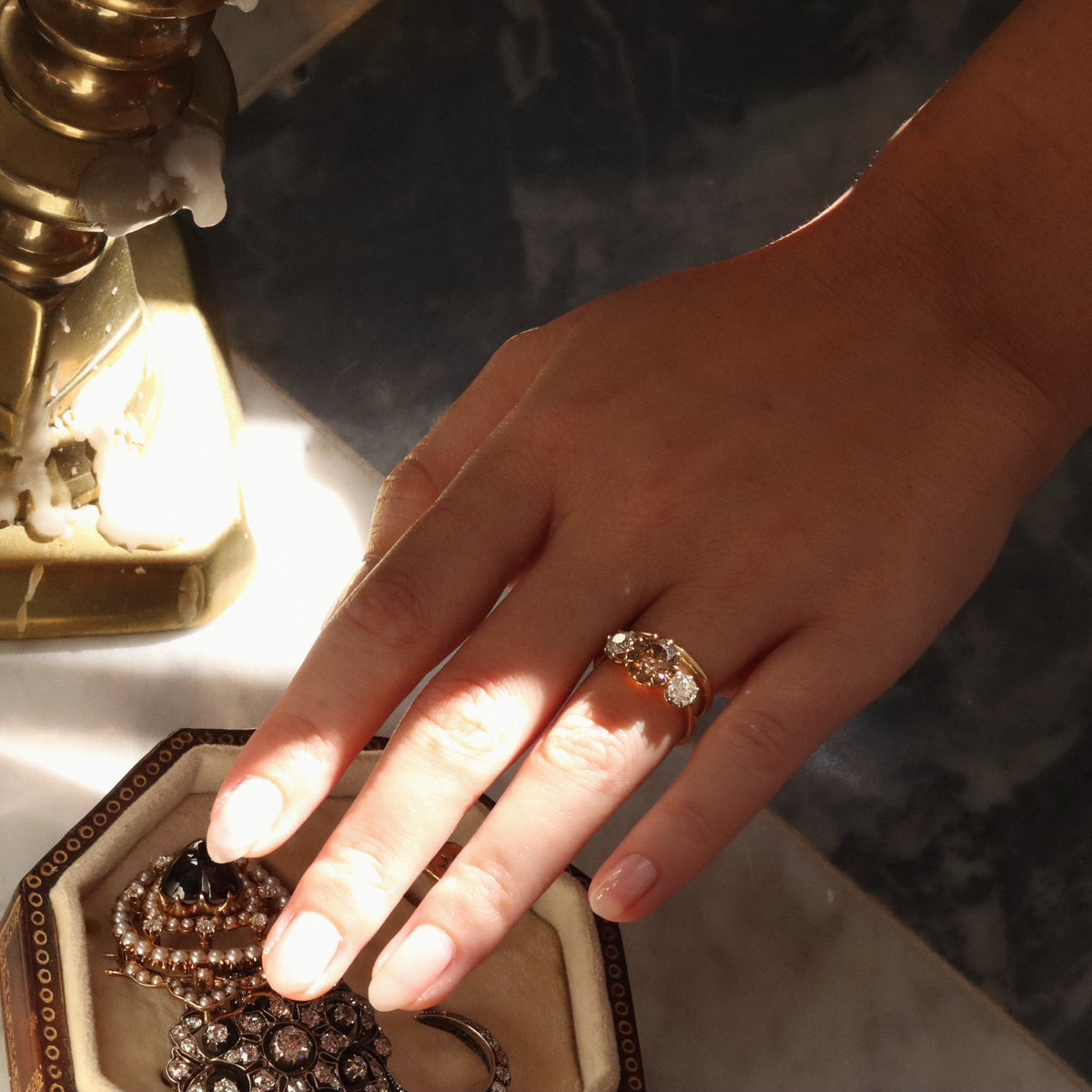
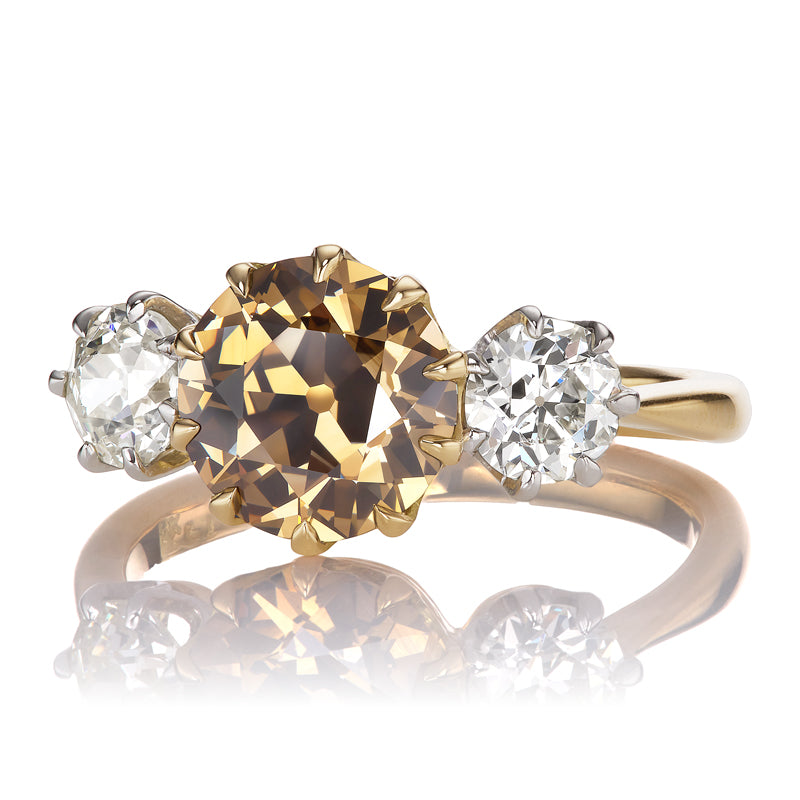
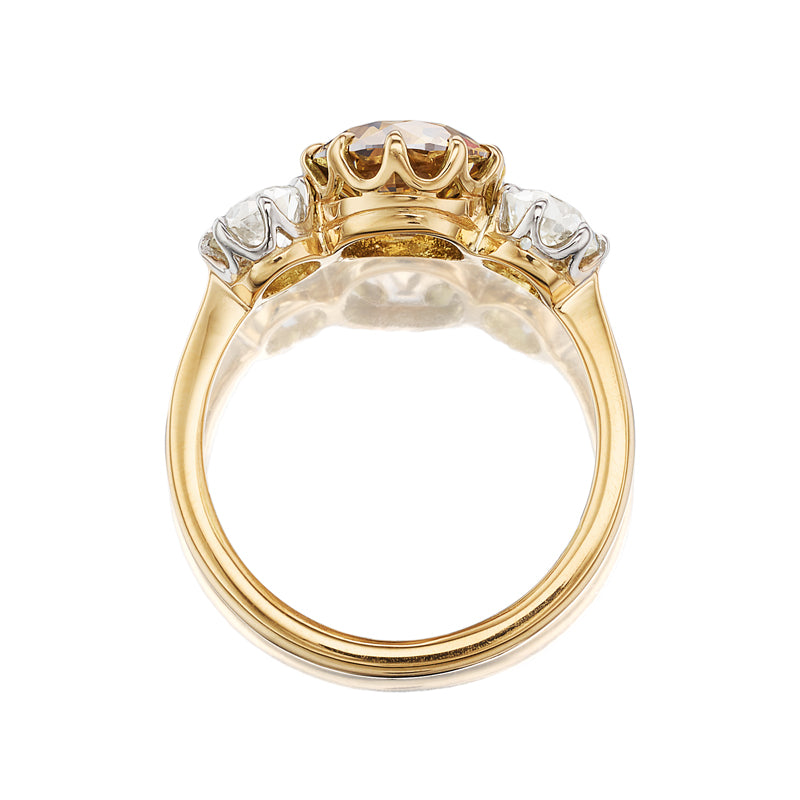
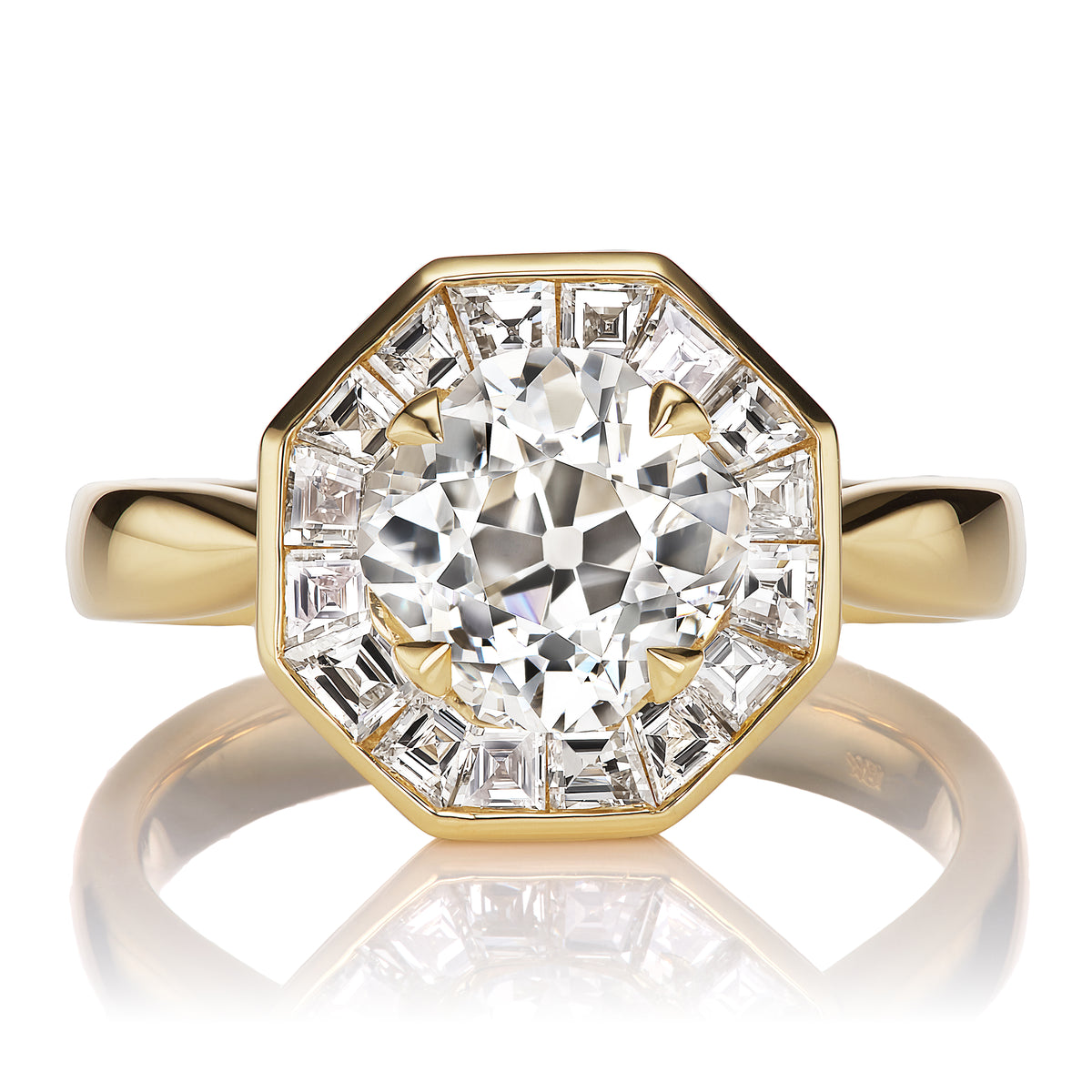
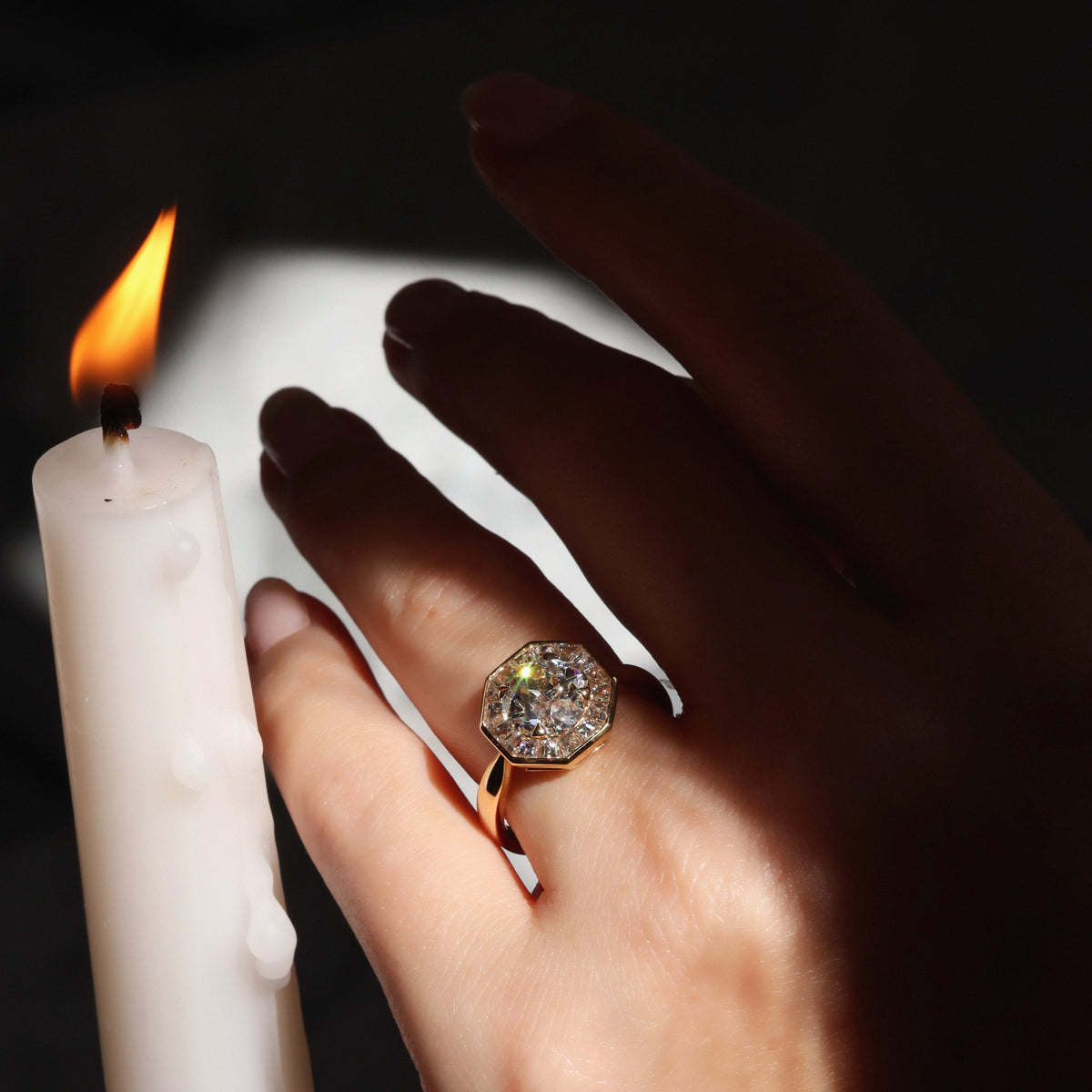
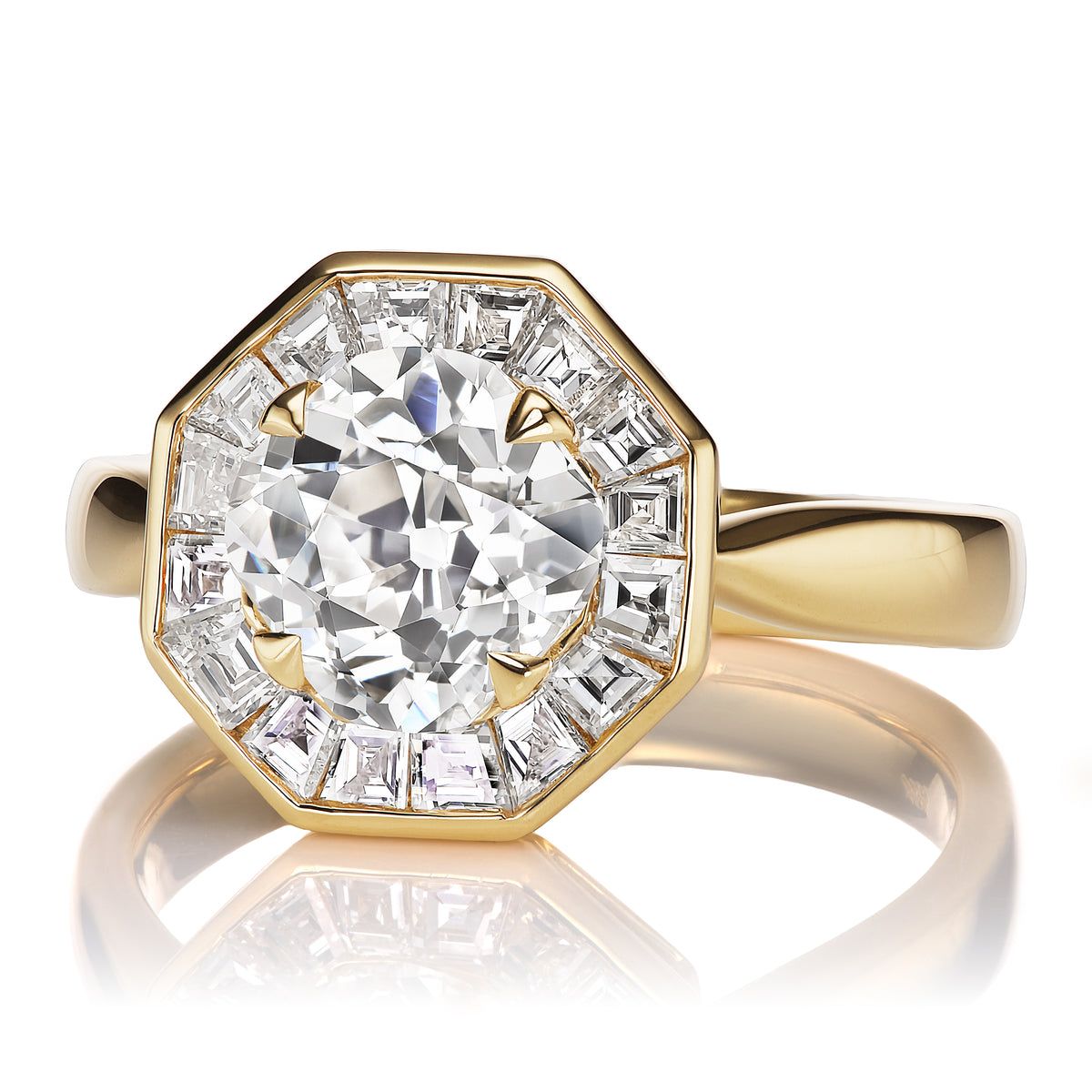
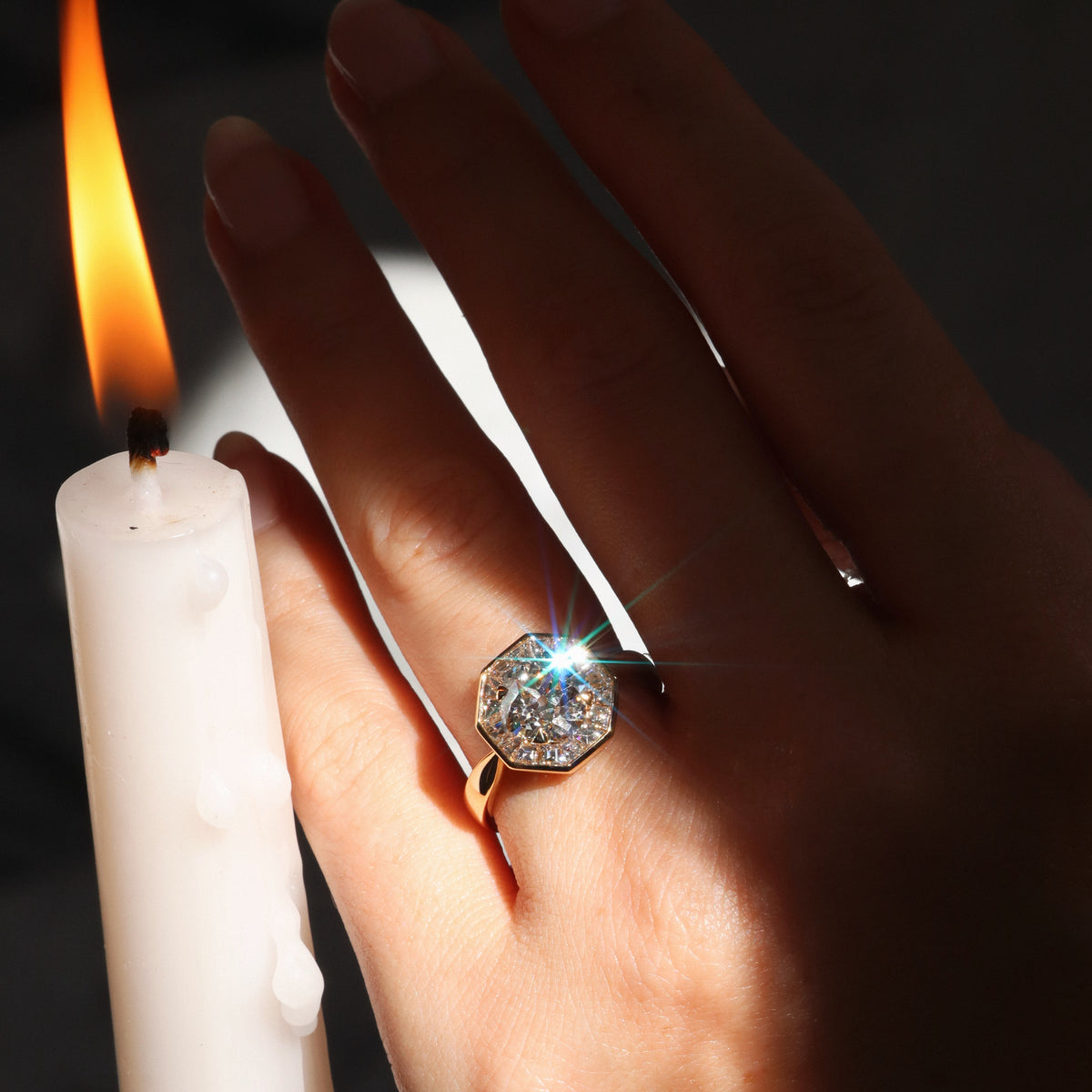
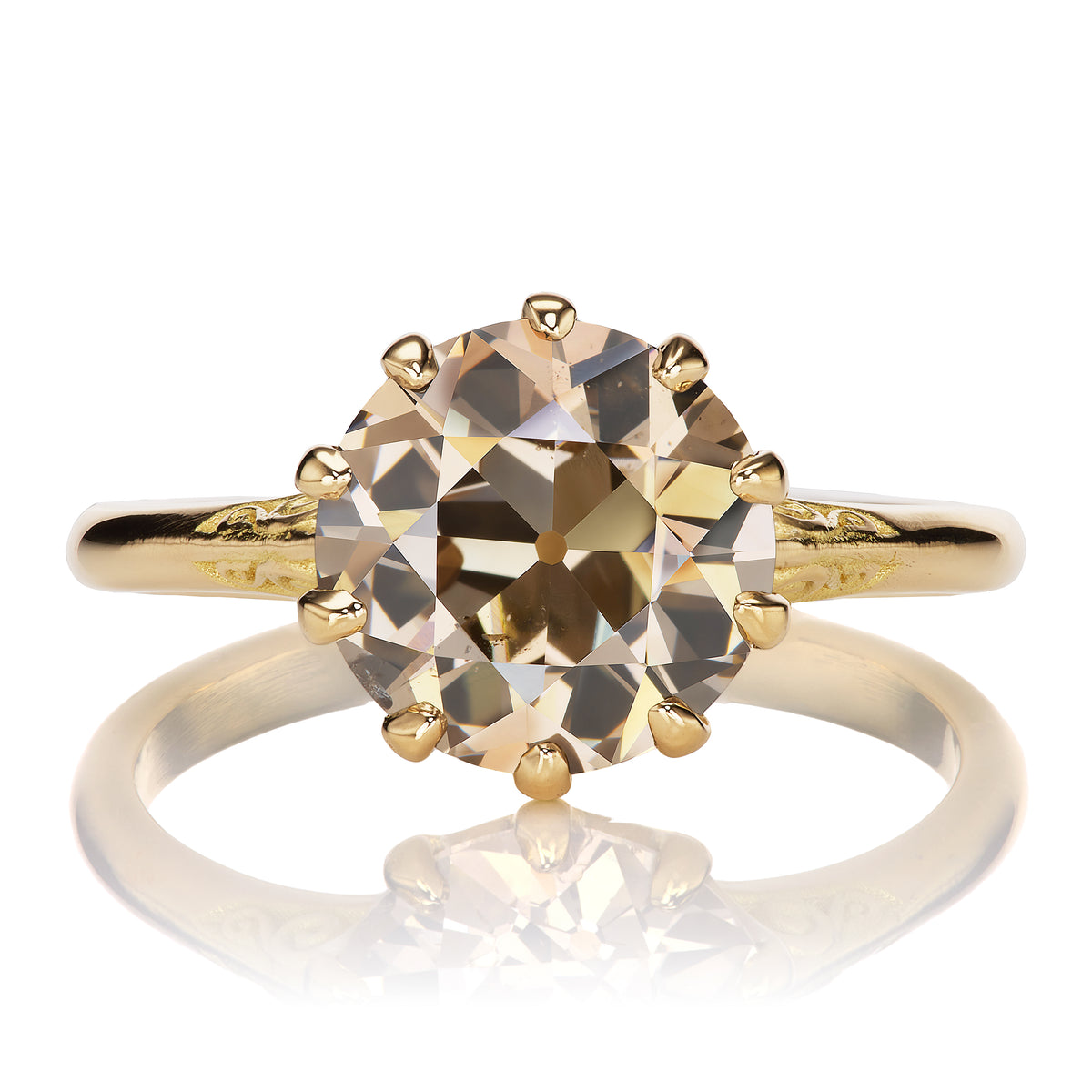
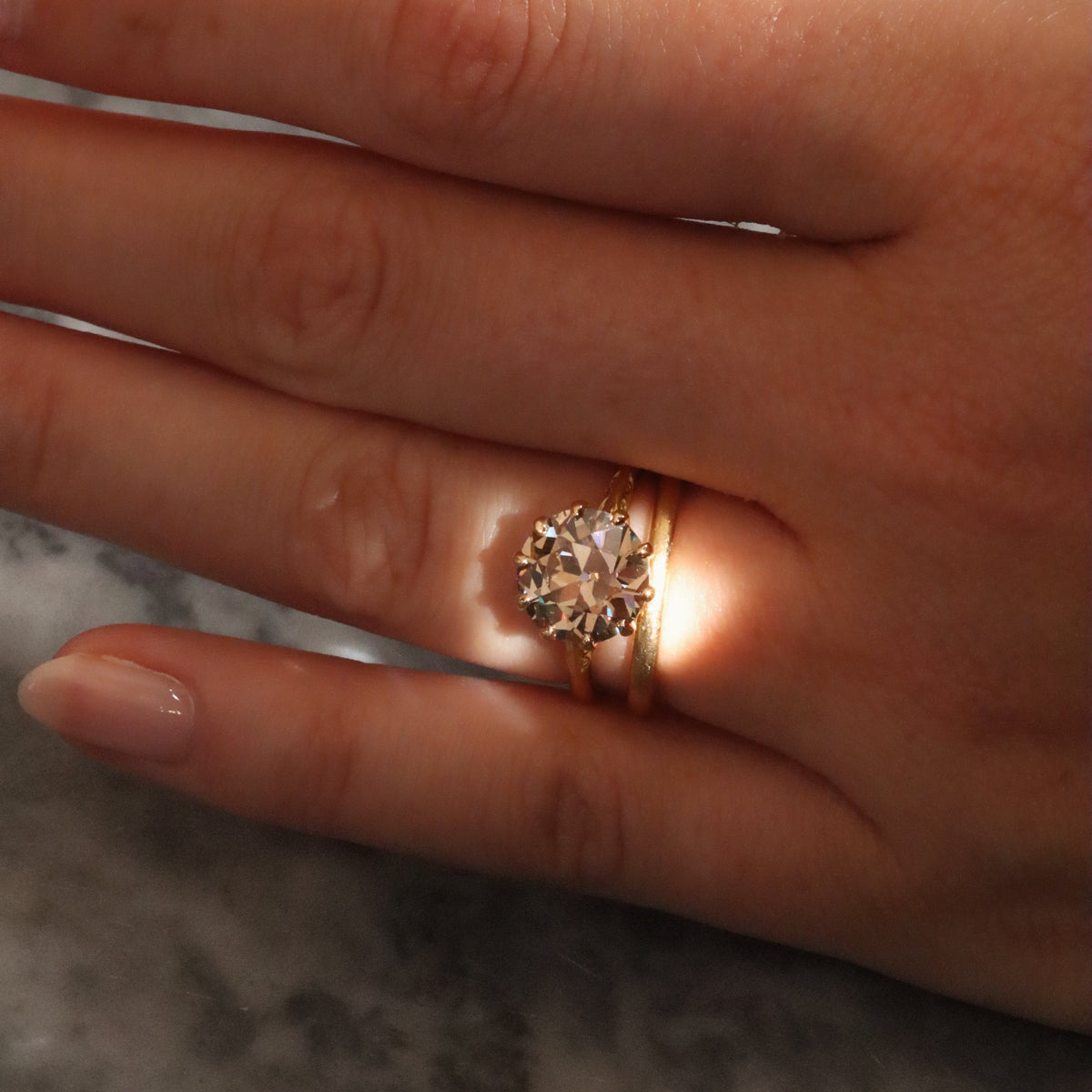
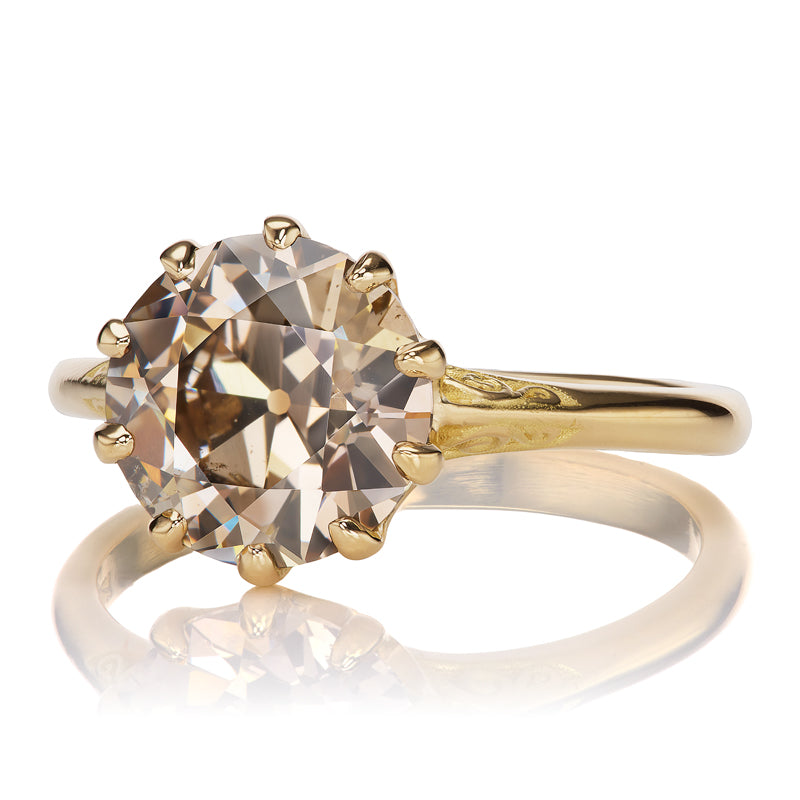
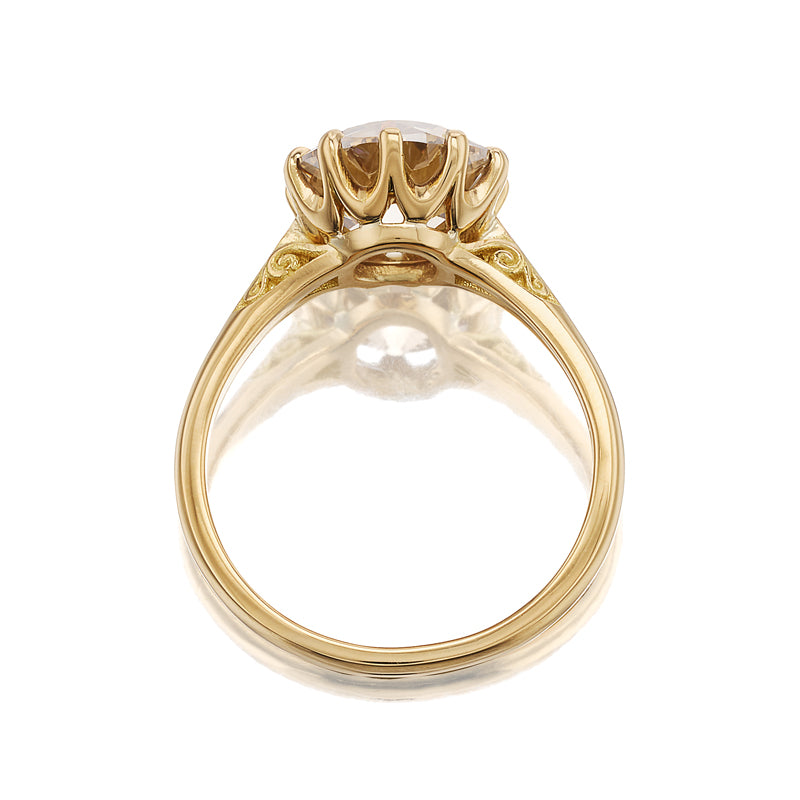
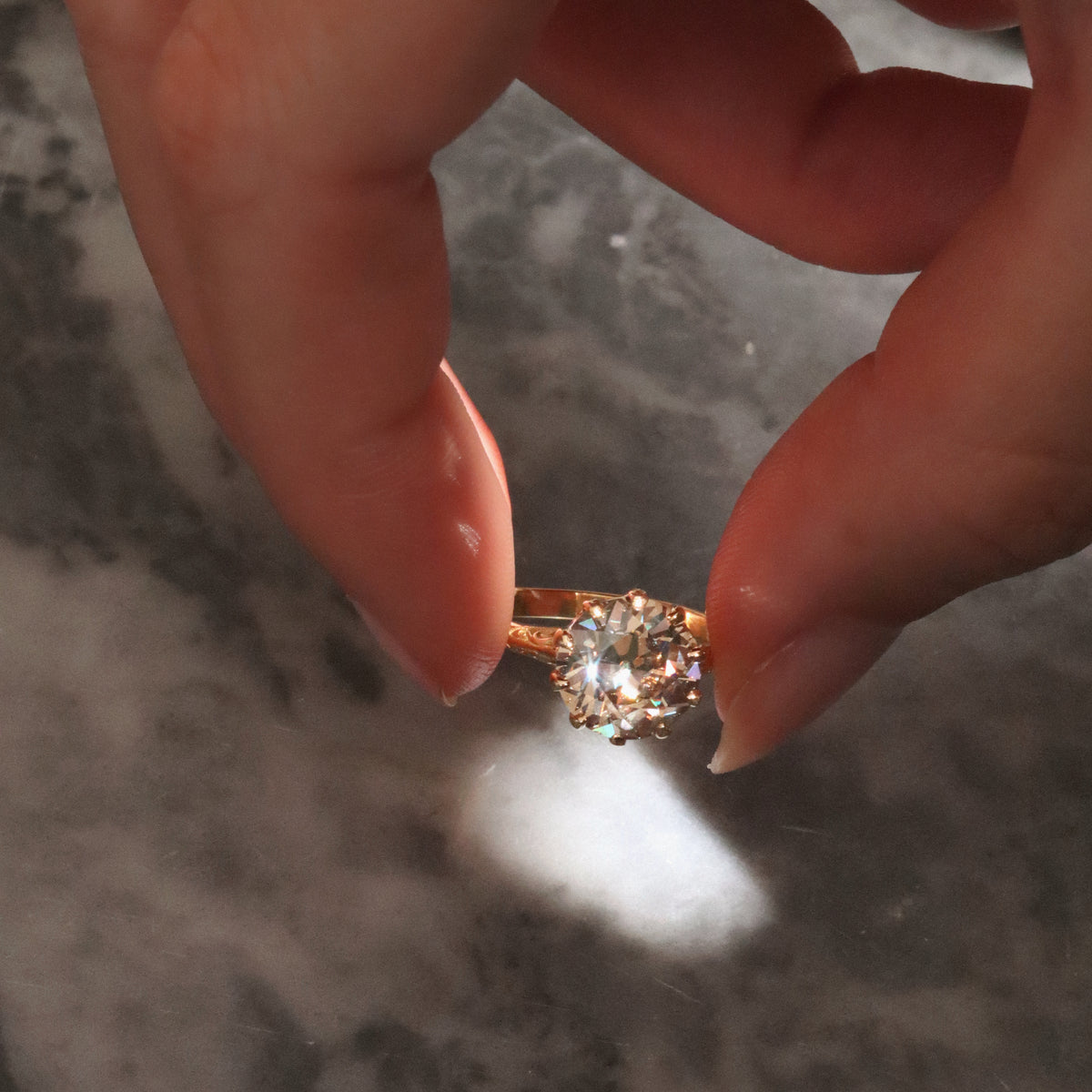
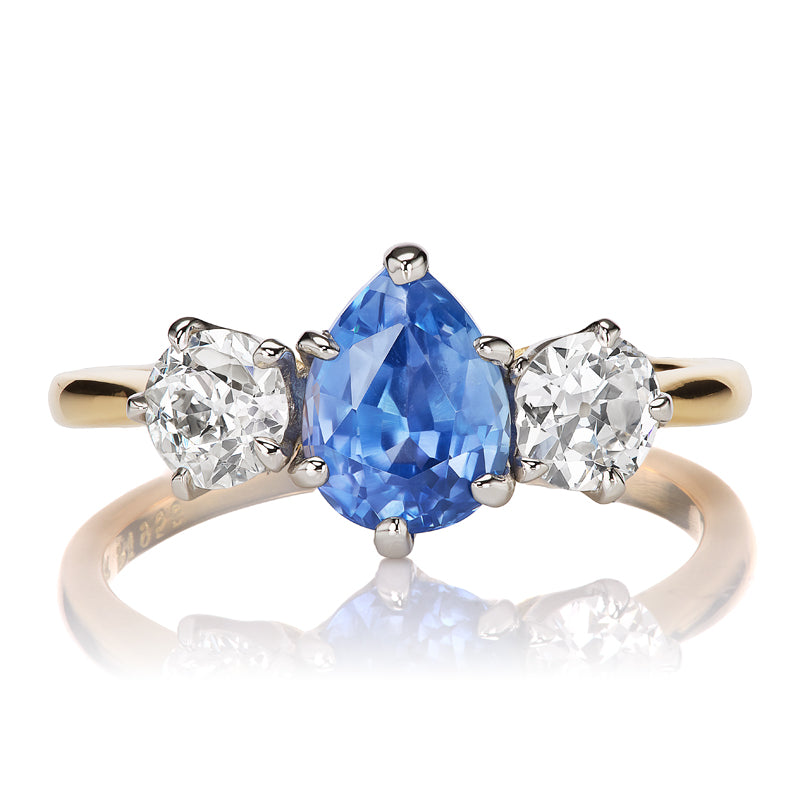
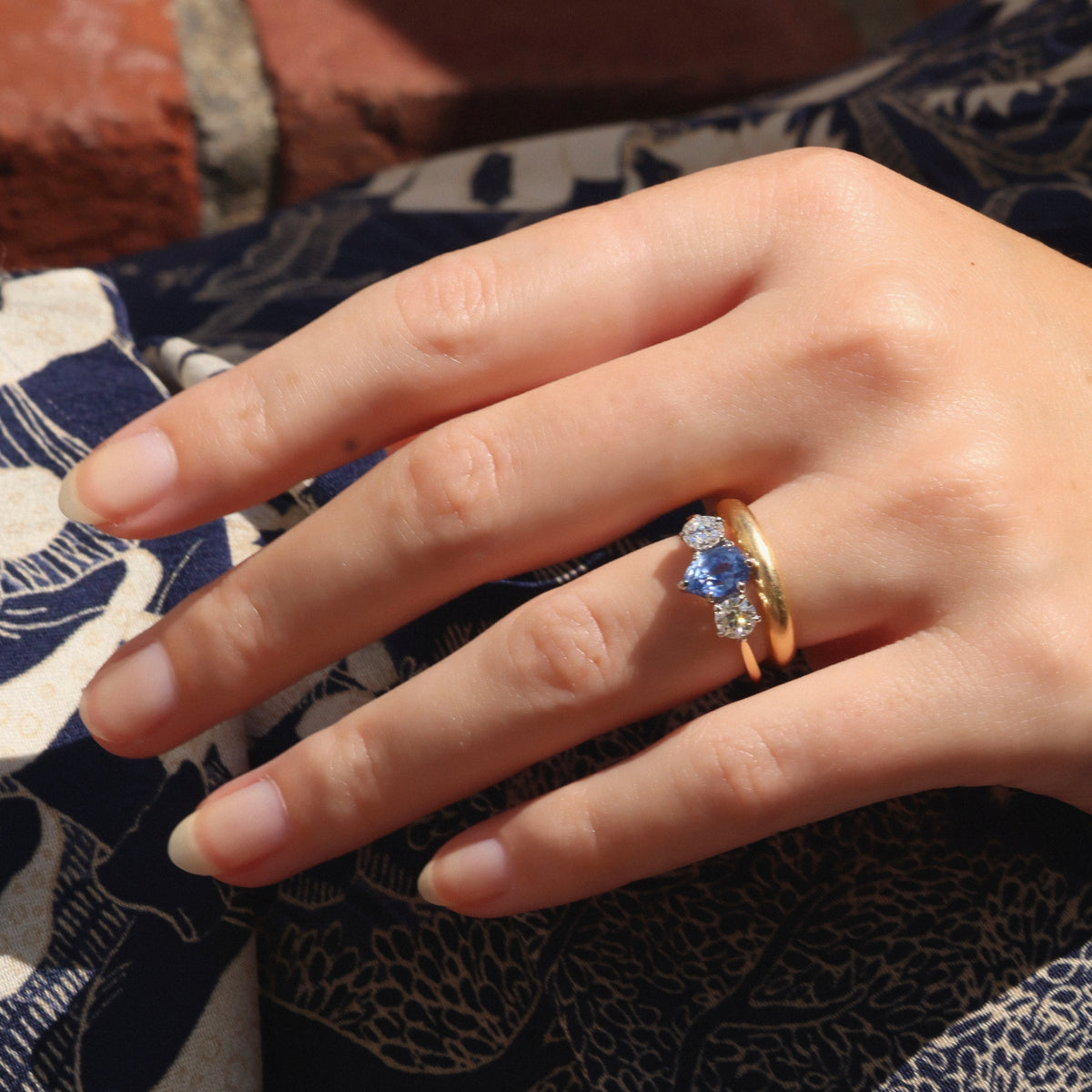
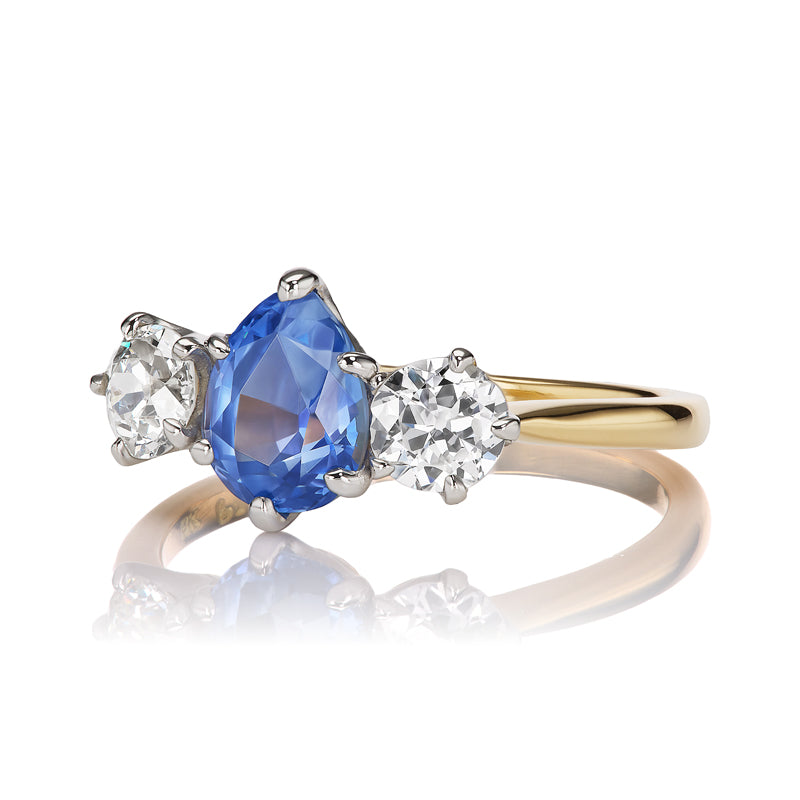
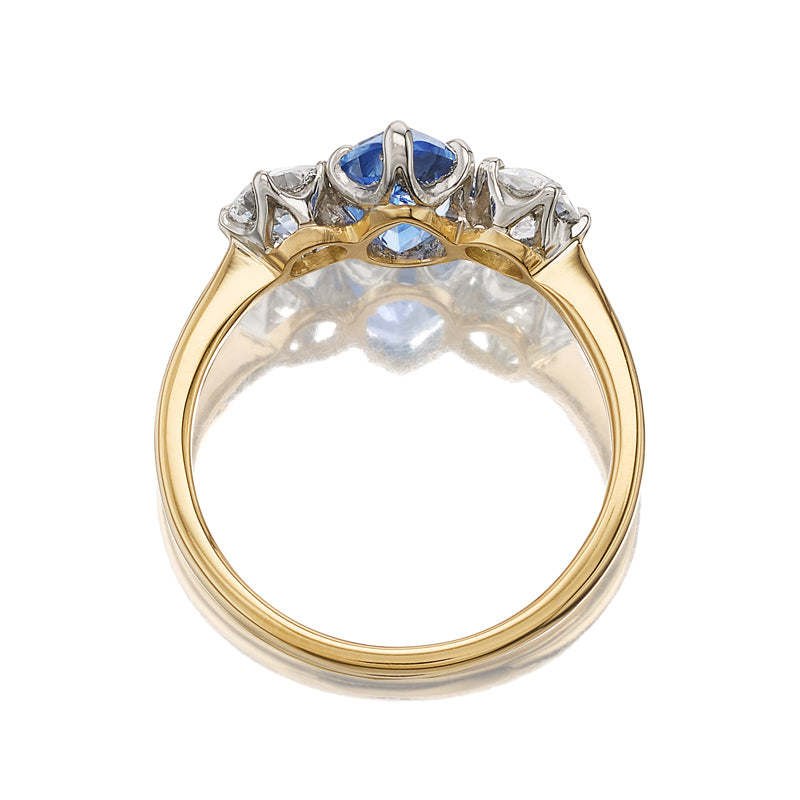
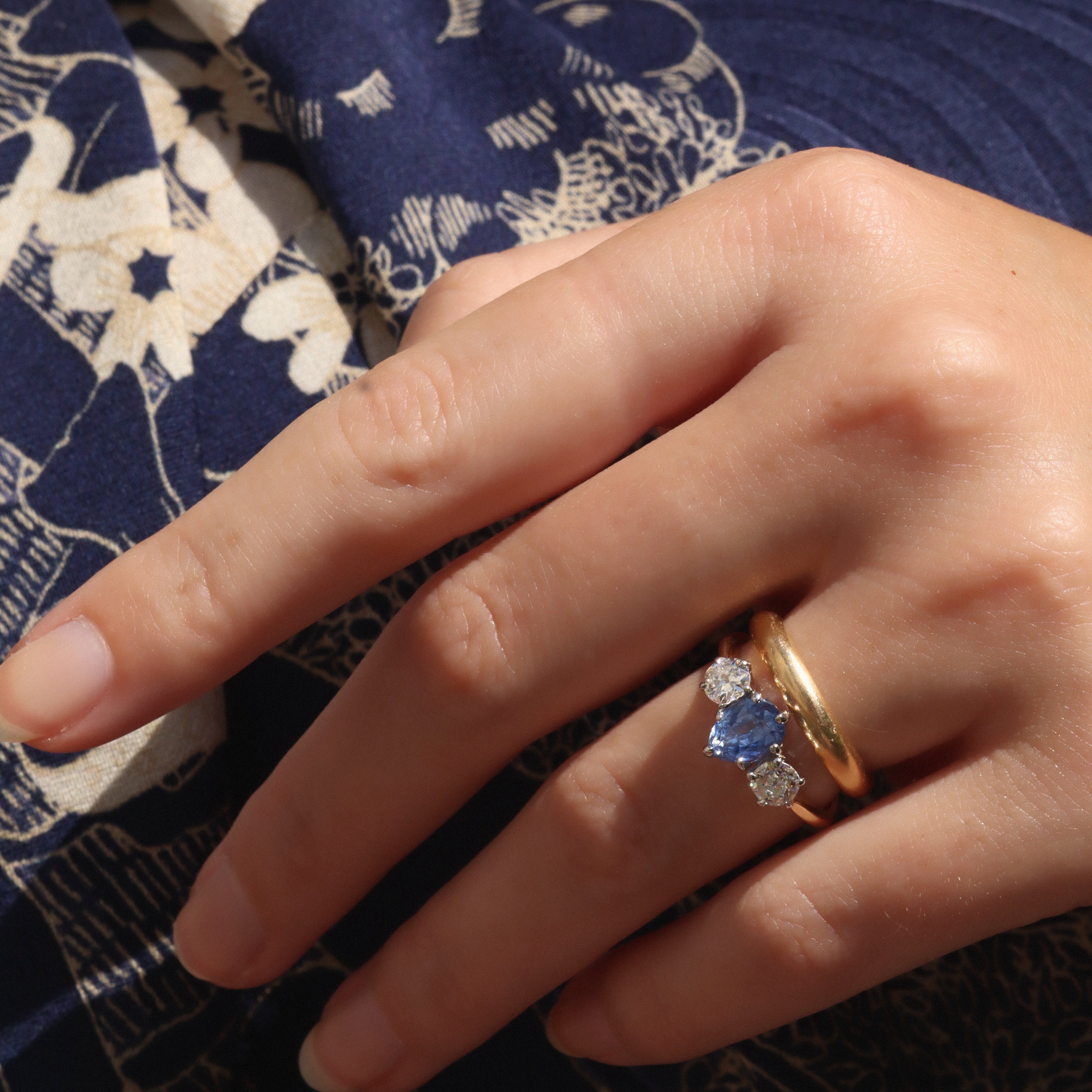
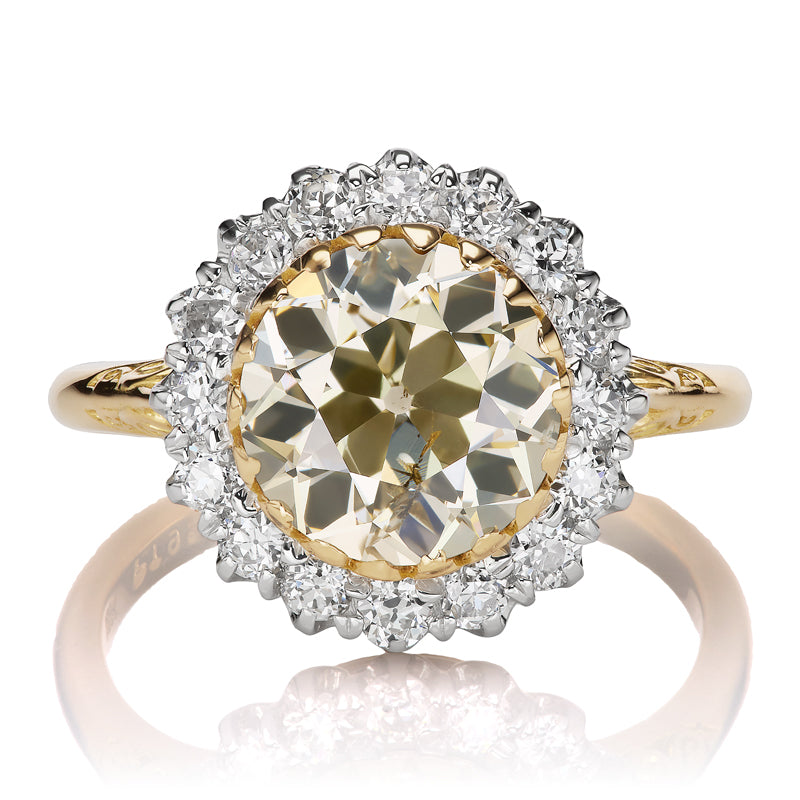
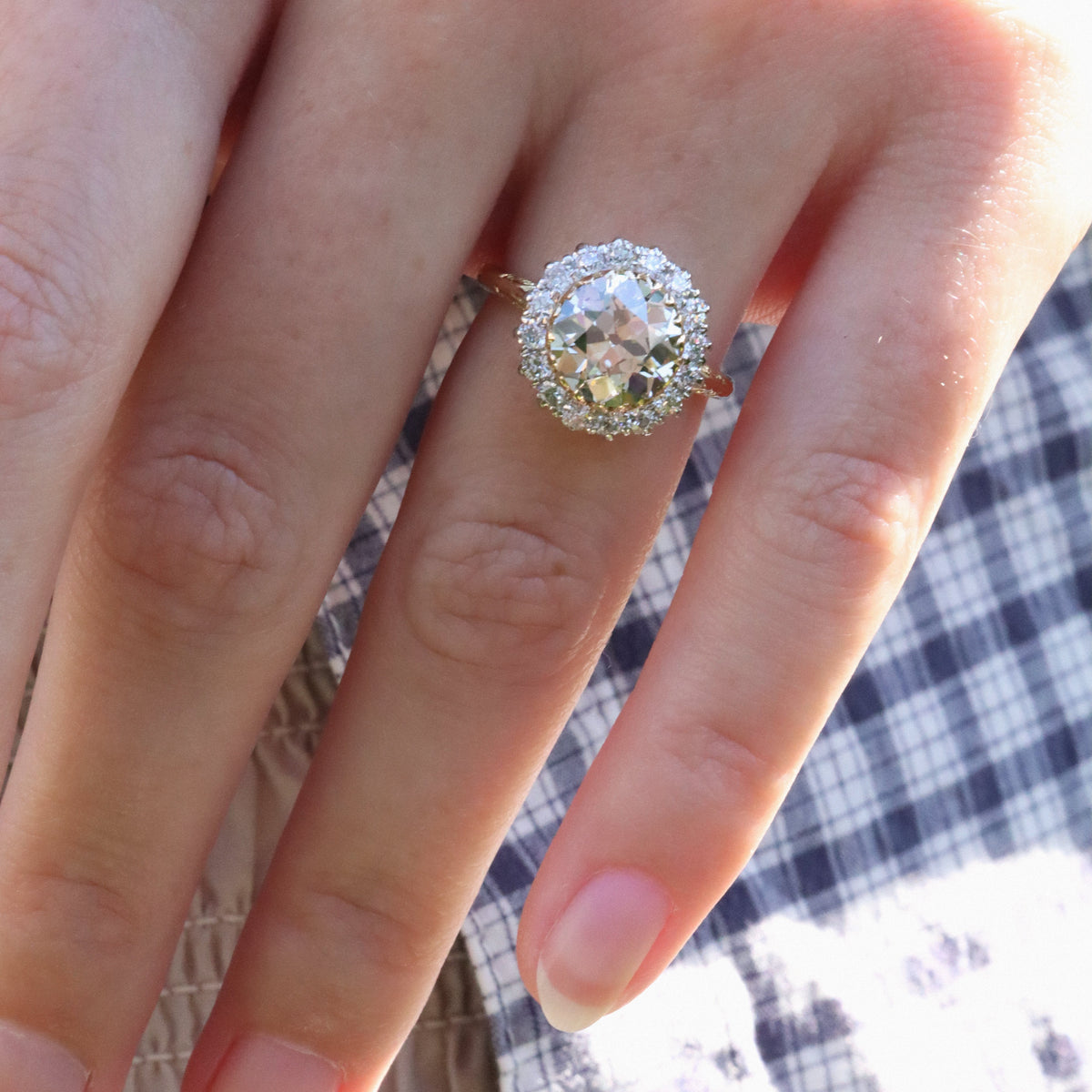
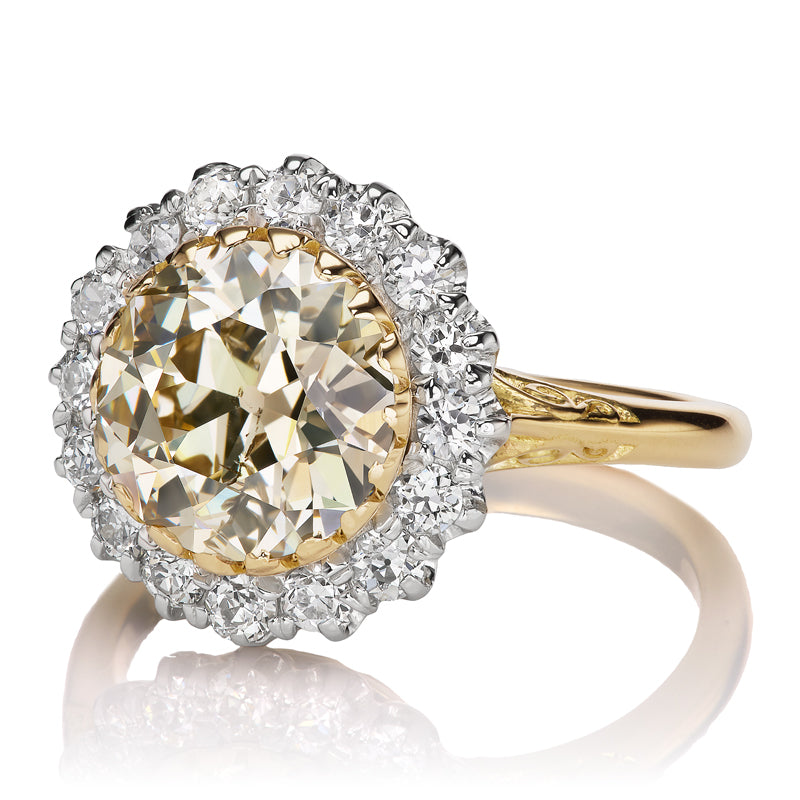
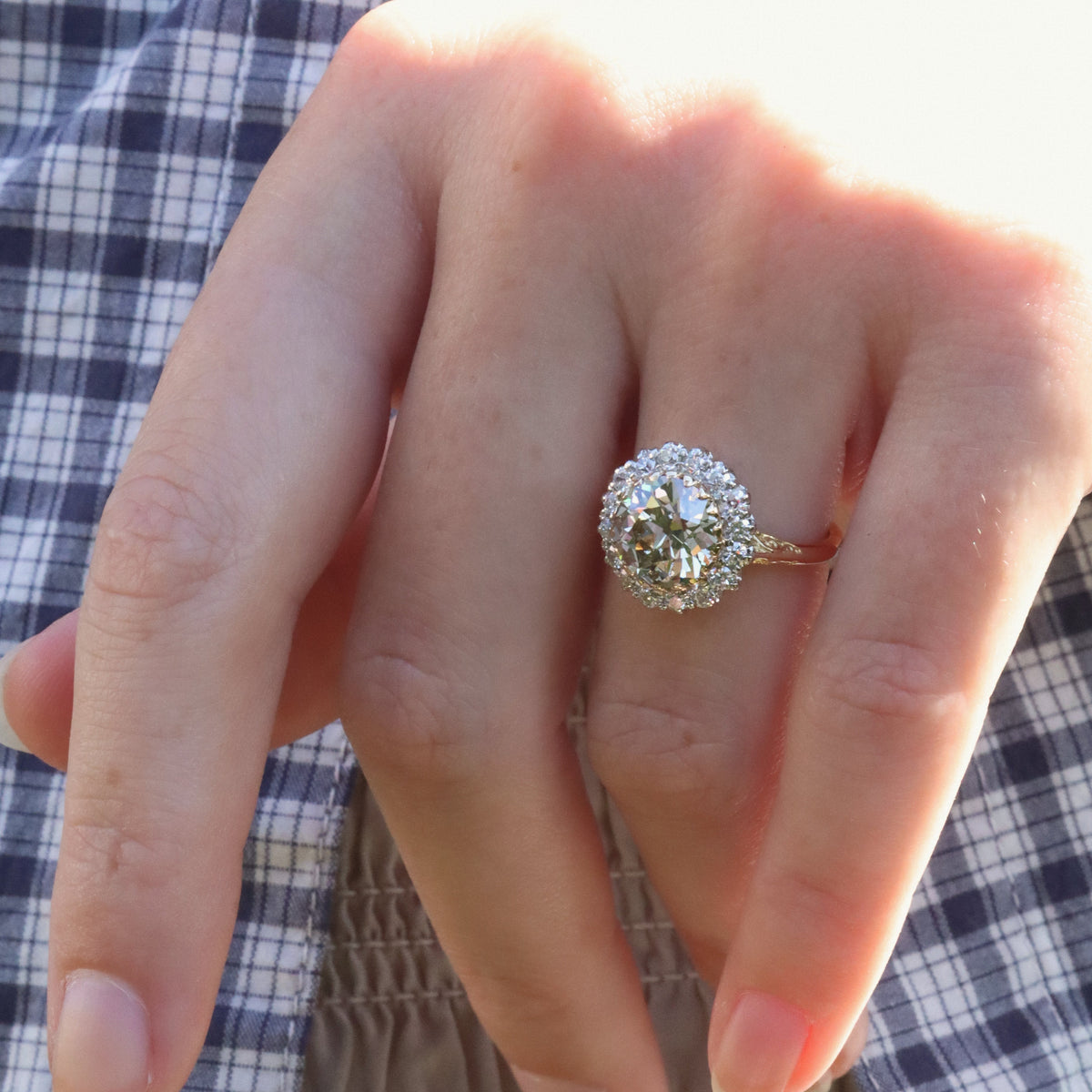
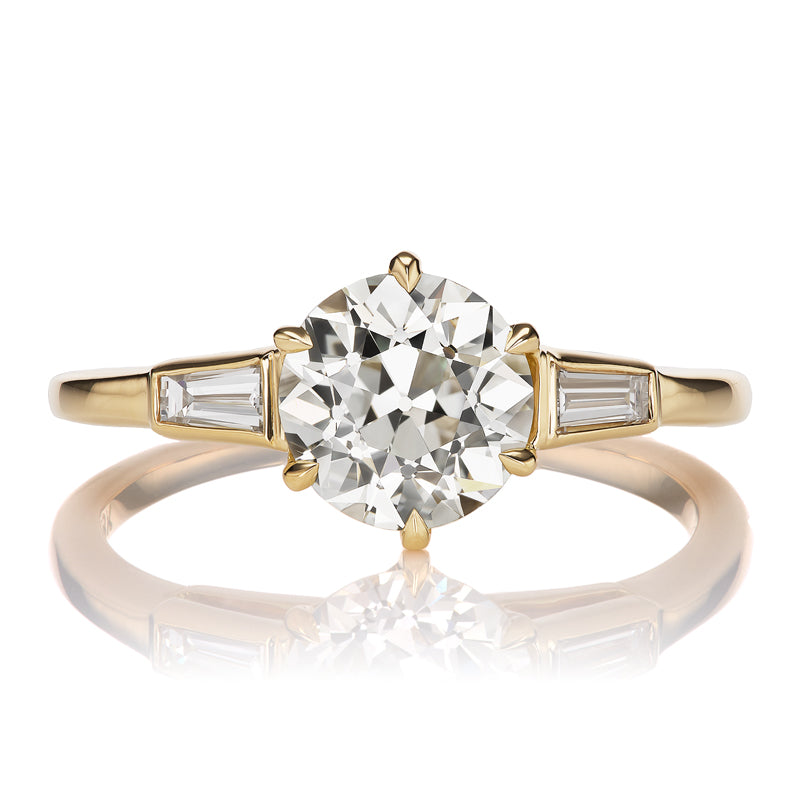
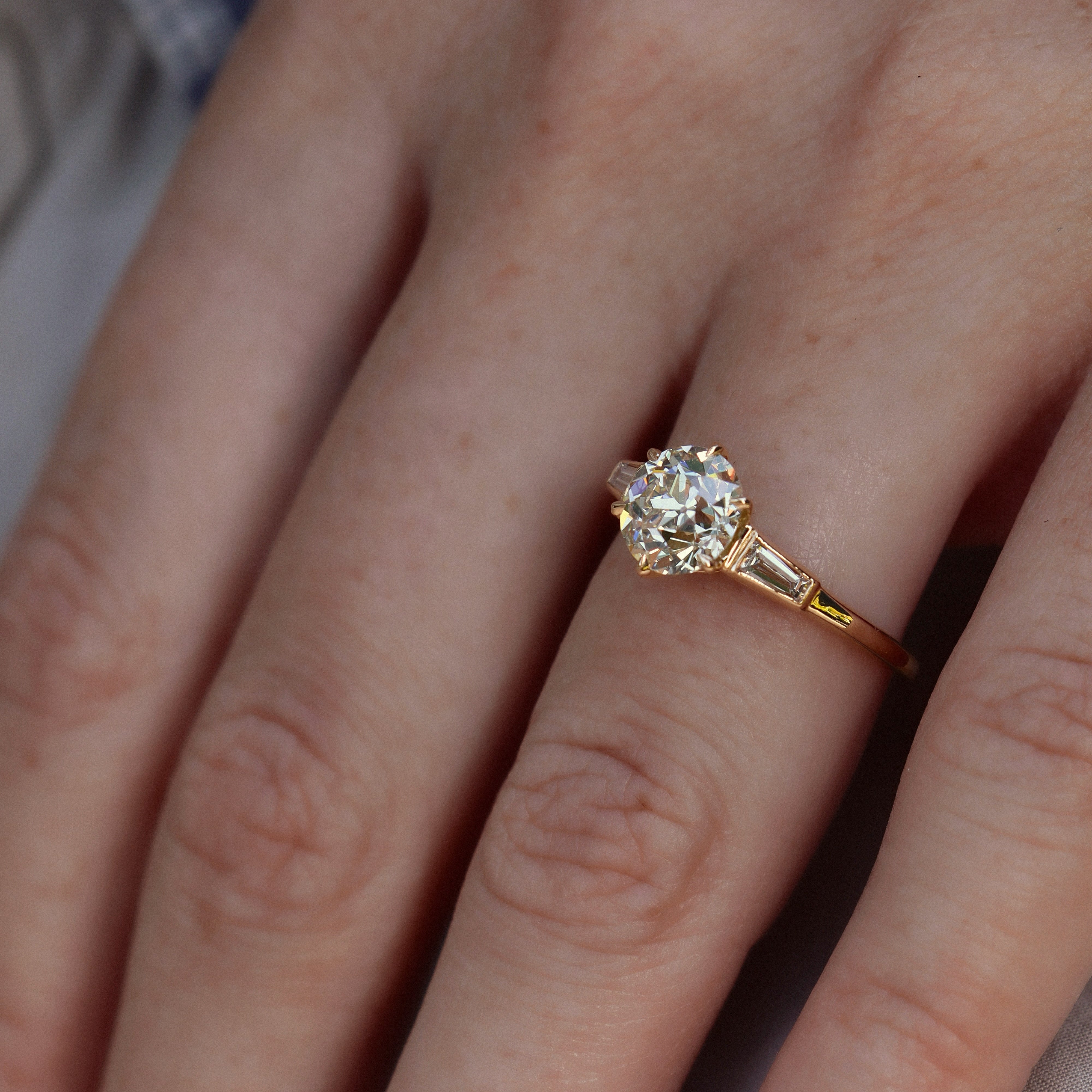
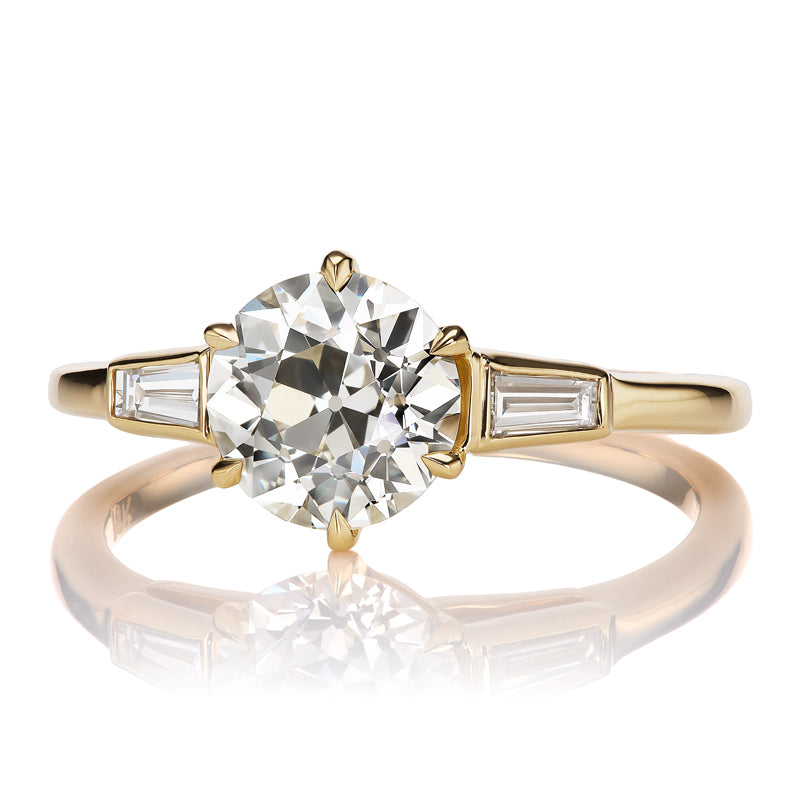
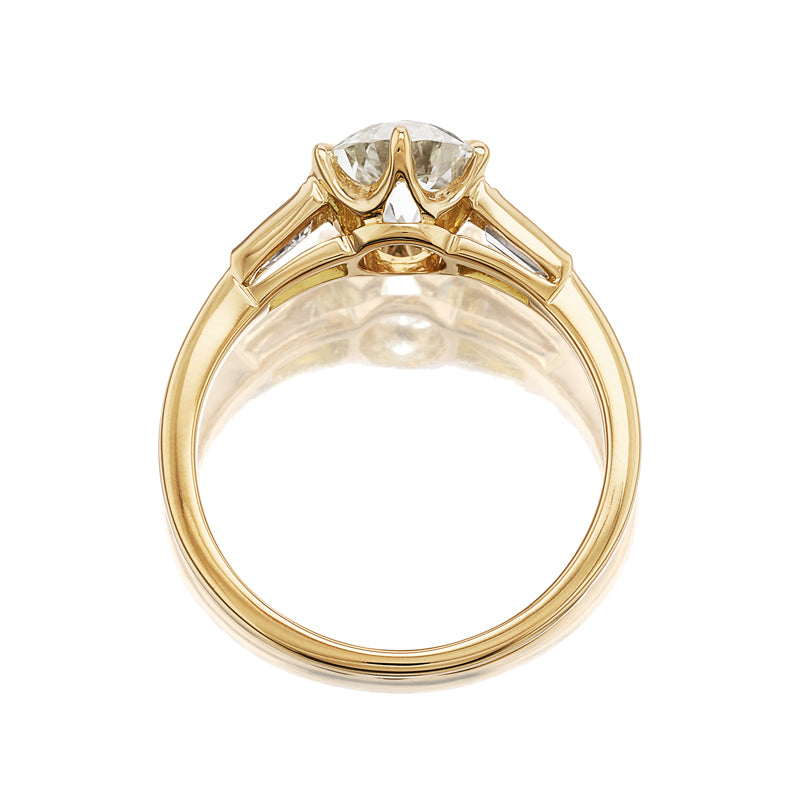
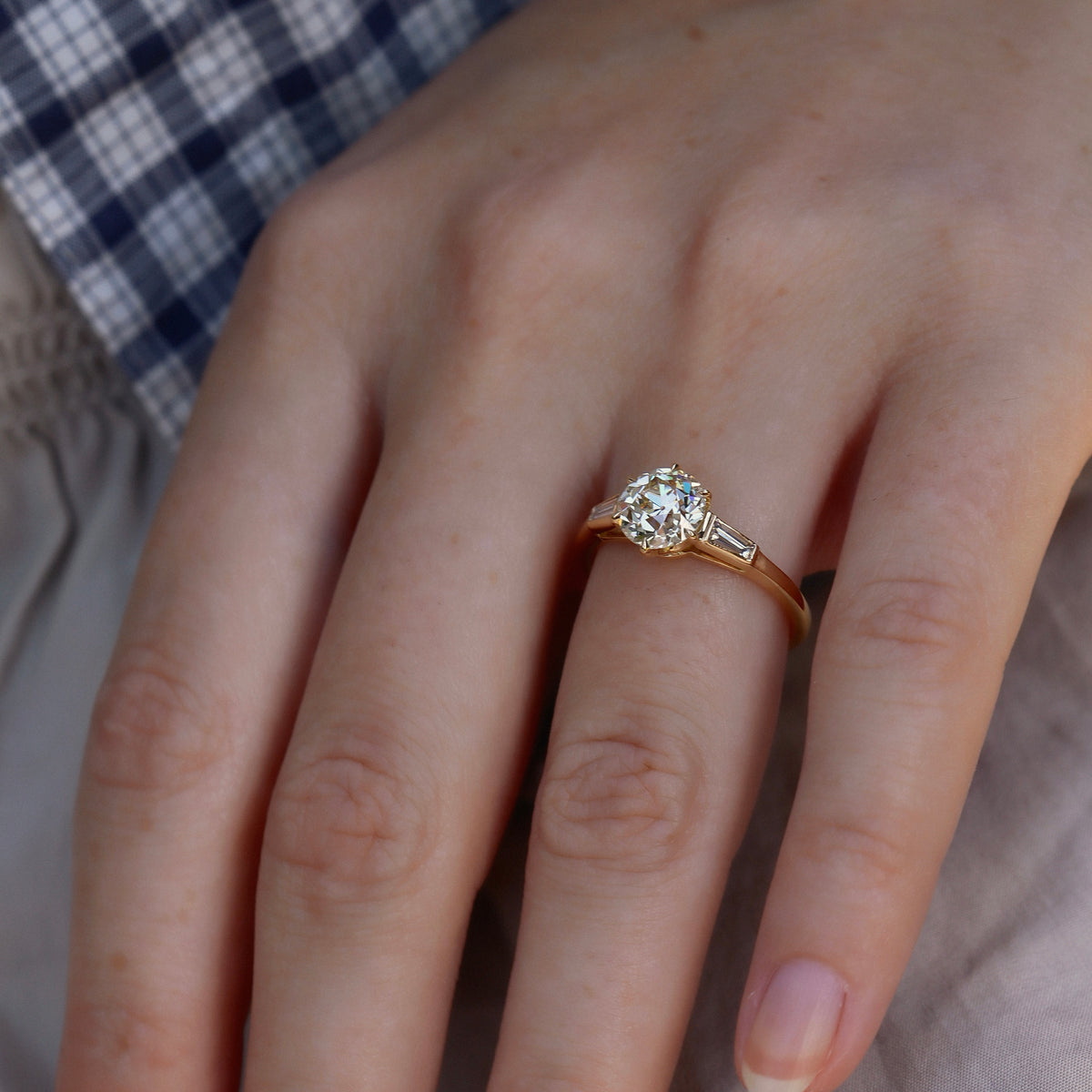
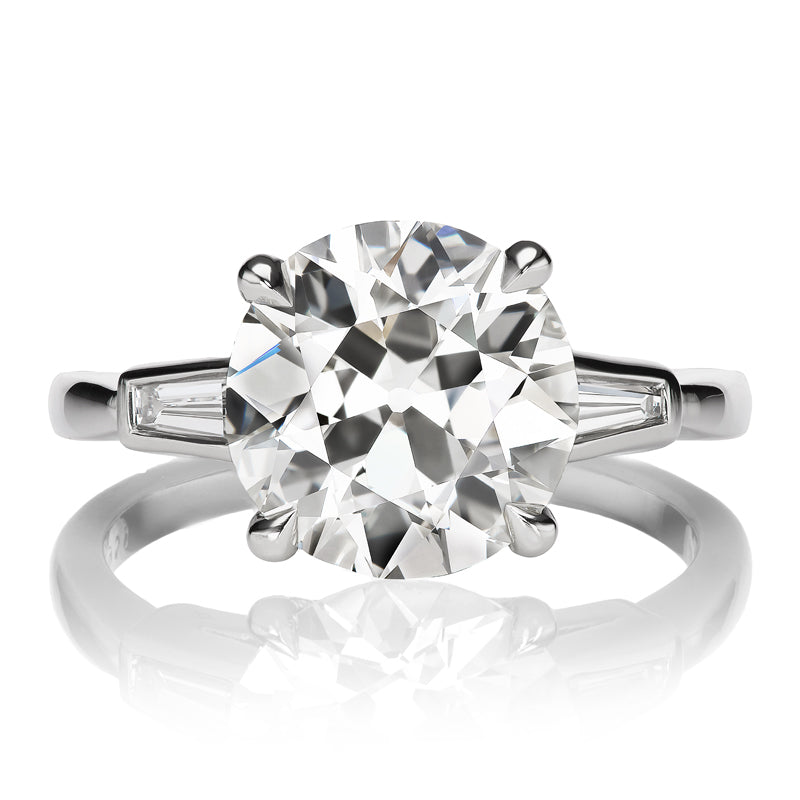
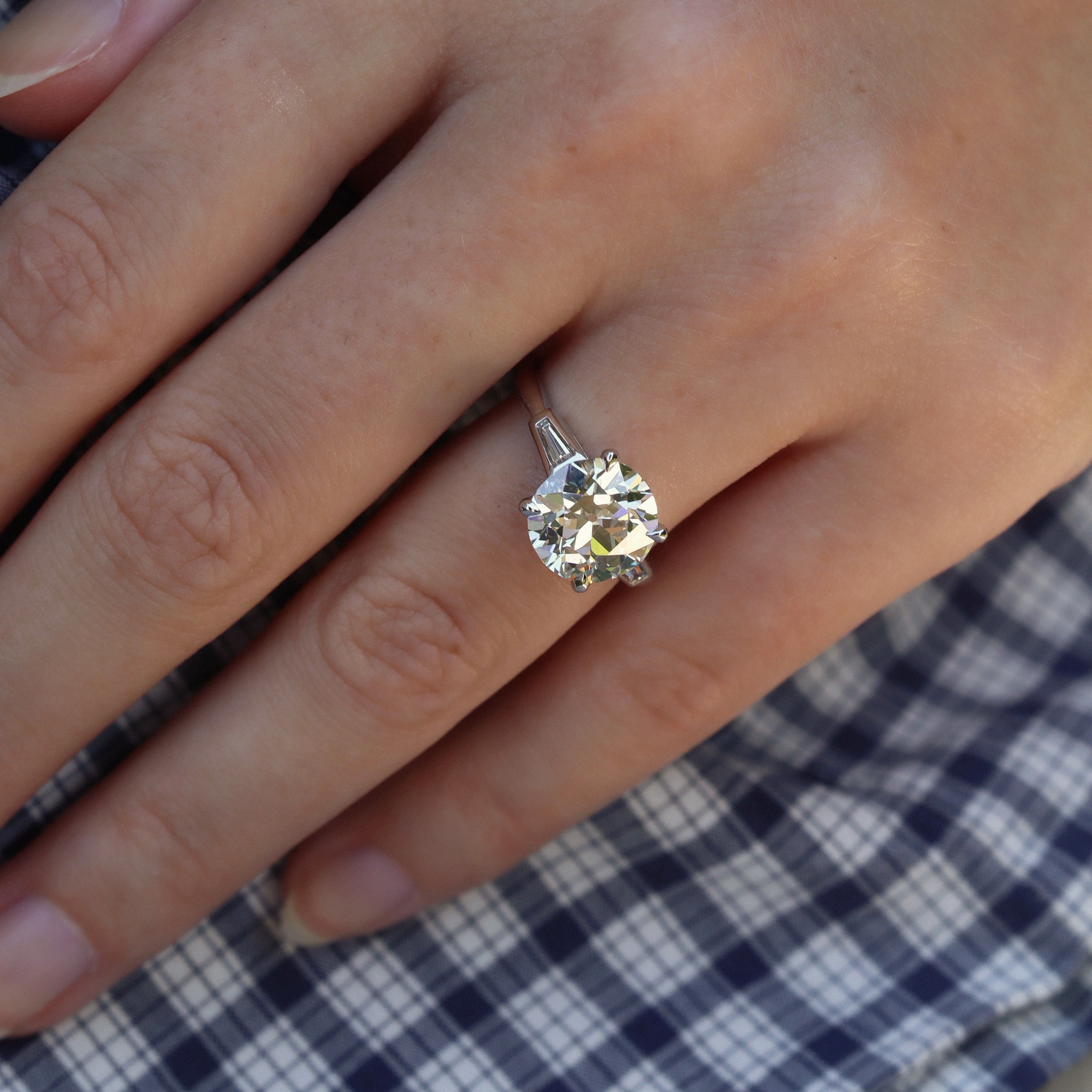
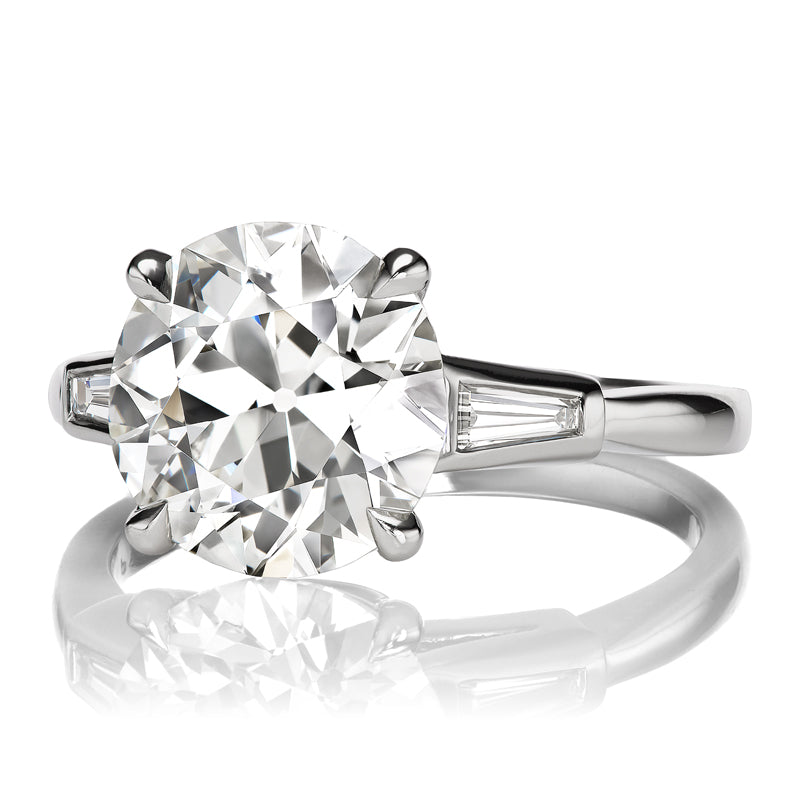
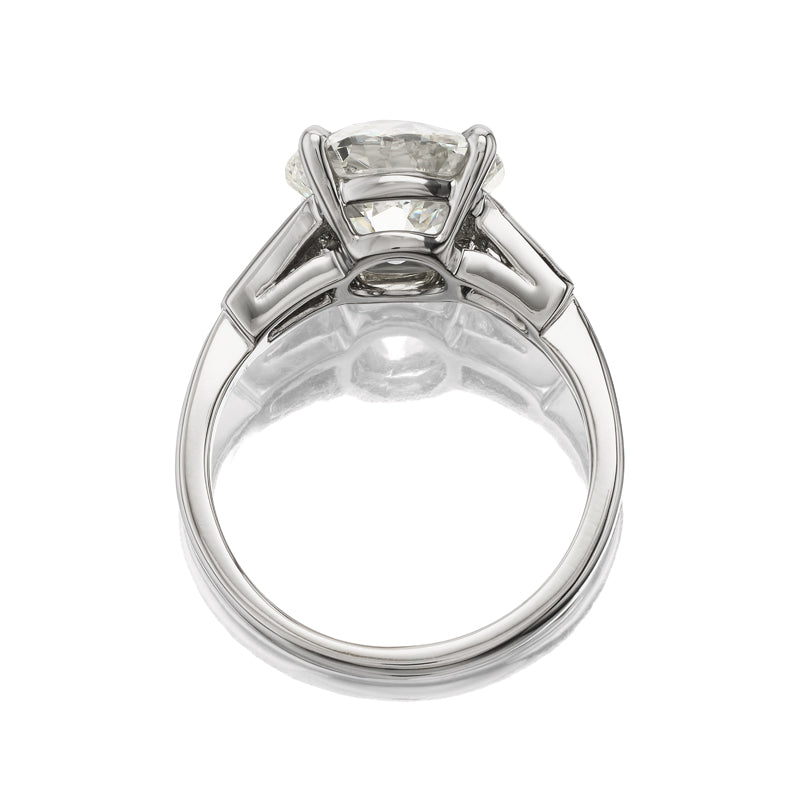
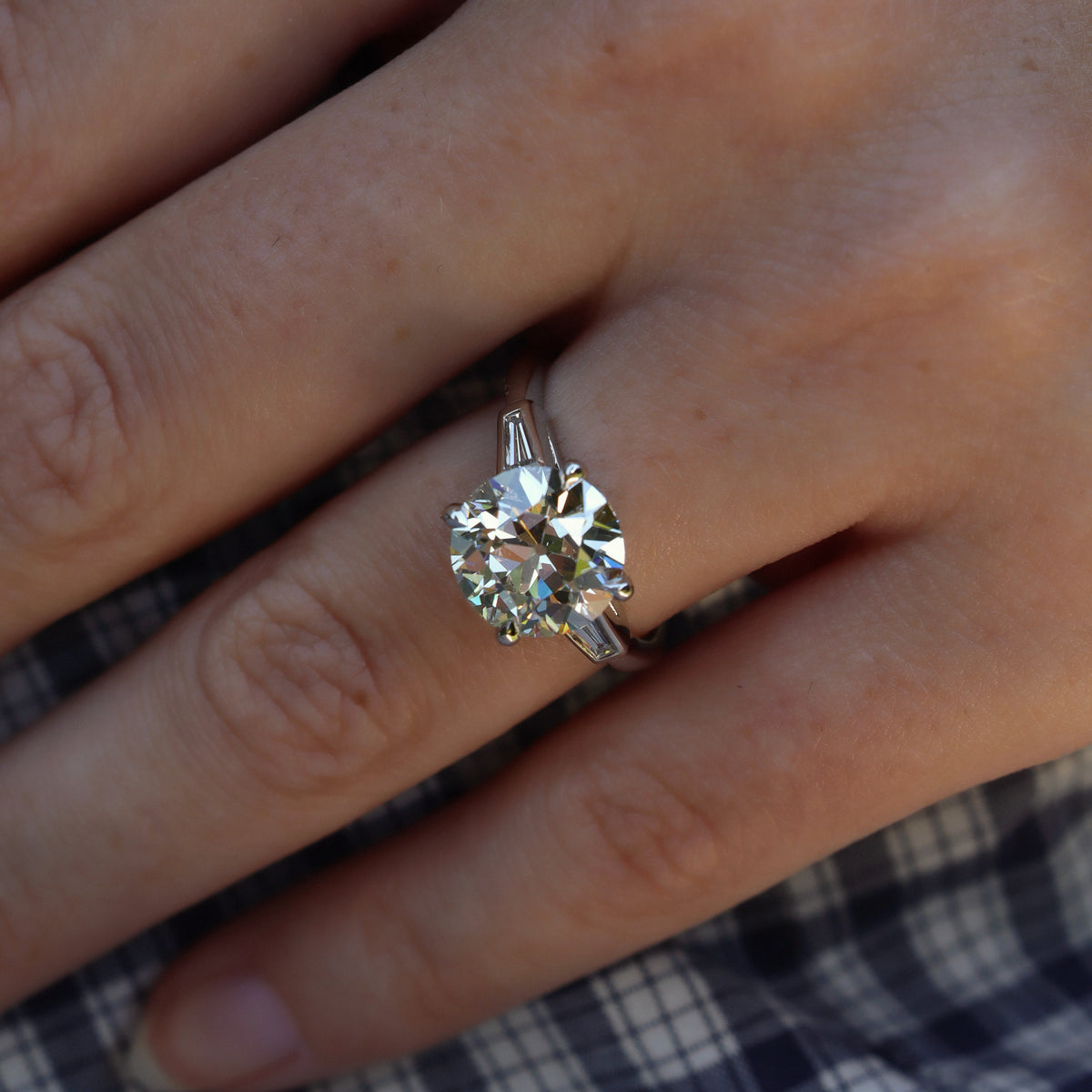
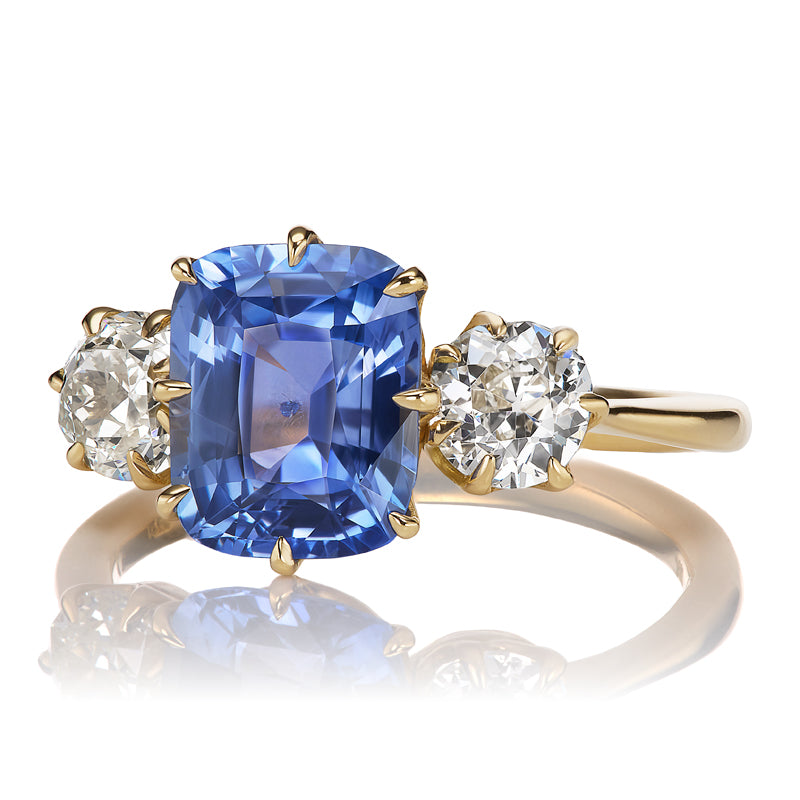
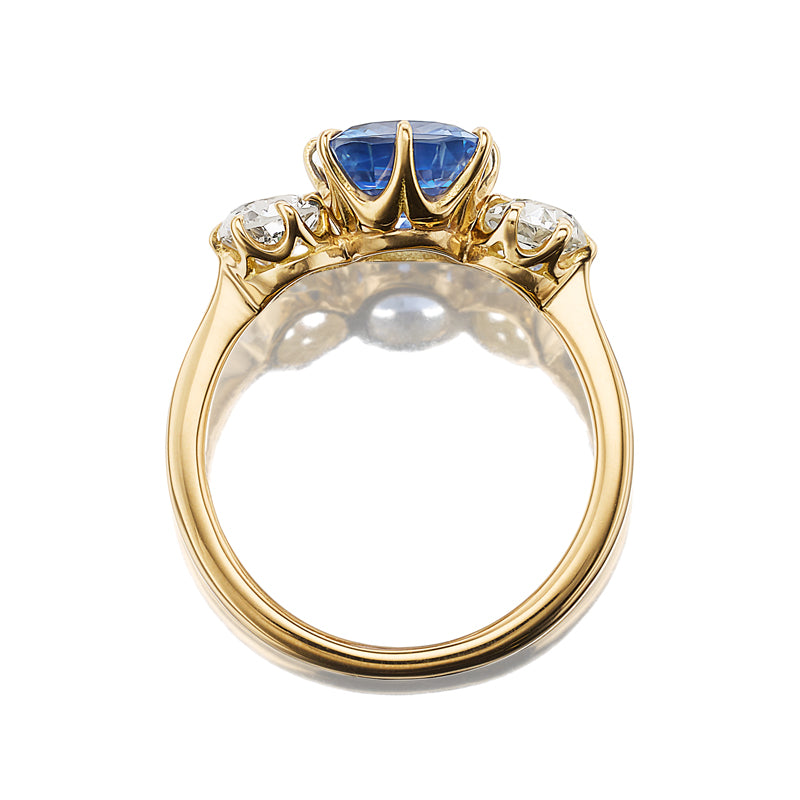
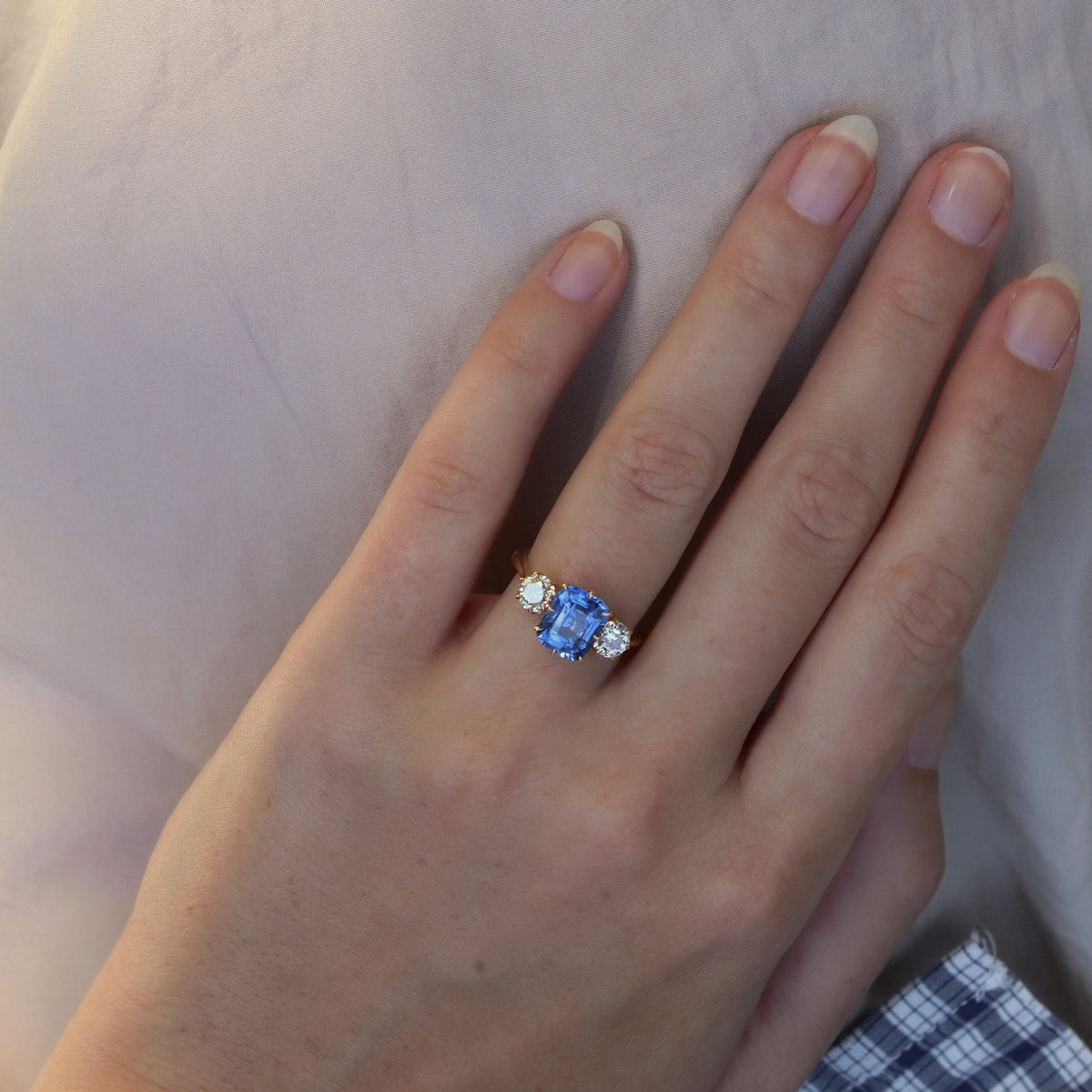
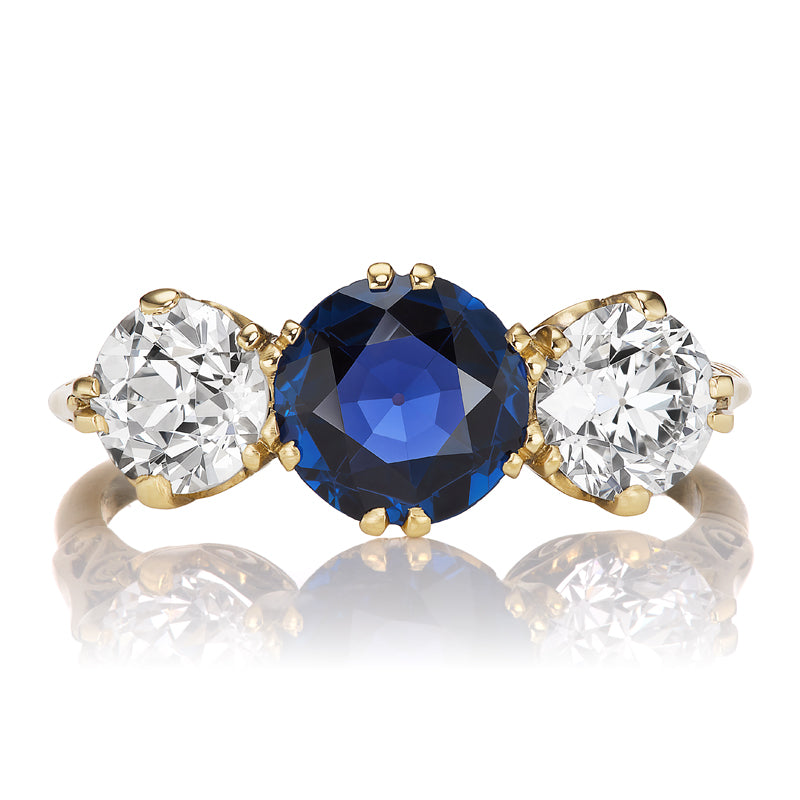
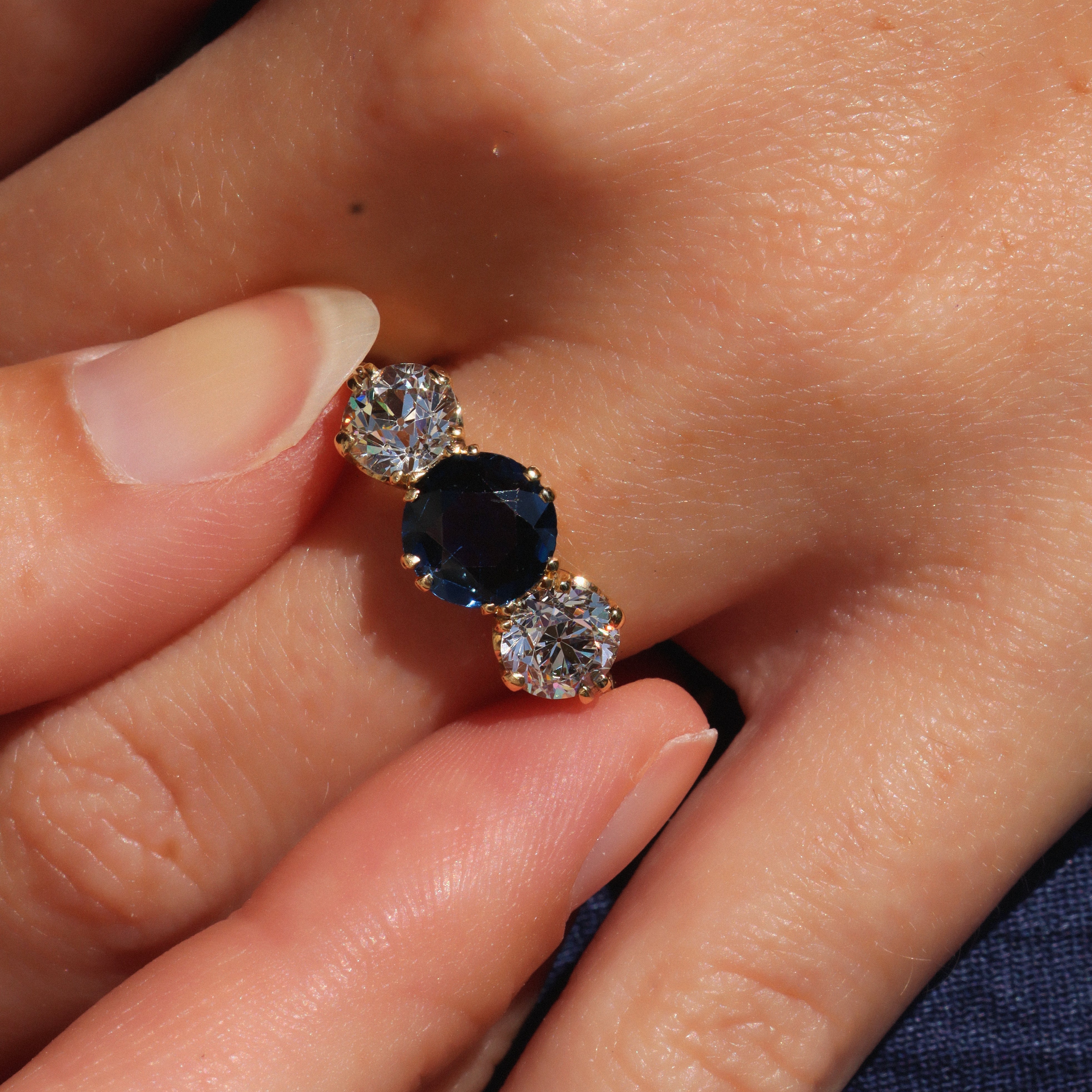
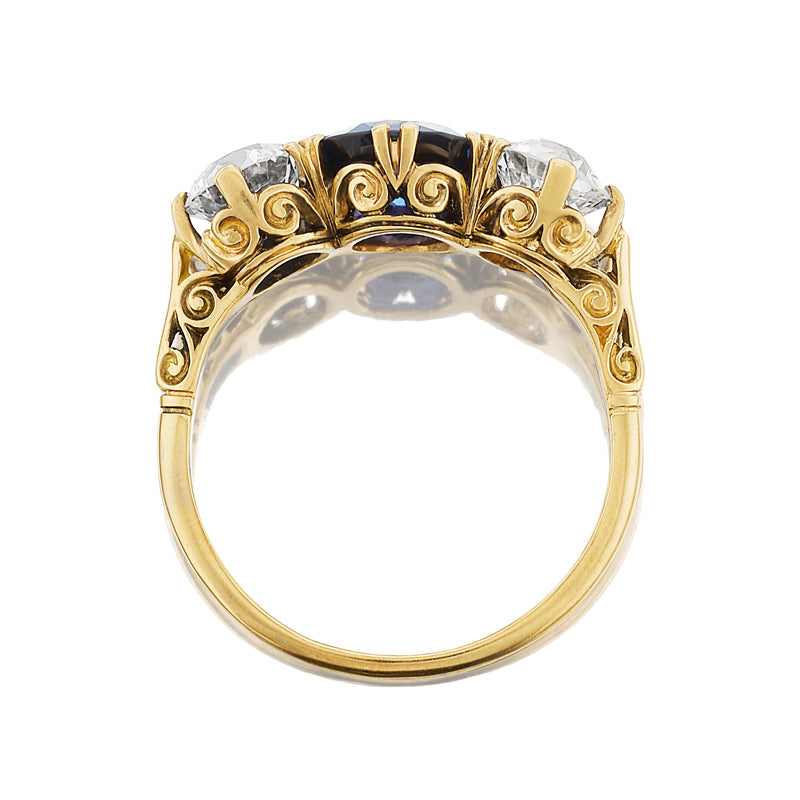
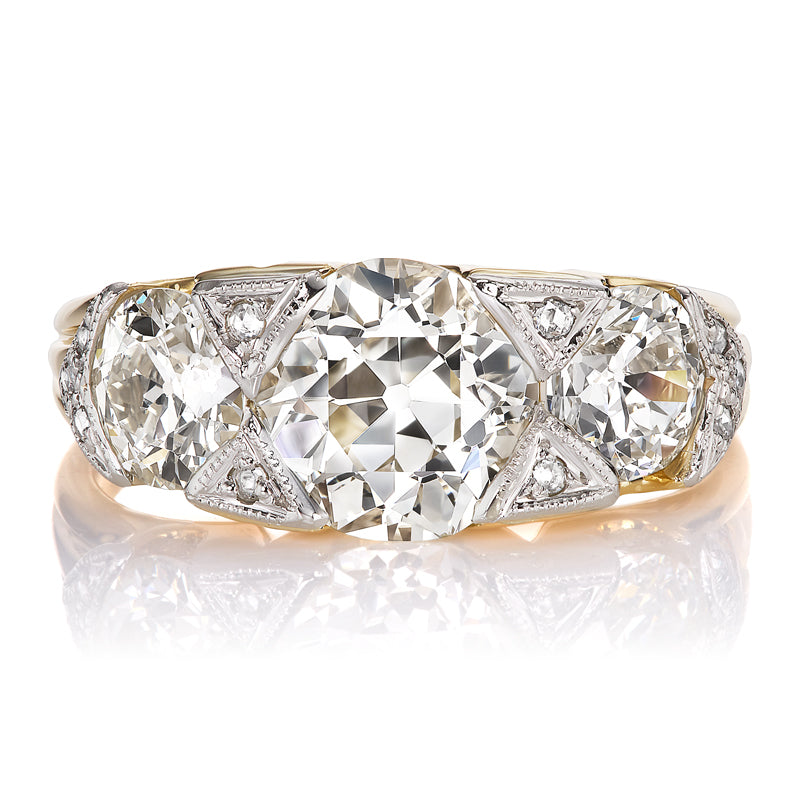
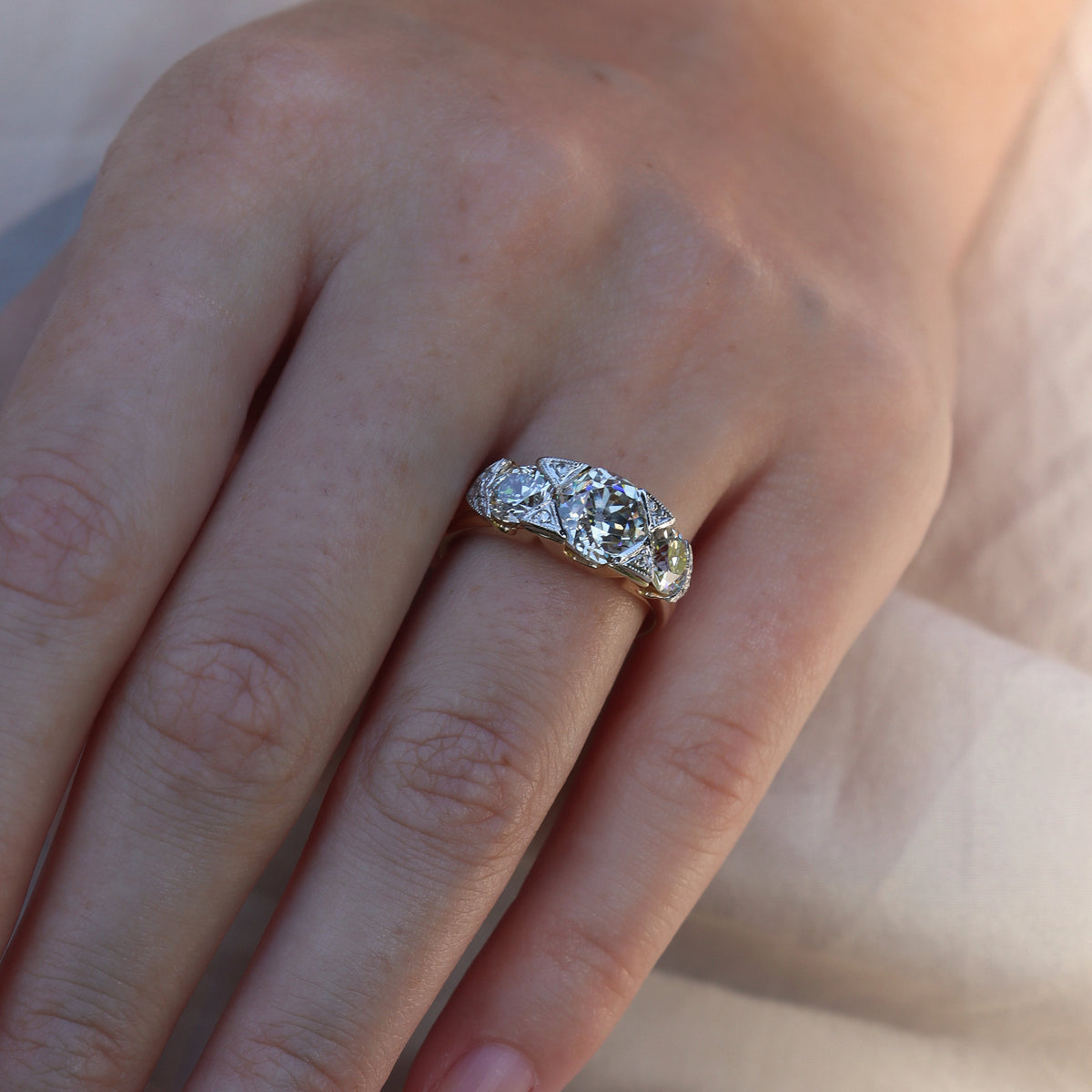
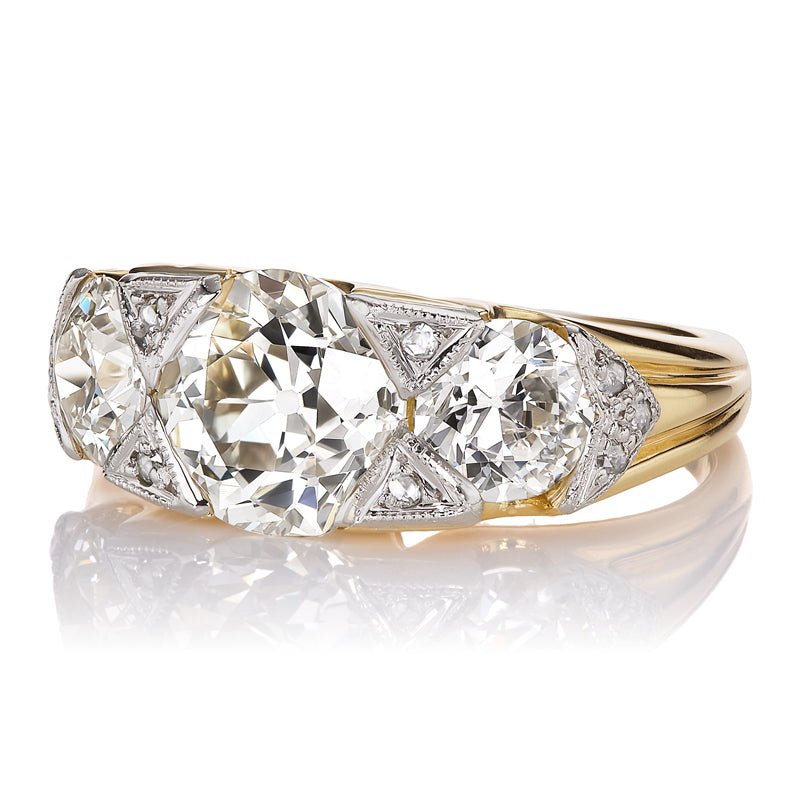
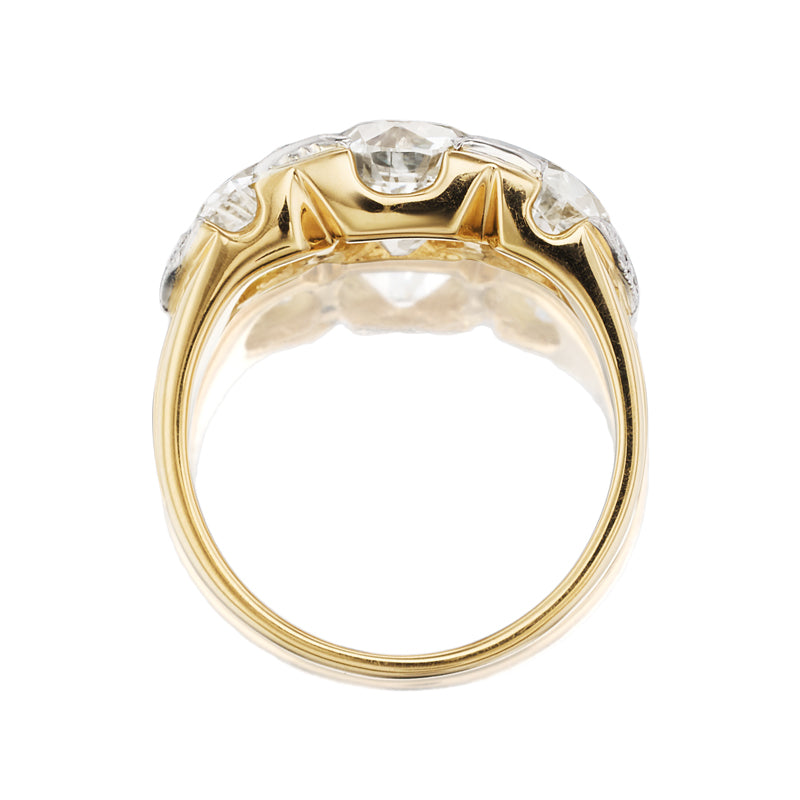
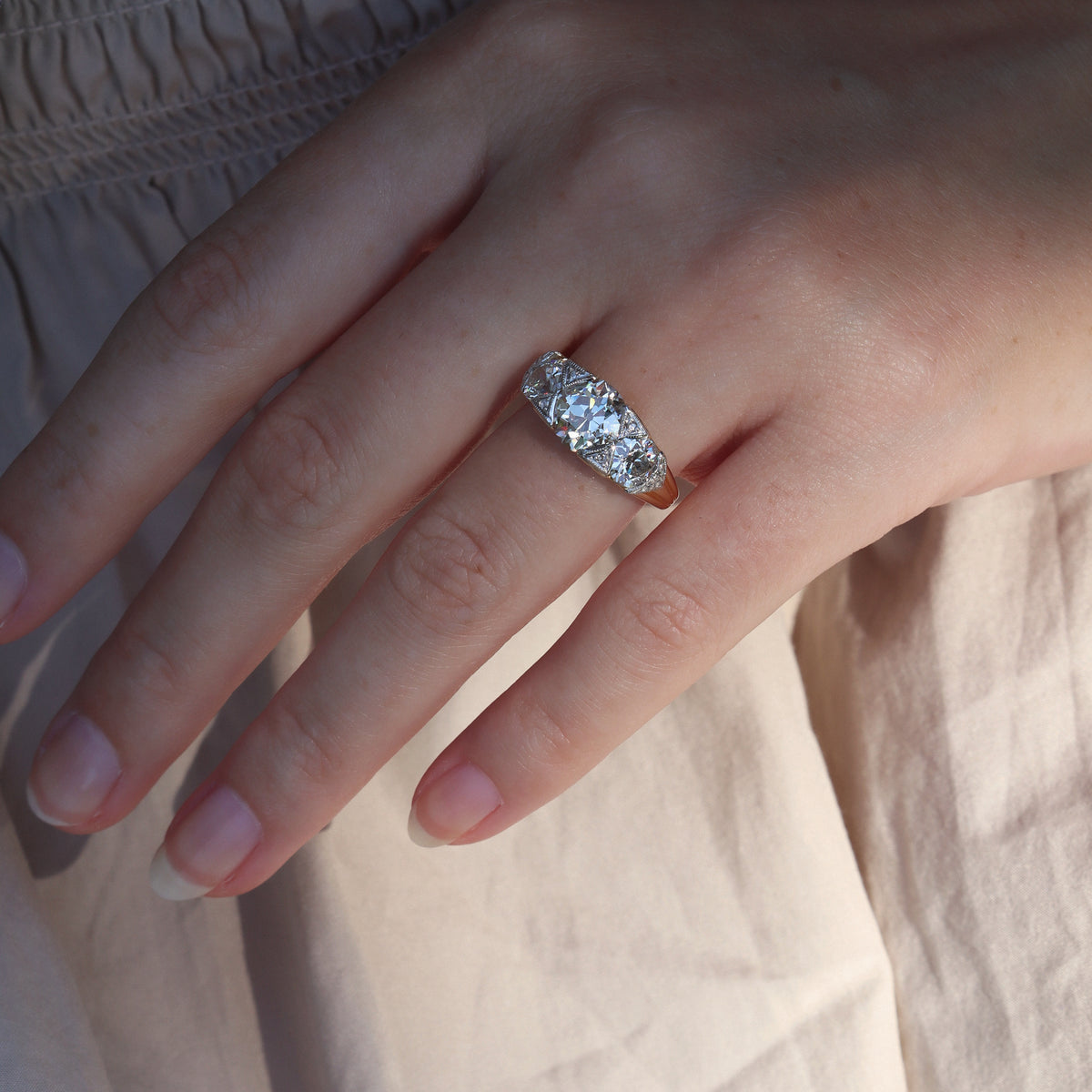
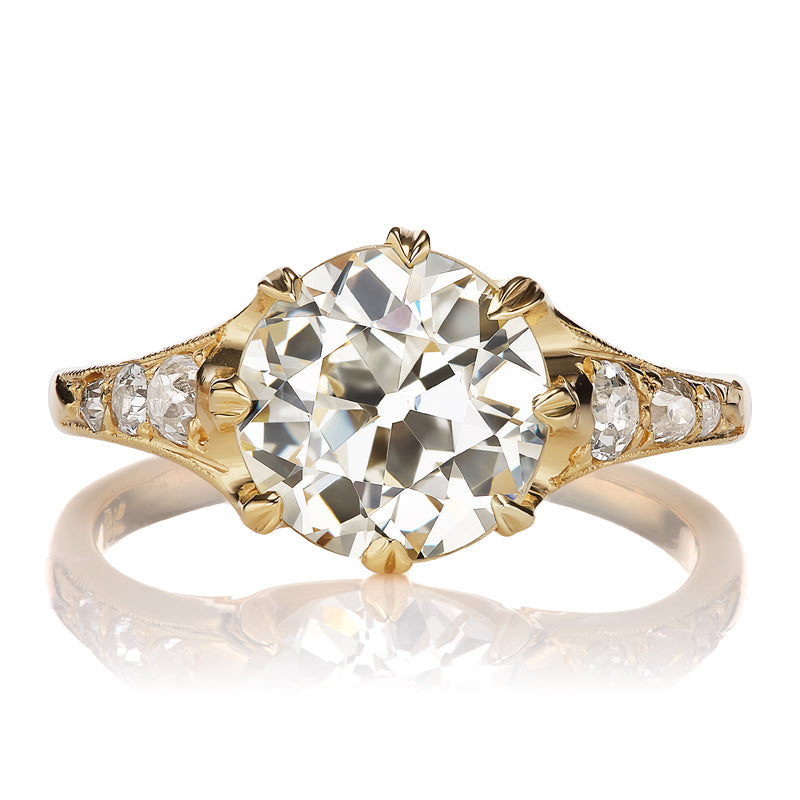
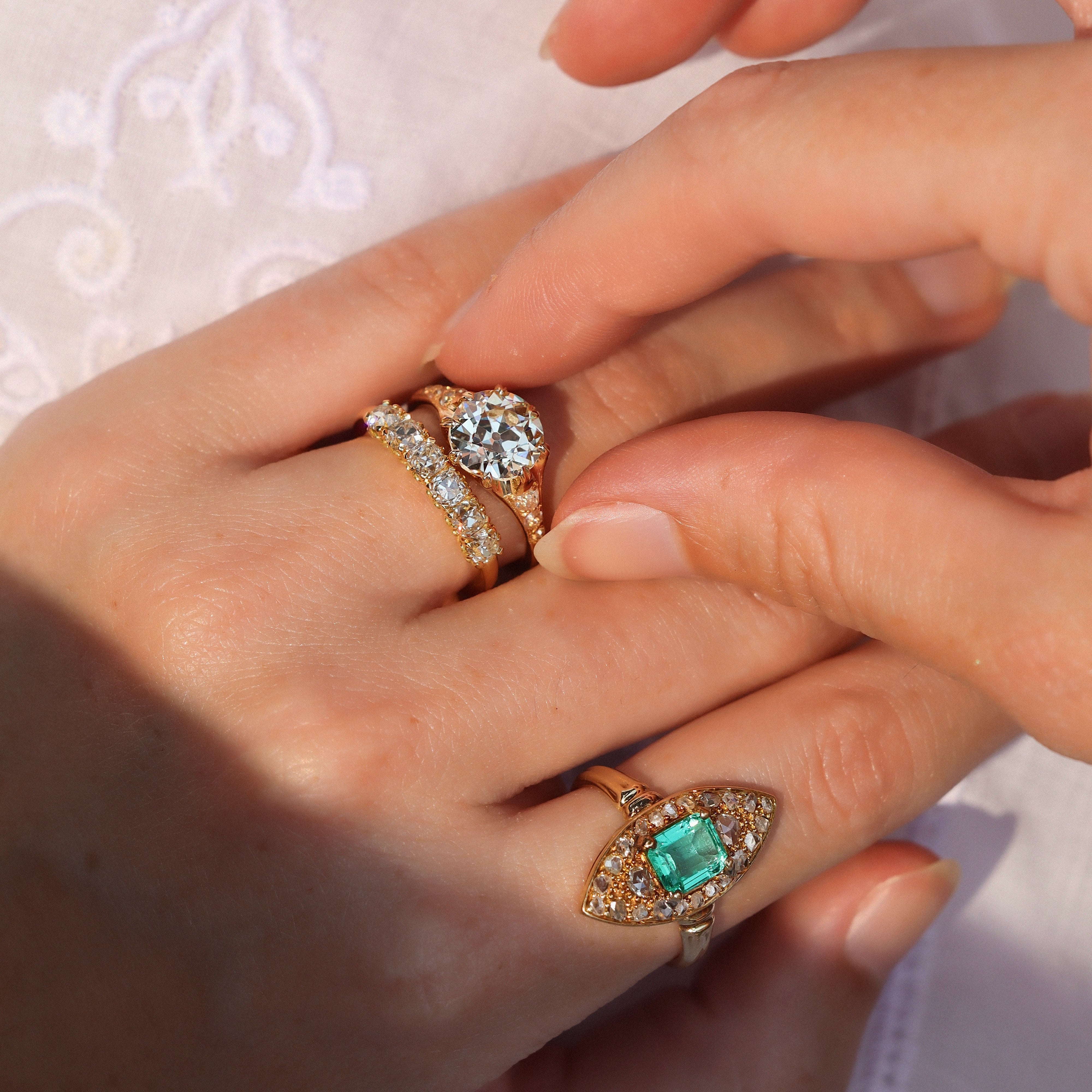
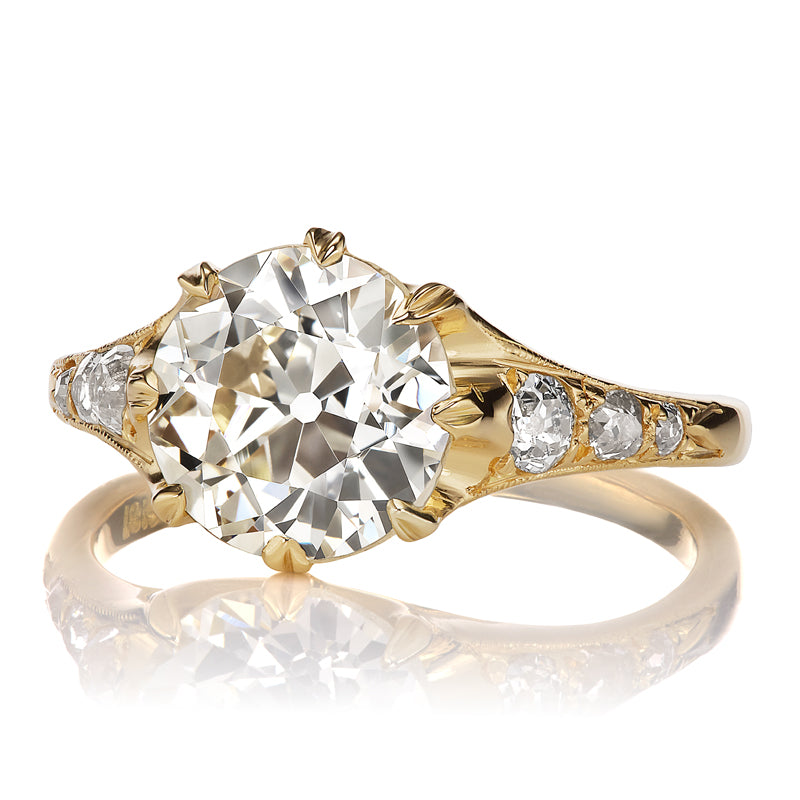
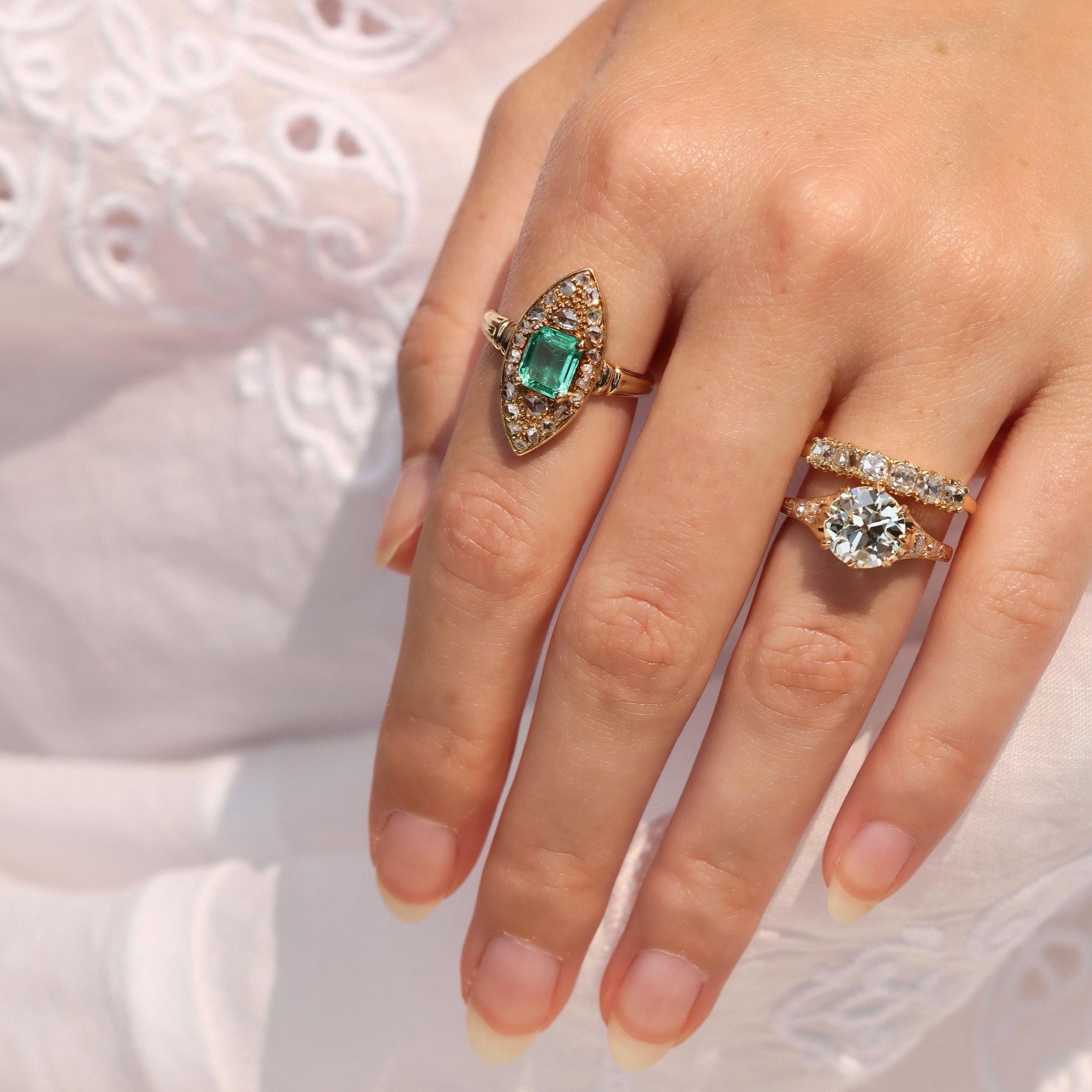
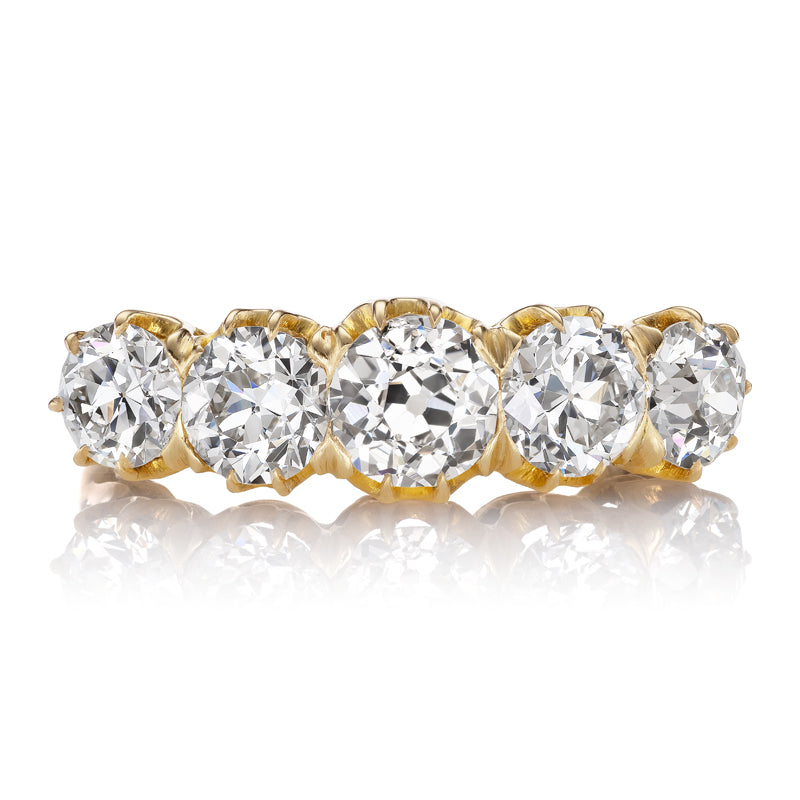
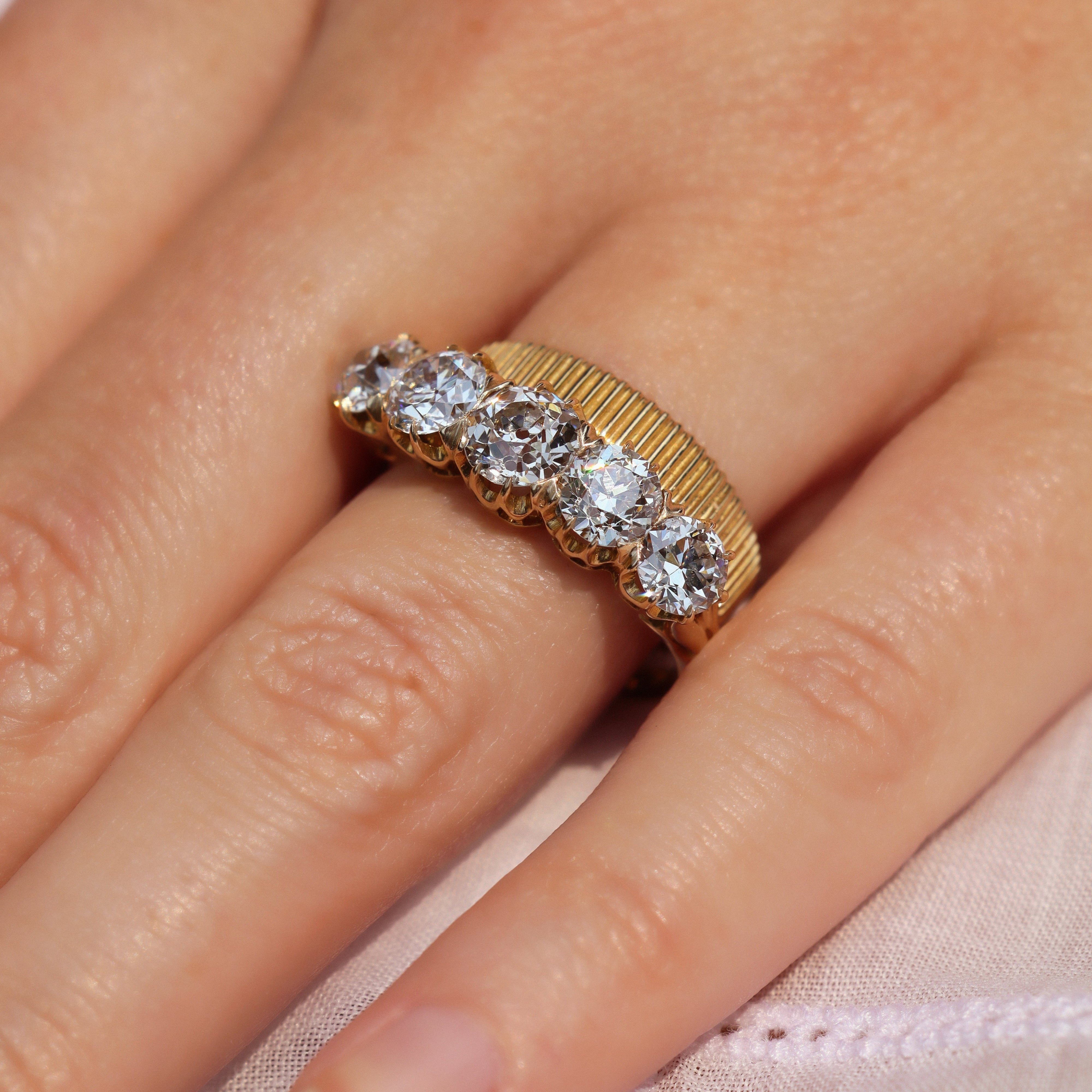
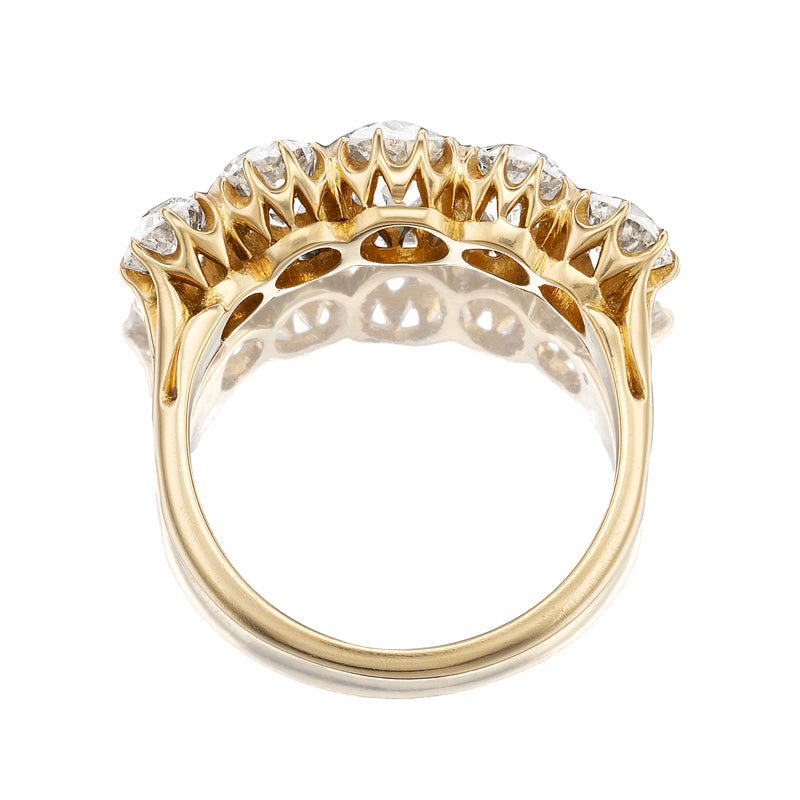
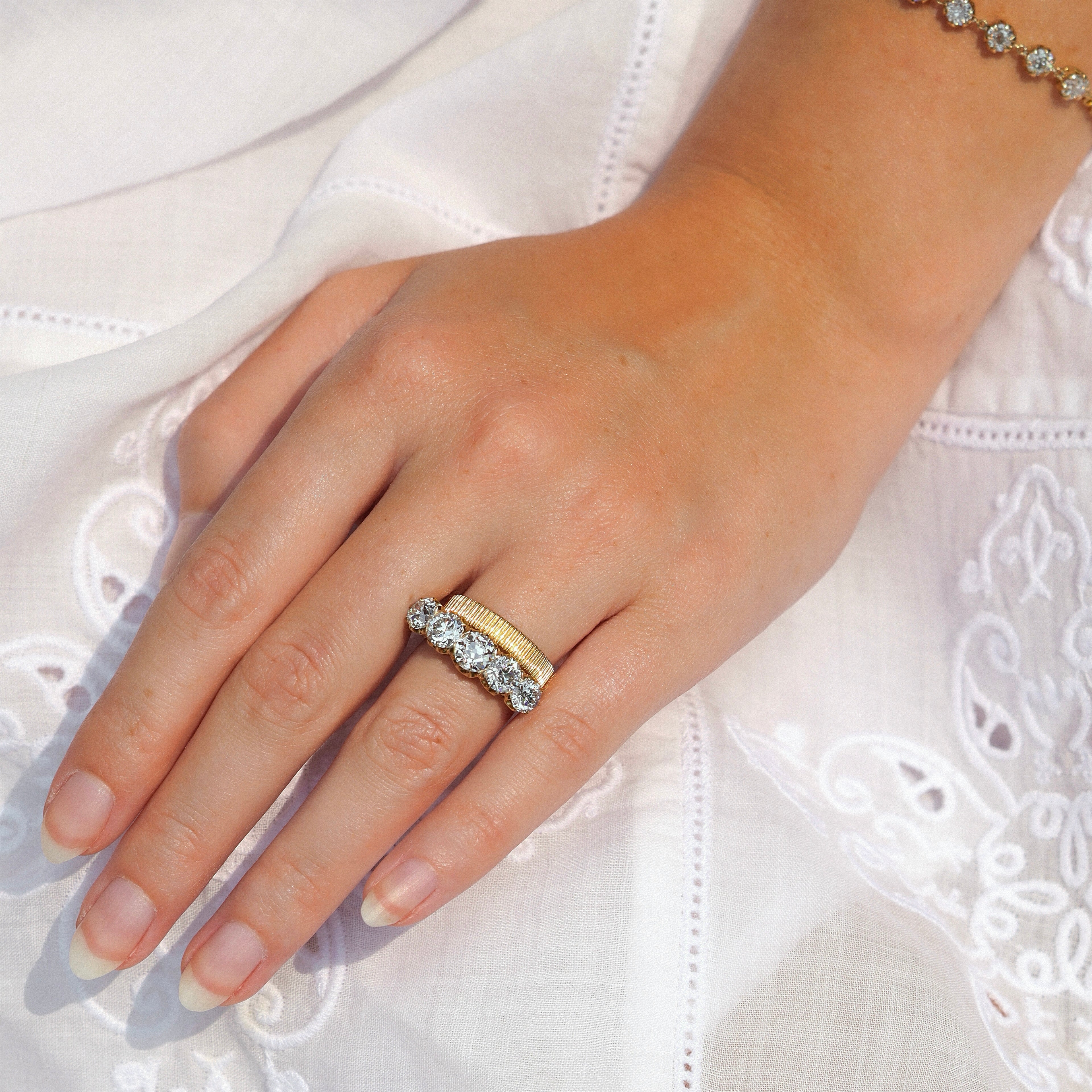
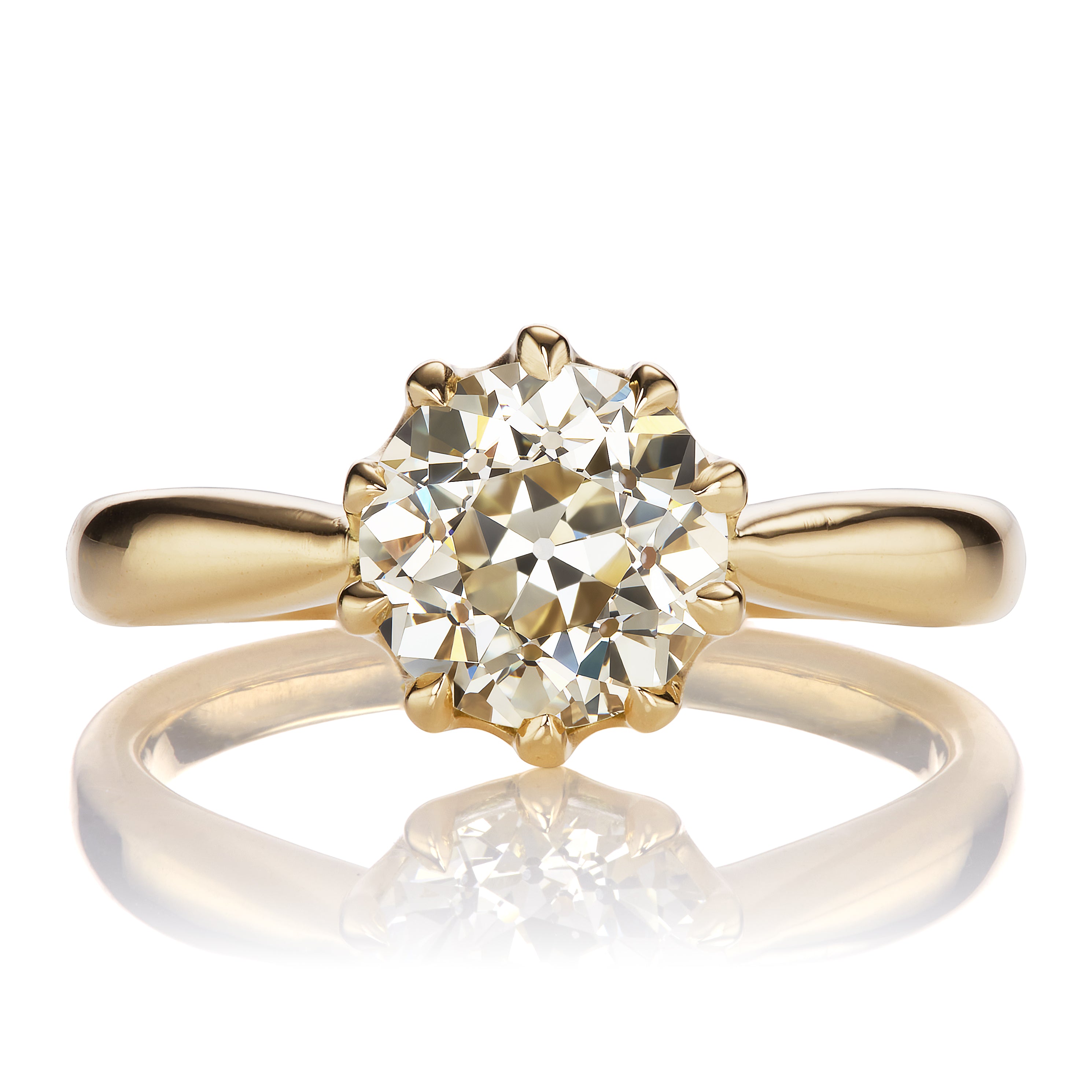
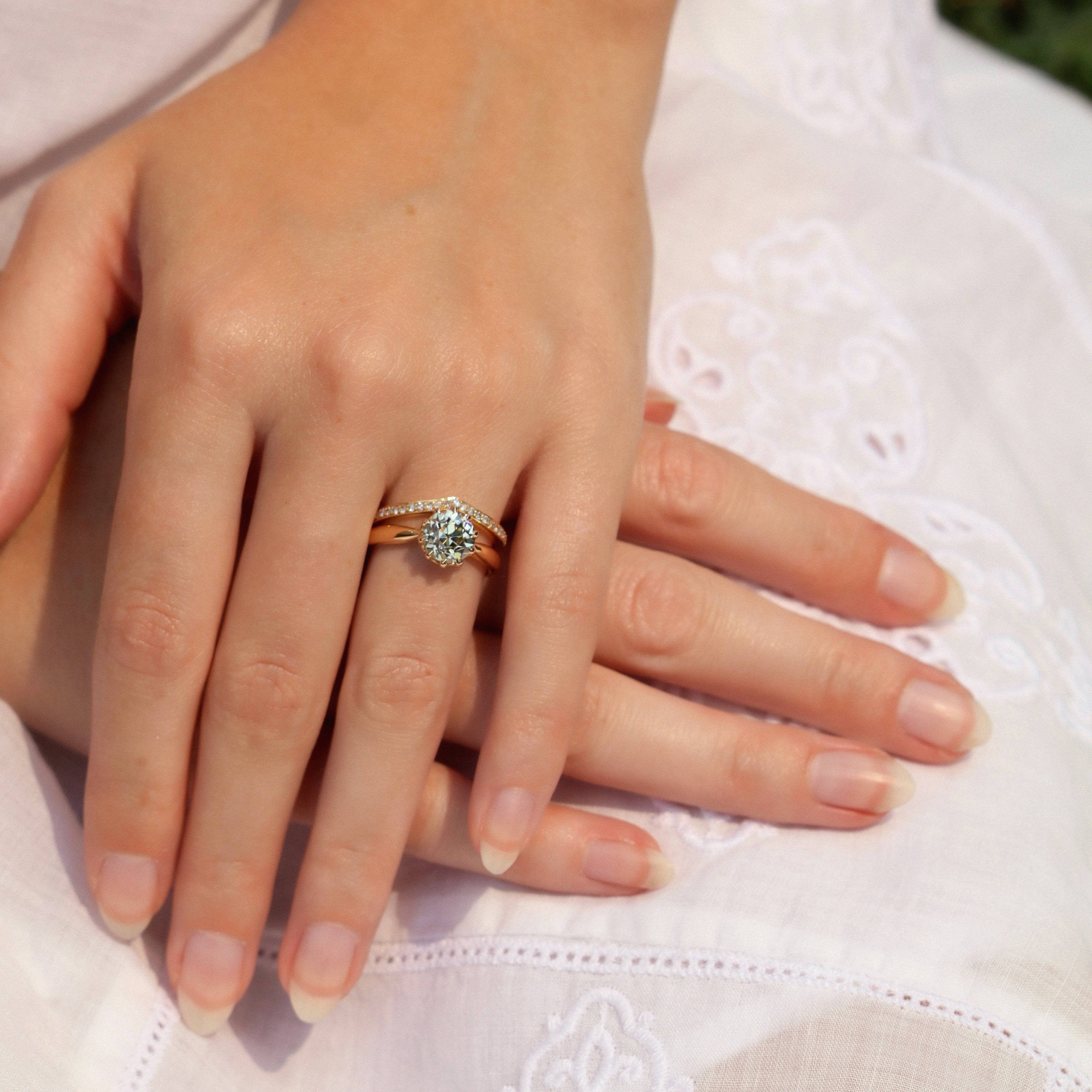
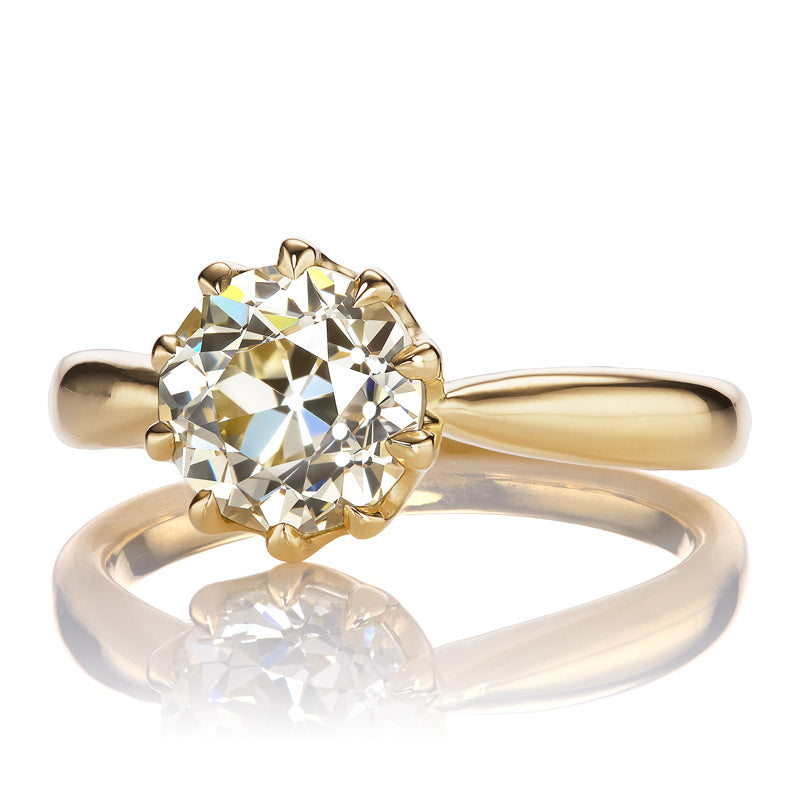
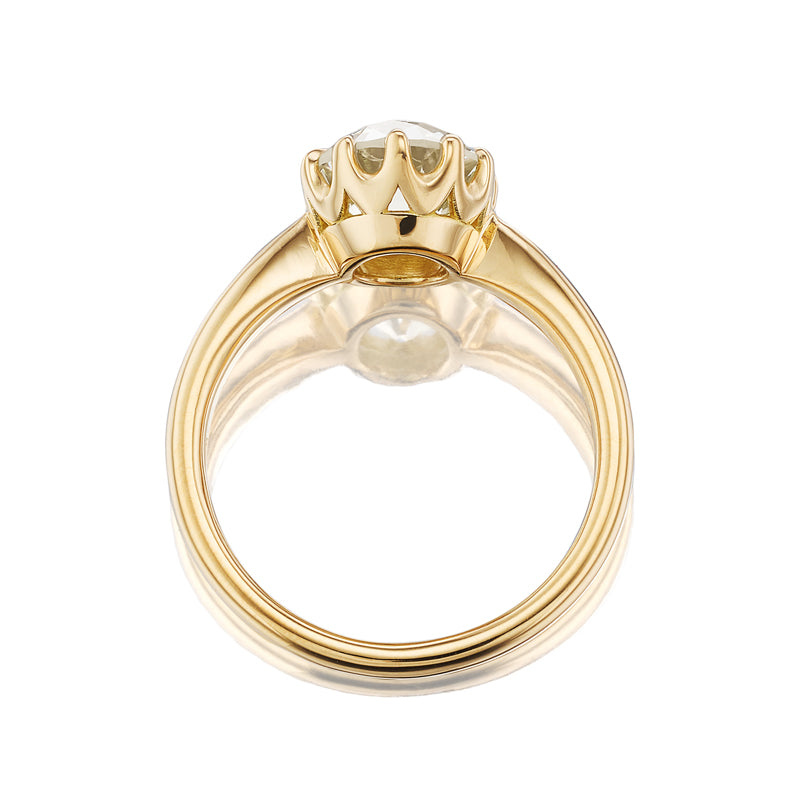
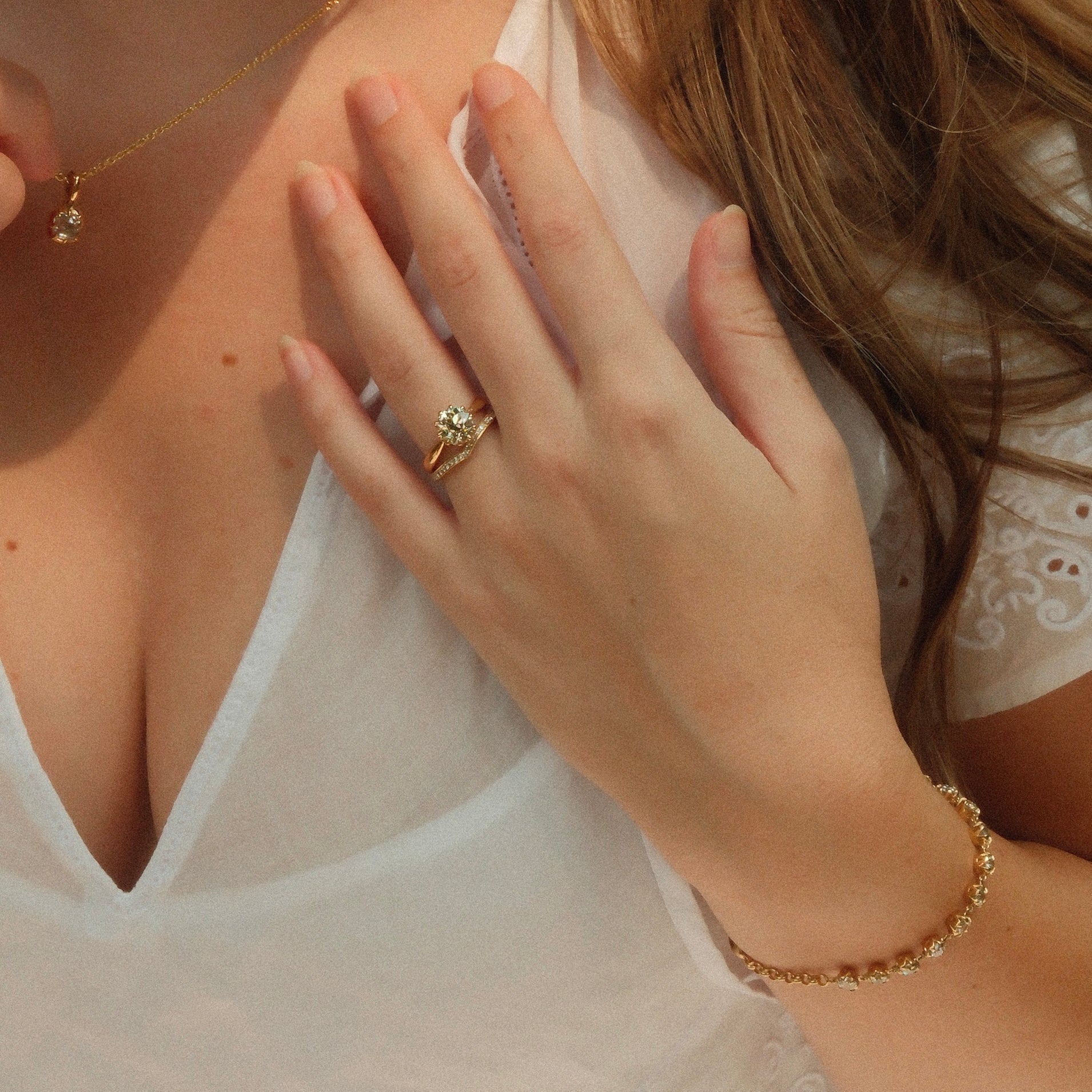
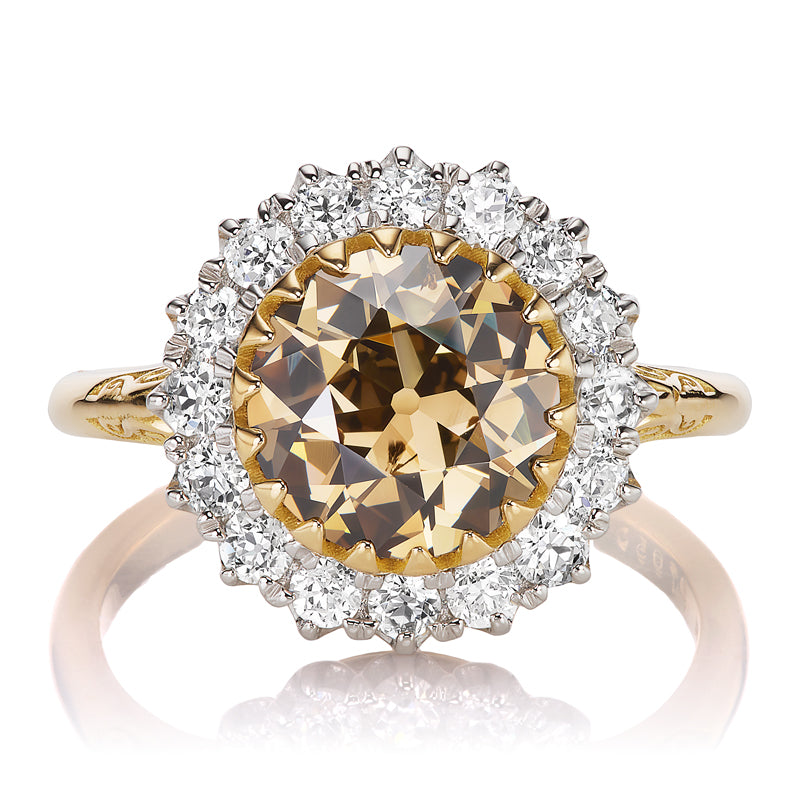
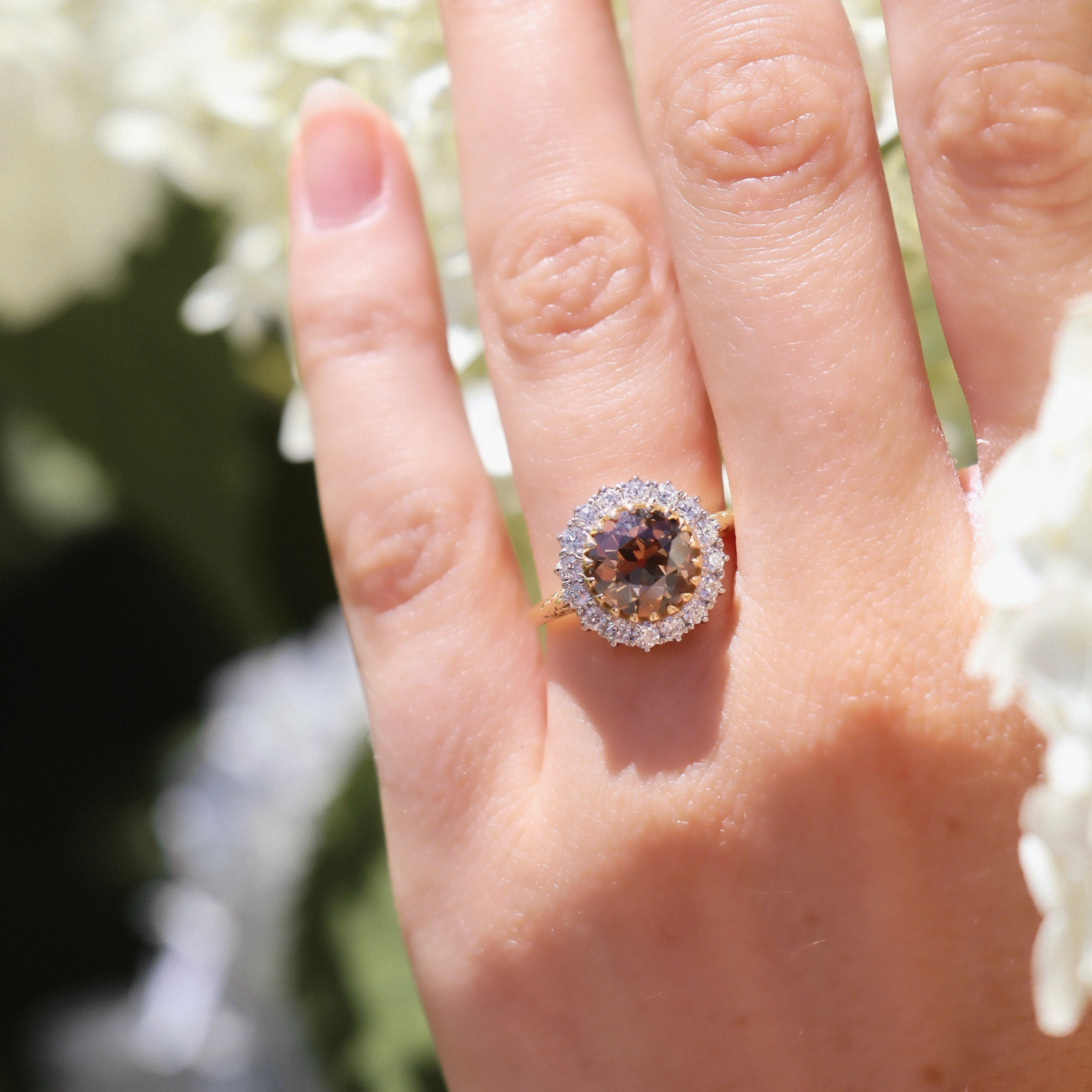
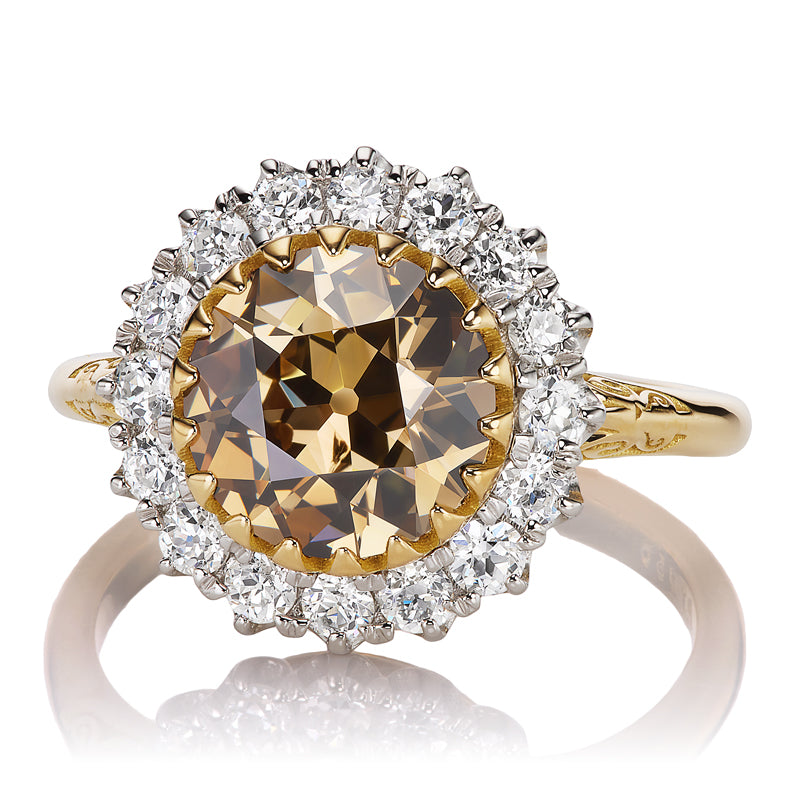
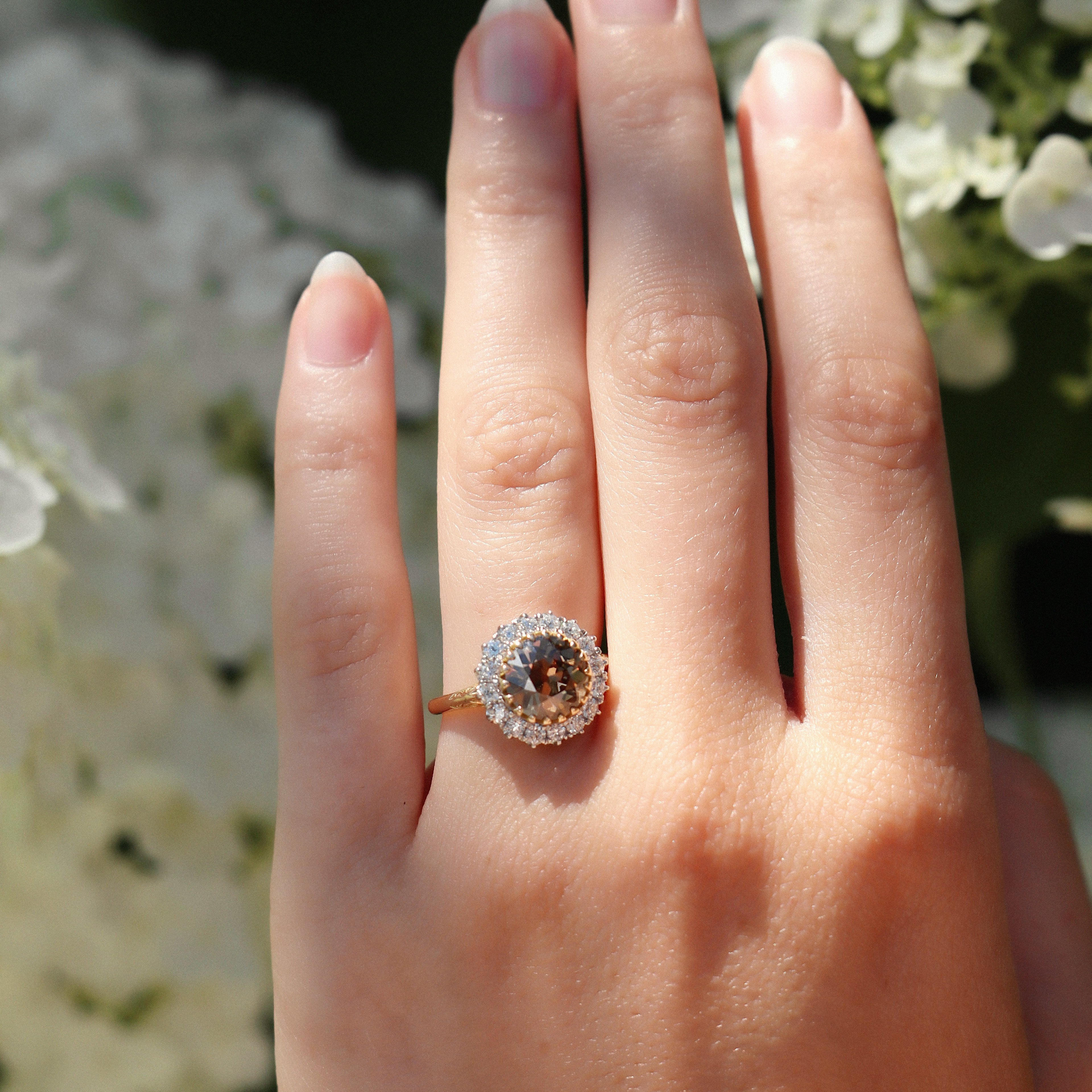
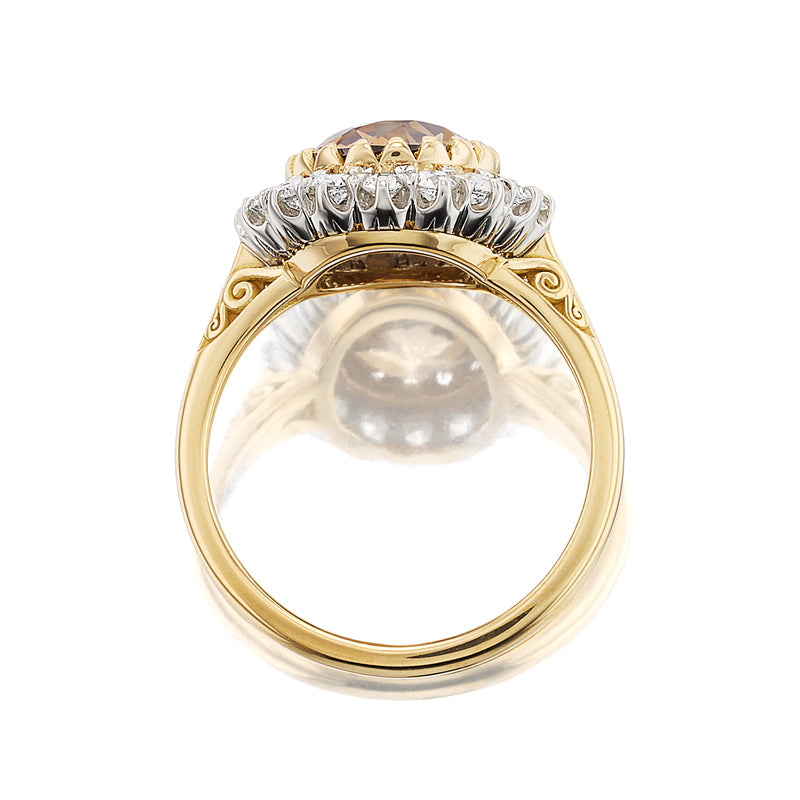
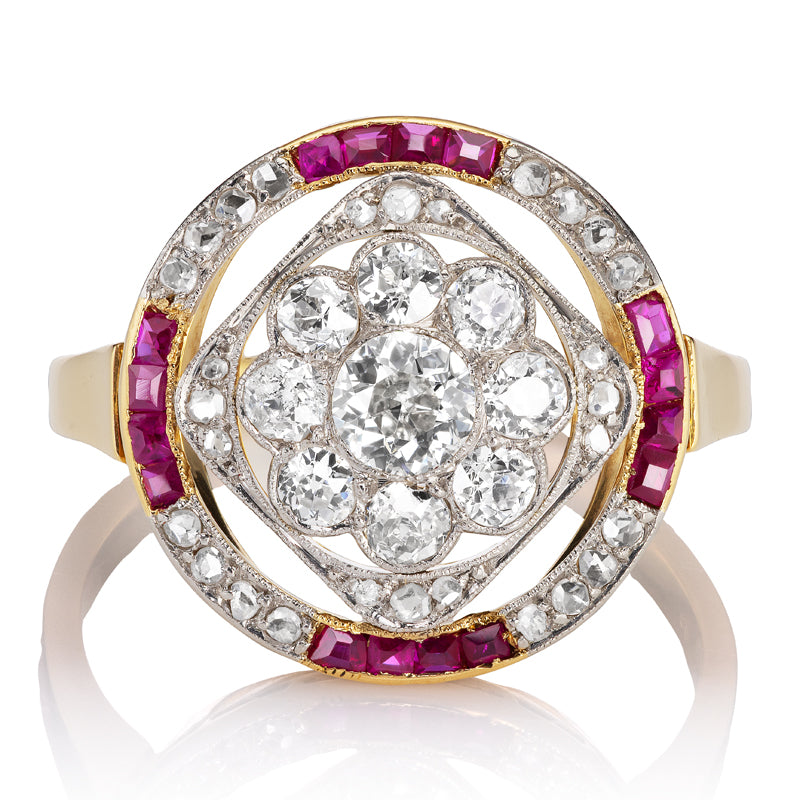
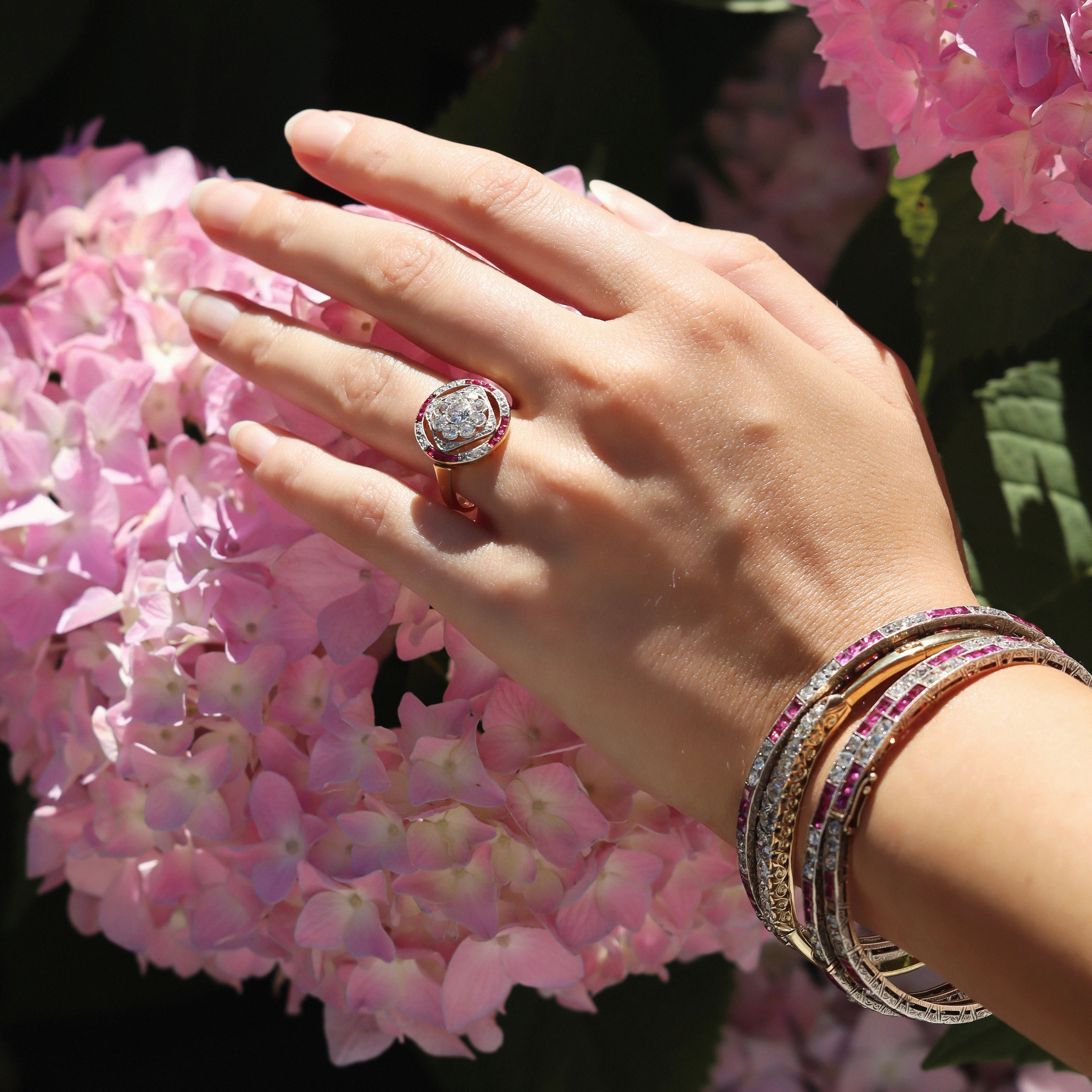
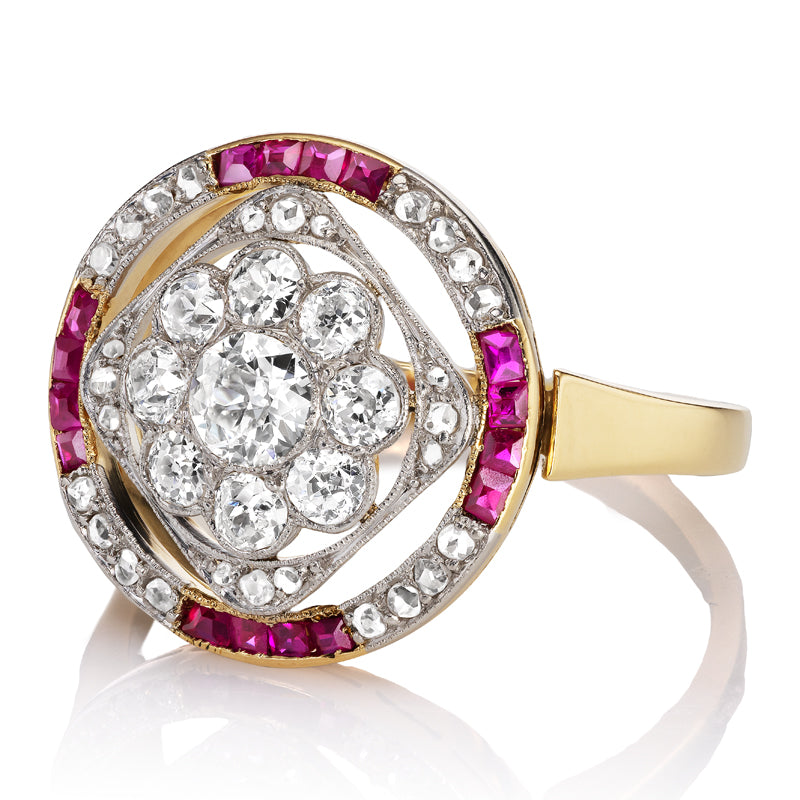
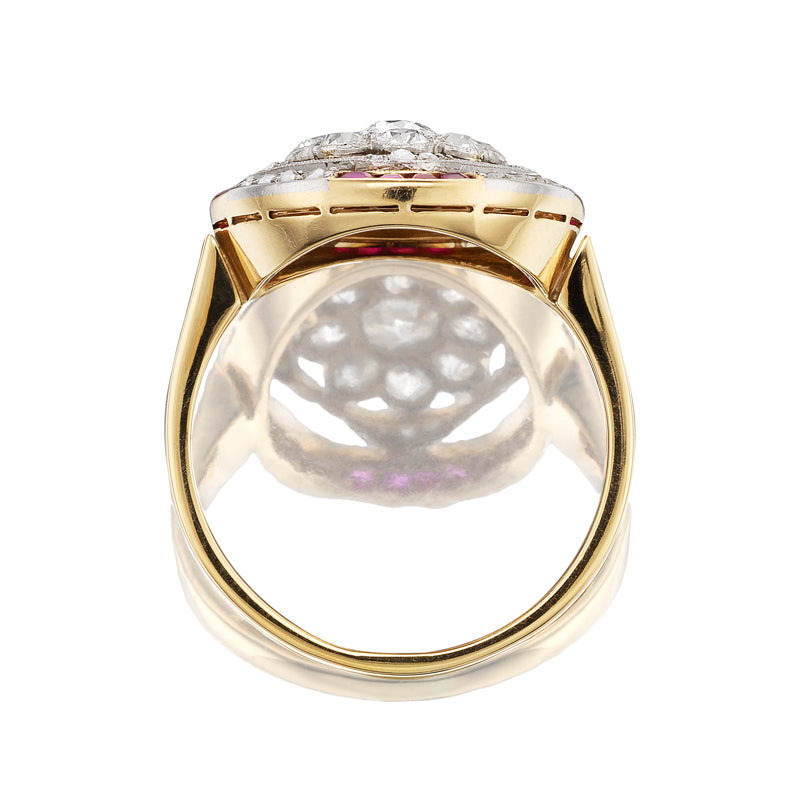
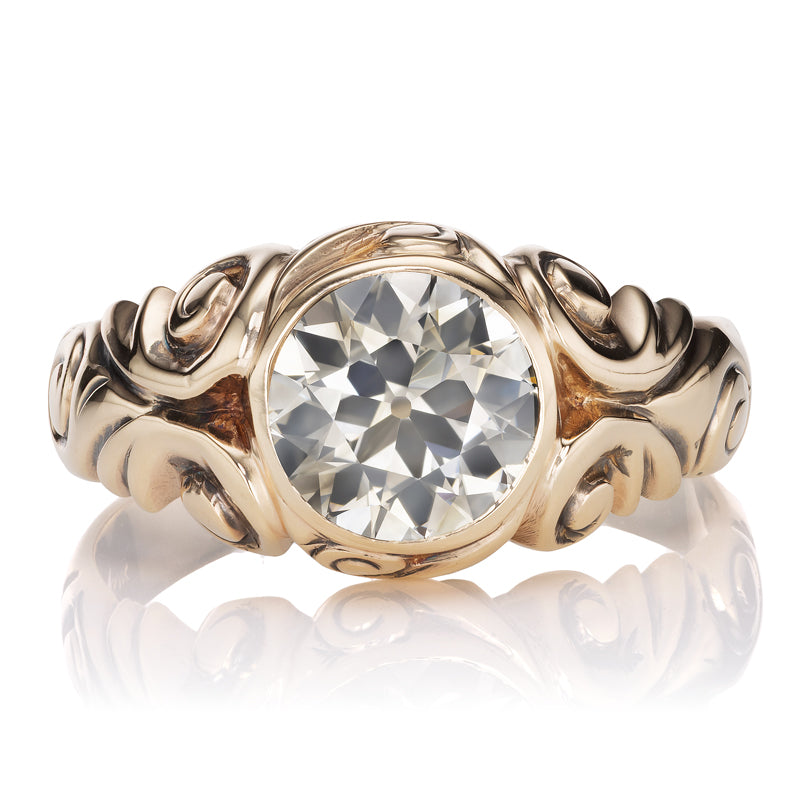
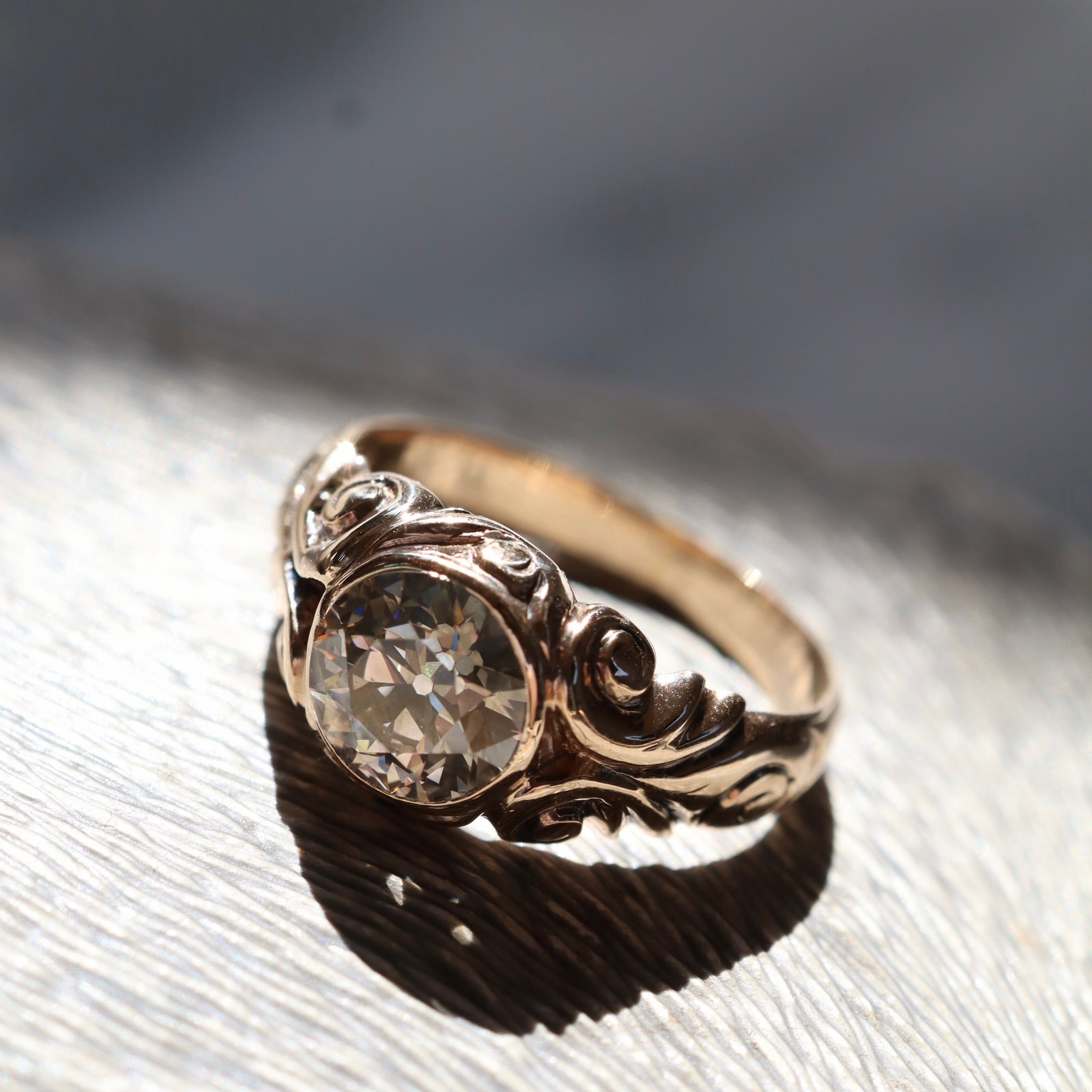
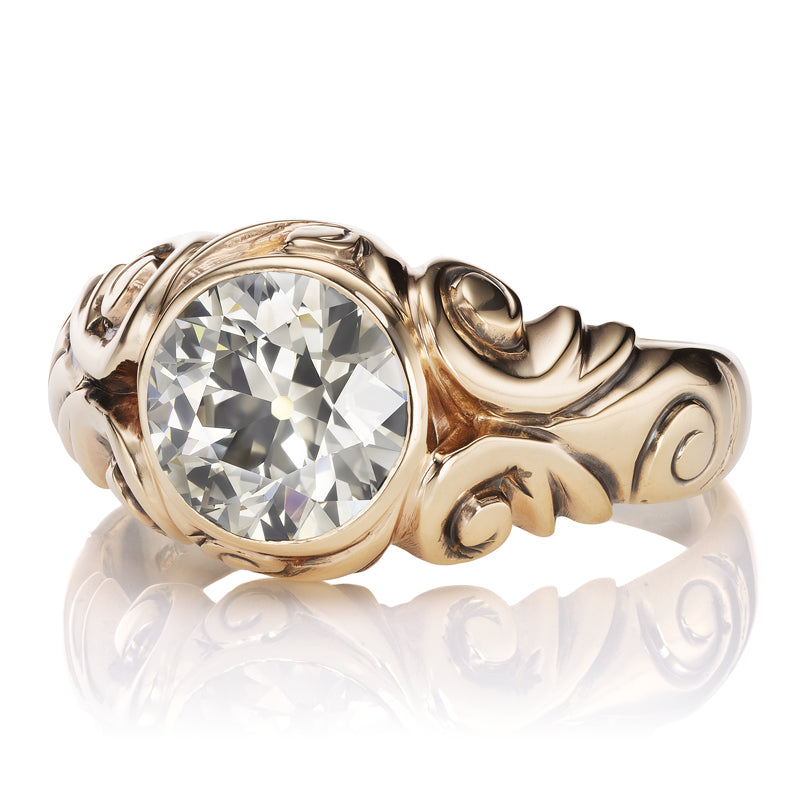
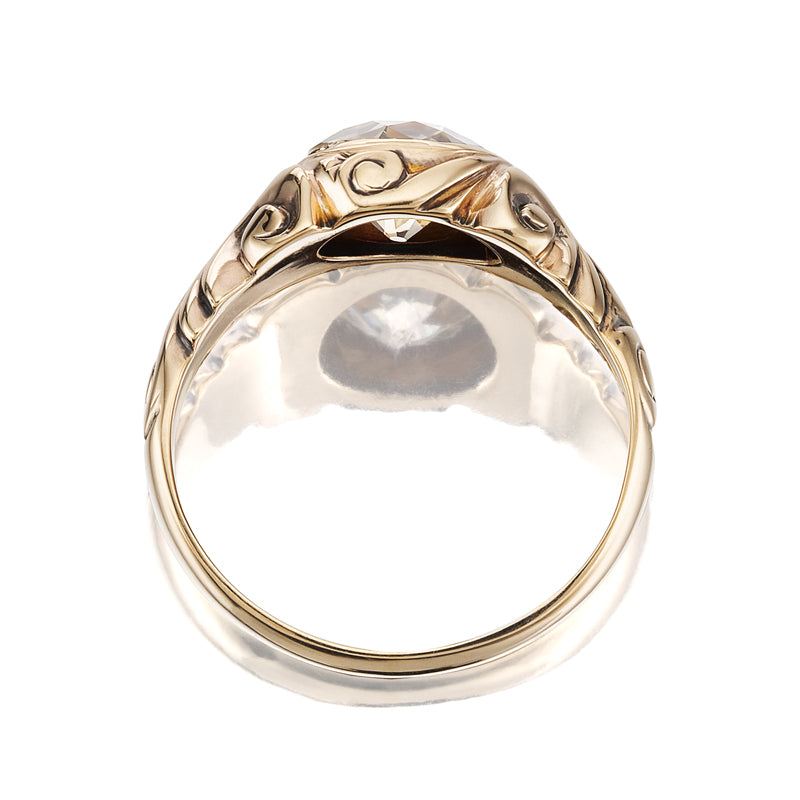
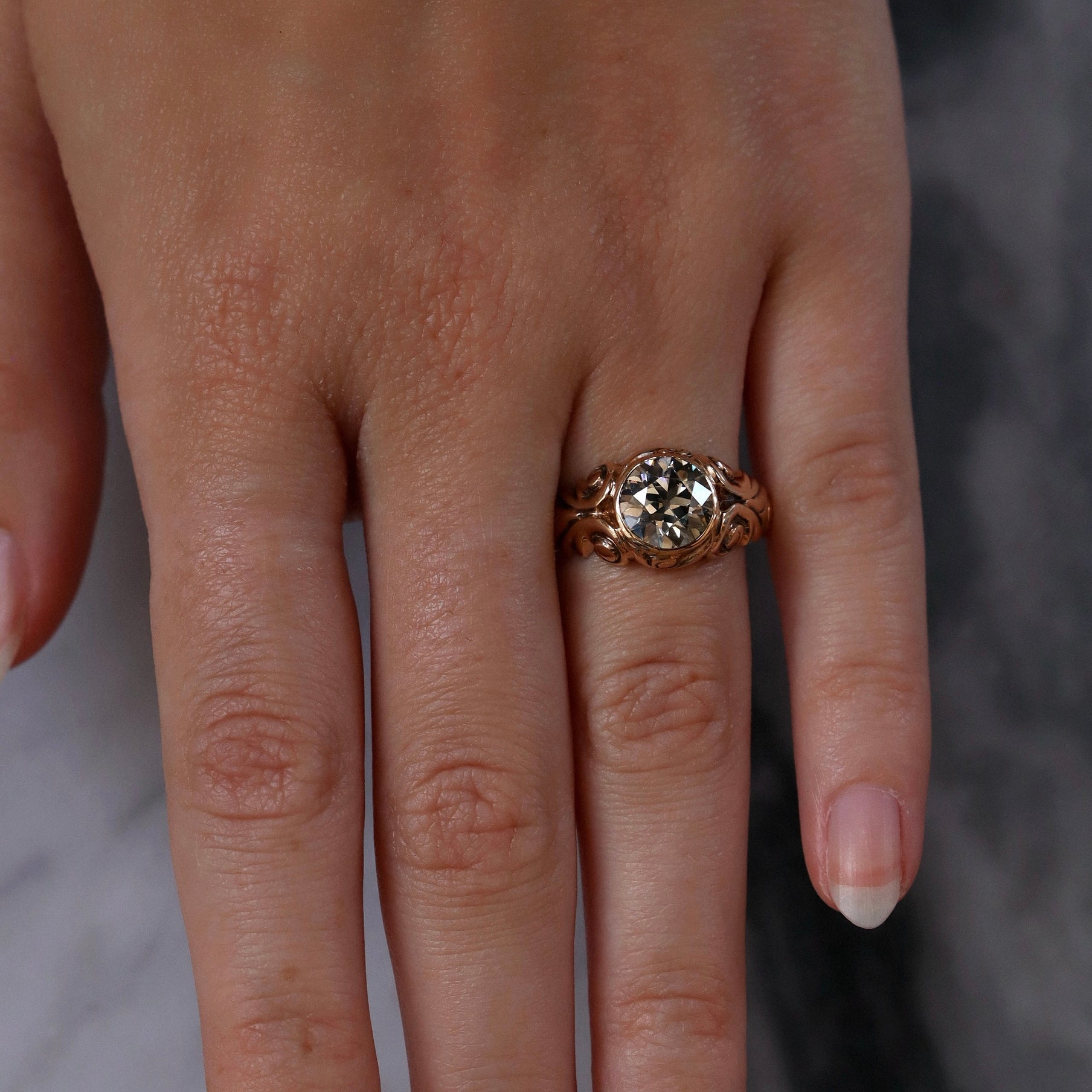
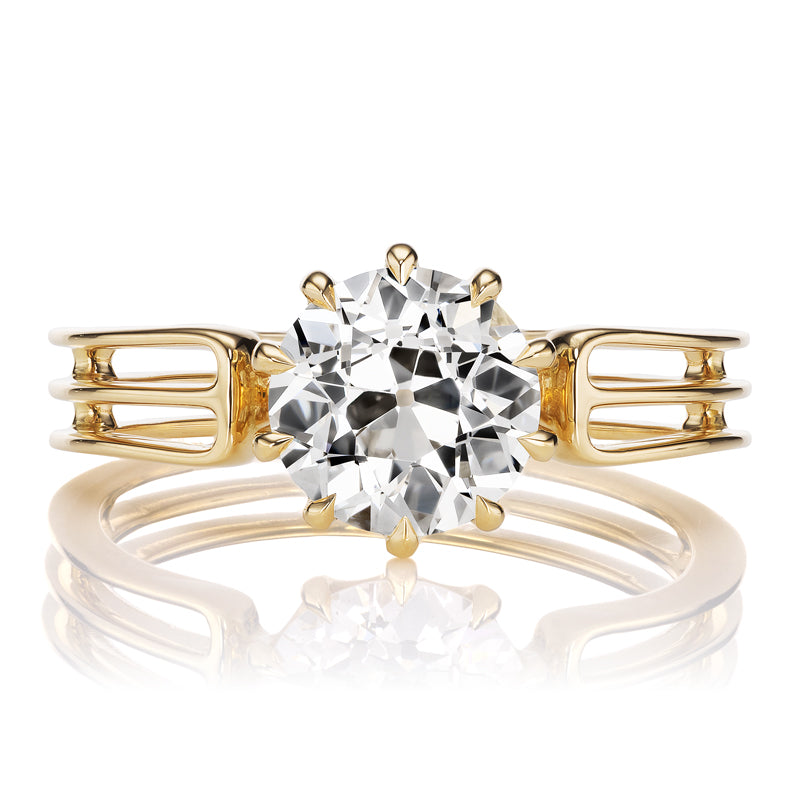
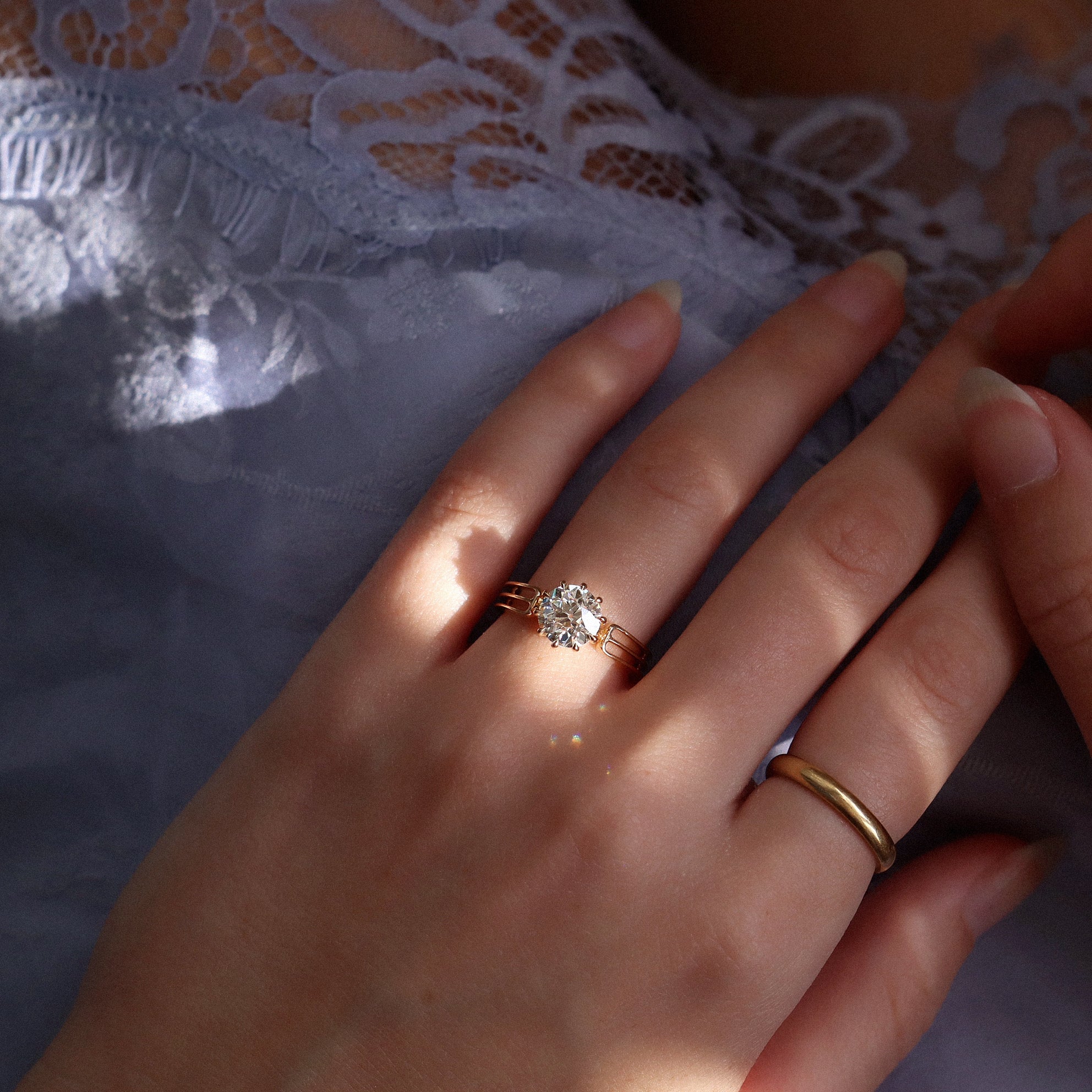
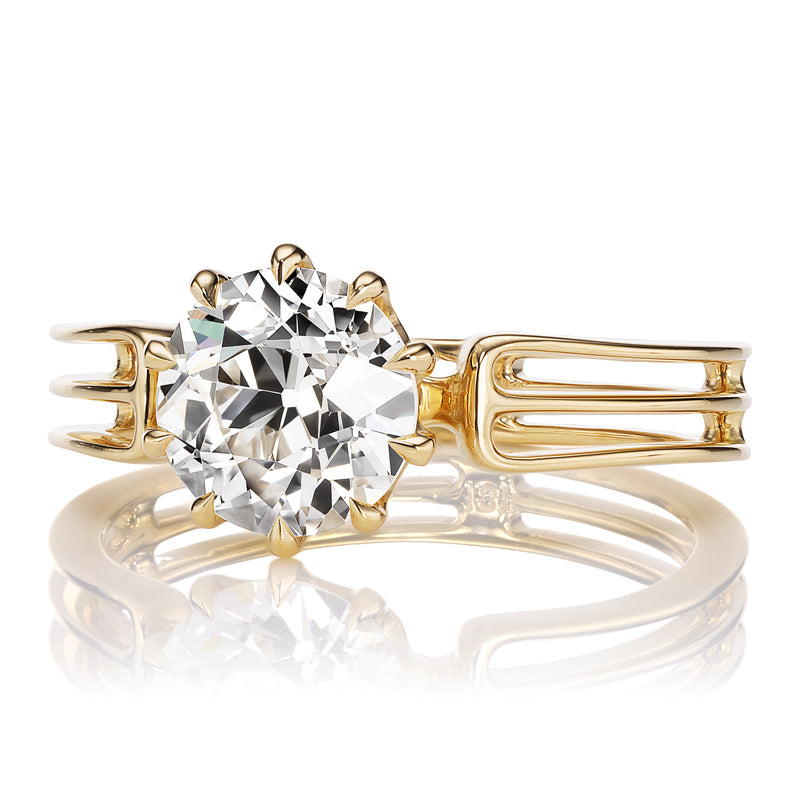
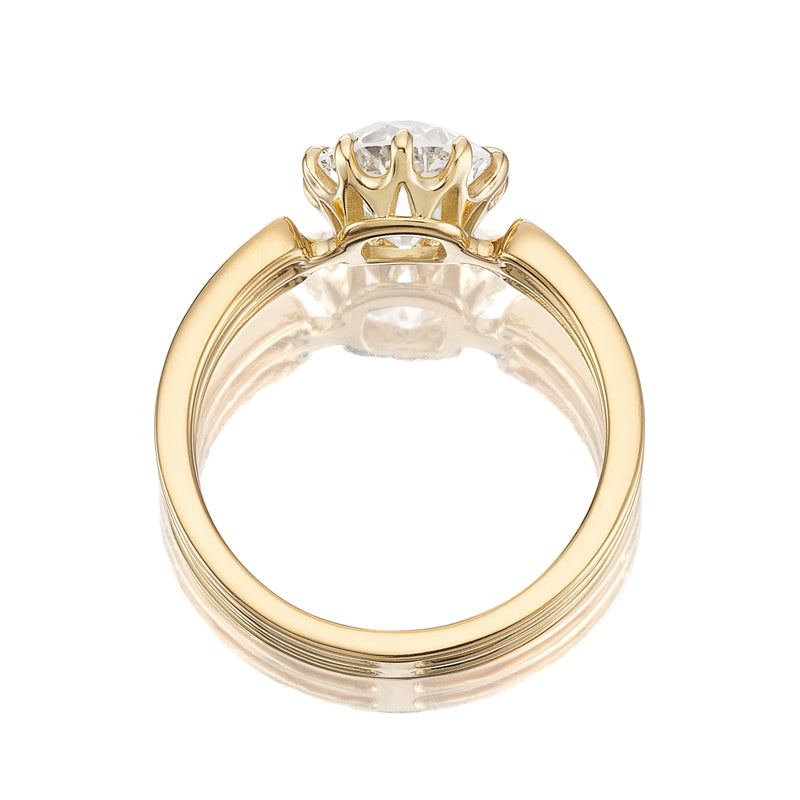
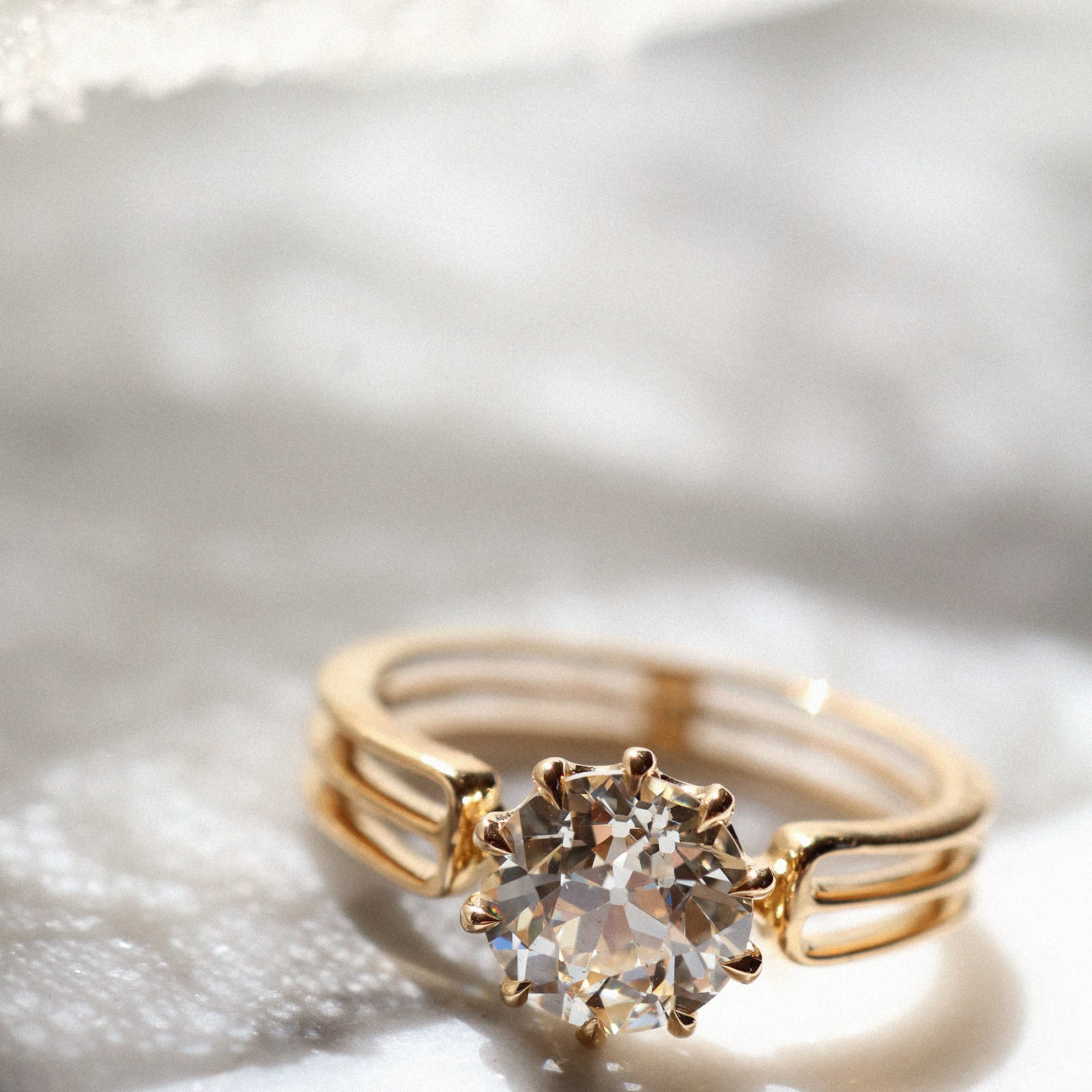
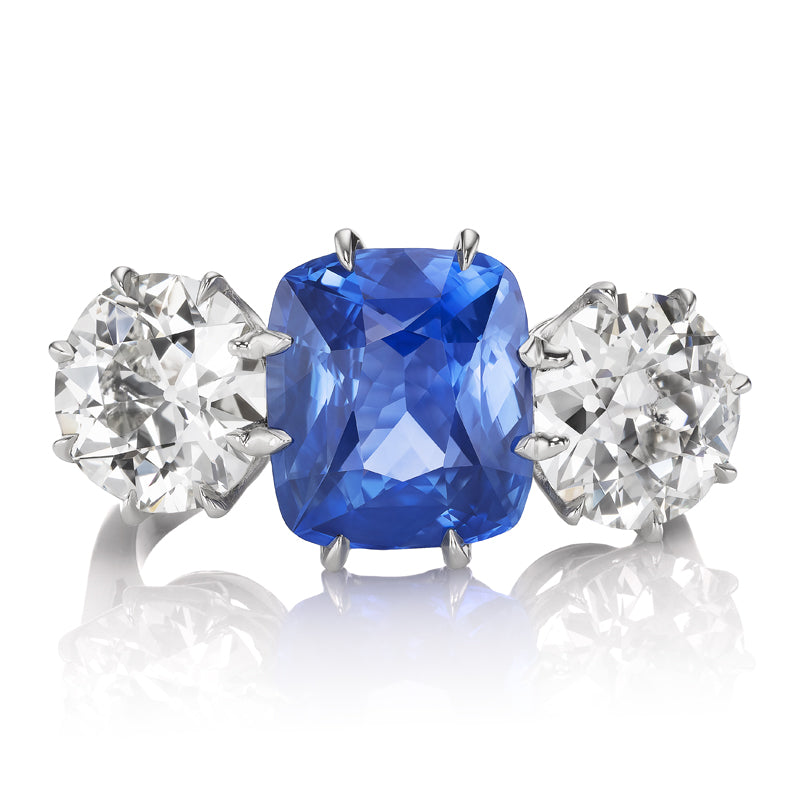
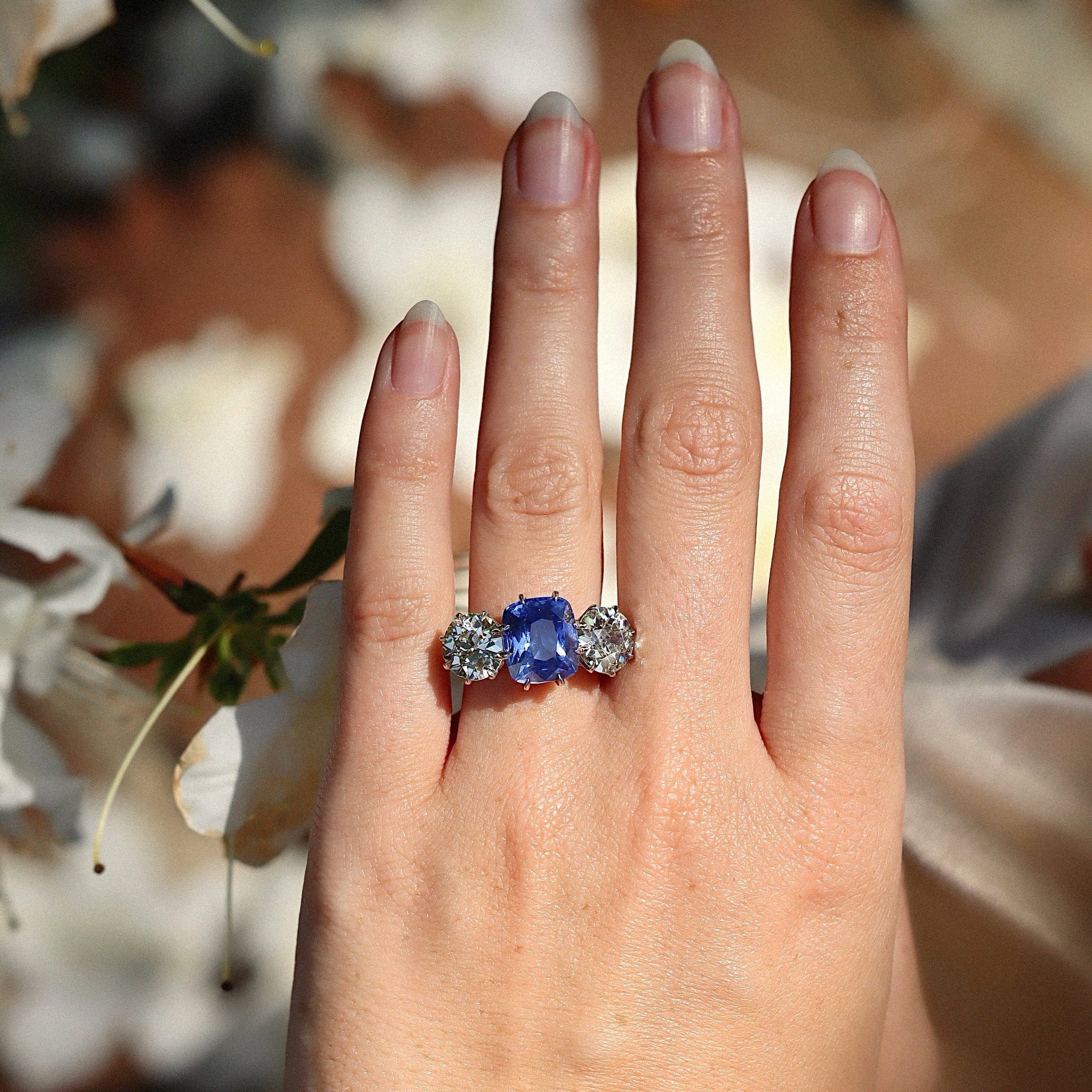
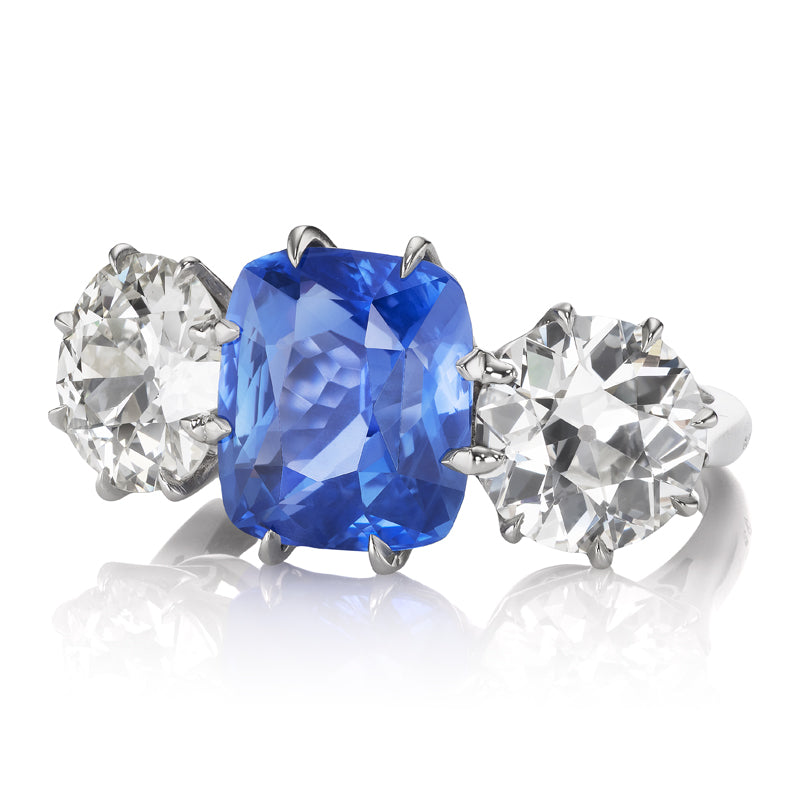
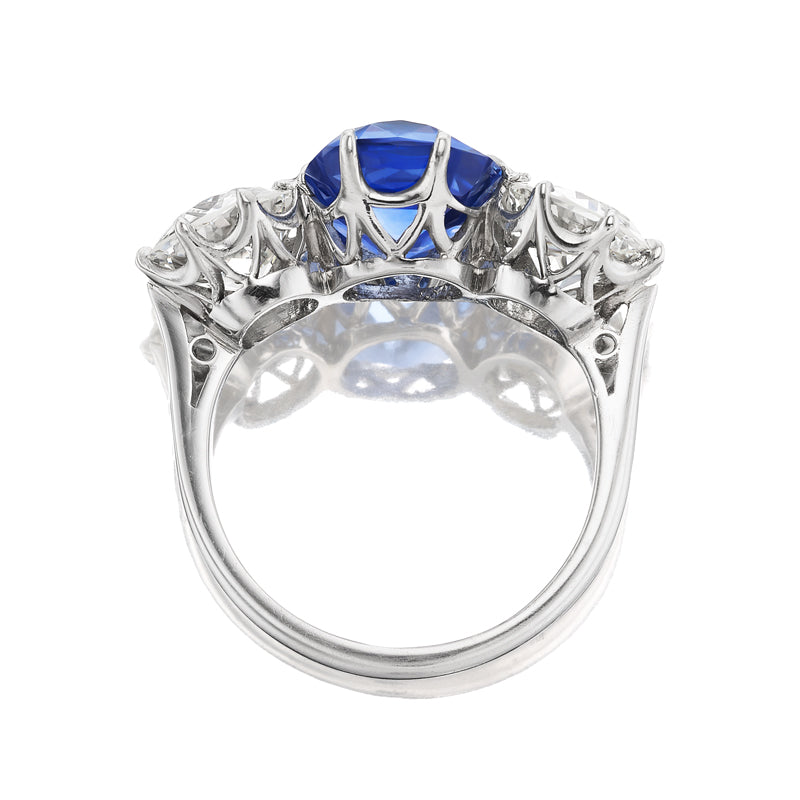
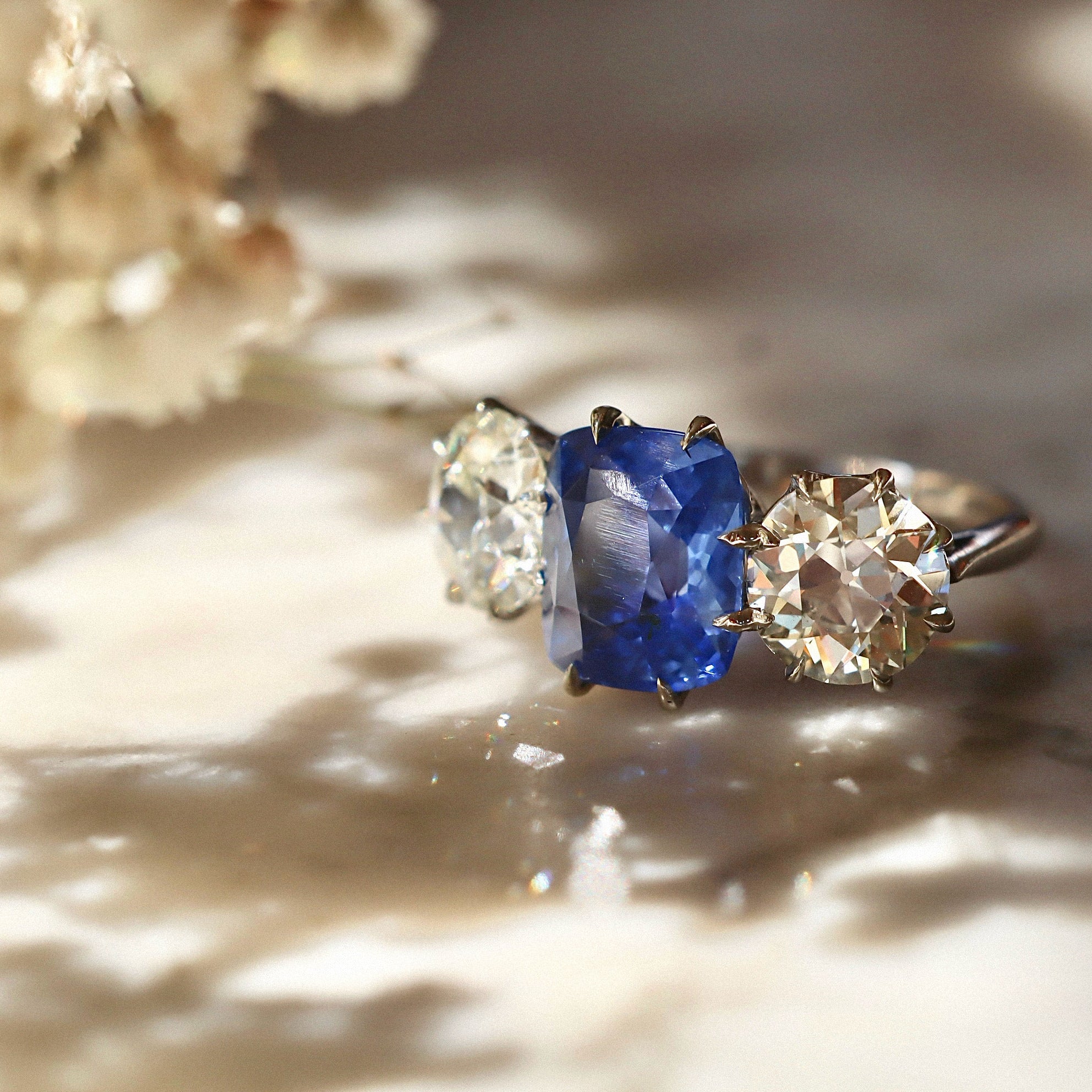
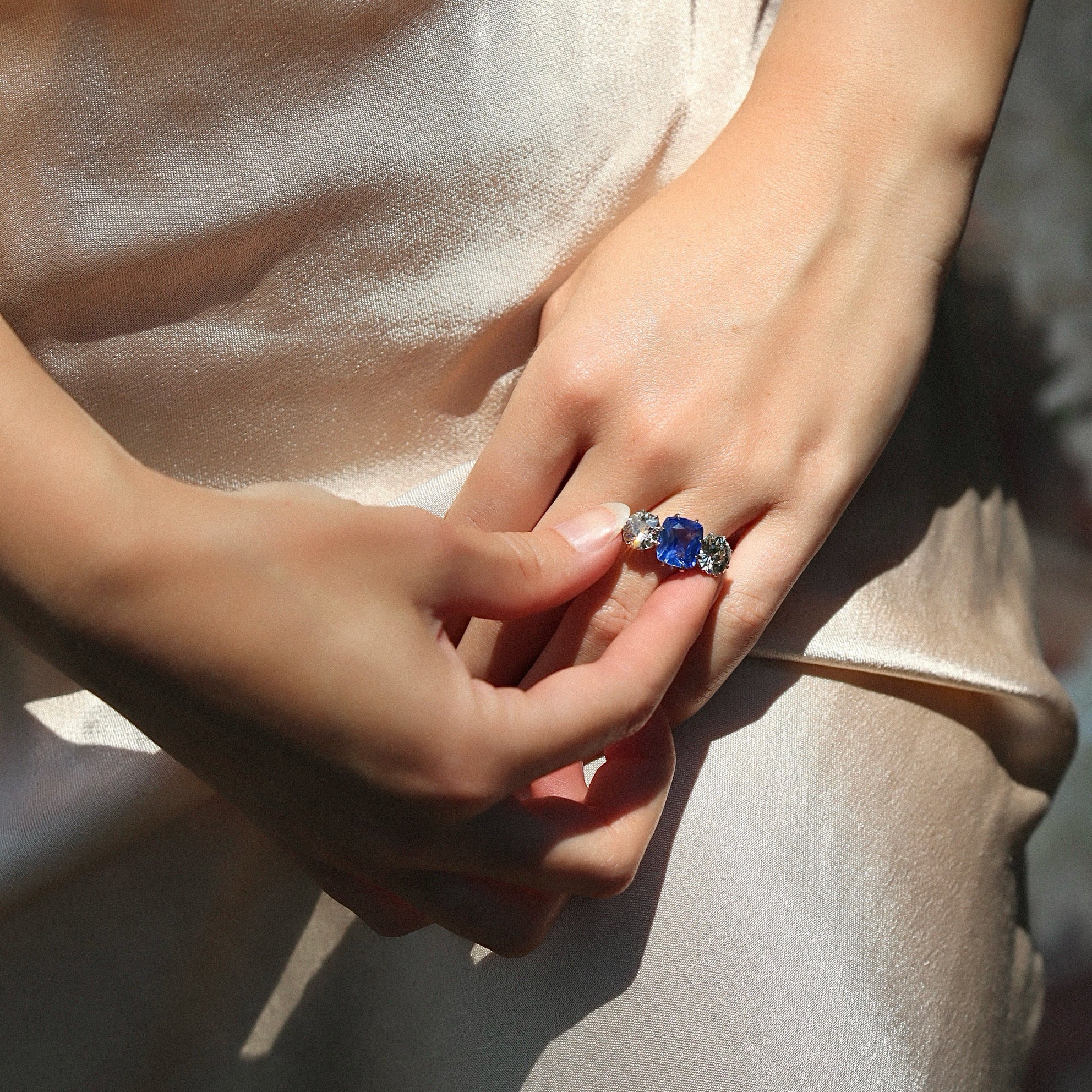
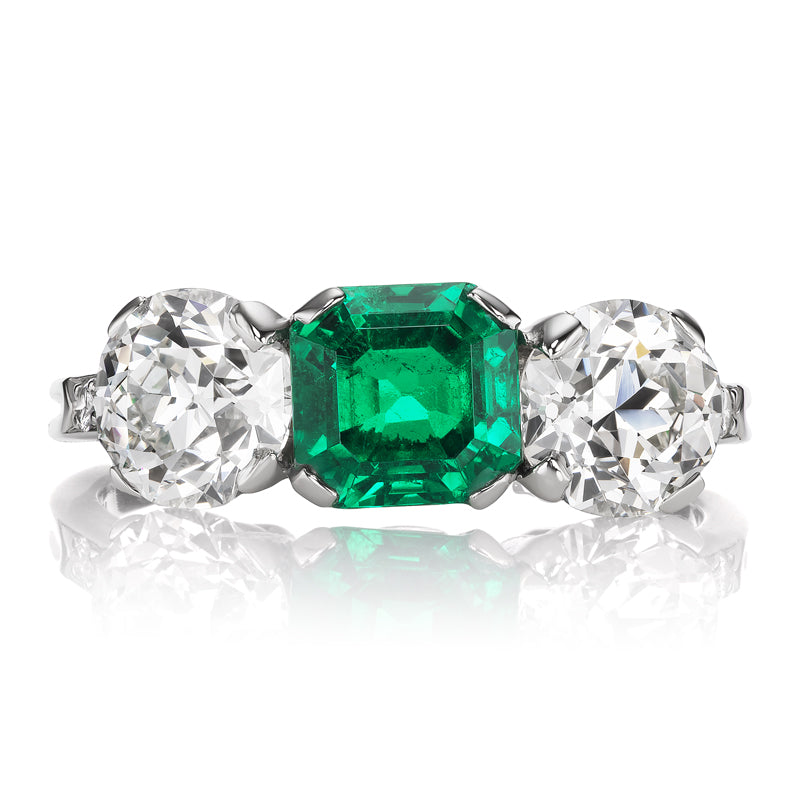
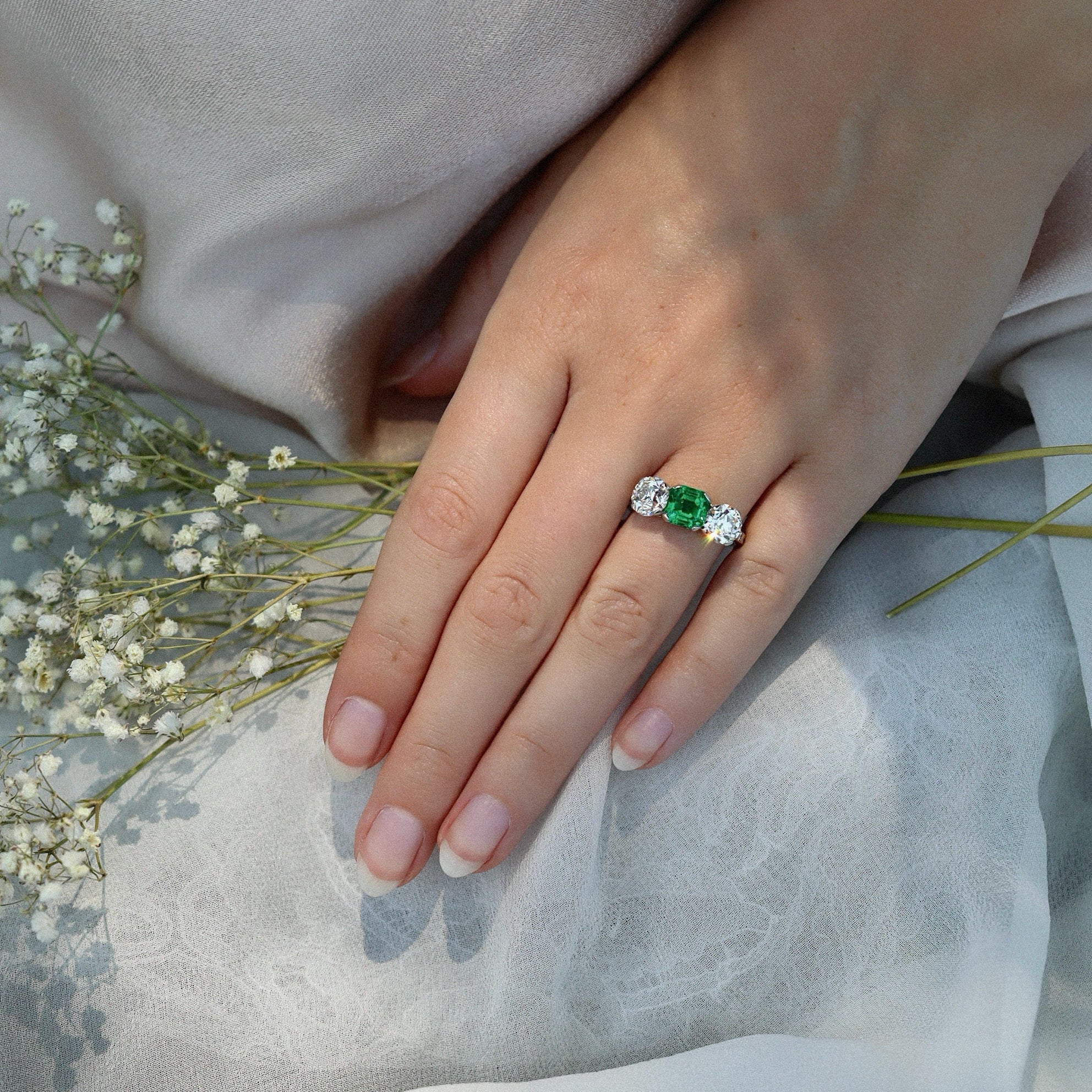
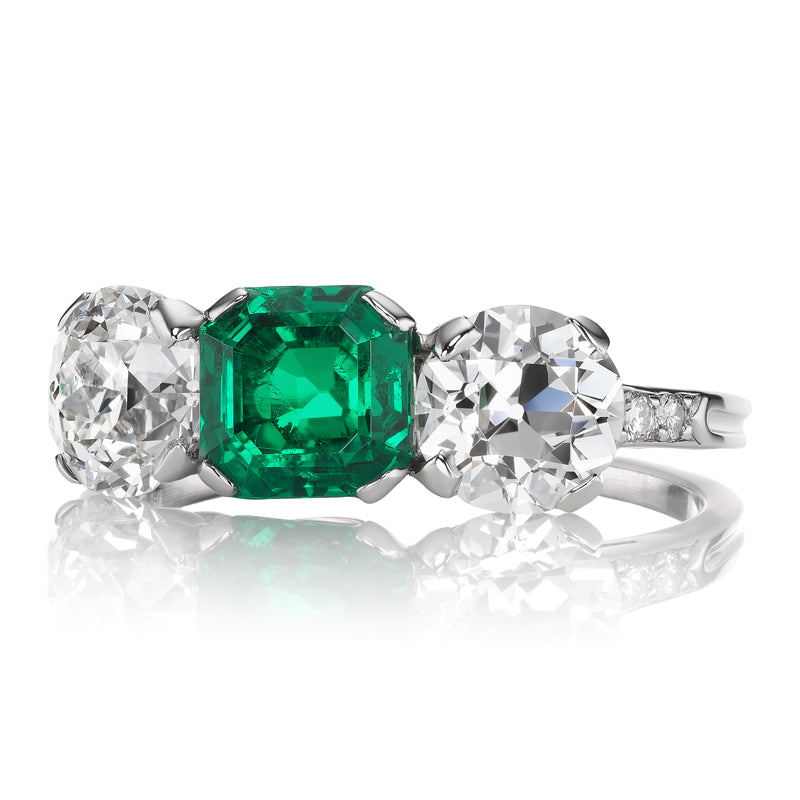
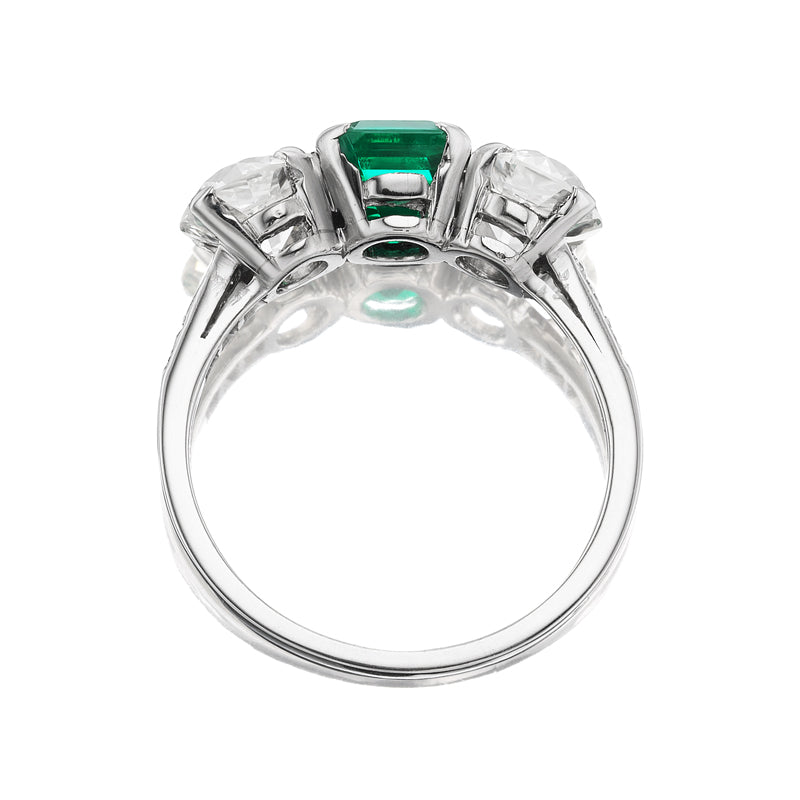
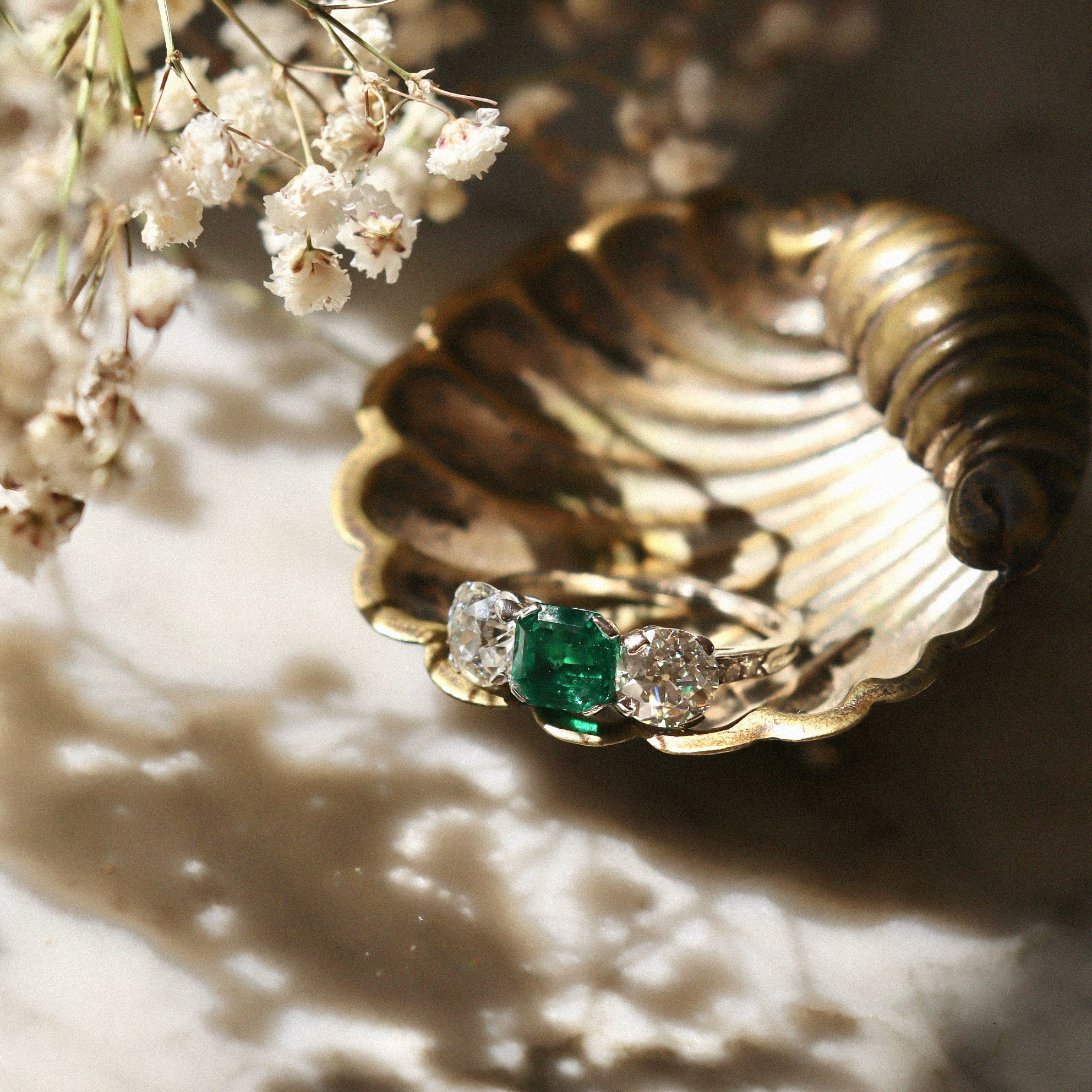
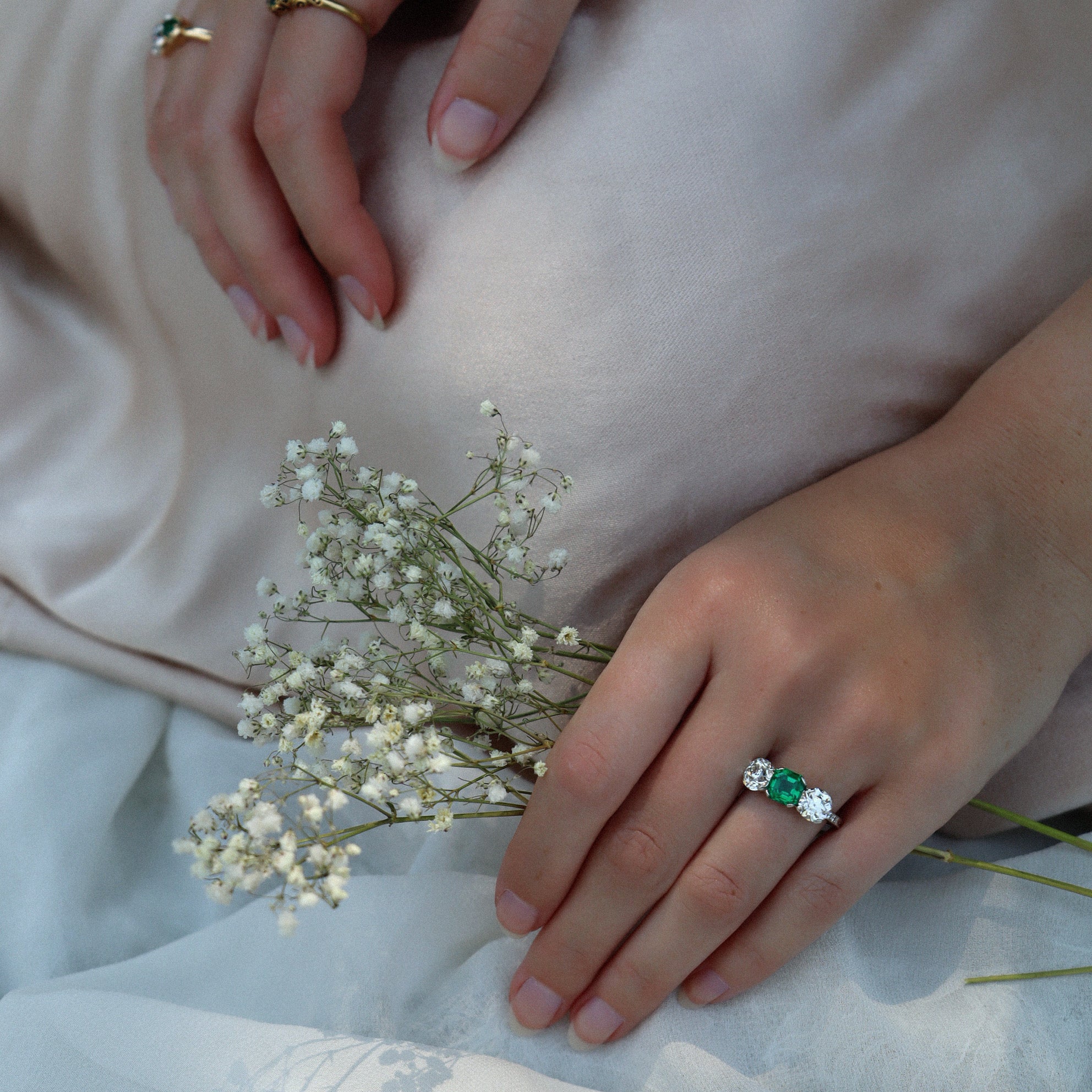
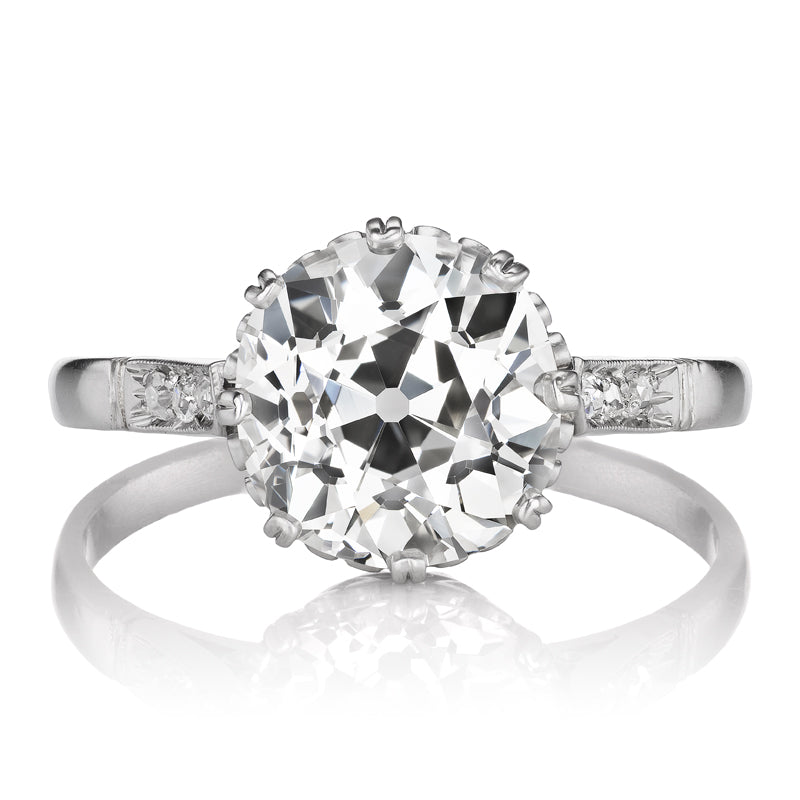
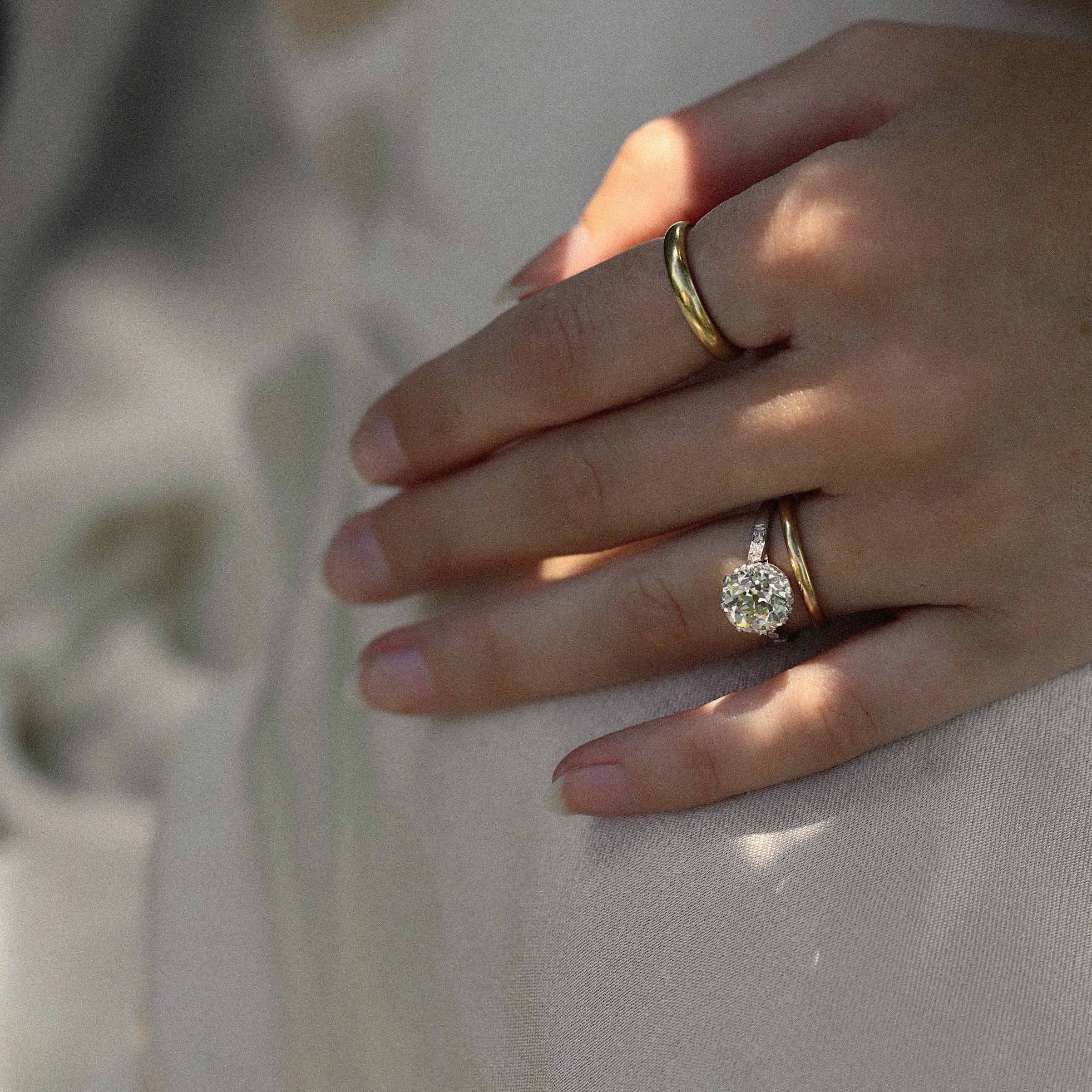
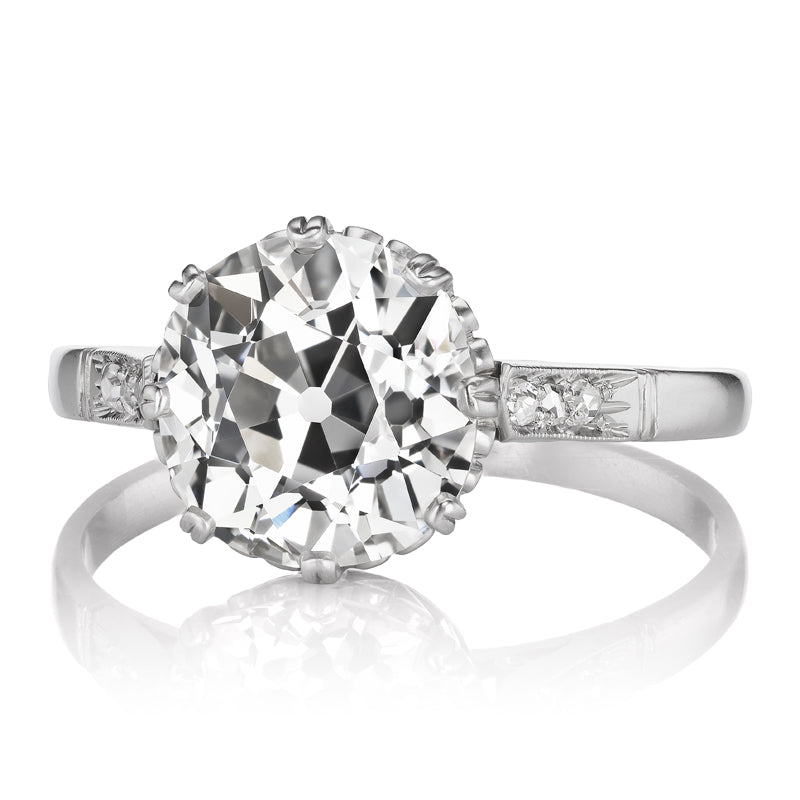
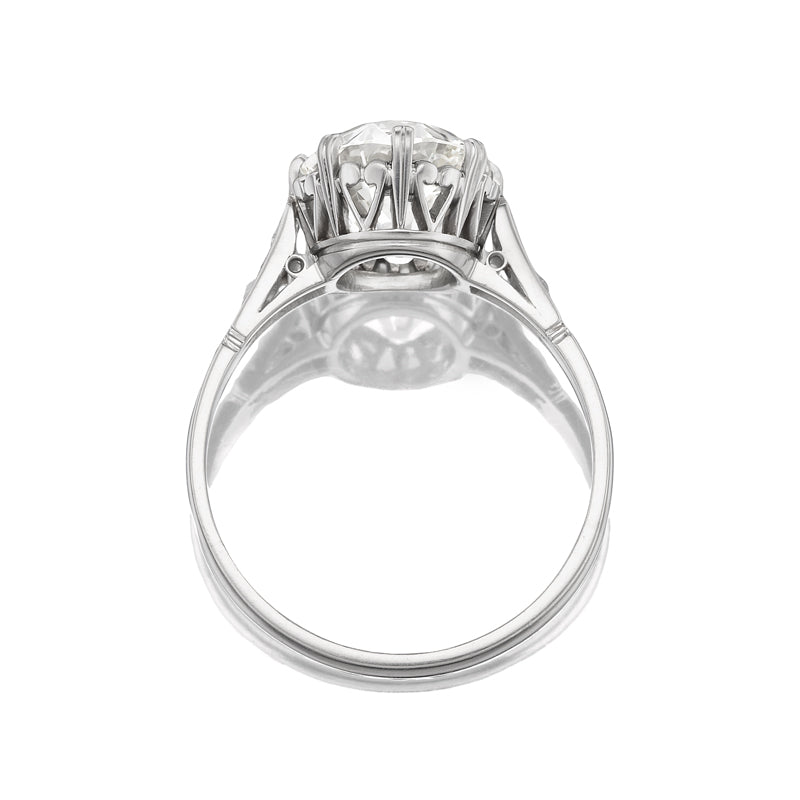
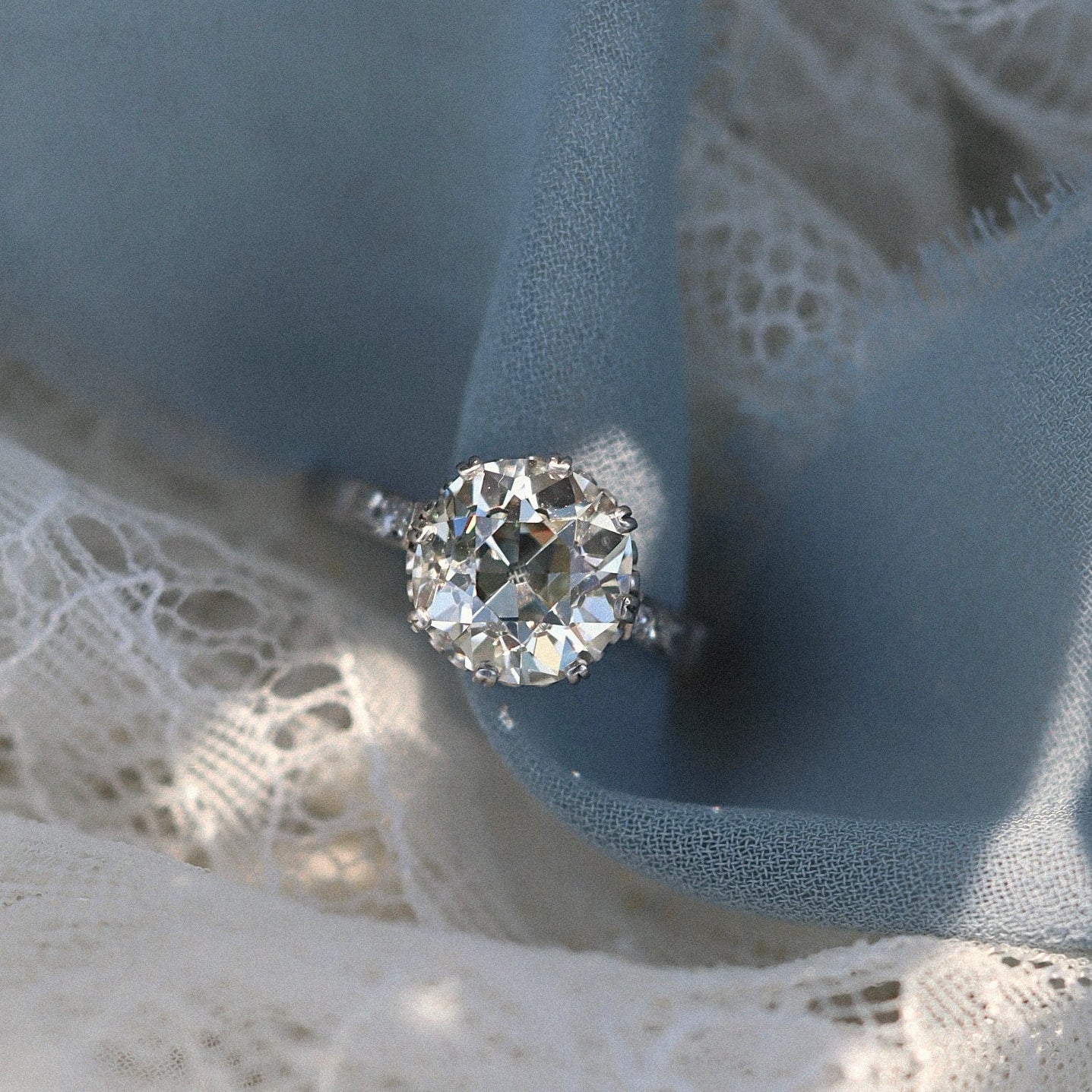
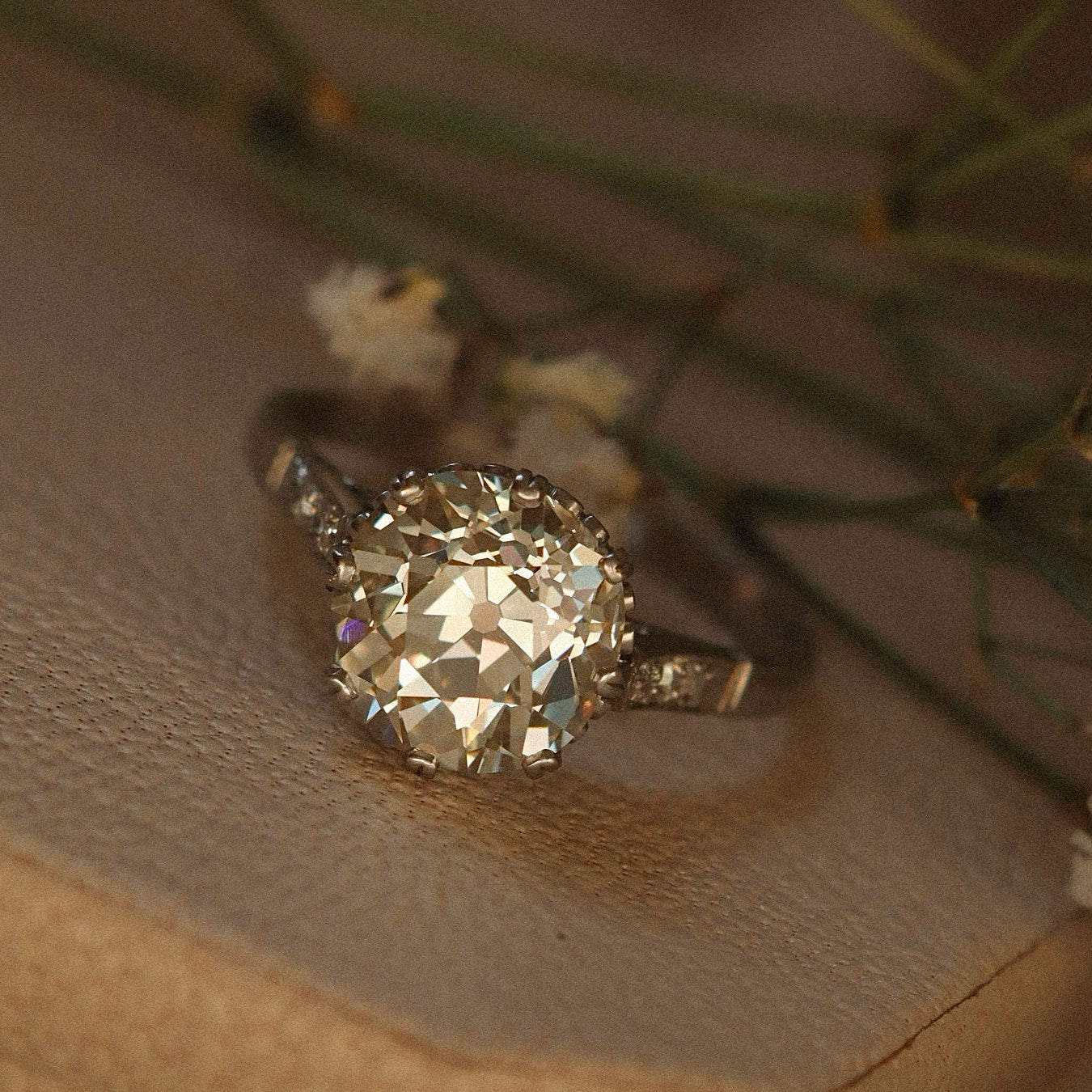
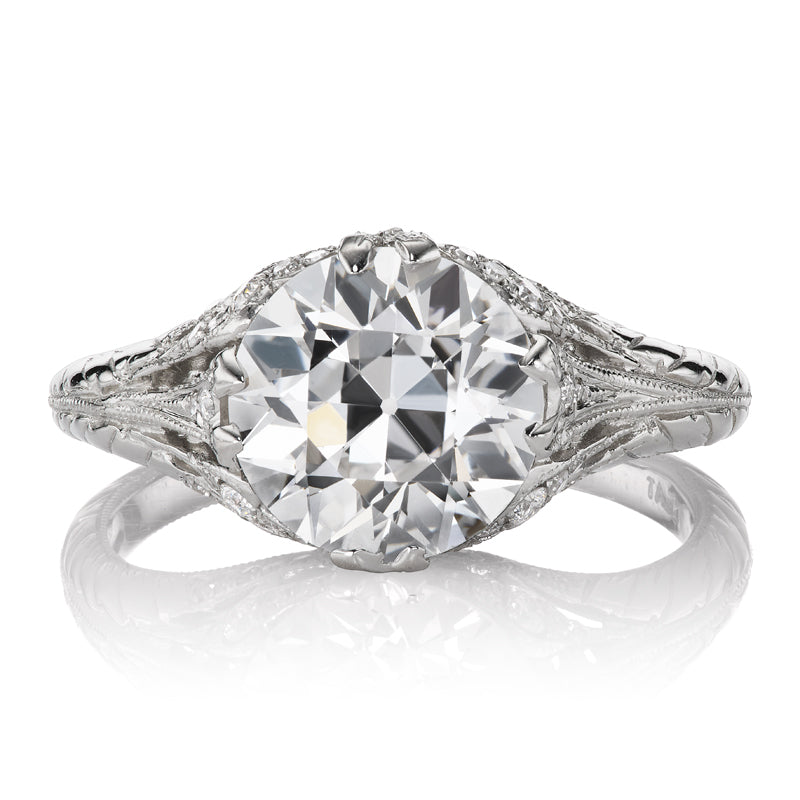
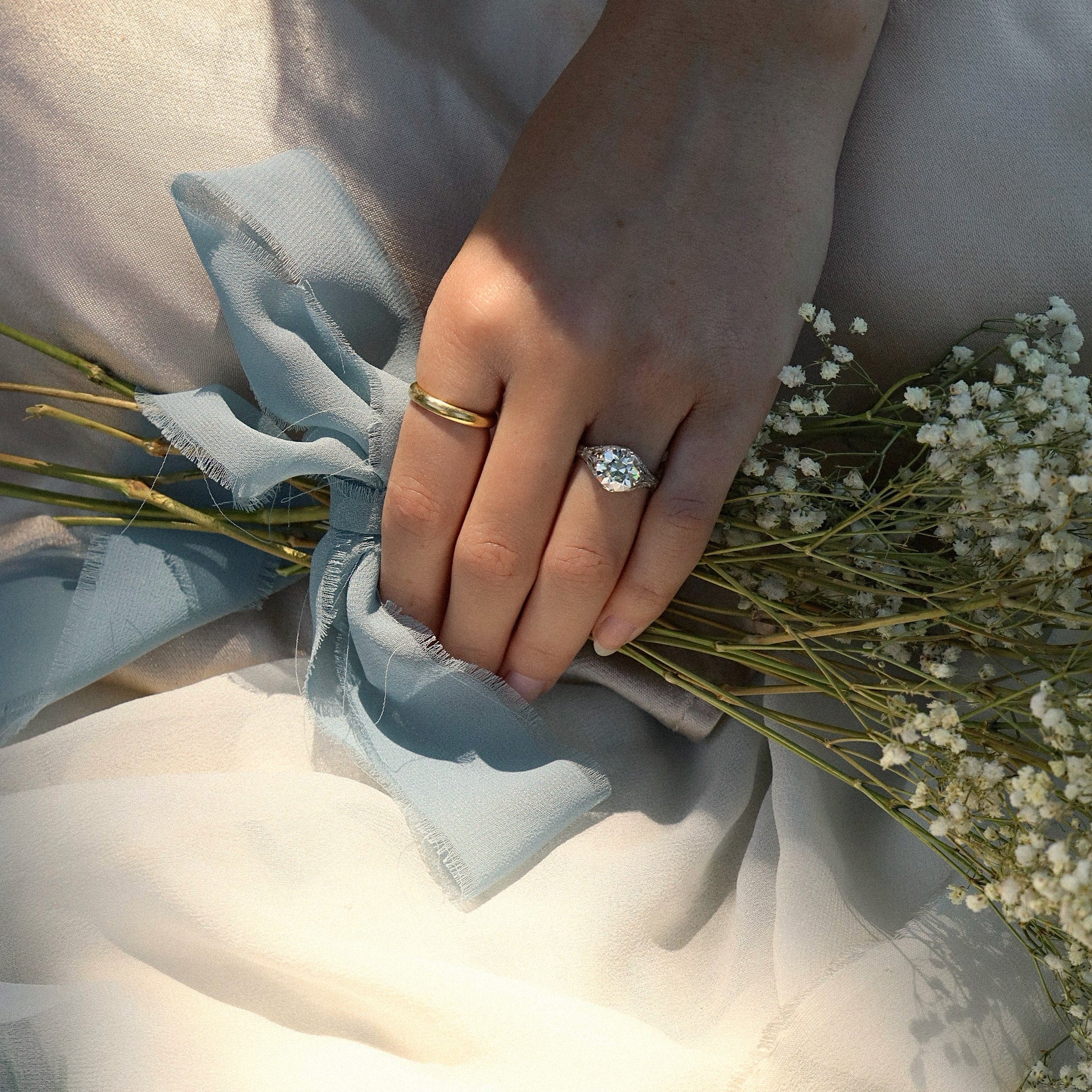
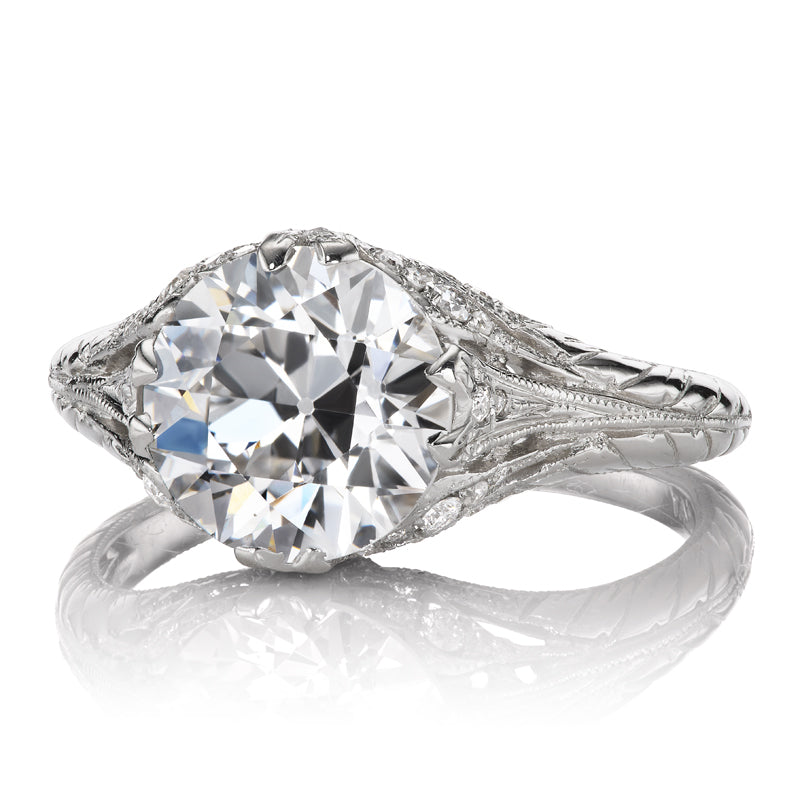
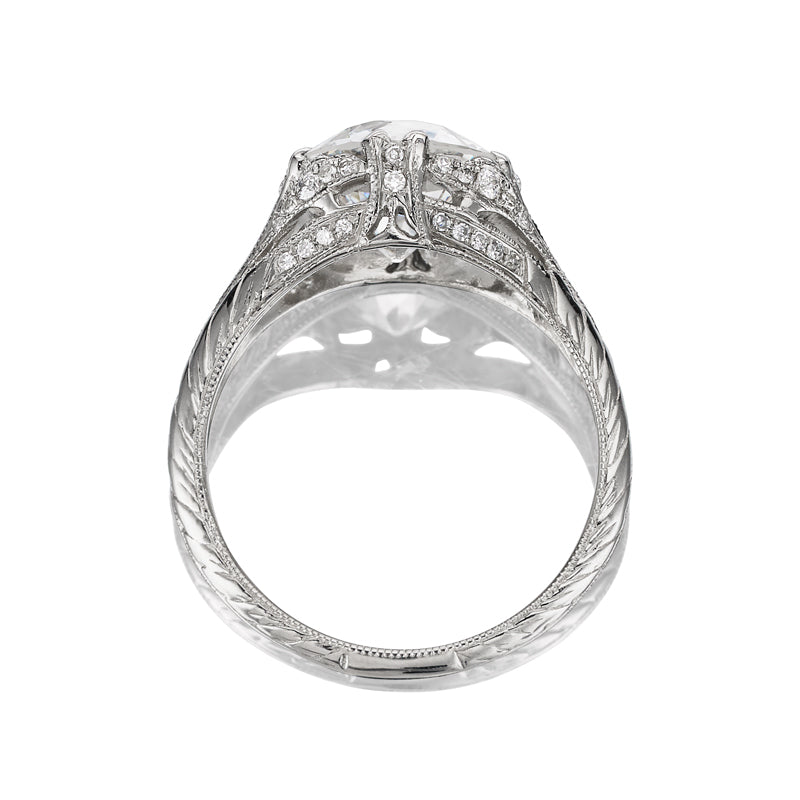
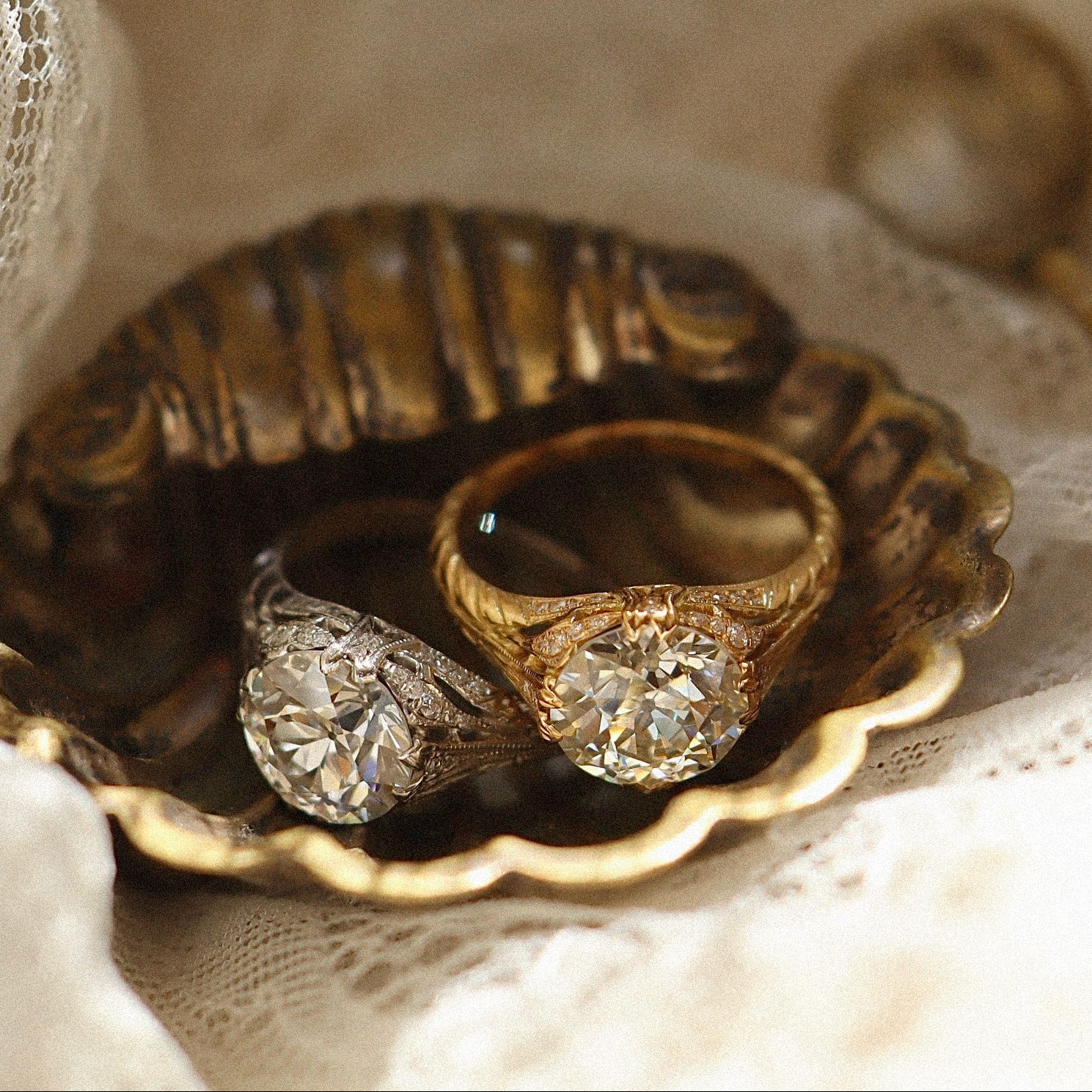
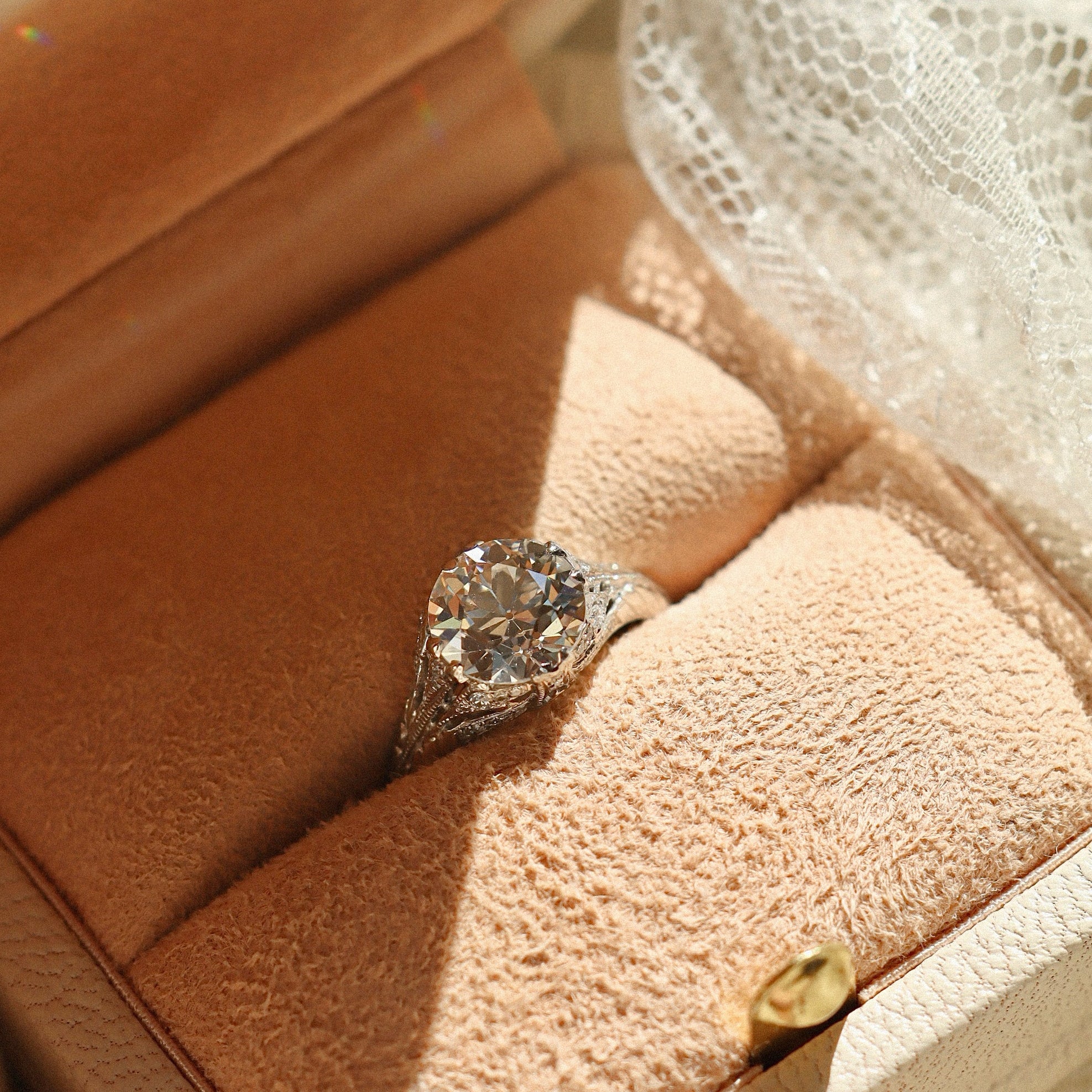
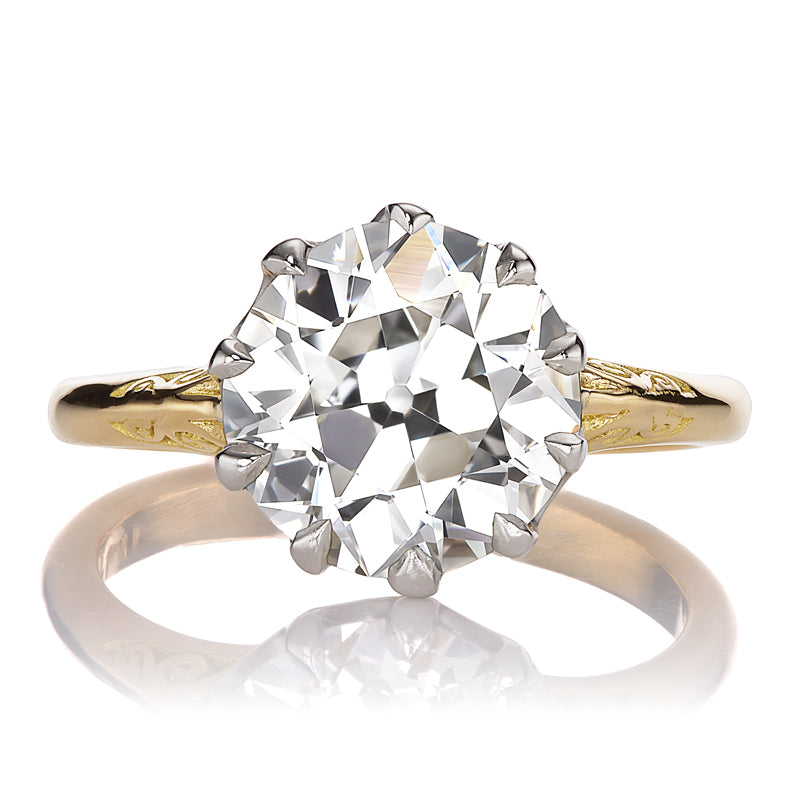
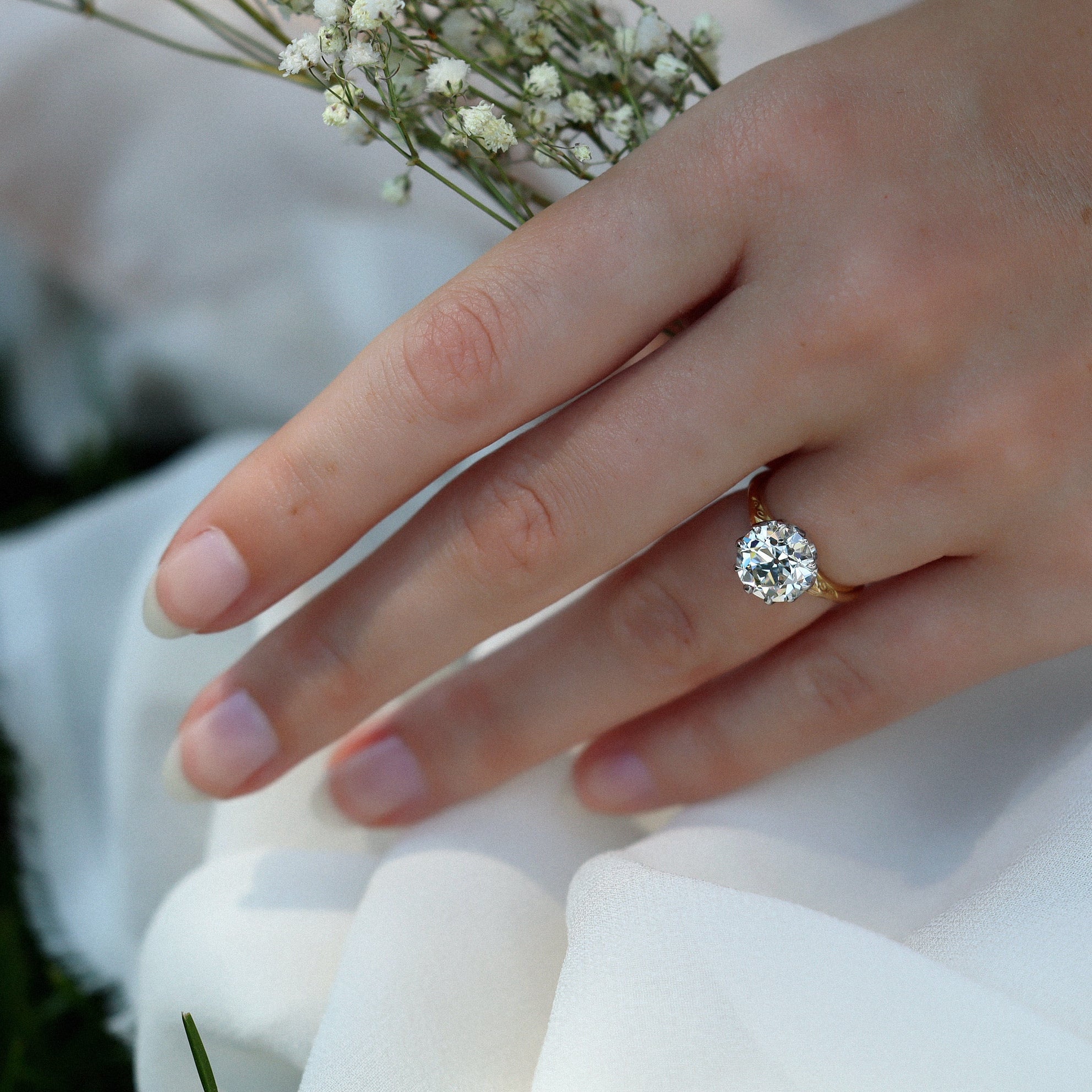
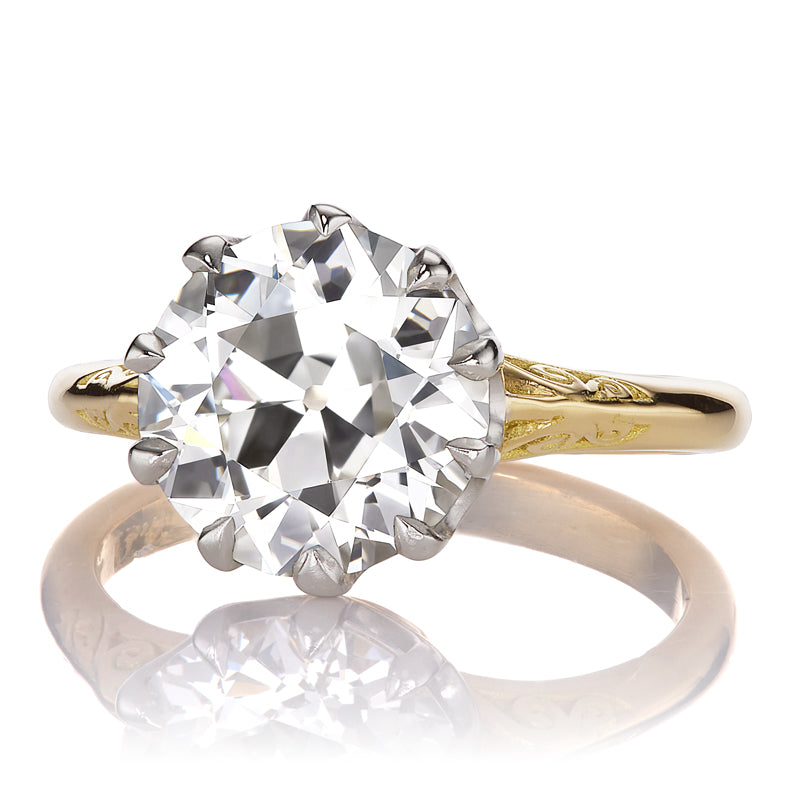
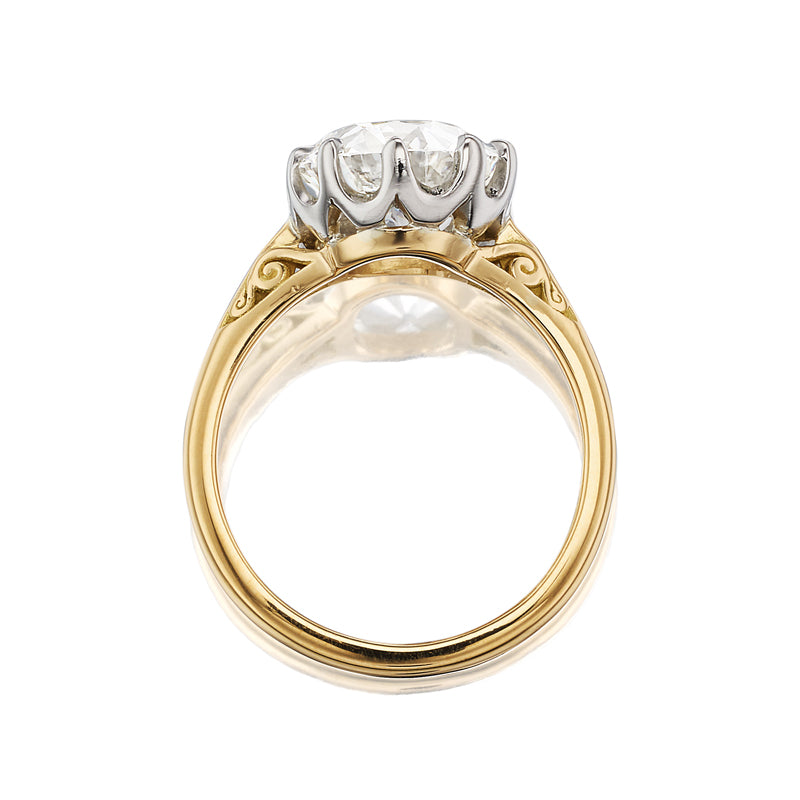
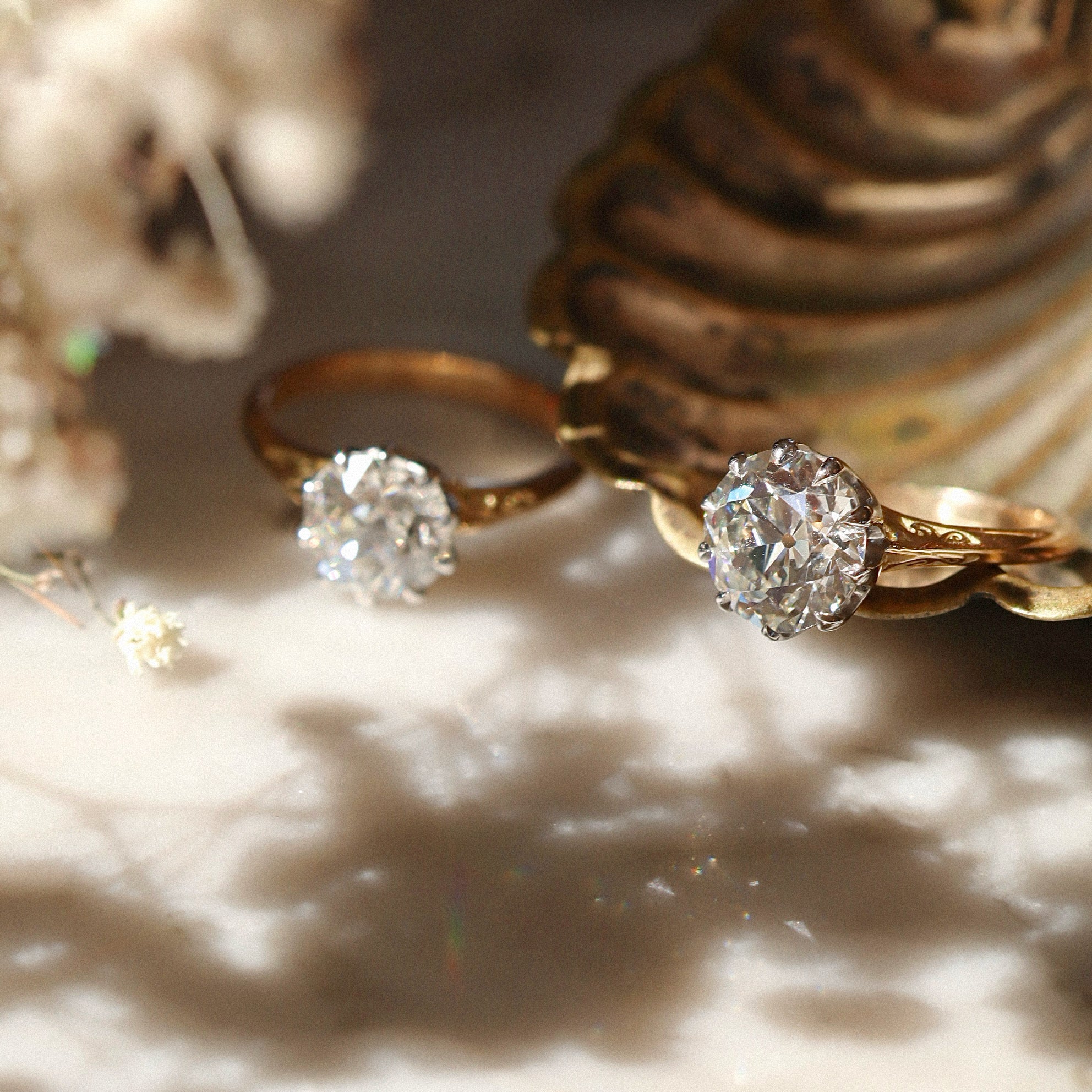
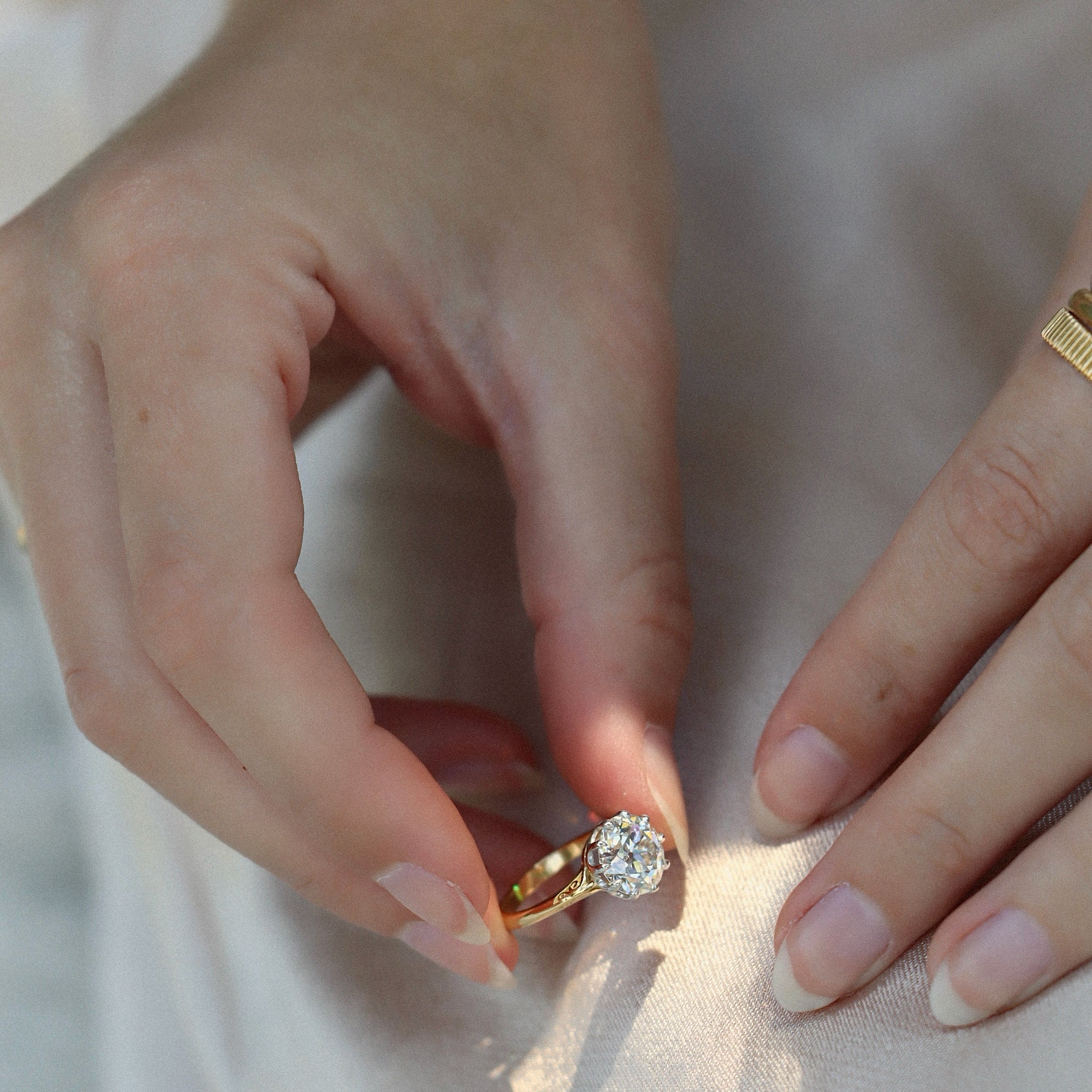


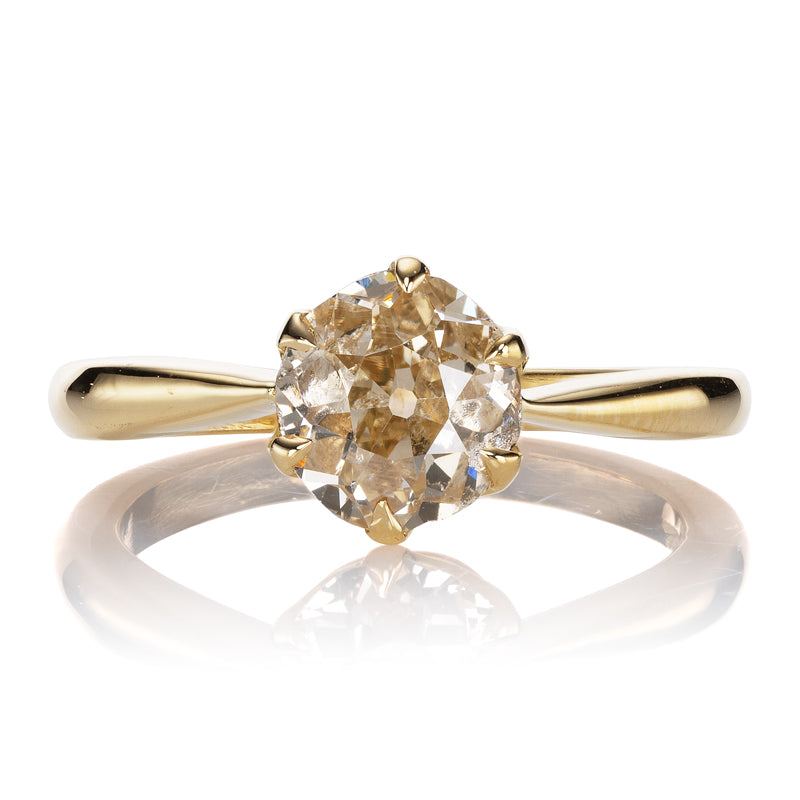
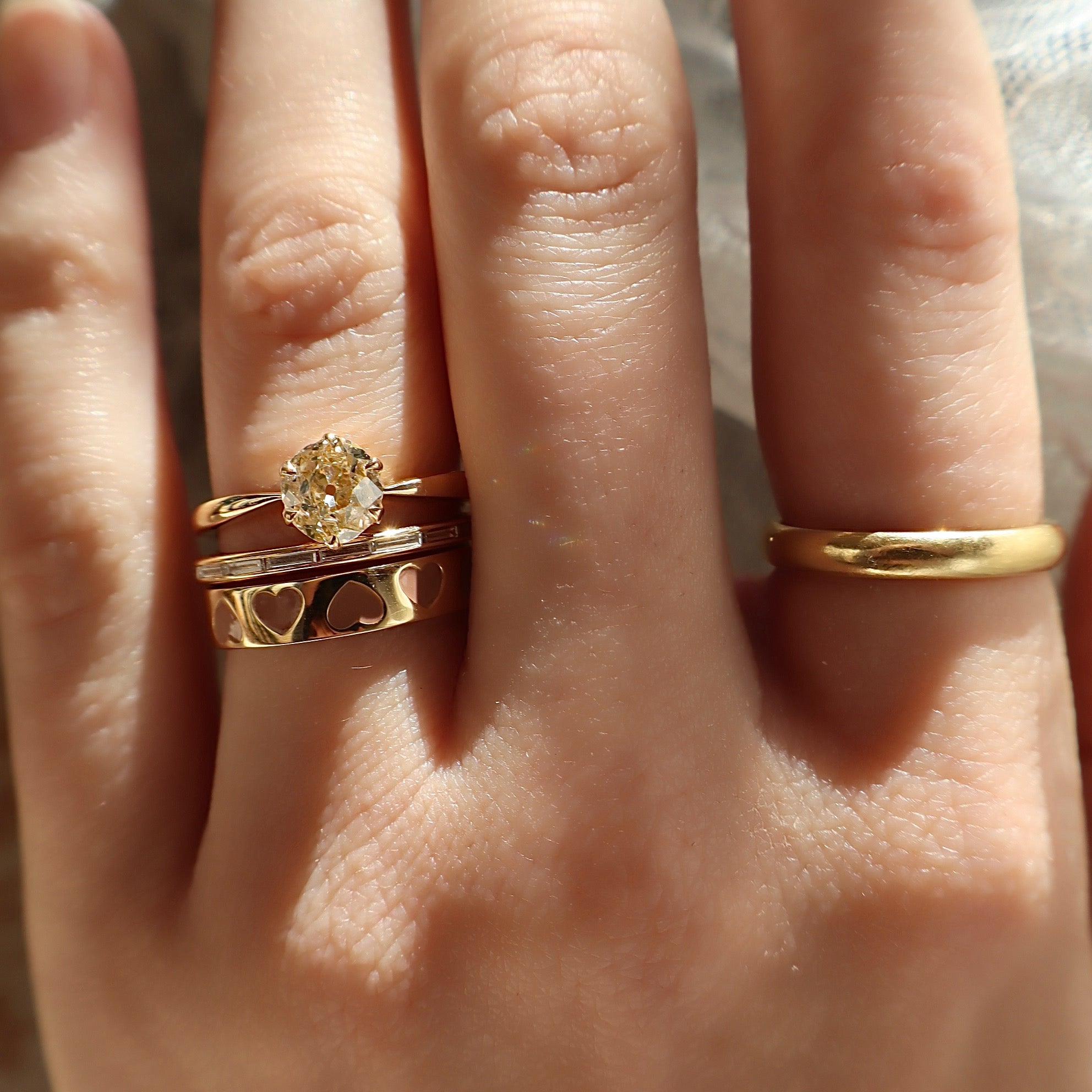
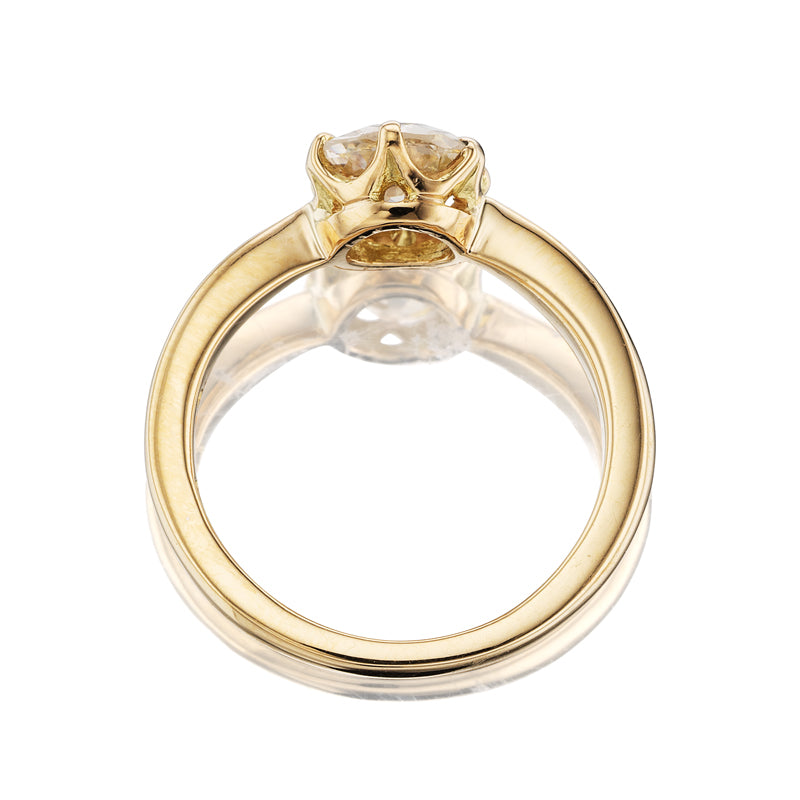
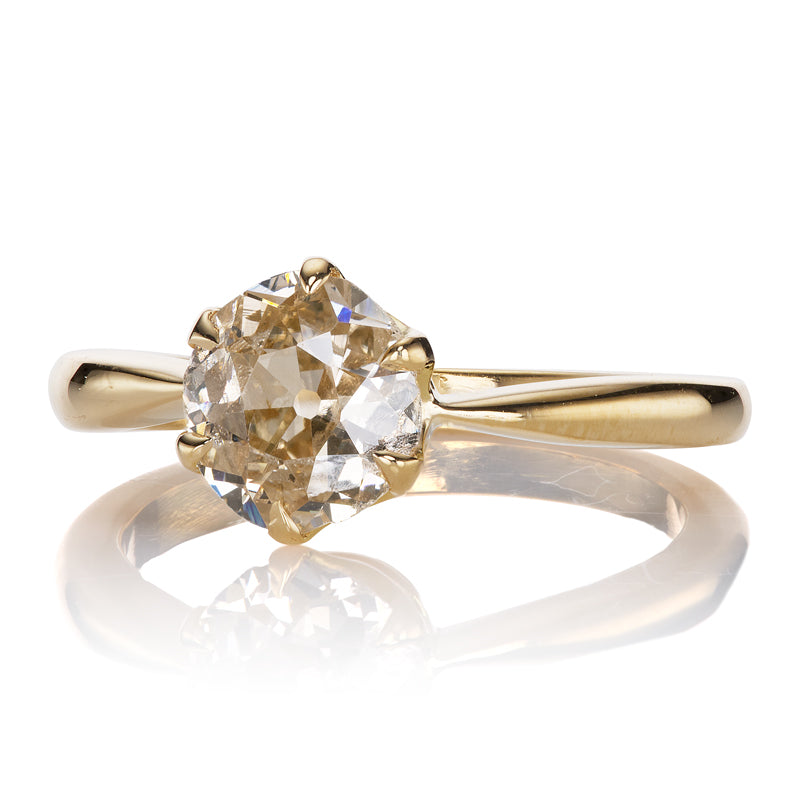
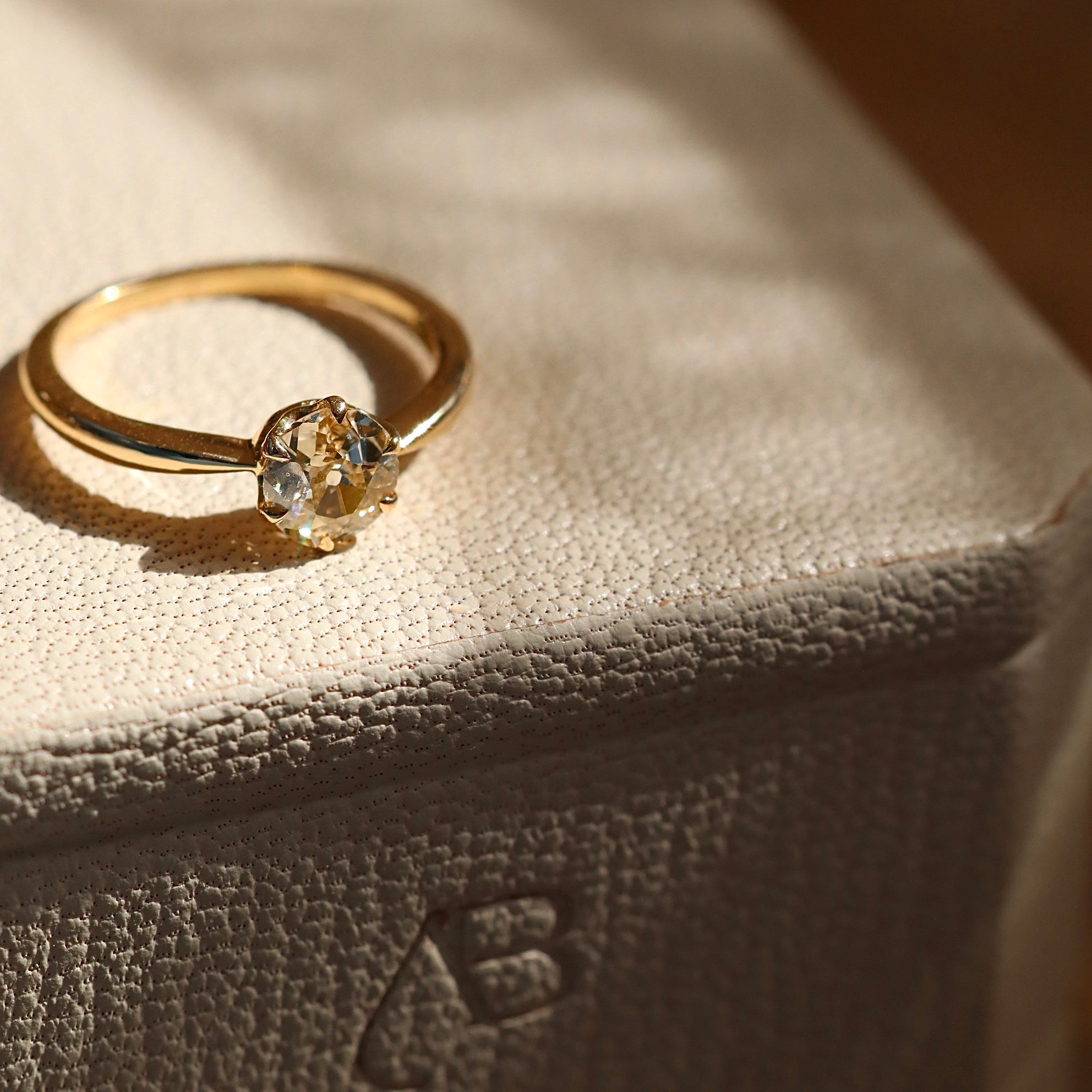
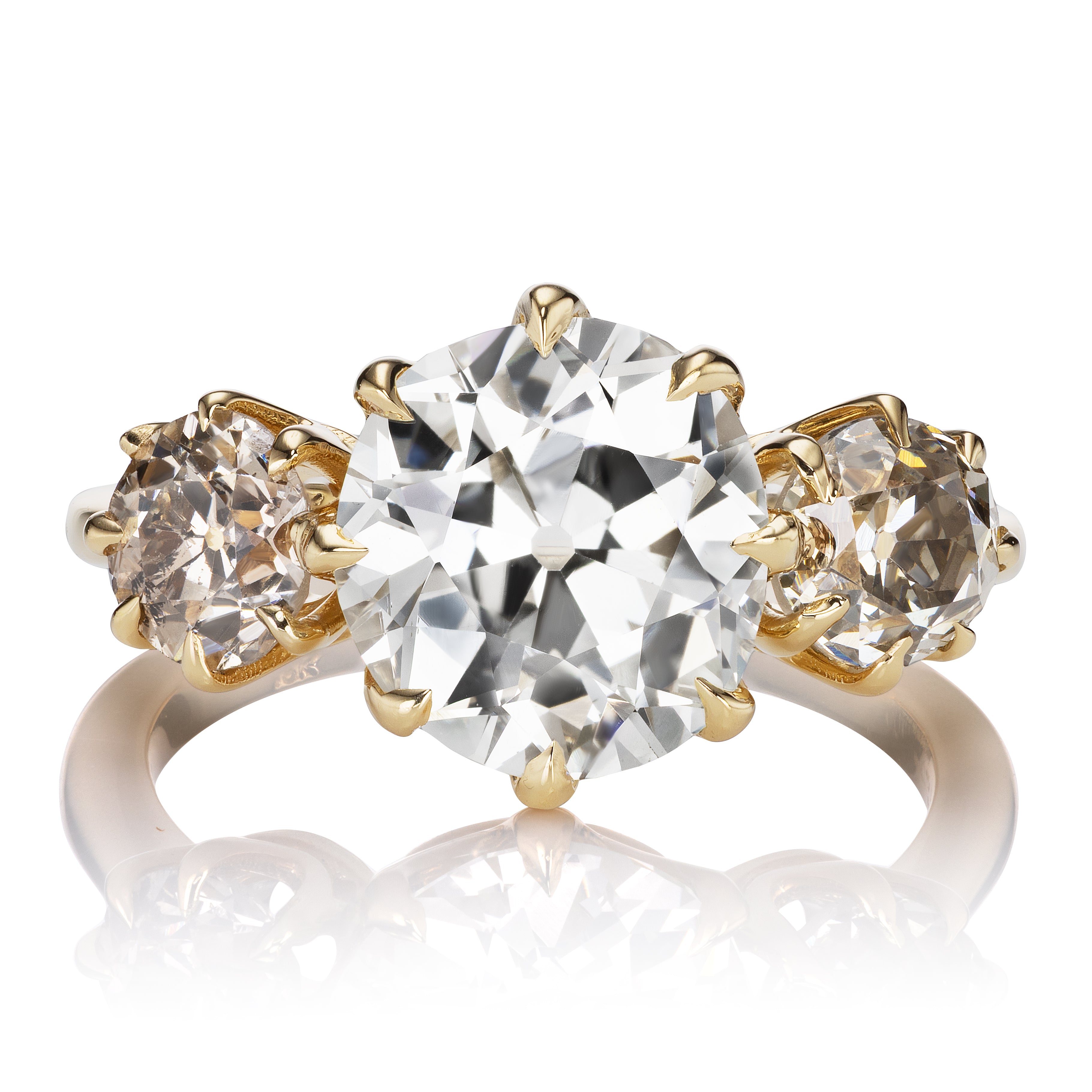
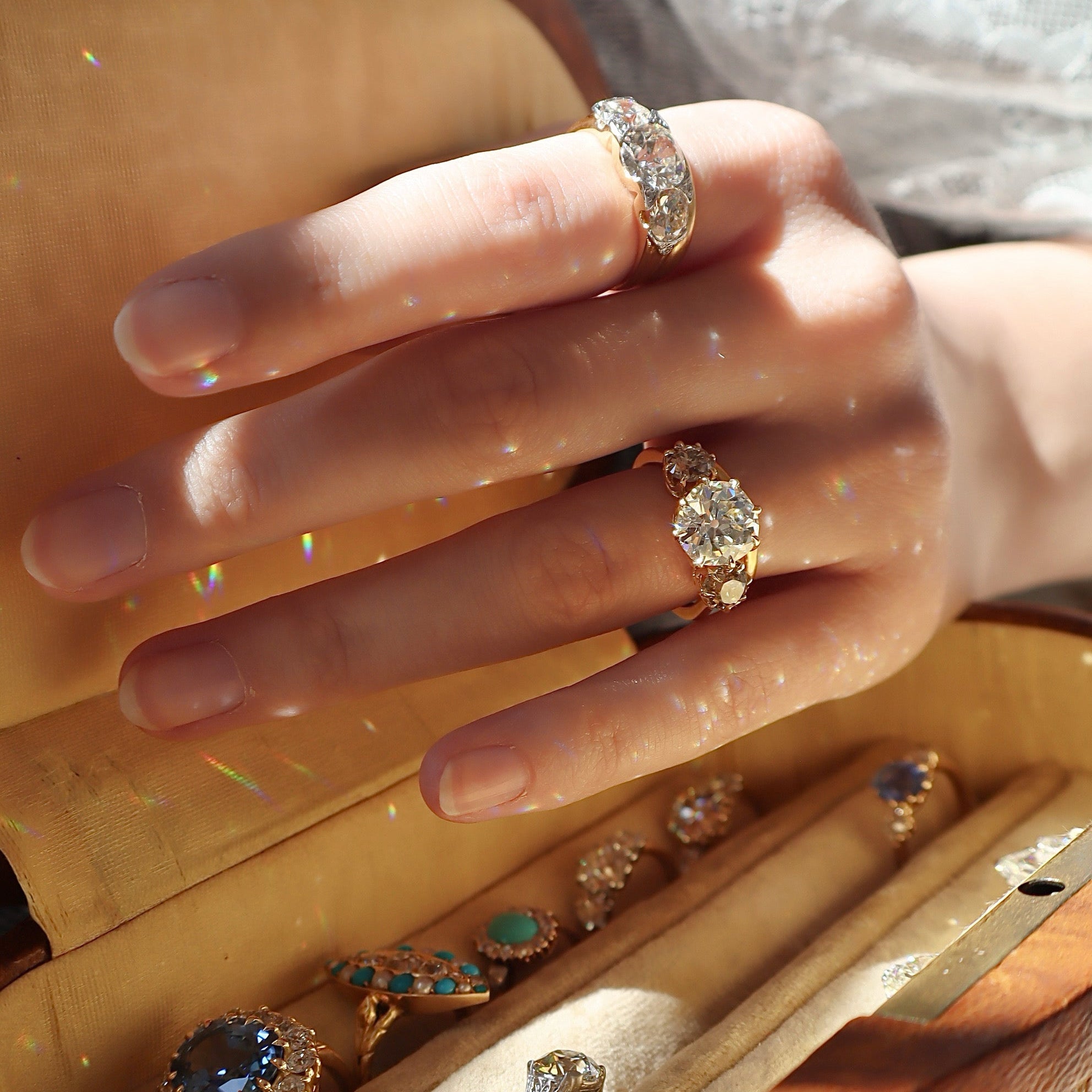
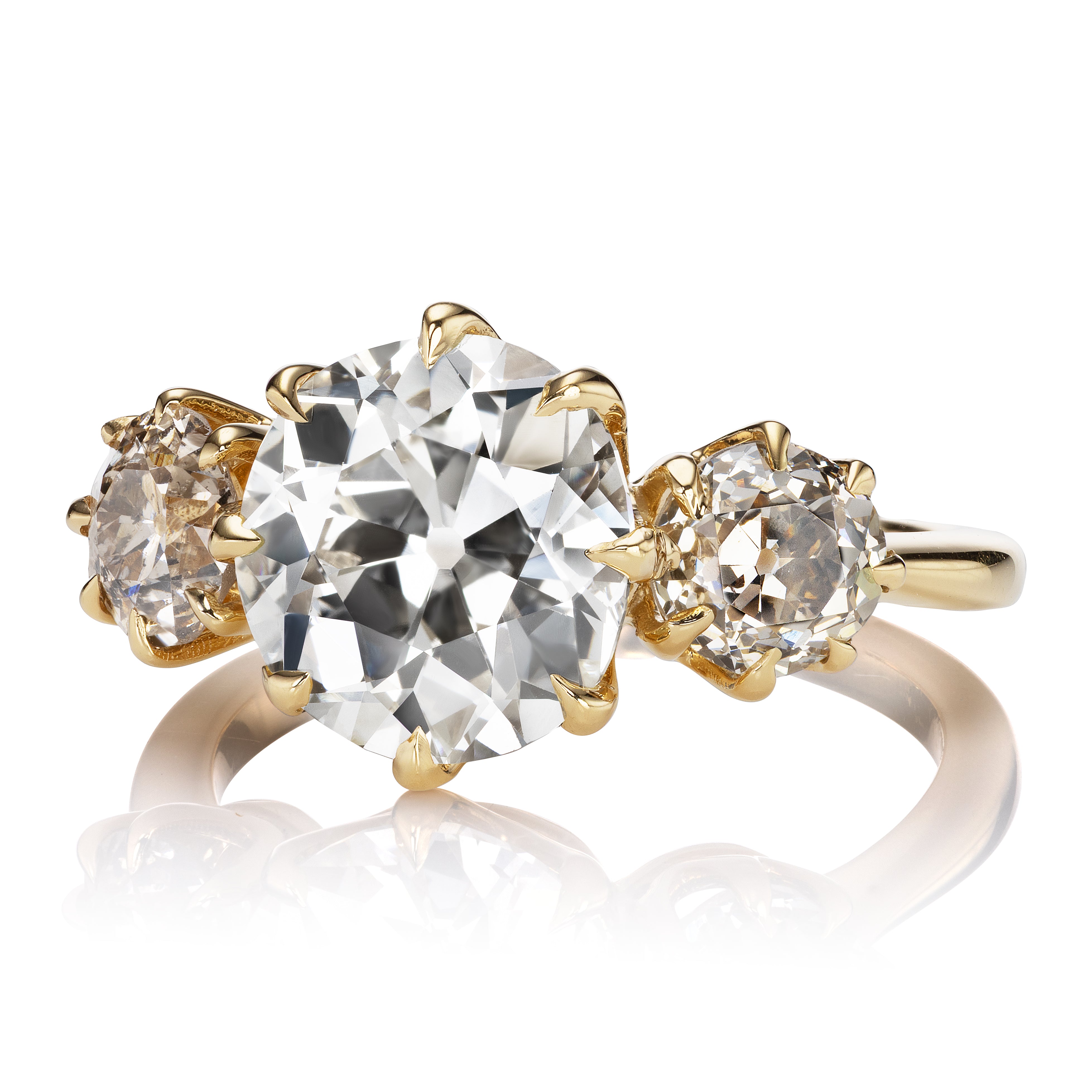
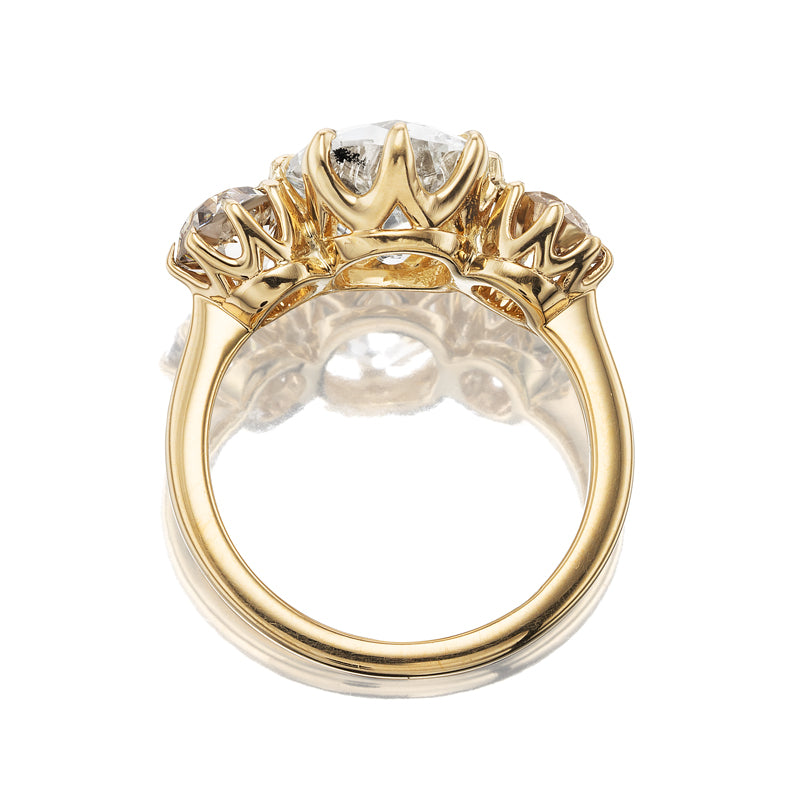
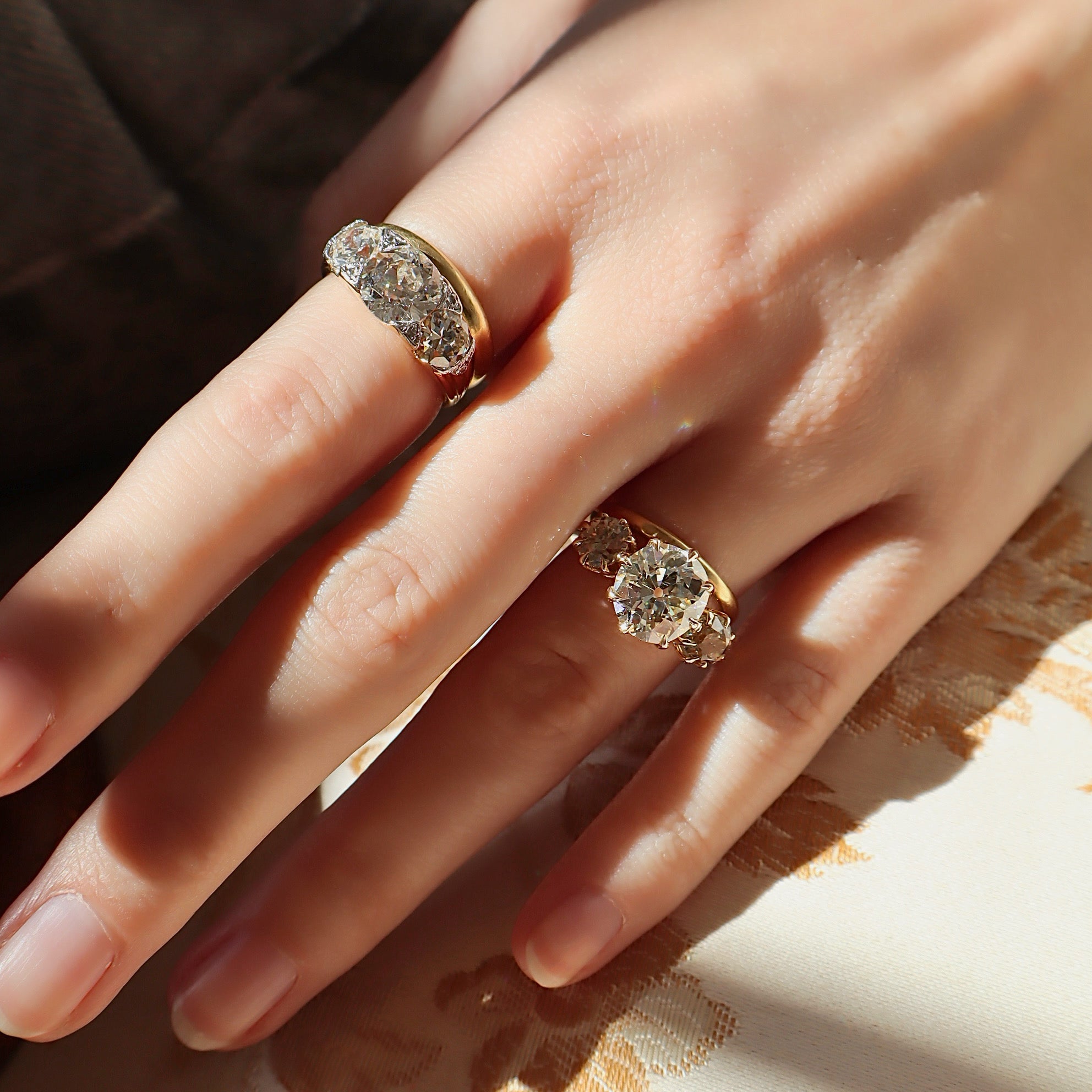
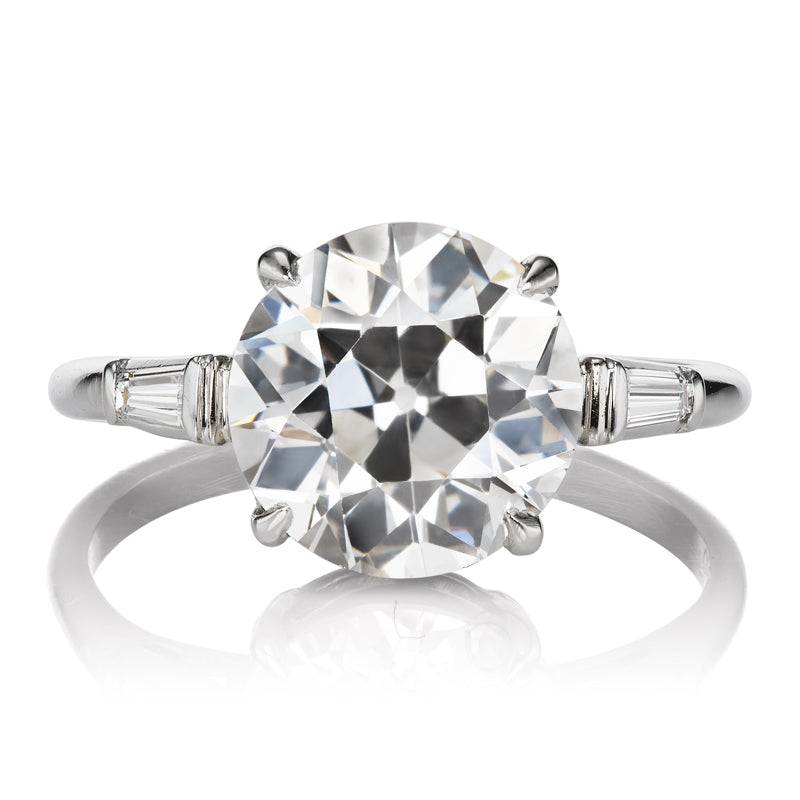
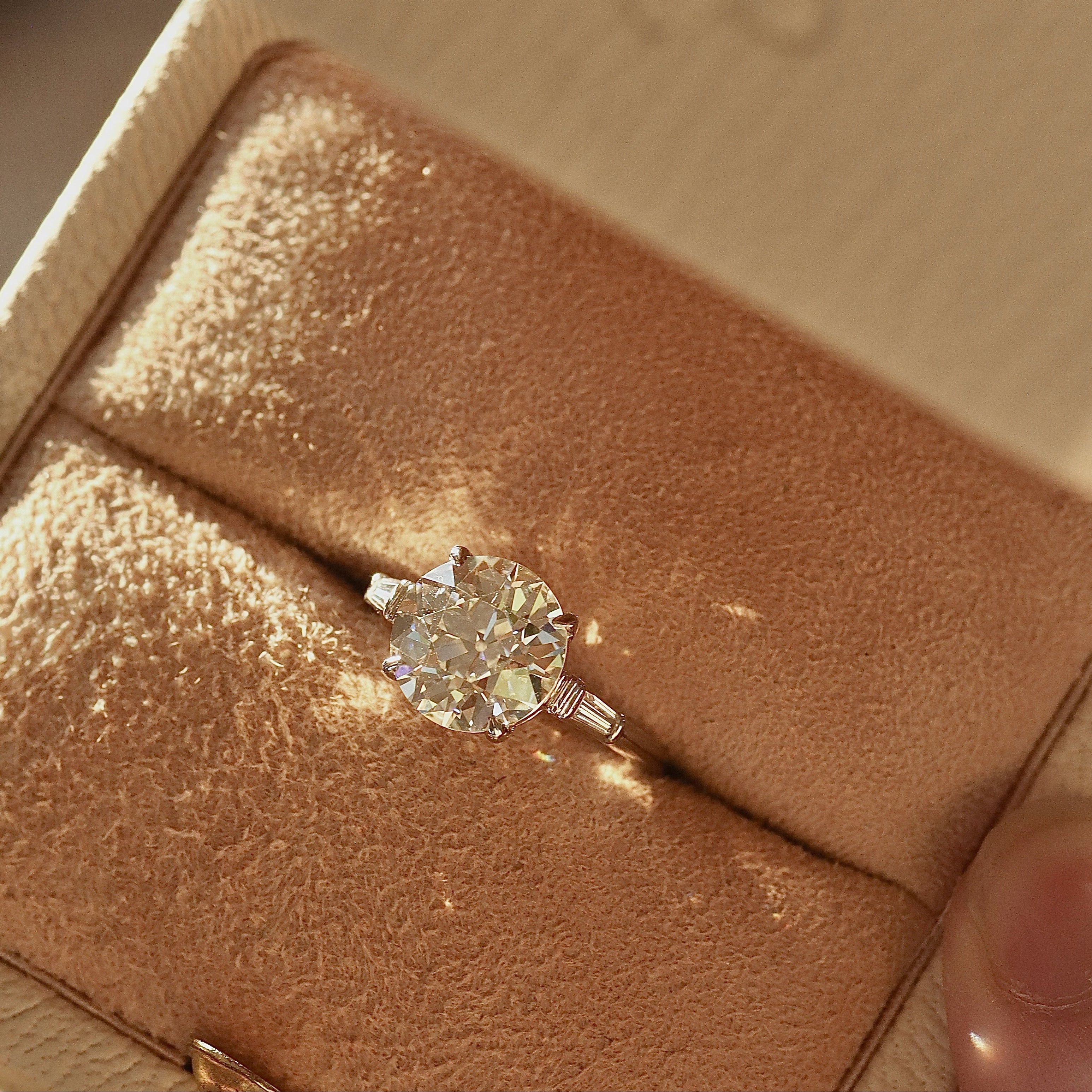
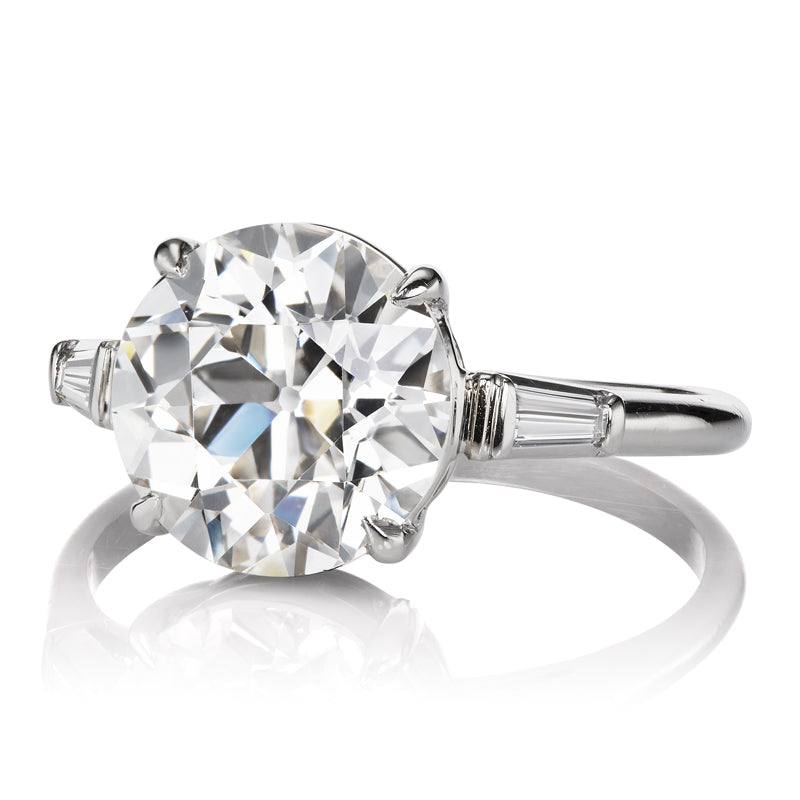
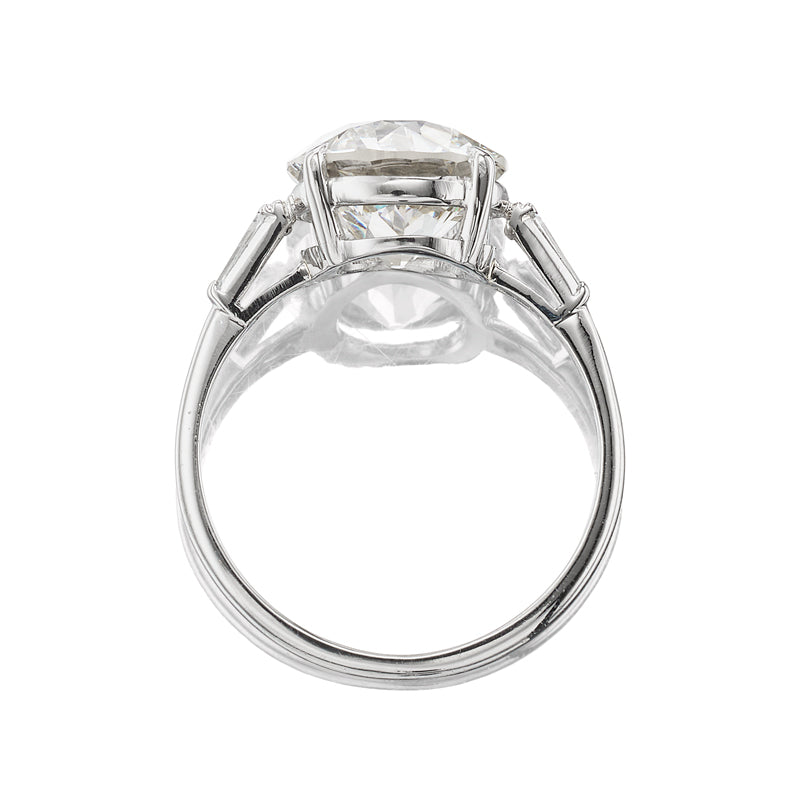
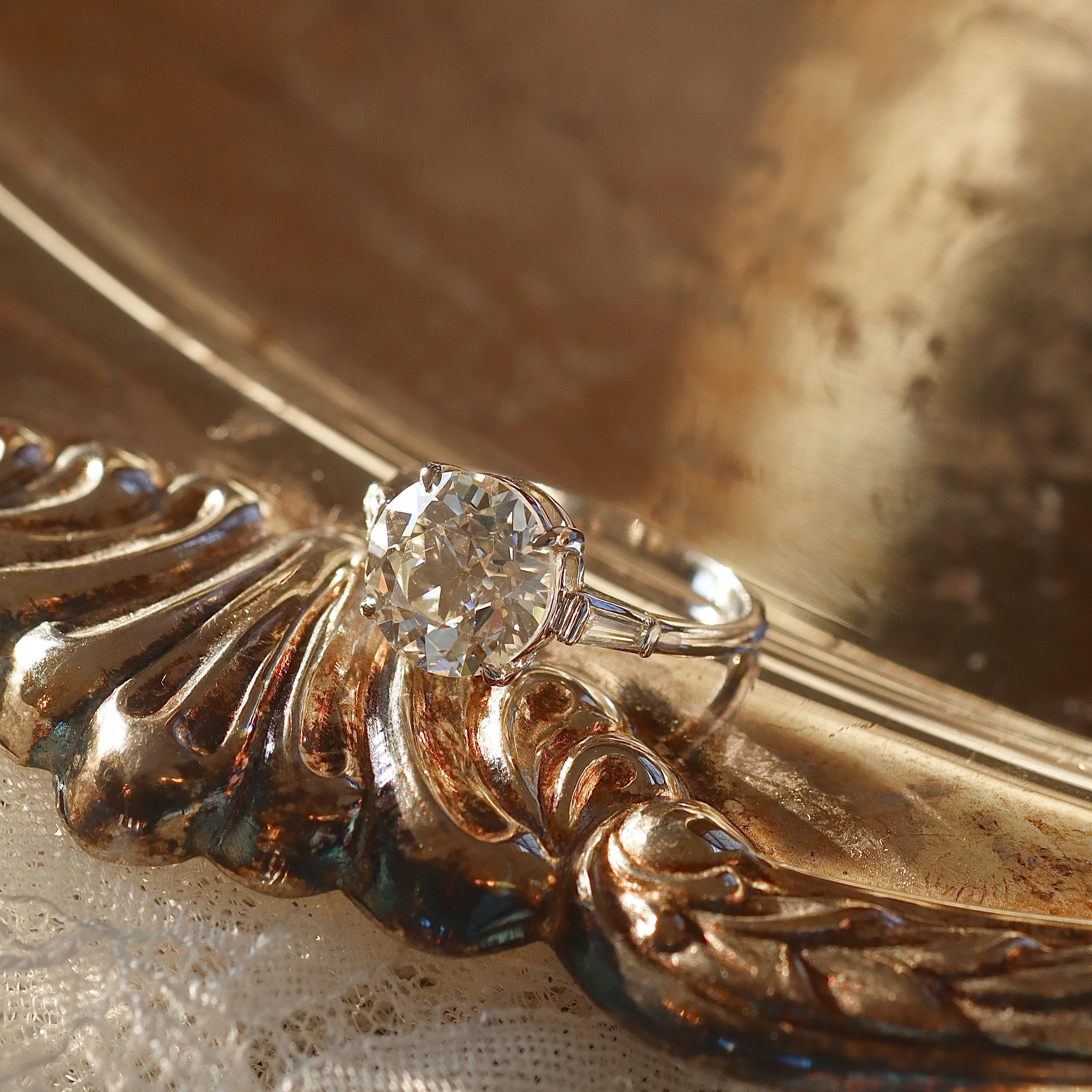
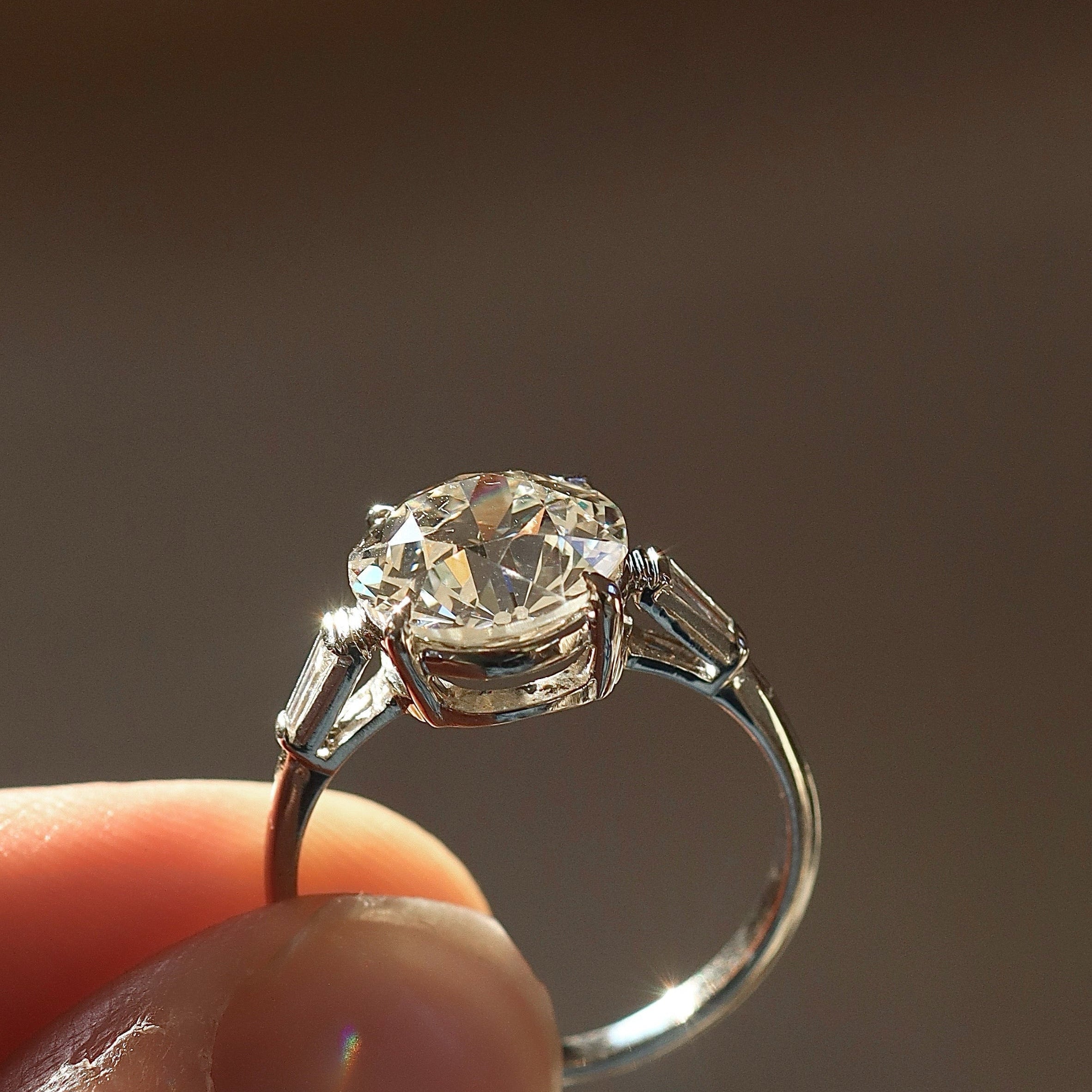
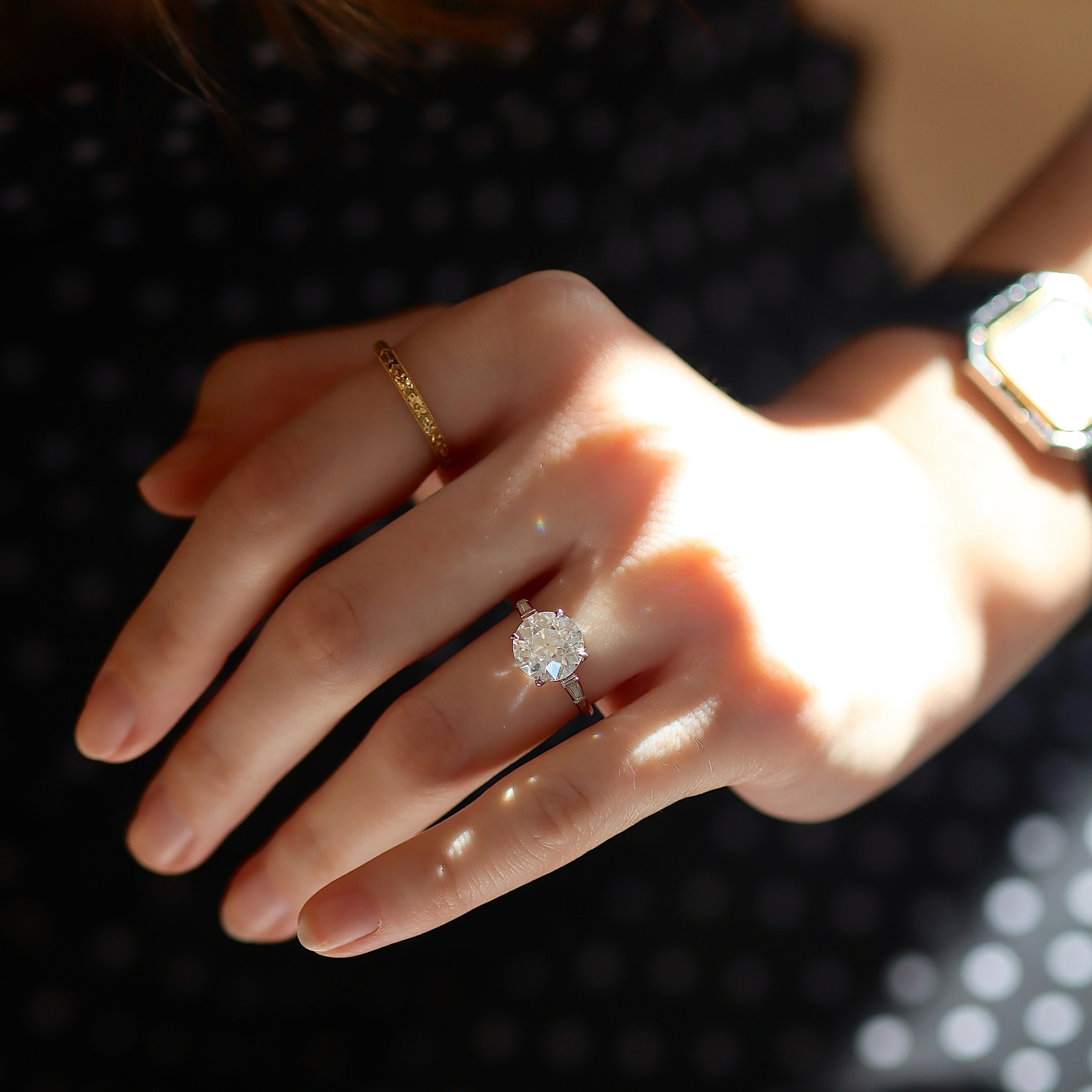
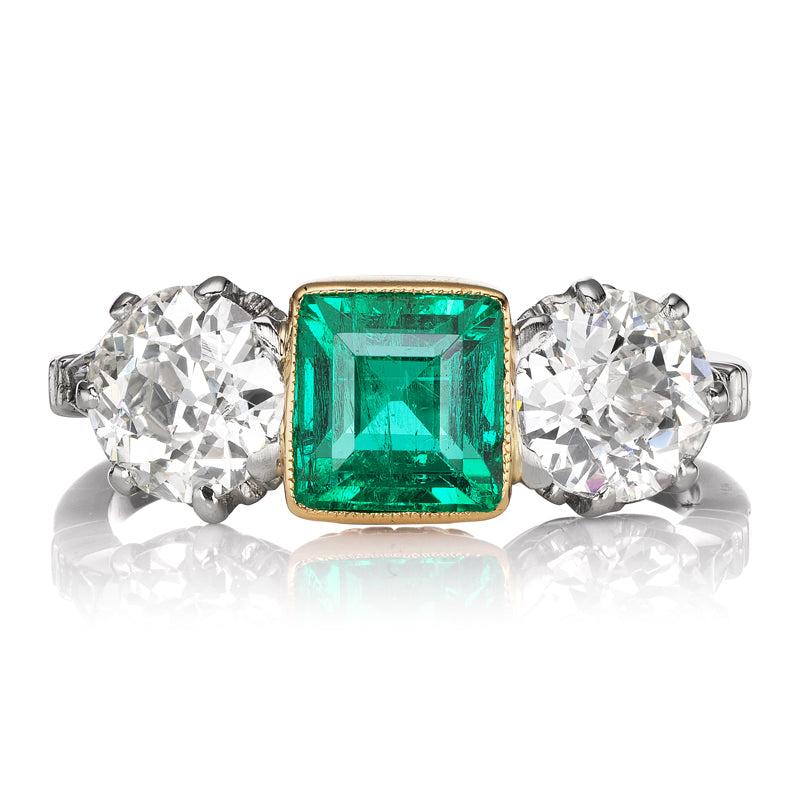
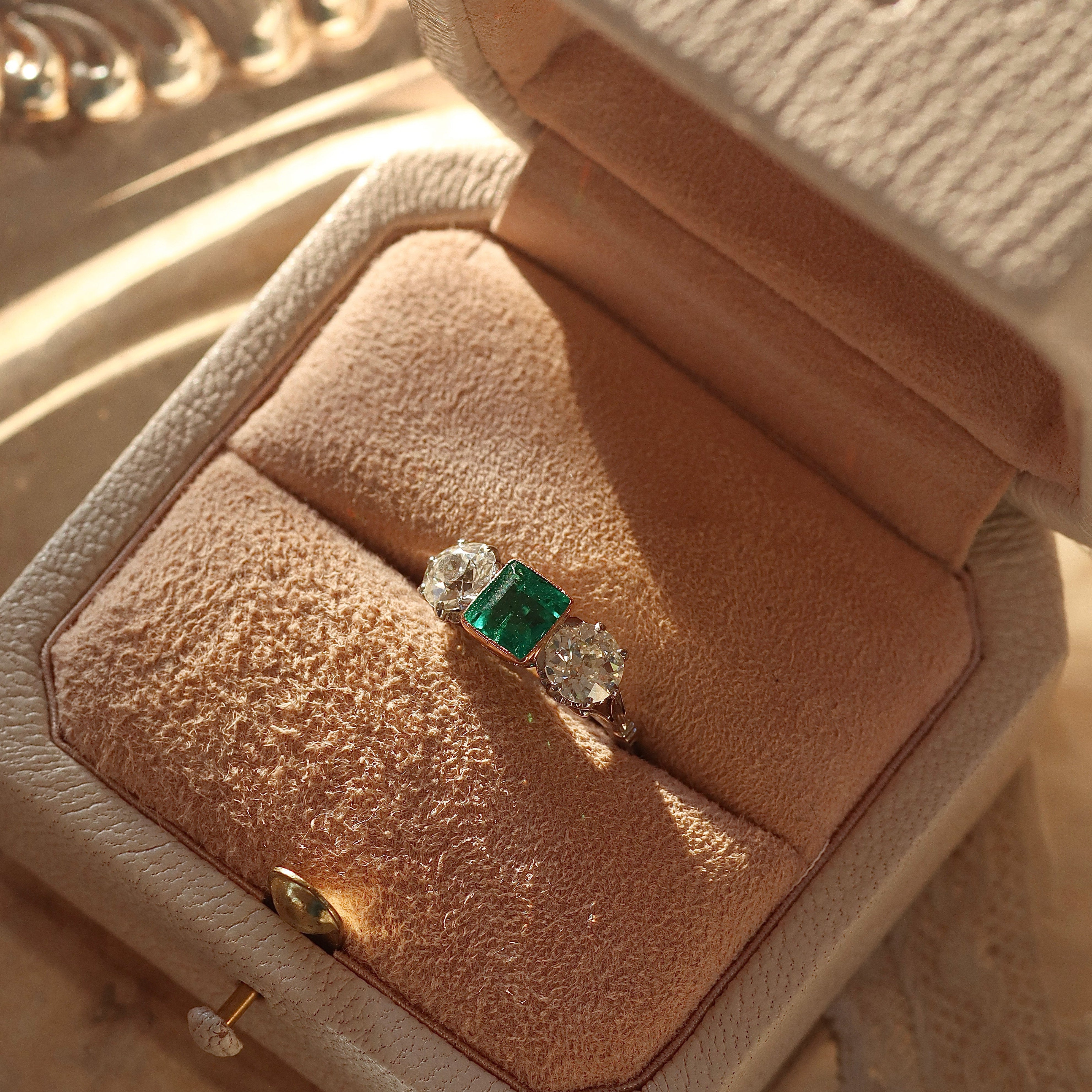
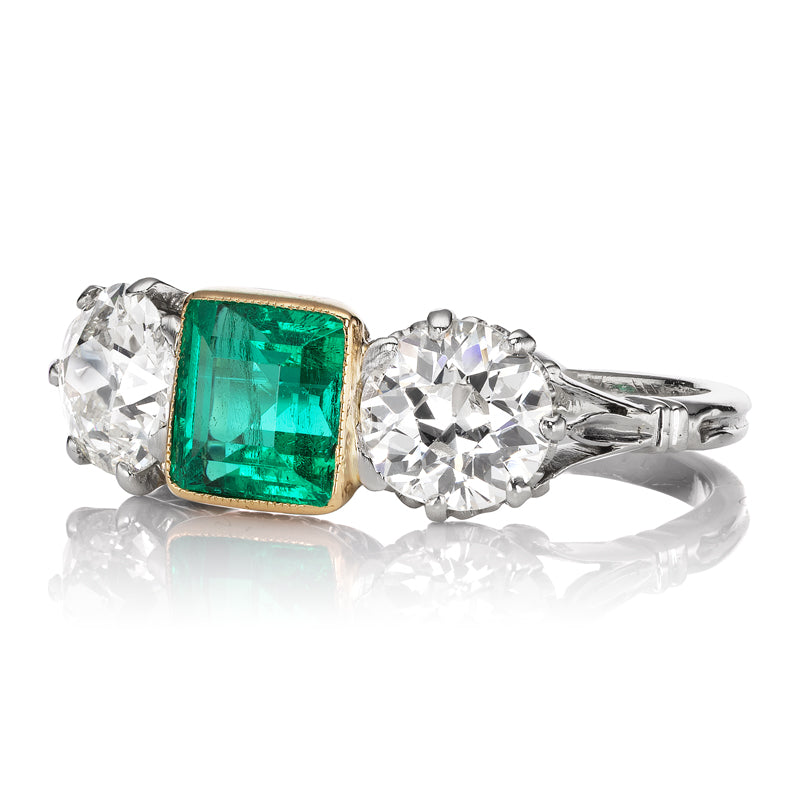
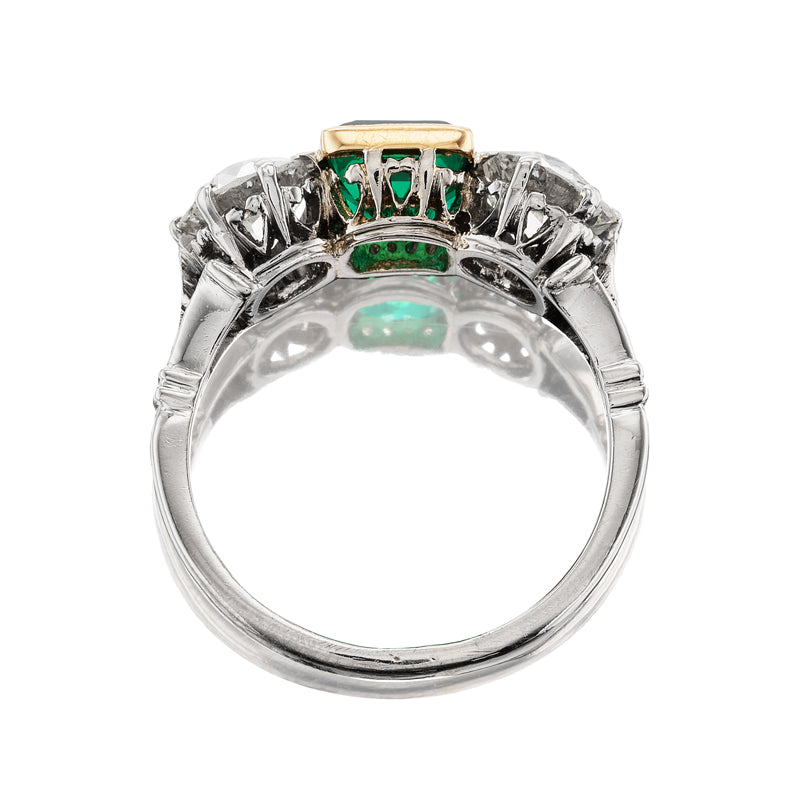
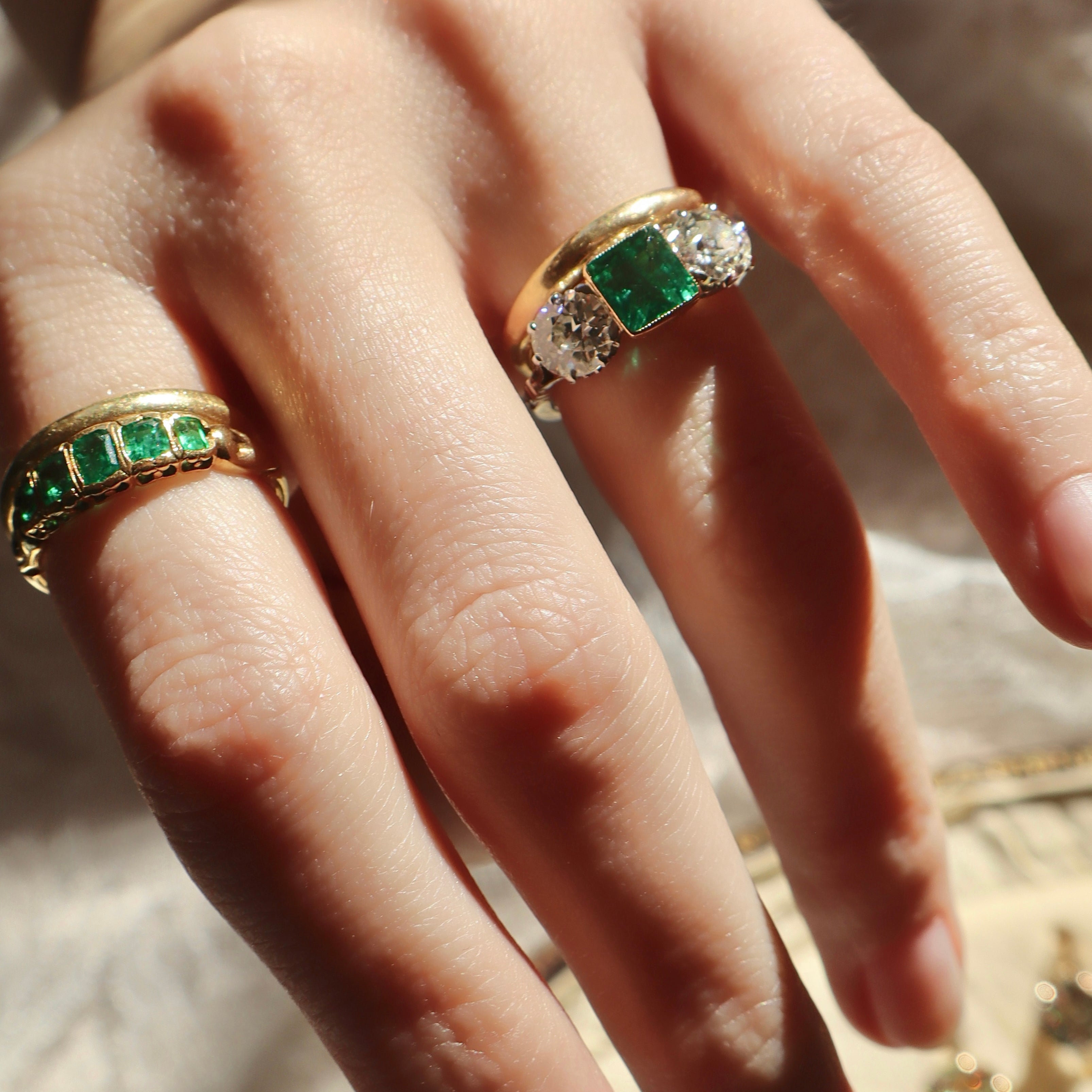
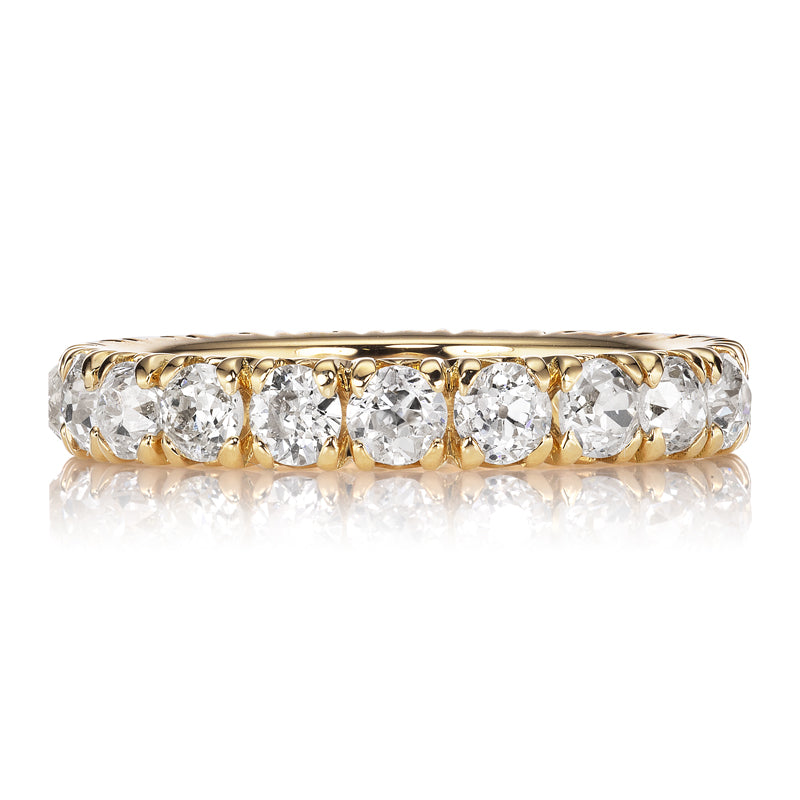
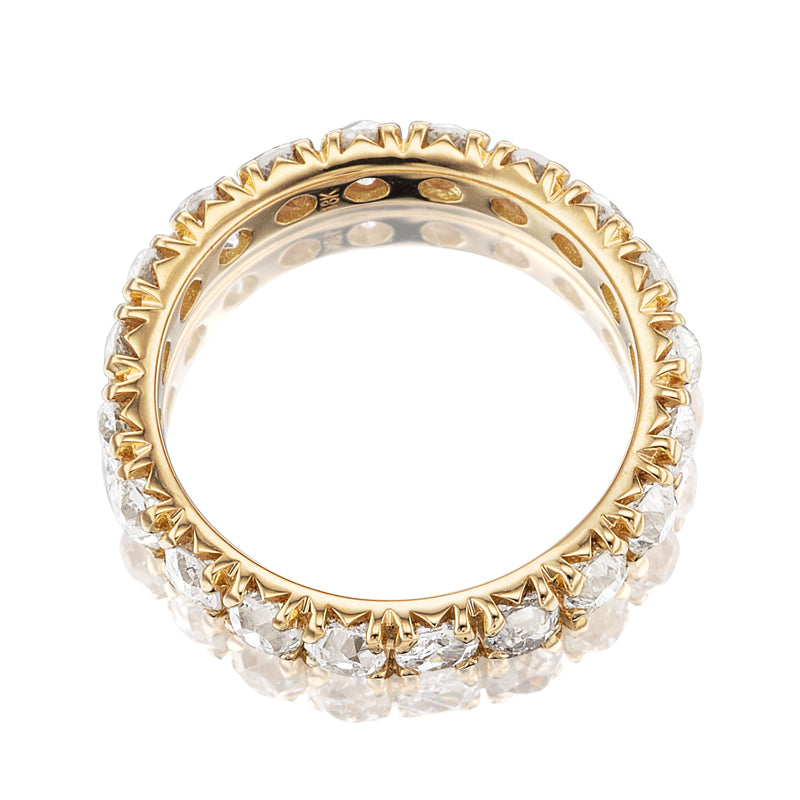


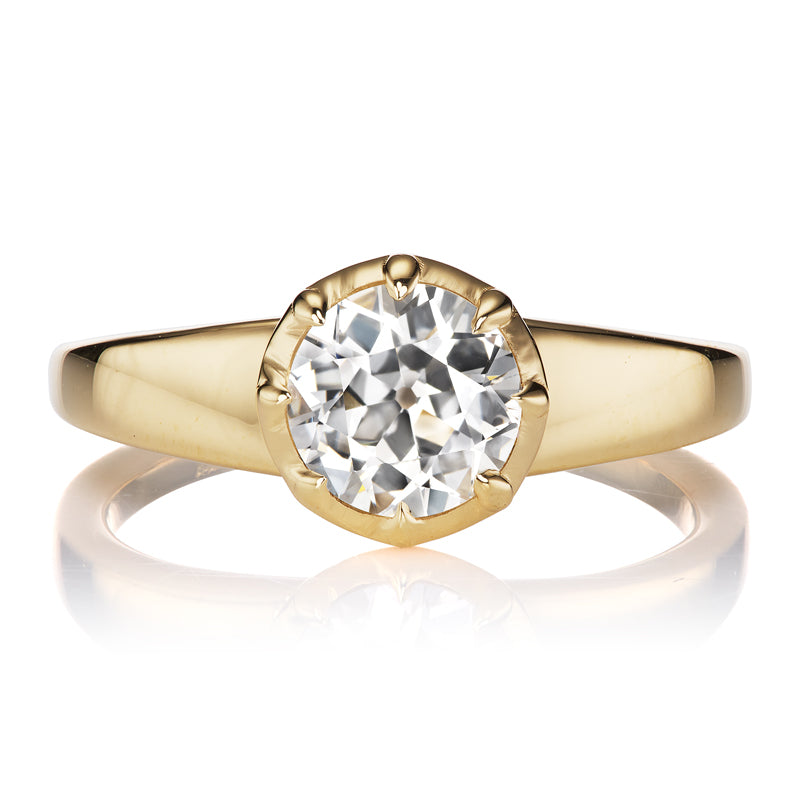
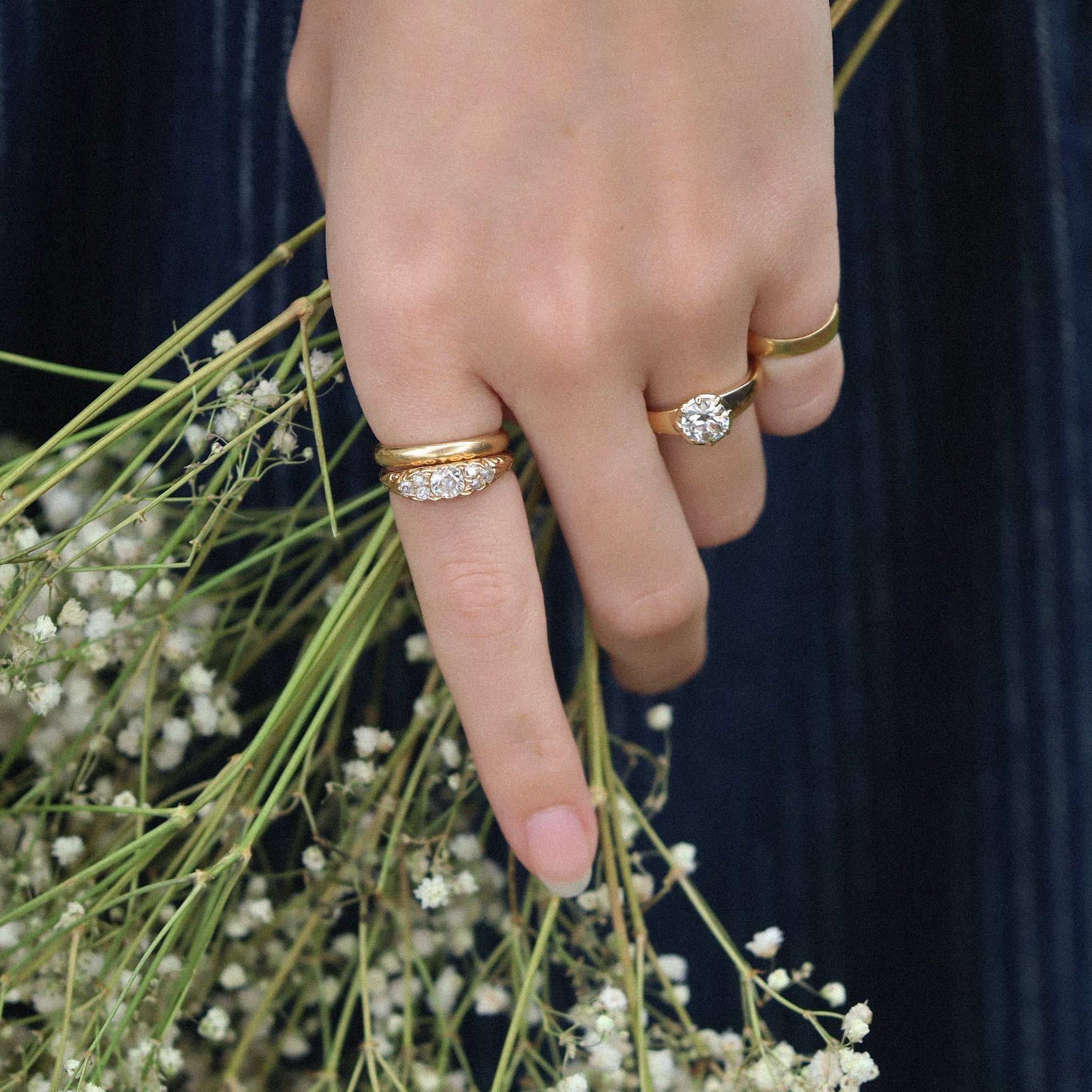
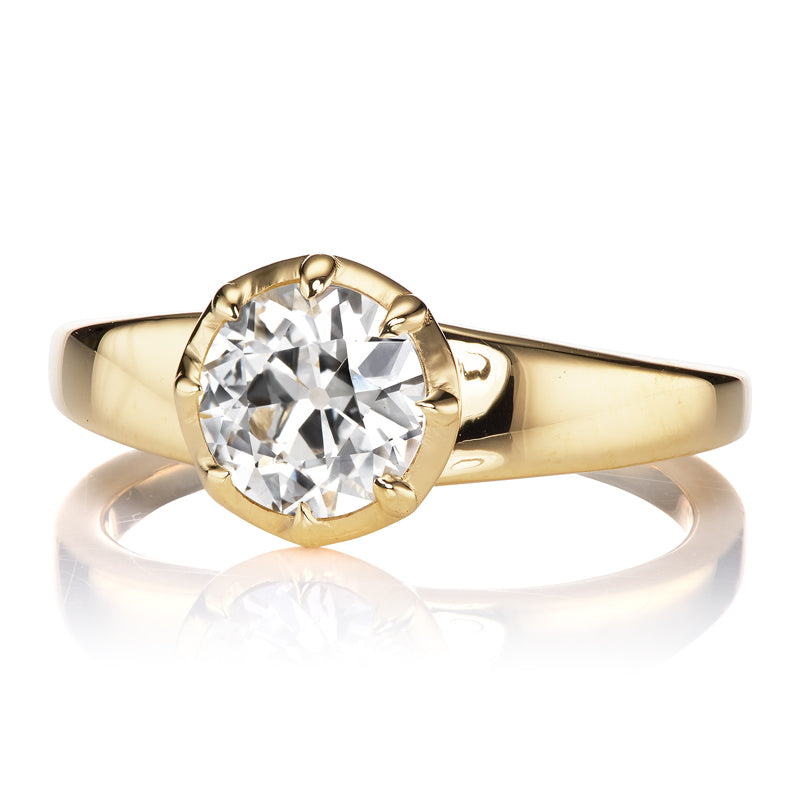
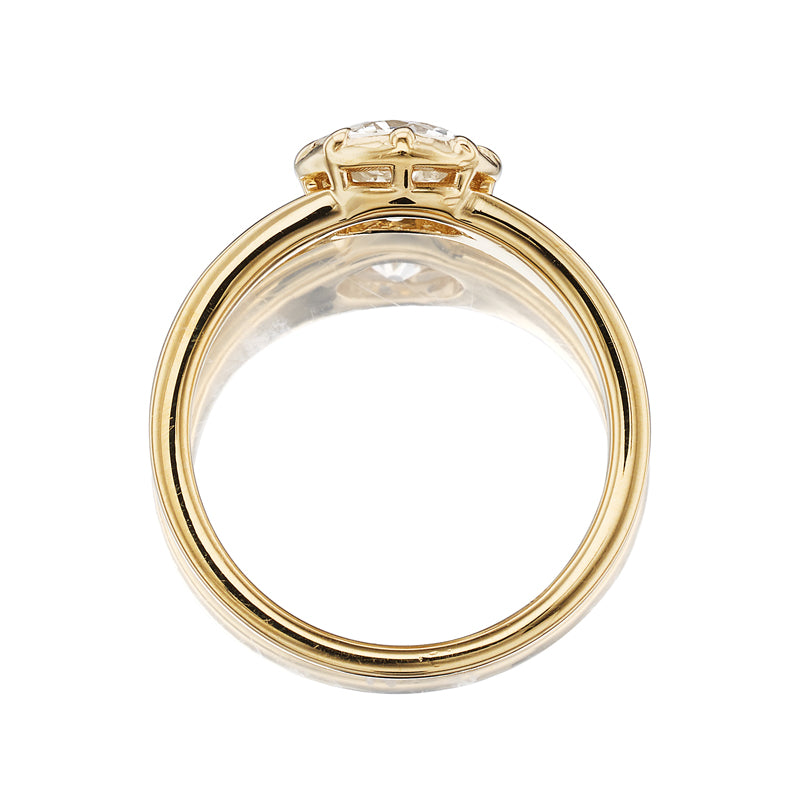
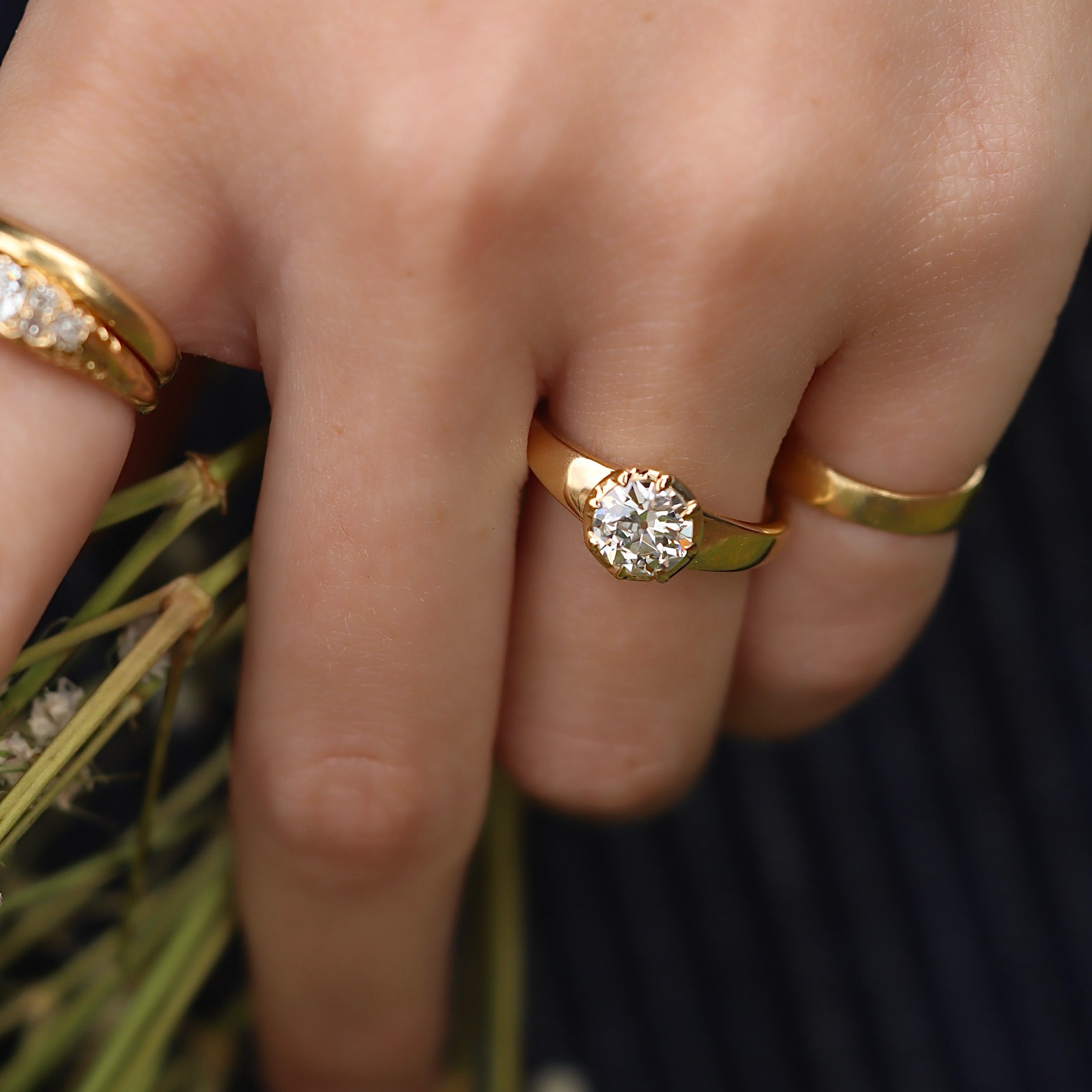
The old European cut diamond is truly a classic and one of the most beautiful cuts of diamond we've ever encountered. Old European Cut diamonds are essentially the antique version of the modern round brilliant cut diamond so these diamonds will have a (near) perfect round outline. They are this beautiful, glimmering cut that has a different appearance than the modern round diamonds.
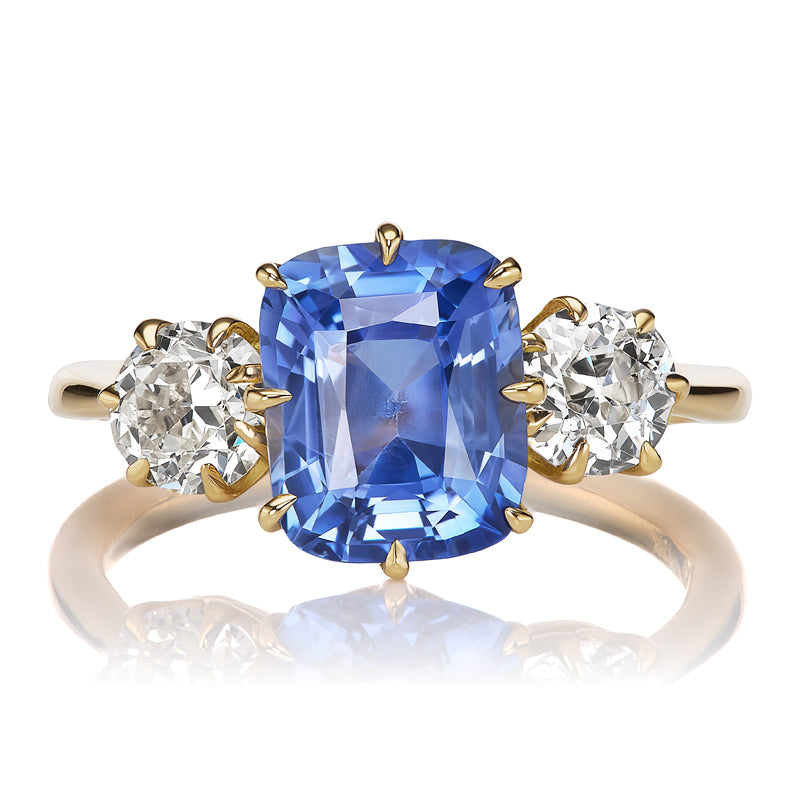
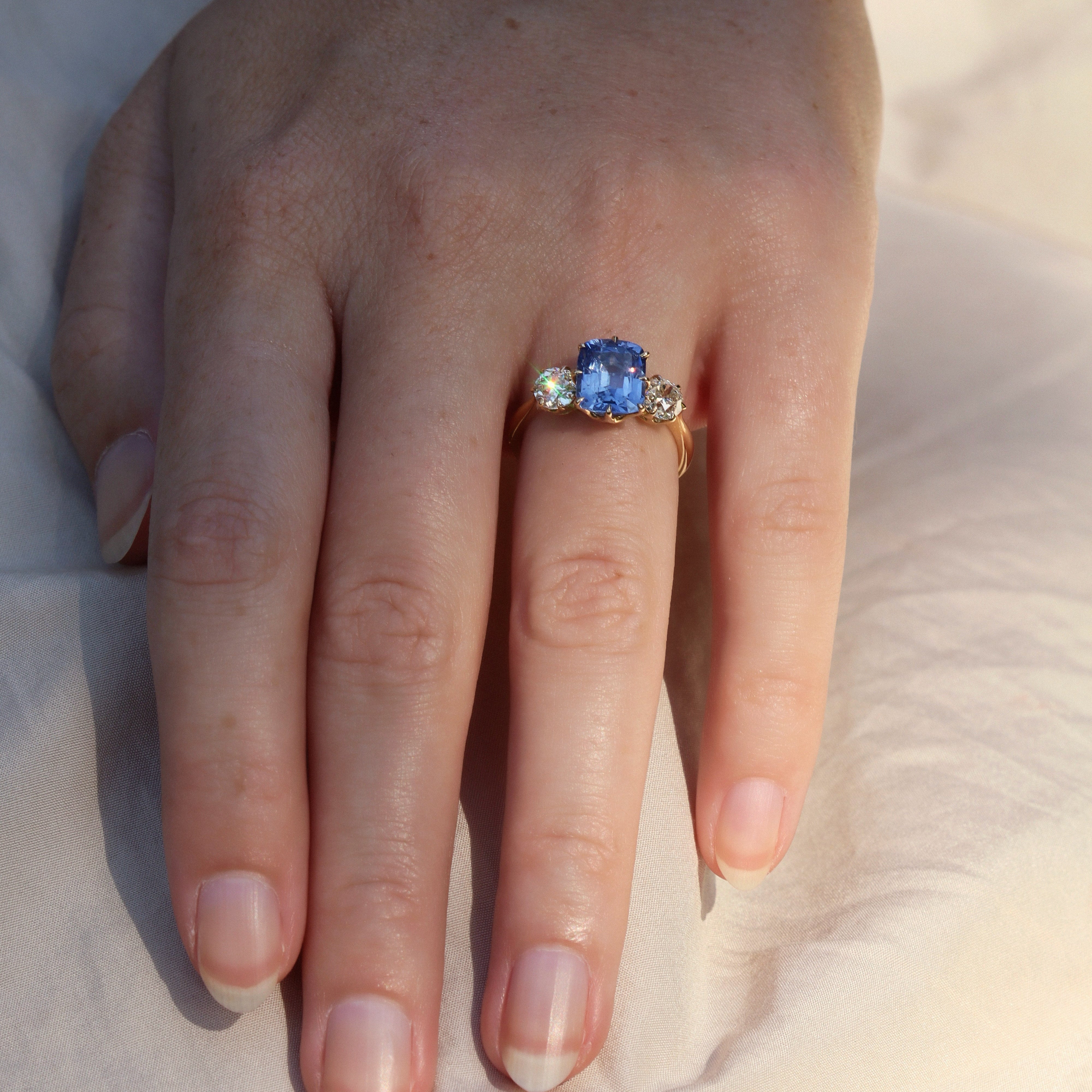
It’s easy to see why they’re so loved and in such high demand (even among modern jewelers) when you see old European cut diamonds. Whether you’re looking for a gorgeous solitaire, a three-stone engagement ring, or a beautiful diamond paired alongside other stones, you’re sure to find the loveliest styles here at Andria Barboné!
Gorgeous, Hand-Crafted History
While their name may sound a bit complicated, old European cut diamonds are basically the antique version of the modern round brilliant diamond. Old European cut diamonds date back to the 1800s into the early 1900s and were the go-to cut for the Edwardian Era and Art Deco Era.
By far the most impressive feature of old European cut diamonds is that they are hand-cut stones. That may evoke an image of a roughly cut stone, but these diamonds are sights to be seen. Expertly crafted and developed well before modern computer programs allowed jewelers to cut with laser precision, these diamonds were cut by hand by master artisans. Since these diamonds were cut by hand, they have varied looks and proportions which make them distinctive treasures as no two old European cut diamonds are exactly alike!
What Makes an Old European Cut Diamond Different?
Unlike modern round brilliant diamonds — which are cut by computer-guided machines to maximize light return under bright lighting — Old European cuts were shaped entirely by hand. The result is a diamond with:
- A smaller table (the flat top facet) and a larger culet (the bottom point), which creates that characteristic circle of light you see when you look straight down into the stone
- 58 chunky, hand-cut facets that produce broad flashes of color rather than the fine, glittery sparkle of a modern cut
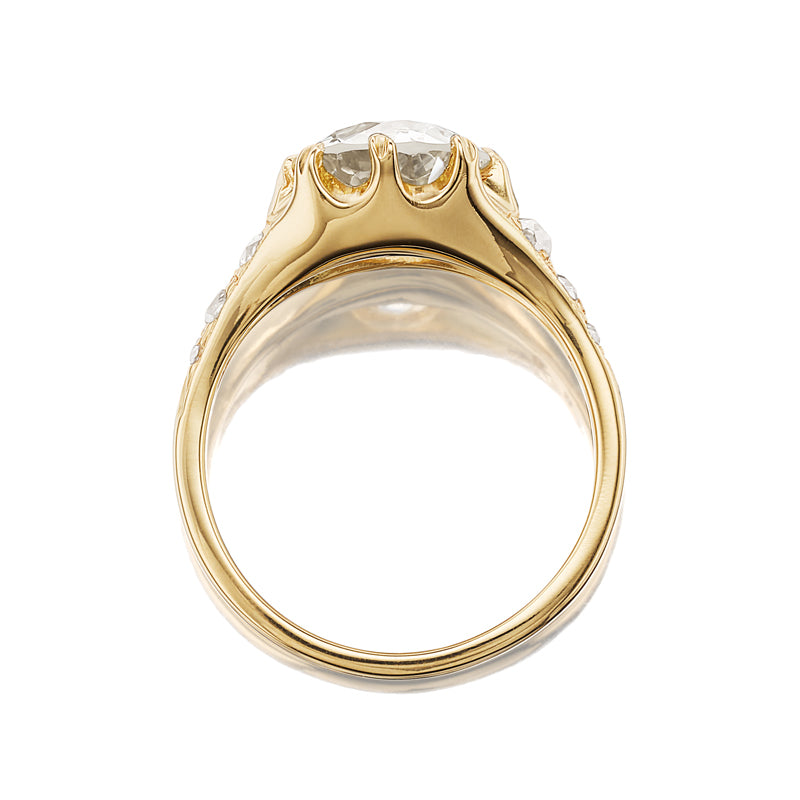
- A higher crown and steeper angles, giving the diamond more depth and presence
-
Slight asymmetry- due to their hand-cut nature, no two Old Europeans are identical, which is part of their charm
The technical differences translate to something you can feel immediately: an Old European cut looks alive in low light, at dinner, by firelight. Modern diamonds are engineered for showrooms. These were made for living.
The Eras Behind Old European Cuts
Old European cut diamonds were the dominant diamond shape from roughly the 1890s through the 1930s, spanning three of the most celebrated periods in jewelry design:
Victorian (1837–1901): Rich, romantic settings featuring intricate metalwork, floral motifs, and deep symbolism. Victorian rings often feature Old European diamonds set in yellow or rose gold, sometimes alongside enamel, pearls, or colored gemstones.
Edwardian (1901–1910): Defined by delicate platinum lacework and a lighter, more feminine aesthetic. Edwardian rings frequently feature Old European cuts in filigree settings — intricate and airy in a way that's impossible to replicate today.
Art Deco (1920–1935): Geometric, bold, and architectural. Art Deco rings pair Old European cuts with graphic patterns, black enamel, and calibré-cut colored stones. The contrast between the soft glow of the diamond and the hard-edged setting is what makes these pieces so striking.
What to Look for When Buying an Old European Cut Diamond
Because Old European cuts predate grading standardization, evaluating them is different from shopping for a modern diamond. Here's what matters most:
Focus on eye-cleanliness over grade. Inclusions that would score an SI2 on a modern grading scale are often invisible to the naked eye in an Old European cut, because the chunky
facets scatter light differently. A high clarity grade is less important here than how the stone actually looks.
Color reads whiter. OECs often appear one to two grades whiter than their certificate suggests, due to the cut's light behavior.
The culet matters. A large, open culet — the bottom facet — is normal and expected in antique diamonds. When you look straight down into the stone, you'll see a small circle rather than a point. This is not a flaw; it's a hallmark of the cut's authenticity.
Frequently Asked Questions
Are Old European cut diamonds more expensive than modern diamonds? These days, yes. A piece of well-cut history can drive a higher price than modern stones so an Old European Cut diamond will be more expensive than a modern round diamond. Of course this depends on where you shop, as well.
Do Old European cut diamonds come with grading certificates? Yes they do! An important note- Antique diamonds were cut before modern gemological labs existed so we are certifying these historic stones in modern times.
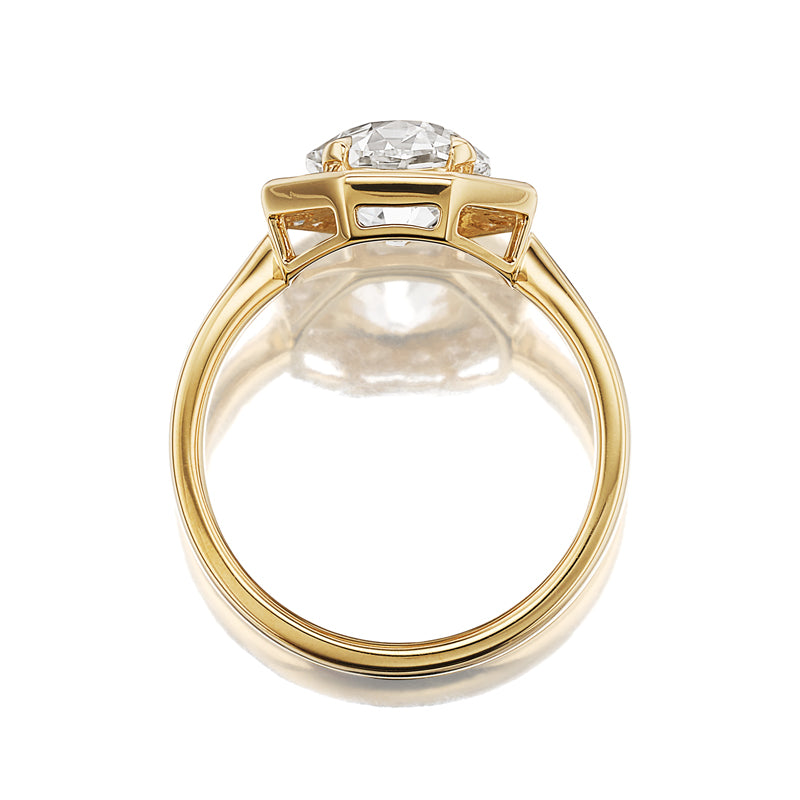
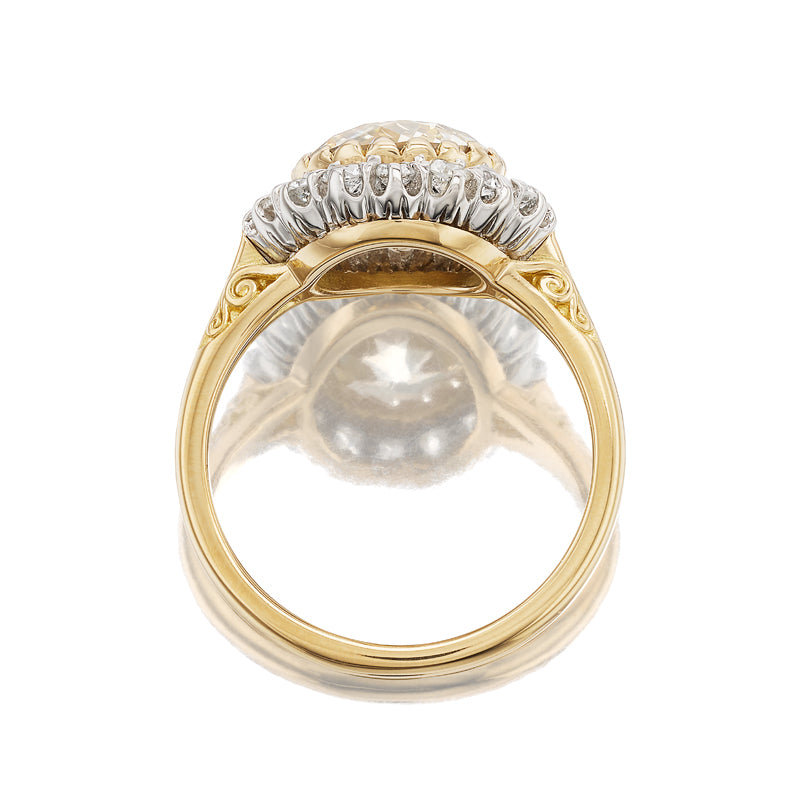
What ring settings work best with Old European cuts? Their rounded shape and deeper profile pair beautifully with solitaire settings, halo settings, and other prong settings. They also sit slightly higher (due to their high crown) in the setting than modern rounds, which many people prefer for the presence it gives the stone.
Why Andria Barboné
We specialize in authentic antique diamonds and jewelry- so we know a thing or two. The Old European cut diamonds in our collection were worn, loved, and passed down before it came to us. We source each piece individually, which means nothing here was mass-produced.
If you're looking for a ring that tells a story before you've even started yours, you're in the right place.
